Why change cannot be delivered

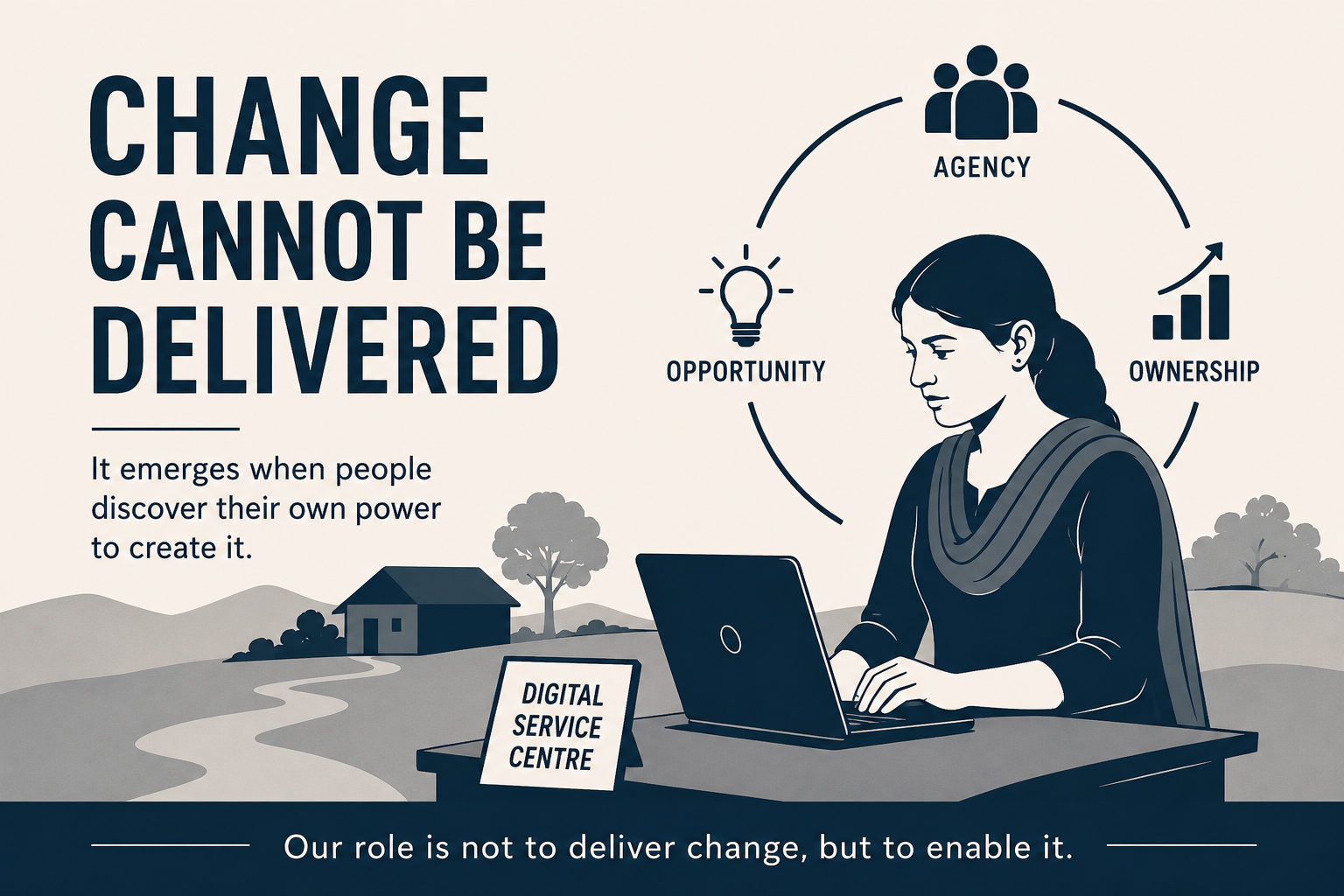
After 20+ years in development sector, this is the lesson I carry with the greatest conviction that change cannot be delivered to people. It emerges when people discover their own power to create it. We often treat it as something that can be designed, funded, managed, monitored, and delivered. We create theories of change, strategic plans, annual targets, dashboards, and impact indicators. We write proposals describing how communities will evolve over the next three or five years and convince ourselves that social transformation can be engineered with enough resources, expertise, and discipline. Yet the longer I have worked in this sector, the more I have realised that change is far more organic, unpredictable, and human than our project documents suggest.

When I began my career, I believed what many young professionals entering the development sector believe, that poverty could be reduced through good Programs alone, that social problems could be solved through smart interventions, and that institutions with the right intent could create pathways for people to improve their lives. I still believe in all of those things. What has changed is my understanding of where transformation actually comes from. After working across livelihoods, entrepreneurship, environmental sustainability, women’s empowerment, public health, education, and digital inclusion, I have come to a simple conclusion that development succeeds when people gain the agency to shape their own futures.

One of the first assumptions I had to unlearn was the idea that communities are primarily defined by what they lack. Development discussion is filled with the language of deficits. We identify needs, vulnerabilities, gaps, and constraints, and catalogue problems and design interventions to address them. While these exercises are important, they can also blind us to a more powerful reality. Communities possess knowledge, resilience, social capital, aspirations, and capabilities that outsiders frequently underestimate. Over the years, I have met women who built successful enterprises despite social barriers, farmers who adapted to environmental challenges long before climate resilience became a policy priority, and young people who created opportunities where experts saw only limitations. What distinguished these individuals was not the assistance they received but the agency they exercised. The most successful development programs I have witnessed were those that helped people discover their own capacity to act.

This may sound obvious, yet much of the development sector still operates as though change originates from institutions rather than individuals. We often speak of empowering communities as if empowerment is something that can be handed over like a grant or a training manual. Experience has taught me that empowerment is not delivered, but is unlocked. People change their lives when they begin to see themselves not as beneficiaries of someone else’s program but as active participants in shaping their own future.

Another lesson that I took years to fully appreciate is that projects produce outputs, while ecosystems create change. Development organisations have become increasingly sophisticated in measuring activities and outputs. We know how many people attended training programs, how many households received services, how many entrepreneurs were supported, and how many villages were covered. These numbers and accountability matter as funders and stakeholders deserve evidence that resources are being used effectively. Yet some of the most transformative changes I have witnessed had little to do with what was captured in a monitoring framework.

I have seen projects with impressive numbers disappear almost entirely once funding ended. I have also seen relatively modest initiatives continue creating value years after external support had ceased. The difference was rarely the size of the budget or the quality of the project design. More often, it was whether the intervention had strengthened the local ecosystem or not. Sustainable change emerges from relationships, institutions, markets, networks, and leadership. It emerges when communities develop the capacity to solve problems collectively, and when local actors begin driving progress themselves. 

This is particularly true in the field of livelihoods and entrepreneurship, where I have spent much of my professional life. For decades, development programs have focused on training individuals, providing assets, or facilitating access to finance. These interventions are valuable, but they are rarely sufficient. Entrepreneurship does not flourish simply because someone acquires a skill. It flourishes when an entire ecosystem supports risk-taking, innovation, market access, mentorship, and growth. The future of development, especially in rural economies, lies in building environments where success becomes possible for many.

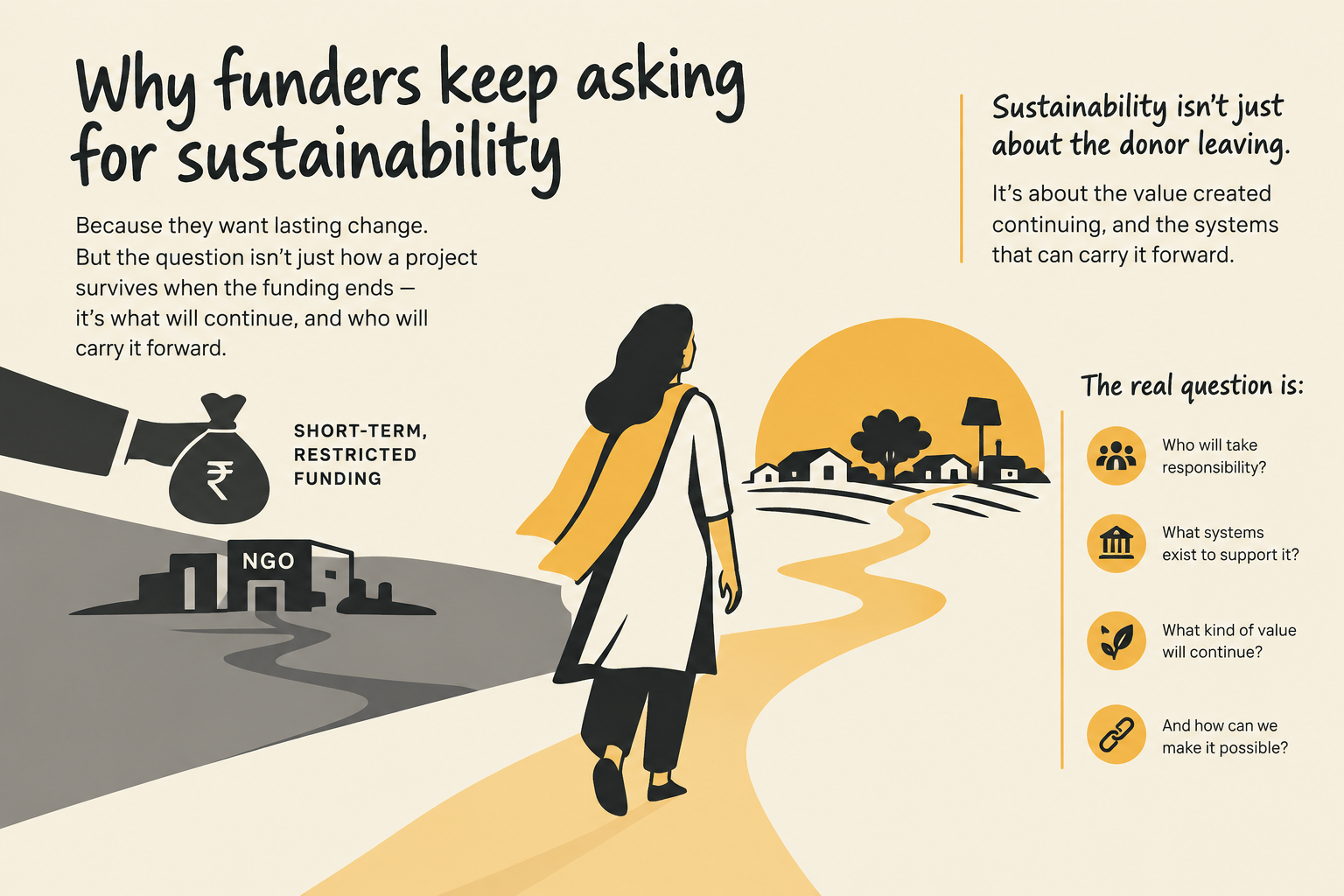
One of the more surprising lessons from my career concerns money. Having spent years raising resources for social programs, I have a deep appreciation for the role of funding in creating impact. Without resources, good ideas often remain aspirations. Yet after helping mobilise hundreds of crores for development initiatives, I have come to believe that development is rarely constrained primarily by money. That may sound like an unusual statement coming from someone whose responsibilities have included fundraising and partnership development, but experience repeatedly points in that direction.

Many social challenges that appear to be funding problems are, in reality, leadership problems, institutional problems, capability problems, or trust problems. Additional funding can accelerate progress when strong systems exist. It can also magnify inefficiencies when those systems are weak. Some of the most effective organisations I have come across were not the wealthiest. They were the ones who built credibility, nurtured talent, fostered partnerships, learned continuously, and remained deeply connected to the communities they served. Development ultimately depends on institutions, as strong institutions outlive projects, preserve knowledge, adapt to changing circumstances, and create platforms through which future generations can continue the work. Sustainable change requires institutions capable of sustaining momentum long after a grant agreement expires.

Another belief I have gradually become sceptical of is the sector’s fascination with innovation. Few words are used more frequently in development conversations today. Every conference, funding call, and strategy document seems to emphasise innovation as the pathway to impact. New technologies, new models, and new approaches are often celebrated as solutions to deeply entrenched social challenges. Innovation undoubtedly has value, and many important advances have emerged from creative thinking. Yet the longer I work in development, the more I believe that adaptation is often more important than innovation.

Communities do not need solutions that look impressive in presentations; rather, they need solutions that work within their realities. The most successful initiatives I have known were not necessarily the most innovative. They were the most adaptive and respected local contexts rather than attempting to impose external models. The development sector is full of examples where brilliant ideas failed because they ignored the realities of the people they were intended to serve. It is also full of examples where relatively simple approaches succeeded because they were grounded in local ownership and practical wisdom.

Perhaps the most important lesson of all is that ownership is the ultimate measure of impact. For many years, I believed that scale alone represented the highest aspiration in development. Reach more people, expand into more geographies, and increase the numbers. Scale is important, and the magnitude of global challenges demands ambition. Yet scale without ownership is fragile. Programs that depend indefinitely on external actors are vulnerable by design. Lasting change occurs when communities begin to see an initiative as their own, when local leaders emerge, when institutions take root, and when progress continues without constant external direction.

This requires a profound shift in how we think about our role as development practitioners. Too often, organisations position themselves as providers of solutions. A more useful role may be that of a catalyst, connector, facilitator, and investor in human potential. The objective is not to become indispensable, but to create the conditions under which communities can thrive independently. Success is not measured by how long people depend on us, but by how effectively people progress without us.

As I reflect on my 20+ years in this sector, I remain optimistic despite the scale of the challenges before us. Climate change, inequality, unemployment, public health crises, and social exclusion remain formidable problems. Yet I have seen enough examples of human ingenuity, resilience, and determination to believe that meaningful progress is possible. I have seen individuals transform their circumstances, communities build collective solutions, and institutions evolve into powerful vehicles for social change. These experiences have reinforced my conviction, which has only grown stronger with time.The future of development will not be determined solely by larger budgets, more sophisticated frameworks, or more ambitious programs. It will be determined by our ability to strengthen local institutions, nurture entrepreneurship, build resilient economic ecosystems, and trust communities to shape their own destinies. If twenty years have taught me anything, it is that change is not something we deliver to people. Change is something people create when they have the opportunity, confidence, and freedom to act. Our responsibility is not to direct that process. It is to help create the conditions that make it possible and then have the humility to step aside.

Disclaimer: The opinions expressed are those of the author and do not purport to reflect the views or opinions of any organisation, foundation, CSR, non-profit or others.

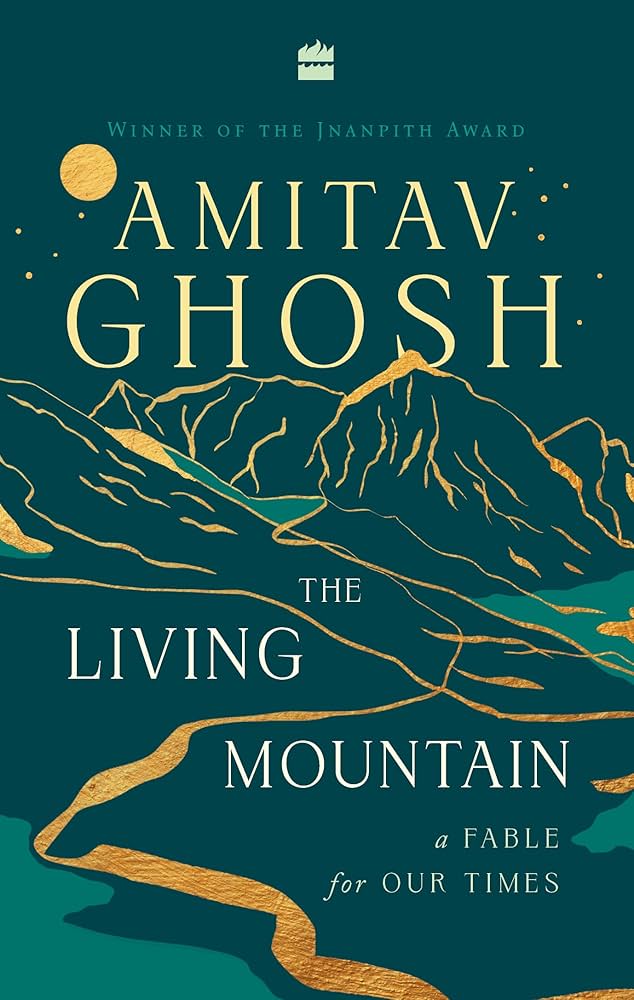
The Living Mountain

Author: Amitav Ghosh | 48 Pages | Genre: Fiction | Publisher: Fourth Estate India | Year: 2022 | My Rating: 7.5/10

The Living Mountain by Amitav Ghosh is a 48-page wonder of a striking ecological fable that narrates a profound moral argument. This book, published during the COVID-19 pandemic, feels less like a conventional story and more like a parable for the Anthropocene, urgent, allegorical, and quietly unsettling.

The narrative revolves around Mahaparbat, a sacred ‘living mountain’ revered by indigenous communities who coexist with it through restraint and ritual. This fragile balance is disrupted when outsiders, symbolically named ‘Anthropoi,’ arrive to exploit the mountain’s resources, triggering ecological and social collapse. The story, framed almost as a dream, distils humanity’s extractive relationship with nature into a stark moral conflict between reverence and domination.  

What makes the book compelling is its deliberate simplicity. Ghosh avoids dense scientific exposition, common in his earlier works like The Great Derangement, and instead uses myth and metaphor to communicate the climate crisis. This shift to fable is effective as it bypasses intellectual resistance and speaks directly to ethical intuition. The mountain is not just a setting but a sentient presence, embodying a worldview where nature is alive, reciprocal, and deserving of respect.

However, this same simplicity is also the book’s limitation. There is little narrative ambiguity or character complexity where the Anthropoi represent greed, the villagers represent harmony, and the trajectory is predictably tragic. Readers looking for layered storytelling or nuanced psychological depth may find it overly didactic. I thought that I was reading an Indian version of the Hollywood movie Avatar from 2009!

In a literary landscape crowded with sprawling climate narratives, The Living Mountain functions like a sharp intervention, almost a moral pamphlet disguised as fiction. It can be read in a single sitting, but its implications linger, forcing reflection on how modern development mirrors the destructive ascent of the Anthropoi.

The book also resonates with contemporary India and the Global South, where tensions between development and ecological preservation are immediate and visible. Ghosh subtly aligns indigenous knowledge systems with sustainability, challenging dominant models of progress that equate exploitation with advancement.The Living Mountain is less about storytelling and more about warning. This fable is didactic, symbolic, and purposeful. While it may lack narrative complexity, it succeeds as a powerful ecological allegory, reminding us that the crisis we face is not just environmental, but civilizational.

Why India needs a circular textile reuse revolution

The clothes we wear have a hidden afterlife. Even after a garment is worn a few times and forgotten at the back of a wardrobe, its environmental footprint remains in landfills, waterways, and the atmosphere. The global fashion industry today has a material and emissions footprint so large that it rivals that of entire nations. Each year, around 92 million tonnes of textile waste are generated worldwide, most of it ending up in landfills or incinerators, even though a large share of it is still wearable or recyclable. This is not just a lifestyle problem; it is a climate, water, and waste crisis rolled into one. In countries like India, Brazil, and the United States, the scale of textile waste varies, but the pattern remains the same, with fast fashion fuelling overconsumption, linear disposal systems leaking value, and communities paying the price through polluted land, stressed water systems, and rising emissions.

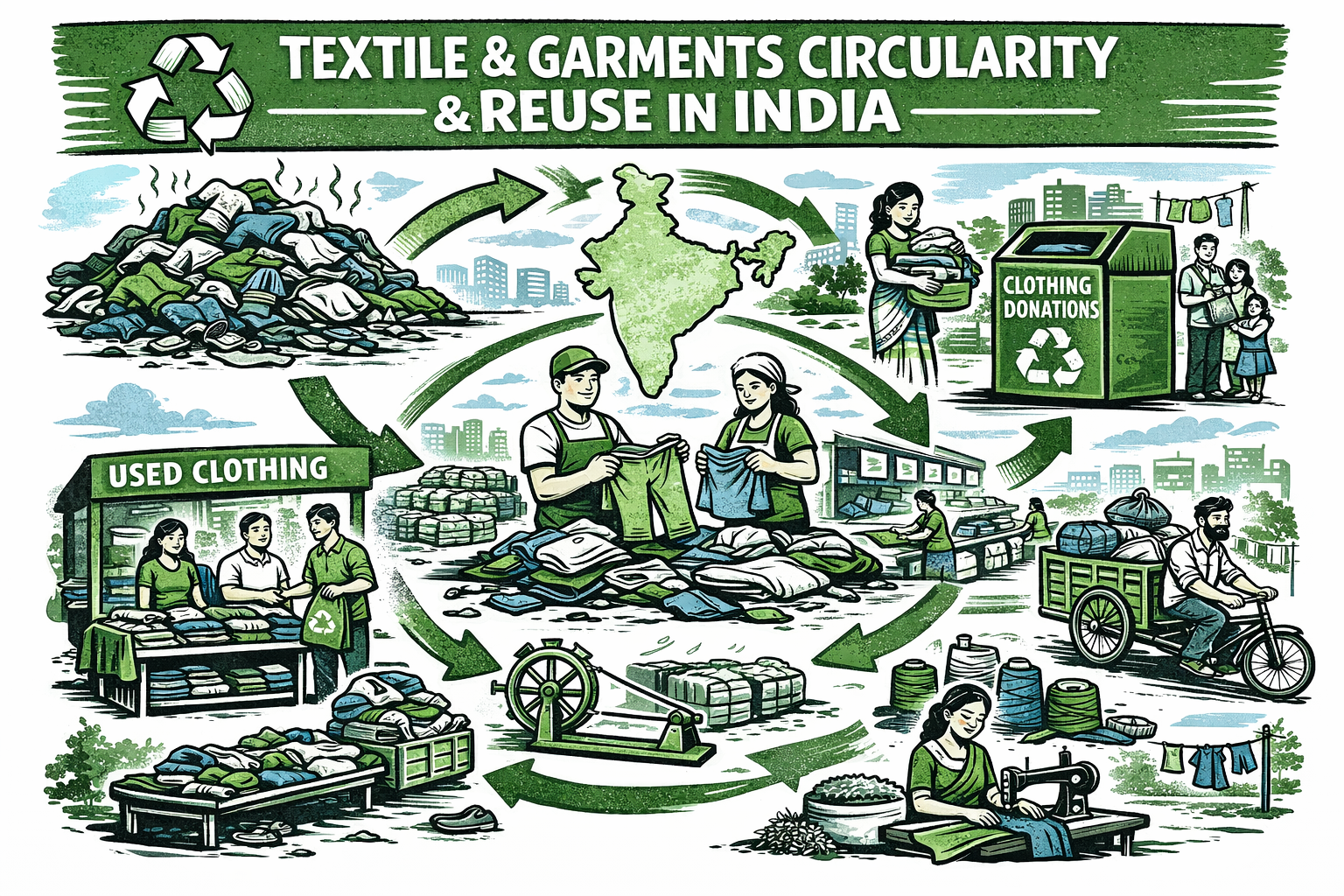
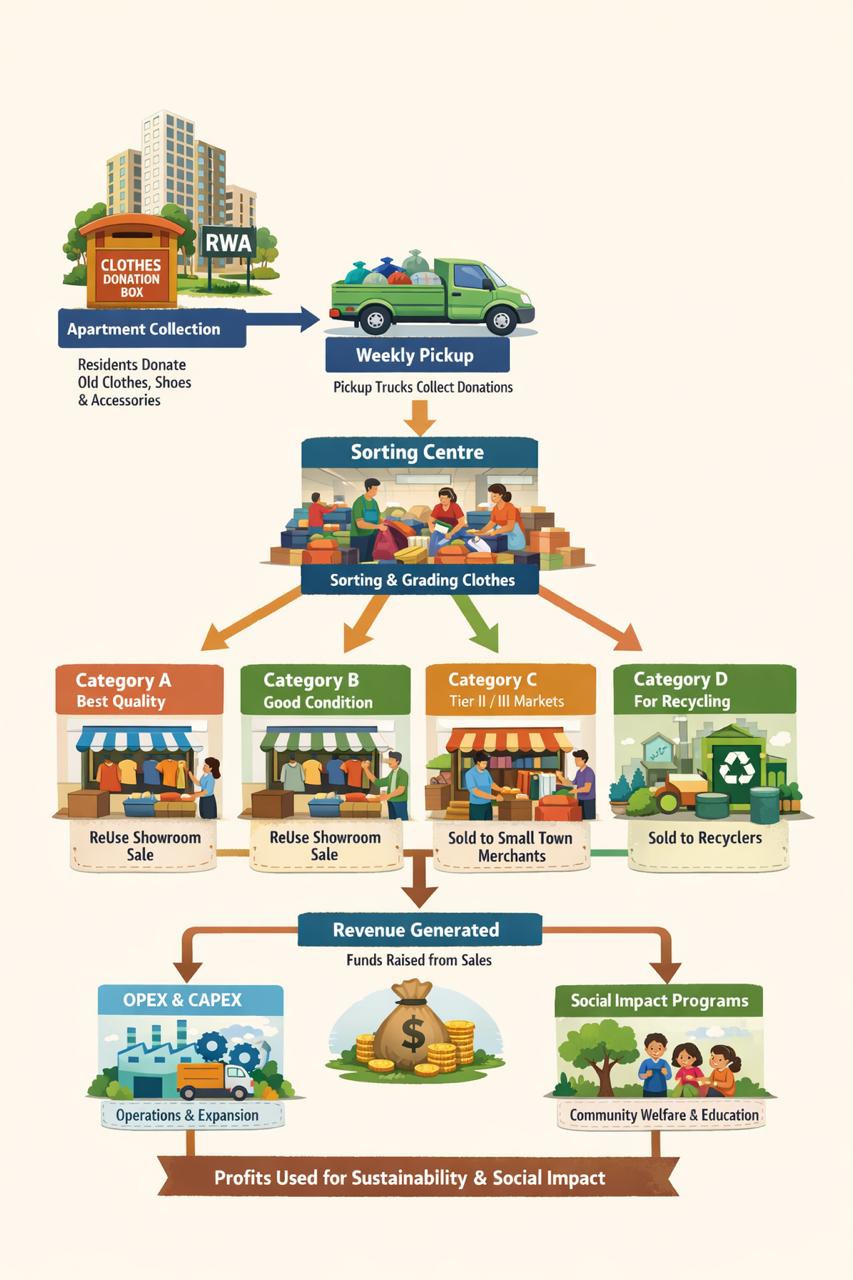
A practical alternative exists, and it is already visible in the reuse models emerging across cities and communities. The ‘collection-sorting-reuse-recycling model’, where clothes donated by households are graded and channelled into resale, regional redistribution, or material recycling, offers a rare triple win. It can save energy and water by avoiding virgin production, reduce landfill pressure and carbon emissions, and create dignified livelihoods across the value chain. In a world searching for climate solutions that also create jobs, textile reuse is a low-hanging fruit hiding in plain sight.

The environmental logic of reuse is powerful. Producing new clothing is energy and water-intensive, especially when fibres are grown, dyed, finished, shipped, and marketed across continents. Cotton alone accounts for massive freshwater use, while polyester is derived from fossil fuels and contributes to microplastic pollution. The fashion sector contributes an estimated 2–8% of global greenhouse gas emissions, making it one of the most carbon-intensive consumer industries.[i] When a garment is reused even once, a large portion of that embedded energy, water, and carbon footprint is avoided. Lifecycle assessments consistently show that resale and reuse pathways can cut emissions per garment by more than half compared to producing a new equivalent, while also sparing thousands of litres of water per kilogram of clothing.[ii] In practical terms, every shirt reused is a shirt not produced, and every kilogram diverted from landfill is methane not emitted during decomposition.

India’s case illustrates both the urgency of the problem and the promise of the solution. The country generates around eight million tonnes of textile waste every year, which is 8.5% of global post-consumer textile discards. India’s textile and apparel sector generates close to four million tonnes of post-consumer textile waste annually, making it one of the country’s largest contributors to landfill, water consumption, and greenhouse gas emissions. While an estimated 57% of used textiles are reused or recycled, these processes take place almost entirely through informal, fragmented, and unregulated channels. The remaining 43% ends up in landfills or is incinerated, reflecting an unsustainable linear ‘buy-use-discard’ consumption pattern that continues to accelerate with the growth of fast fashion[iii].

While India has long traditions of repair and hand-me-downs, rapid urbanisation and fast fashion consumption are overwhelming these cultural buffers. The result is a growing stream of clothing waste in municipal dumps, often mixed with organic waste, making recycling harder and environmental harm more acute. Yet India also hosts some of the world’s most innovative reuse ecosystems. Organisations such as Humana People to People India is demonstrating how urban surplus clothing can be collected and sold through retail channels, and income used for funding social development outcomes[iv], and Goonj collection channelled to rural communities in dignified ways, linking redistribution to community development and livelihoods.[v] Informal networks of sorters, repairers, and traders already keep a significant portion of textiles in circulation, proving that reuse is culturally and economically viable when supported by the right infrastructure. 

Brazil presents a parallel story shaped by urban consumerism and rising awareness. The country generates millions of tonnes of textile waste annually, with a large fraction still going to landfills due to limited formal recycling and reuse systems.[vi] Yet a growing thrift and resale movement, especially among younger Brazilians, is reframing second-hand fashion as both affordable and aspirational.[vii] Community cooperatives and small recyclers are beginning to integrate textile waste into circular micro-economies, creating jobs in sorting, resale, and upcycling. The lesson from Brazil is that cultural acceptance of reuse can shift quickly when affordability, sustainability narratives, and local entrepreneurship align.

The United States, often seen as the epicentre of fast fashion consumption, offers a different scale of lessons. Tens of millions of tonnes of textiles are discarded each year, but the country also has one of the world’s most established second-hand markets, supported by charities, social enterprises, and commercial resale platforms. Organisations collecting used clothing divert billions of pounds from landfills annually, channelling them into domestic resale, international reuse markets, and recycling streams.[viii] Even in a high-consumption society, reuse systems demonstrate that scale is possible when logistics, sorting infrastructure, and consumer awareness are aligned. The American experience shows that reuse is not marginal, but can be commercially viable, and environmentally meaningful at the national scale.

There could be lessons learnt from Brazil and the USA, and good practices replicated in India. Beyond environmental benefits, reuse models unlock employment that matters deeply for India. Every stage of the circular value chain creates work, from collection crews and logistics managers, sorting centre workers trained in grading and repair, retail staff in reuse shops, resellers in Tier II and III towns, and recycling technicians handling end-of-life textiles. Unlike capital-intensive manufacturing, reuse and sorting are labour-intensive, making them ideal for employment generation in peri-urban and rural contexts. India’s textile and apparel ecosystem already employs tens of millions of people, and circular extensions of this value chain can add new layers of income while formalising parts of the informal economy.[ix] For women and youth, especially in low-income communities, reuse enterprises can offer accessible entry points into entrepreneurship and wage work, from operating neighbourhood collection hubs to running small resale outlets.

Such models fit well within India’s national climate adaptation priorities. The National Action Plan on Climate Change[x]emphasises sustainable consumption, waste reduction, and resource efficiency as pillars of climate resilience. Textile reuse contributes to mitigation by cutting emissions embedded in production and avoiding landfill methane, while also supporting adaptation by reducing pressure on water systems and urban waste infrastructure. In water-stressed cities, every litre saved through avoided textile production matters. In flood-prone regions, reducing landfill volume lowers the risk of waste-choked drainage and secondary pollution. Circular textile systems thus become part of urban resilience, not just waste management.

The social enterprise model further adds public value, where profits from resale and recycling can cover operating costs and fund social programs. By reinvesting surpluses into community education, skills training, or local environmental projects, reuse systems can close the loop between consumption and social impact. This can become an excellent example of regenerative economics, where waste becomes a revenue stream that sustains both the enterprise and the communities it serves. When scaled across cities through partnerships with RWAs, municipalities, and CSR programmes, such models can become a distributed infrastructure for circularity, embedded in everyday life rather than confined to pilot projects.

While reuse alone cannot solve fashion’s environmental crisis, overproduction must be addressed, and durable design, extended producer responsibility, and recycling innovation are all necessary. But reuse is the fastest, cheapest, and most socially inclusive solution available today. It requires no new technology breakthroughs, only better organisation of what already exists and conscious consumerism. 

Embracing circular textile reuse at scale in India is not just an environmental choice, but an essential development strategy. It aligns climate action with employment, urban resilience with rural markets, and consumer behaviour with community benefit. Brazil’s cultural shift towards thrift and the USA’s large-scale reuse infrastructure show that such transitions are possible across income levels and cultures. The question is no longer whether reuse works, but whether policy, capital, and civic will can come together to make it the norm rather than the exception. If India gets this right, it will not only reduce its textile footprint but also demonstrate how climate action can be woven into the fabric of everyday economic life.

References 


[i] https://news.un.org/en/story/2025/03/1161636#:~:text=The%20fashion%20industry%20is%20one,of%20global%20greenhouse%20gas%20emissions

[ii] Number Analytics. “The Impact of Recycled Textiles on the Environment.” Lifecycle assessment review, 2024.

[iii] https://reports.fashionforgood.com/report/sorting-for-circularity-india-wealth-in-waste/chapterdetail?reportid=813&chapter=3

[iv] Humana People to People India. “Reuse and Circularity in Textiles”, 2026

[v] Goonj (India). Organisational model and impact summaries, publicly available reports.

[vi] Upcycle4Better. “Textile Recycling in Brazil.” Country brief, 2023.

[vii] Greenbook. “The Thrifting Revolution in Brazil.” Market insight report, 2024.

[viii] Planet Aid

[ix] CSTEP. “India’s Textile and Apparel Sector: Ecosystem and Readiness for EPR.” Policy report, 2024.

[x] National Action Plan on Climate Change (NAPCC), Govt. of India

Fabric of Resilience in Assam

I witnessed women weaving change in the villages of Assam through their skills, cultural heritage, hard work, perseverance, and collective will. Standing in a courtyard in Kamrup district, watching a woman at her traditional loom, I was struck by how quietly revolutionary this simple, everyday act truly is. The rhythmic motion of her hands, the steady concentration on her face, and the vibrant threads stretching across the loom were far more than craft; they were a statement of agency, identity, and economic empowerment. In that moment, it became clear that weaving in Assam is not merely a livelihood. It is a living narrative of resilience and progress, written by women who have refused to be left behind.

In much of rural India, the conversation around women’s empowerment often centres on what needs to be ‘given’ to women: access, opportunities, rights, financial inclusion, and public safety. All of these are undeniably essential. Yet what struck me in Kamrup was how much women were already giving to their families, to their communities, and to the preservation of an age-old cultural tradition. Assam’s weaving heritage is legendary, and most rural households have a loom. The women I met weave not only exquisite textiles like Mekhela Chadors, Gamosas, stoles, saris, but also new pathways for themselves, stitch by stitch.

The woman in the photograph, Jonali Das, from Paschim Bagta village, sits on a traditional handloom, made using local materials, framed by a raw brick wall and a sandy earthen floor. Nothing in this setting reflects modern machinery or industrialized production. Yet it reflects something far more important: dignity in work and pride in cultural identity. Her loom is more than a tool; it is a symbol of continuity. Generations of Assamese women have learned to weave from their mothers and grandmothers. The craft is deeply entwined with rituals, festivals, and the wider cultural ethos of the region. In many communities, a girl’s weaving skill is a marker of her readiness for adulthood. It is a quiet but powerful form of cultural education.

But the picture also reveals another truth: despite the beauty and value of these textiles, most weavers earn very little. The informal nature of the craft, the lack of organized supply chains, exploitative middlemen, limited access to raw materials at fair prices, and the absence of direct market linkages keep them trapped in low-income cycles. The fact that such a skilled craftswoman is working in a semi-open shed with bare tools is a reminder that heritage alone cannot sustain livelihoods unless the systems that support them evolve.

What struck me during conversations with the weavers was their clarity. They were not seeking charity. They were asking for fair access to better looms, training on contemporary designs, consistent market demand, and opportunities to sell directly. Their ask was not a transformation from the outside, but an enabling ecosystem that amplifies what they already excel at.

Local institutions like cooperatives, women’s self-help groups, producer companies, and artisan clusters play a pivotal role in negotiating prices, ensuring raw material supply, and aggregating products for larger orders. In Kamrup, I saw tremendous potential for women-led collectives that could own the entire value chain, from sourcing raw silk yarn of Eri and Muga to designing contemporary designs to managing logistics with digital tools. A decentralized, community-owned model would allow profits to remain in the village while giving weavers a bargaining voice.

There is also an urgent need to tell the stories behind these weaves. Consumers today increasingly seek authenticity, sustainability, and connection. Assam’s handloom sector embodies all three. Each Mekhela Chador woven on a traditional loom is not just a garment; it is hours of meticulous labour, generations of inherited technique, and the cultural soul of a community. Yet the lack of branding and storytelling often reduces these textiles to mere commodities. If India can celebrate Banarasi silk and Kanchipuram saris globally, there is no reason why Assam’s weaves cannot enjoy similar recognition, with the right investment, visibility campaigns, and market linkages.

Government programs like the National Handloom Development Programme and Deendayal Upadhyaya Grameen Kaushal Yojana have made efforts to support weavers. But ground realities show that the most impactful interventions are those that engage women directly, respect their lived knowledge, and co-create solutions rather than imposing them. Capacity building must happen in their language, in their community spaces, and at timings suitable to their daily responsibilities.

Most importantly, the narrative around rural women must shift. Too often, they are portrayed as vulnerable, needing rescue. The woman in the photograph, and countless others like her, are not symbols of vulnerability, but are symbols of strength. They run households, care for children and the elderly, manage farms, participate in community activities, and still take out time to weave. Their contribution to the rural economy is enormous, even though much of it remains invisible and unpaid.

As I watched the fabric slowly take shape on her loom, I realised that weaving is also an act of hope. Every thread layered over another is a gesture of belief in tomorrow, belief that their craft will survive, that their daughters will inherit both the skill and the opportunity to thrive, and that their labour will be valued fairly. If India is to build a truly inclusive development story, it must begin by recognising and uplifting such women, not through charity, but through partnership.

In the villages of Assam, women are already weaving change. They only need the rest of us to stop standing on the sidelines and start supporting the revolution they have begun.

Gold Rush

As the festive season in India is ongoing, jewellers across India are ready, investors tracking bullion prices, and families waiting eagerly for the most “auspicious” day of the year to buy gold. Dhanteras, celebrated two days before Diwali, has long been associated with the purchase of the precious metal, a tradition believed to bring prosperity and good fortune. Similar buying frenzies occur during Akshaya Tritiya, weddings, Karwa Chauth, and harvest festivals, when gold is not merely an adornment but a cultural marker of wealth and status.

Market reports celebrate the crores spent, but beneath the sparkle lies a complex story of culture, aspiration, and economics. Is festival gold-buying a timeless symbol of financial prudence and cultural continuity, or is it a cycle of consumption propelled by social pressure, marketing, and habit?

India’s love affair with gold is centuries old. From the time of the Indus Valley civilisation to the Mauryan emperors to our modern nuclear families, gold has been a medium of exchange, a store of value, and a token of spiritual significance. For millions, gold is not just metal, it is Lakshmi, the goddess of wealth herself. Dhanteras literally means “the thirteenth day of wealth,” and families believe that buying gold on this day invites abundance.

This cultural reverence made economic sense in a pre-banking era. Gold’s intrinsic value and portability provided a hedge against famine, emergency, and currency devaluation. Rural households, lacking access to formal savings mechanism, used jewellery as insurance and collateral. Even today, India remains the world’s second-largest consumer of gold, with annual demand often exceeding 700–800 tonnes. For many, gold remains the most trusted form of intergenerational wealth transfer.

Yet, today’s festival buying is no longer just about family heirlooms or prudent savings. It has evolved into a multi-billion-rupee economic event. According to trade bodies like the All-India Gem and Jewellery Domestic Council, Dhanteras sales often spike by 20–25% year-on-year, depending on price trends. In 2024, for example, despite gold hovering at record highs of around INR61,000 per 10 grams, jewellers reported robust demand, with many urban consumers opting for lighter designs or digital gold to keep up with tradition.

Specific estimates for festival (especially Dhanteras) sales in recent years help show the proportion of demand tied to ritual buying. During Dhanteras in 2024, around 20-22 tonnes of gold were sold, worth nearly INR 16,000 crore. The full jewellery sector during the festival period saw sales in the INR 18,000-20,000 crore.

The annual figures show India’s gold demand continues to be immense, though shifting in nature,

  • In 2024, India’s total gold demand rose to around 802.8 tonnes, up from 761 tonnes in 2023.  
  • The value of gold purchases in 2024 was estimated at INR 5.15 lakh crore (~US$60-70 billion depending on gold price).  
  • Jewellery demand in 2024 was ~ 563 tonnes, with the non-ornamental purchases (coins/bars) making up ~ 239 tonnes.   

These numbers reflect overall demand, not just festival or Dhanteras purchases, but festivals remain a major driver. The data show that although overall demand has often crept upward in value terms (driven by price inflation), the volume of jewellery demand has at times fallen or stagnated. For example, in 2024 jewellery tonnage demand dropped ~2% compared to 2023 even as value increased.

Targeted marketing plays a huge role. Advertisements link gold to auspiciousness and emotional milestones, “Gift prosperity,” “Secure her future,” “Start your Diwali with gold.” Social media influencers and celebrity endorsements reinforce the message that a festival without gold is incomplete. This creates a powerful psychological loop: buying gold is not just desirable, it is expected.

The Dhanteras gold rush is fuelled by a mix of fear and aspiration. Gold retains a near-mystical aura as a hedge against uncertainty. Global financial instability, inflation, and geopolitical tensions often send prices higher, reinforcing the perception of gold as a “safe haven.” For middle-class families, a few grams bought every year feels like both a celebration and a safety net.

But there is also the quieter pressure of status. Weddings, festivals, and social gatherings often showcase jewellery as a measure of success. The fear of “falling behind” relatives or neighbours can nudge families, especially in smaller towns and rural areas, into stretching budgets and even getting into debt trap to maintain appearances. What was once a hedge against uncertainty can change into a source of financial strain.

From a macroeconomic perspective, India’s gold obsession is a double edged sword. While the jewellery industry supports millions of jobs, from miners to artisans to retailers, it also represents a massive outflow of capital. India imports more than 90% of its gold, spending billions of dollars in foreign exchange each year. Economists have long argued that this “dead investment” locks up household savings in a non-productive asset, diverting funds from sectors like manufacturing, infrastructure, or technology that could generate higher returns and employment.

For individual households, the opportunity cost is equally significant. A family buying gold at festival-time may forgo investing in equity markets, mutual funds, or even bank deposits that could provide compounding growth. Gold prices, while generally stable over the long term, are not immune to volatility as we are witnessing now with gold prices rising to INR 120K+ per 10 grams. The metal offers no dividends or interest; its value lies only in resale or emotional satisfaction.

Beyond economics lies an often-ignored cost, the environmental impact of gold mining. Extracting gold is an energy-intensive process that generates toxic waste and contributes to deforestation, soil erosion, and water pollution. Globally, gold mining is associated with mercury contamination and significant carbon emissions. While India imports much of its gold, domestic refining and artisanal mining also pose environmental challenges.

Consumers rarely connect their festival purchases to these ecological consequences. The cultural narrative of purity and prosperity masks the fact that every bangle and coin carries a hidden footprint. Ethical sourcing, such as recycled gold or fair-trade certifications, is slowly gaining traction among urban, environmentally conscious buyers, but remains a niche segment.

As India’s economy digitises, a quiet transformation is underway. Younger consumers, especially in cities, are exploring alternatives to physical gold. Digital gold platforms, gold exchange-traded funds (ETFs), and sovereign gold bonds (SGBs) allow individuals to invest in gold without worrying about purity, storage, or theft.

These products offer flexibility and sometimes better returns. Sovereign gold bonds, for instance, pay annual interest and are exempt from capital gains tax if held to maturity. Yet they also challenge the cultural core of gold-buying: there is no ornament to wear, no glitter to display, no festive ritual of walking into a jewellery shop on Dhanteras. For many families, the emotional experience is as important as the investment itself. Still, the shift is undeniable. Digital gold platforms have reported double-digit growth during recent festivals, particularly among younger investors who value convenience and liquidity over tradition.

So where does this leave the Indian consumer? To dismiss festival gold-buying as mere superstition would be simplistic. Traditions provide continuity, identity, and joy. For rural households with limited access to financial products, gold remains a practical and trusted savings tool.

But to ignore the economic, environmental, and social pressures embedded in this ritual is equally shortsighted. When a practice once rooted in prudence becomes a compulsive annual expense, it risks becoming a trap. The symbolism of prosperity can mask financial strain, and the celebration of abundance can conceal environmental degradation. Festivals can retain their joy without becoming economic burdens. A few grams of gold bought with intention, rather than compulsion, can honour tradition while respecting modern realities.

Dhanteras will always hold a special place in the Indian calendar. The sight of families entering jewellery shops, and elders blessing the new purchase is undeniably heartwarming. Yet it is worth remembering that true prosperity lies not in the weight of gold but in the wisdom of choice.

As India strides into a digital, climate conscious future, perhaps the most auspicious act is not buying more gold, but buying it mindfully acknowledging its beauty, its history, and its hidden costs. The goddess of wealth, after all, smiles brightest on those who balance tradition with thoughtfulness.

Buy thoughtfully. Celebrate responsibly. Live consciously.