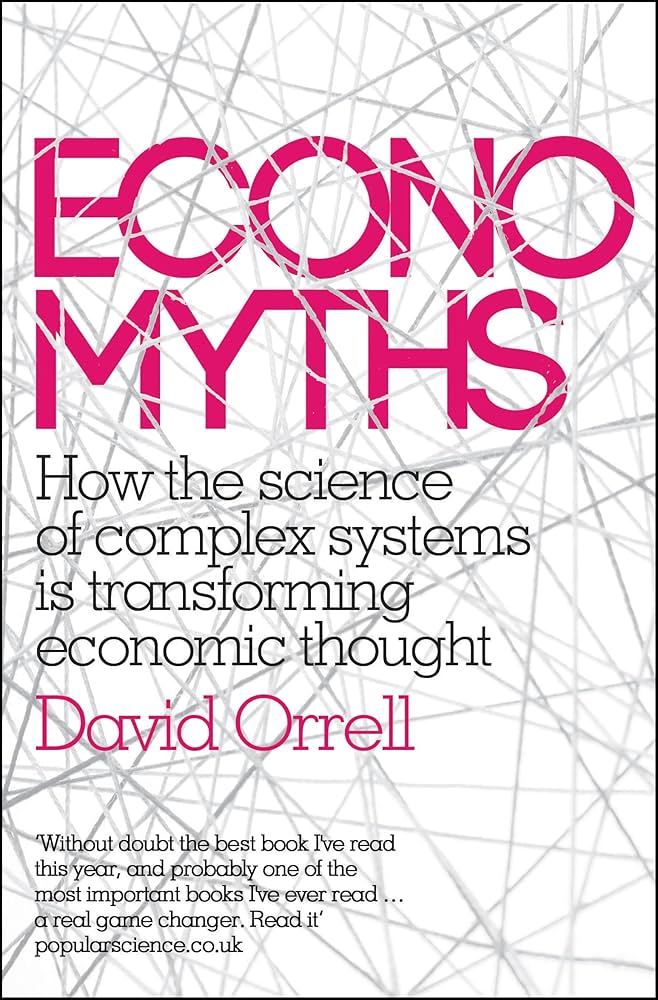
Economyths

Author: David Orrell | 320 Pages | Genre: Non-Fiction | Publisher: Icon Books | Year: 2012 | My Rating: 8/10

Every profession and subject has its myths, like medicine once believed illness was caused by imbalances of bodily humours! Astronomy once believed that Earth sat at the centre of the universe. Economics, despite its mathematical sophistication and Nobel Prizes, is no exception. David Orrell’s Economyths examine some of the stories modern economics tells us and ask whether they still deserve our trust.

What makes this book particularly engaging is that Orrell, a Canadian mathematician, is not writing as an economist defending one school of thought against another. Orrell approaches economics with the curiosity of an outsider and the scepticism of a scientist. He argues that many of the assumptions that underpin mainstream economic thinking are treated as objective truths when they are, in fact, useful stories, simplifications, and sometimes outright myths.

The book systematically dismantles ten such myths. Markets are not always efficient, people are not perfectly rational, money is not neutral, growth is not synonymous with wellbeing, and risk is not always measurable. These ideas may sound obvious after the financial crisis of 2008-09, market bubbles, and widening inequalities of recent decades, but Orrell demonstrates how they are deeply embedded in economic models, policy discussions, and public discussions.

One of the most refreshing aspects of the book is its insistence that economics is not a physics problem. Human societies are messy, emotional, political, and adaptive. Unlike atoms, people change their behaviour when circumstances change. They are influenced by culture, fear, aspiration, power, and relationships. Any attempt to reduce economic life to neat equations inevitably leaves something important out.

As someone working in the social development sector, I found myself reflecting on how often development conversations are shaped by economic assumptions that go unquestioned. We celebrate GDP growth while overlooking ecological degradation. We measure income while ignoring dignity, and optimise for efficiency while neglecting resilience. The book reminded me that the indicators we choose are never neutral, as they shape what we value and what we overlook.

The book encourages intellectual humility and reminds us that economic models are maps, not territories. Useful maps matter, but problems arise when we mistake them for reality itself. Reading Economyths also felt surprisingly relevant beyond economics. In many ways, the book is about the dangers of oversimplification. Whether in public policy, business strategy, or personal life, we often gravitate towards elegant frameworks because complexity is uncomfortable. Reality rarely conforms to tidy narratives, as the world is interconnected, dynamic, and often unpredictable.

The book questions whether economics is ultimately about how societies organise resources to support human development, and then what exactly are we optimising for? Wealth? Growth? Efficiency? Security? Sustainability? Happiness? The answer matters because different goals produce different systems and different outcomes.

More than a critique of economic theory, Economyths is a reminder that every model reflects a set of values. The challenge is not to abandon economics but to recognise its limits, question its assumptions, and remain open to perspectives that better capture the complexity of human life. I finished the book with greater scepticism toward economic certainties but also with greater appreciation for the importance of asking better questions. In a world increasingly driven by metrics, forecasts, and optimisation, that may be one of the most valuable lessons of all. Economyths is a thoughtful and provocative read for anyone interested in economics, public policy, development, business, or simply understanding the assumptions that quietly shape modern society.

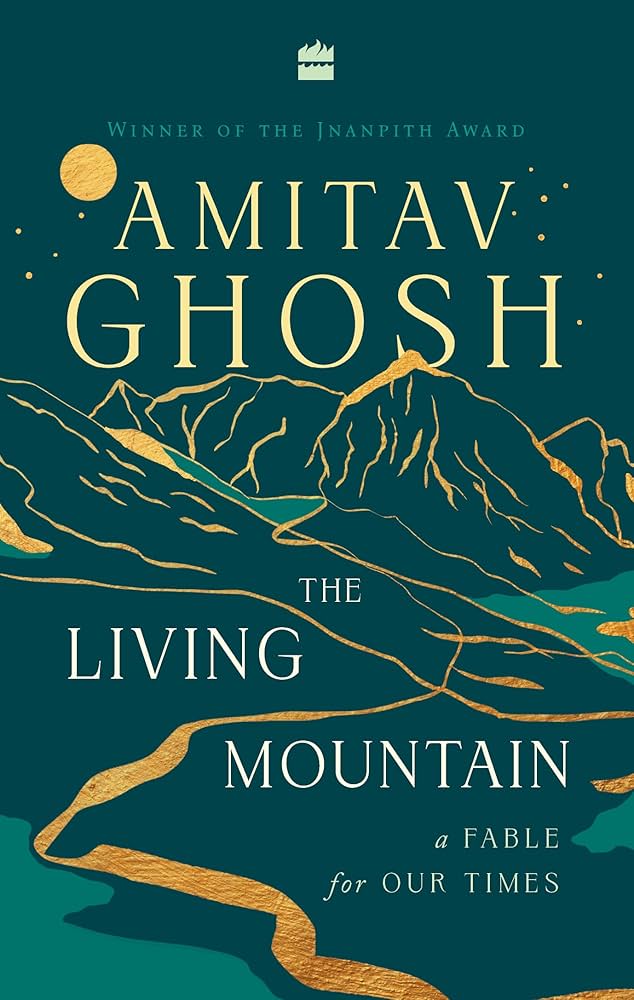
The Living Mountain

Author: Amitav Ghosh | 48 Pages | Genre: Fiction | Publisher: Fourth Estate India | Year: 2022 | My Rating: 7.5/10

The Living Mountain by Amitav Ghosh is a 48-page wonder of a striking ecological fable that narrates a profound moral argument. This book, published during the COVID-19 pandemic, feels less like a conventional story and more like a parable for the Anthropocene, urgent, allegorical, and quietly unsettling.

The narrative revolves around Mahaparbat, a sacred ‘living mountain’ revered by indigenous communities who coexist with it through restraint and ritual. This fragile balance is disrupted when outsiders, symbolically named ‘Anthropoi,’ arrive to exploit the mountain’s resources, triggering ecological and social collapse. The story, framed almost as a dream, distils humanity’s extractive relationship with nature into a stark moral conflict between reverence and domination.  

What makes the book compelling is its deliberate simplicity. Ghosh avoids dense scientific exposition, common in his earlier works like The Great Derangement, and instead uses myth and metaphor to communicate the climate crisis. This shift to fable is effective as it bypasses intellectual resistance and speaks directly to ethical intuition. The mountain is not just a setting but a sentient presence, embodying a worldview where nature is alive, reciprocal, and deserving of respect.

However, this same simplicity is also the book’s limitation. There is little narrative ambiguity or character complexity where the Anthropoi represent greed, the villagers represent harmony, and the trajectory is predictably tragic. Readers looking for layered storytelling or nuanced psychological depth may find it overly didactic. I thought that I was reading an Indian version of the Hollywood movie Avatar from 2009!

In a literary landscape crowded with sprawling climate narratives, The Living Mountain functions like a sharp intervention, almost a moral pamphlet disguised as fiction. It can be read in a single sitting, but its implications linger, forcing reflection on how modern development mirrors the destructive ascent of the Anthropoi.

The book also resonates with contemporary India and the Global South, where tensions between development and ecological preservation are immediate and visible. Ghosh subtly aligns indigenous knowledge systems with sustainability, challenging dominant models of progress that equate exploitation with advancement.The Living Mountain is less about storytelling and more about warning. This fable is didactic, symbolic, and purposeful. While it may lack narrative complexity, it succeeds as a powerful ecological allegory, reminding us that the crisis we face is not just environmental, but civilizational.

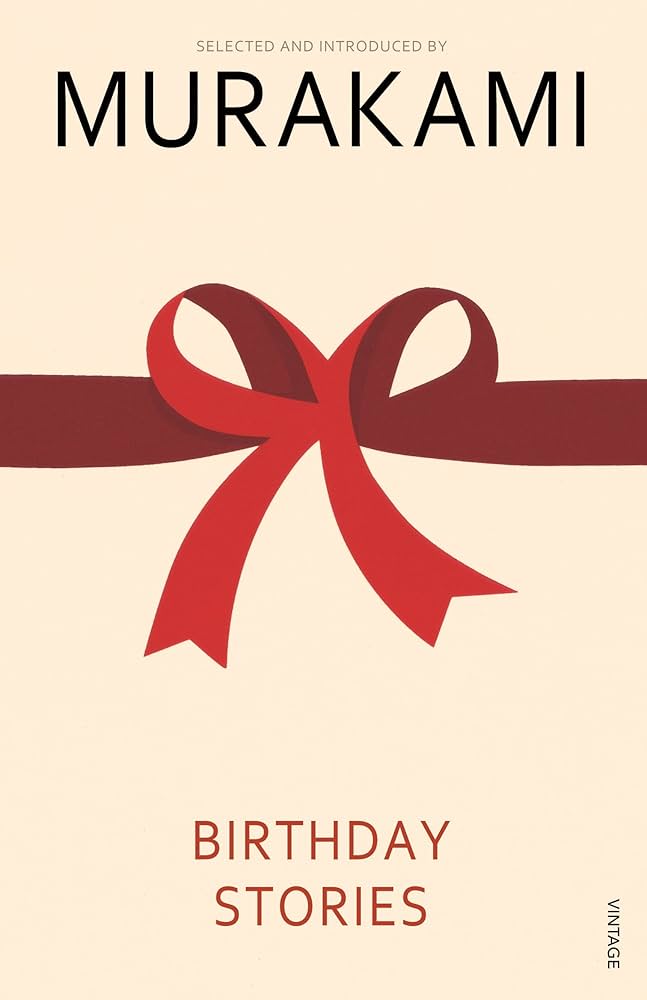
Birthday Stories

Edited by Haruki Murakami | 224 PagesGenre: Fiction | Publisher: Vintage Books | Year: 2006 | My Rating: 8/10

I’ve always loved receiving books on my birthdays, as far back as I can remember. When I was in elementary and middle school, my parents used to gift me books, and for several years, since I can recall, I often used my saved pocket money to buy myself the best books, something I still do on my birthdays. On my last birthday in 2025, a few friends and family members gifted me books that could keep me occupied for six months. Among them was “Birthday Stories” by Haruki Murakami. What an amazing way to start my birthday year!

Something is mesmerising about beginning a new year of one’s life with a book that itself revolves around birthdays, those strange markers of time when we pause, introspect and reflect, and sometimes feel the weight of becoming. Birthday Stories is not a novel by Murakami in the conventional sense, but a curated collection of short stories written by various authors, commissioned by Murakami for the Japanese magazine Monkey. The book is a rich anthology that explores how a single day in one’s life can hold joy, dread, memory, regret, longing, and transformation.

A birthday is such a universal ritual of cake, candles, wishes, gifts, and phone calls. Yet, through these 13 stories, the birthday becomes a moment where ordinary life tilts, revealing hidden fractures or unexpected openings. Some stories are gentle and reflective, others unsettling, a few laced with humour or quiet absurdity. As a reader beginning a personal ‘birthday year’ of reading, I found myself slipping into these stories with a peculiar intimacy, as if each one was asking me to examine my own relationship with time and personal evolution.

Murakami’s presence is felt more as a curator than as a dominating voice, which is refreshing. He resists the temptation to turn the anthology into a showcase of ‘Murakami-esque’ surrealism. Instead, he assembles a diverse range of voices that are playful, melancholic, and even experimental. The result is a collage of sensibilities that mirrors the many ways people experience birthdays, often not as a single emotion, but as a spectrum of moods. This diversity keeps the collection from becoming repetitive. Each story feels like a different room in the same house of memory and anticipation.

One of the pleasures of Birthday Stories is how subtly it captures the loneliness that can accompany birthdays. Even when surrounded by people, birthdays can heighten our awareness of time passing, unmet expectations, and relationships that have shifted gears. Several stories linger in this emotional space, portraying characters who are quietly dislocated on their special day. A birthday becomes a reminder of what has not happened as much as what has. This emotional undercurrent resonated deeply with me. Birthdays, after all, are checkpoints reviewing the year that has finished, and not just celebrations. They ask uncomfortable questions, like ‘where am I in my life? What have I become since the last candle was blown out?’

The collection of stories has a playfulness about it, a recognition that birthdays can be absurd social performances. Some stories gently mock the rituals we perform around ageing: the forced cheer, the obligatory gratitude, the awkward gifts. Others find wonder in small moments of a conversation, a remembered taste, a fleeting encounter that feels more meaningful than any grand celebration. This balance between lightness and introspection makes the book an easy yet thoughtful read. 

The anthology format also invites a particular kind of reading rhythm. I found myself reading one story at a time, allowing each to settle, and eventually taking 13 weeks to complete the book. It felt like savouring my favourite Lindt Intense Orange, one piece at a time. In doing so, Birthday Stories began to feel less like a book to be finished and more like a companion to the year ahead with short meditations on time, chance, and the quiet dramas of ordinary lives. It suited the idea of a reading calendar stretching over weeks, not rushing through but returning to in small, reflective doses.

Reading Birthday Stories at the start of my birthday year felt quietly symbolic. It reminded me that growing older is not a singular narrative of progress or decline, but a series of small, often unnoticed stories we accumulate. Some are strange, some tender, some unresolved. Murakami’s editorial touch brings these fragments together on how time moves through us. The book does not offer grand revelations about ageing or purpose; it brings an honest recognition of the ordinary magic and quiet unease that accompany the simple act of marking another year lived. In that sense, Birthday Stories was the perfect birthday gift. Not because it dazzled with literary fireworks, but because it sat beside me, nudging me to notice the emotional textures of passing time. As the months of my reading calendar unfold, I don’t think I will remember this book less for specific plots and more for the reflective awareness it left me with that every birthday, like every story, is a small doorway into who we are becoming.

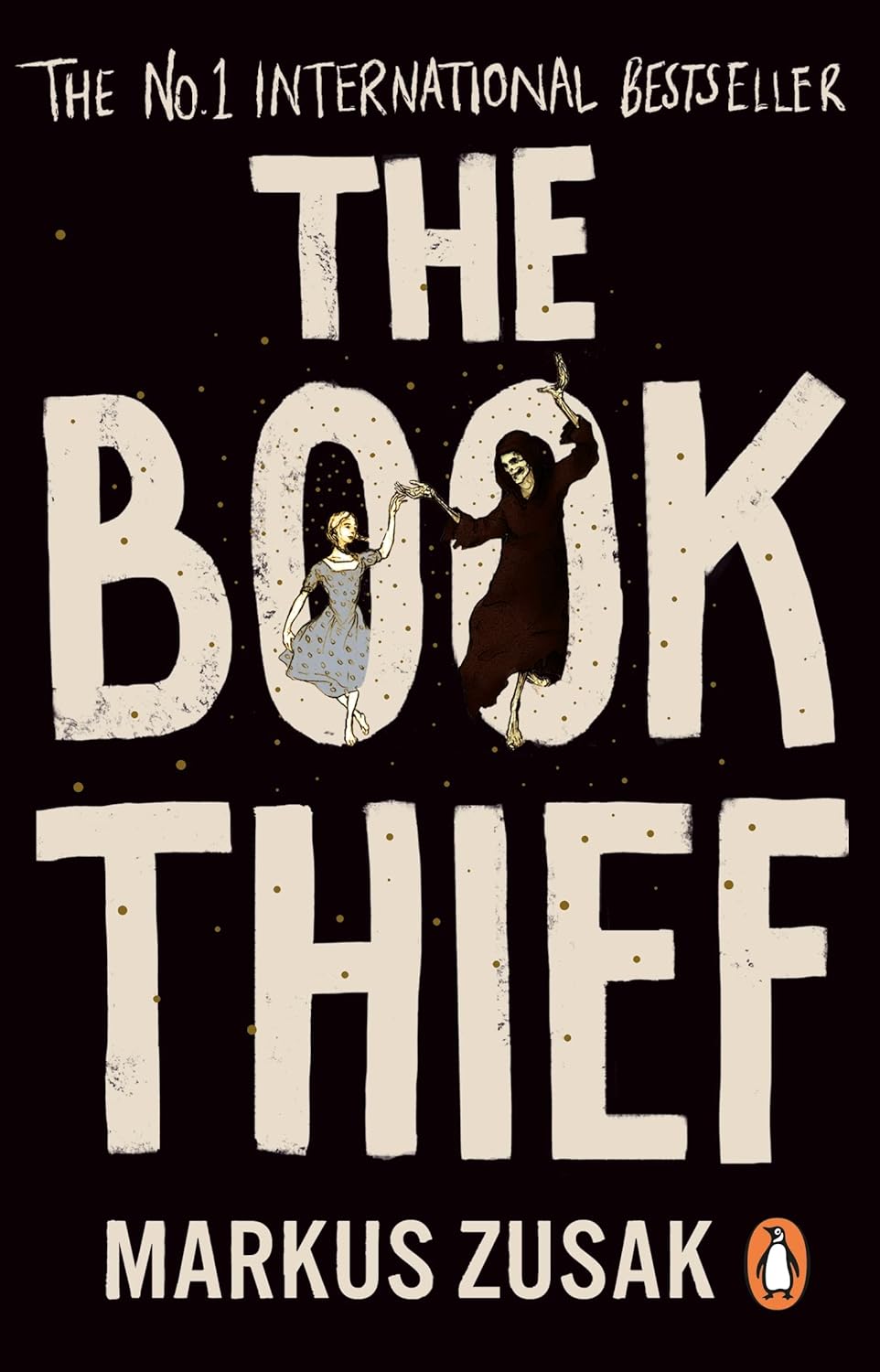
The Book Thief

Author: Markus Zusak | 560 PagesGenre: Historical Fiction | Publisher: First edition published by Alpha 2 Omega Books. My edition published by Penguin Random House (2018) | Year: 2005 | My Rating: 9/10

“The human heart is a line, whereas my own is a circle, and I have the endless ability to be in the right place at the right time. The consequence of this is that I’m always finding humans at their best and worst. I see their ugly and their beauty, and I wonder how the same thing can be both”
― Markus Zusak, The Book Thief

The Book Thief combines brutality and beauty with extraordinary grace, and I found it to be truly unique and spectacular. The novel is set in 1939 Nazi Germany, during World War II, where the story is a haunting exploration of love, loss, language, and the power of storytelling to preserve humanity. Narrated through the unexpected voice of Death, the novel redefines the familiar war narrative, which is both poetic and profoundly human.

The story centres on Liesel Meminger, a young girl sent to live with foster parents Hans and Rosa Hubermann in Molching, near Munich. After her brother dies en route to their new home in 1939, Liesel steals her first book, marking the beginning of her quiet rebellion through reading. Liesel’s foster father, Hans, patiently teaches her to read during late-night sessions in their basement. Liesel’s foster mother, Rosa, is gruff yet deeply protective. For Liesel, books become both a refuge and a means of resisting the Nazi regime’s manipulation of language.

When the Hubermanns shelter Max Vandenburg, a Jewish man fleeing Nazi persecution, Liesel’s world broadens. Her friendship with Max, rooted in fear and hope, highlights the power of imagination to endure hardship. Max’s stories, especially “The Word Shaker,” reinforce the novel’s central theme that ‘words can both harm and heal.’

The author’s decision to use Death as the narrator is both bold and effective. Death is portrayed as weary, compassionate, and reflective, observing humanity’s capacity for both cruelty and kindness. His tone shifts between irony and melancholy, providing both distance and intimacy. Death’s closing line, “I am haunted by humans,” underlines the novel’s meditation on human fragility and resilience.

Zusak removes sentimentality from tragedy through his narration by Death. I knew early in my reading that the story would end in loss, and Death tells plainly who will die, but this foreknowledge deepened rather than diminished my emotional investment. Zusak’s central theme of the power of language could not be more resonant. The Nazi regime weaponized words to manipulate a nation and justify genocide. In contrast, Liesel and Max reclaim language as a force for healing and remembrance. Books become tools of freedom, teaching Liesel not only literacy but empathy and defiance. There is also a profound theme of ordinary heroism. The Hubermanns, Liesel, and her friend Rudy Steiner resist in small, quiet ways, sharing bread with starving prisoners, hiding a Jew in their basement, refusing to let fear extinguish decency. These are acts of rebellion born not of ideology but of humanity.

The novel also explores how even in a time of death, there are moments of laughter, friendship, and love. It portrays war as a lived experience through the eyes of a child who learns too soon about loss but clings to hope through storytelling. Zusak’s prose is poetic, fragmented, and rhythmic, a departure from conventional realism. He uses vivid imagery and typographical experimentation, breaking the fourth wall and inserting short notes, sketches, and lists. These stylistic quirks mirror Death’s fragmented perception of events and add texture to the reading experience. Like his description of the sky as Death collects souls, “The sky was the colour of Jews.” It is shocking, ambiguous, and heartbreaking, capturing the moral weight of genocide in those six words. It made me pause at the sentence and page for a while, feeling the sentence rather than merely understanding. Liesel is one of contemporary literature’s most memorable protagonists, who is resilient, curious, and brave. Through her eyes, one can experience both the innocence of childhood and the disillusionment of war. Her evolution from an illiterate girl to a book thief who reads to others in bomb shelters symbolizes the redemptive arc of language.

The moral core of the novel, Hans Hubermann, embodies quiet courage. His act of painting over antisemitic graffiti and hiding Max is not grand heroism but the moral defiance of an ordinary man. Rosa, abrasive yet loving, offers a realism often absent in depictions of maternal figures. Rudy Steiner, Liesel’s best friend, brings youthful vitality and heartbreak into the story. His dream of kissing Liesel becomes a symbol of innocence stolen by war. Max, the Jewish fugitive, represents endurance and the power of imagination, writing his own story literally over the pages of “Mein Kampf,” transforming an instrument of hate into one of creation. Each character feels deeply human, flawed, frightened, and compassionate, and their relationships form the emotional spine of the novel.

The Book Thief focuses on ordinary citizens rather than soldiers or political figures. Zusak reminds us that history is lived by common people, those who make small moral choices every day. Since its first publication in 2005, The Book Thief has also been adapted into a film released in 2013. Its endurance over the years lies in its emotional honesty and narrative innovation. It teaches us that even in times of darkness, stories can keep the flame of humanity alive. The Book Thief is not just a story about war or death; it is about the defiance of the human spirit through words and empathy.

This novel reminded me that reading, too, is an act of resistance. It is a book that stays with you, not because of the horrors it depicts, but because of the beauty it finds amidst them. As Death himself observes, “It’s only small stories like this one that can make the bigger ones bearable.”

Light

Light: Empty Space (Kefahuchi Tract) 

by M. John Harrison | 336 PagesGenre: Science Fiction/Fantasy Literature | Publisher: First edition published by Gollancz. My edition published by Orion Publishing | Year: 2002 | My Rating: 9/10

“When you have done all things worth doing, you’re forced to start on things that aren’t”
― John Harrison, Light

Light is profoundly complex, dark, draining, unusual sci-fi mystery with a great ending. It has an uneven mosaic of two timelines filled with symbolism and curious characters. It’s not an easy read, nor it is likeable in the first instance. The book builds on you with the time you invest through the pages and remain invested in the story. 

The story bridging three stories from present Earth of 1999 and post Earth with distant and futuristic galactic settings in the year 2400, initially feels disjointed. Yet Harrison’s skill lies in gradually and subtly revealing the connections among these strands that are anchored by the mysterious cosmic phenomenon known as the Kefahuchi Tract. In this future, humanity is scattered across planets surrounding the Kefahuchi Tract, a space-time anomaly, a “singularity without an event horizon”. Violence and sex recur throughout in brusque, almost clinical tones as part of a broader theme that human depravity and detachment persist, whether in corporeal present or digital futurity.

In 1999 London, Michael Kaerney, quantum physicist and serial killer, is seeking an escape in a future that doesn’t yet exist – a quantum world that he hope to access through a breach of time and space. In this future, Seria Mau Genlicher has already sacrificed her body to merge into the systems of her starship, the White Cat. In this future, Ed Chianese, a drifter and adventurer, has ridden dynaflow ships, run old alien mazes, surfed stellar envelopes. Haunting them all through this maze of menace and mystery is the shadowy presence of the Shrander, a being with a horse skull for a head. 

I have wanted to read this book for so long, until I received it as a birthday gift 22 years later. This enigmatic blend of literary complexity, cyberpunk, and metaphysical dread is worth reading. However, this certainly is not a casual read. You need focus and dark scientific imagination to relish its thematic depth. Once you have read this, you would be hooked to read the two sequels Harrison wrote, completing the triology.