Circular economy solution for India’s cooking crisis

For the past decade, India’s clean cooking revolution was symbolised by a powerful image in the form of a woman in a rural village receiving her first LPG connection under the Pradhan Mantri Ujjwala Yojana (PMUY). It represented dignity, health, convenience, and liberation from the unpaid drudgery of firewood collection, respiratory illness, and smoky kitchens where women spent hours inhaling toxic fumes while cooking over firewood and dung cakes. And to be fair, it was a transformational policy intervention because it solved a critical access problem by expanding LPG connections to millions of low-income households. But as is often the case with development policy, solving access did not fully solve sustainability. 

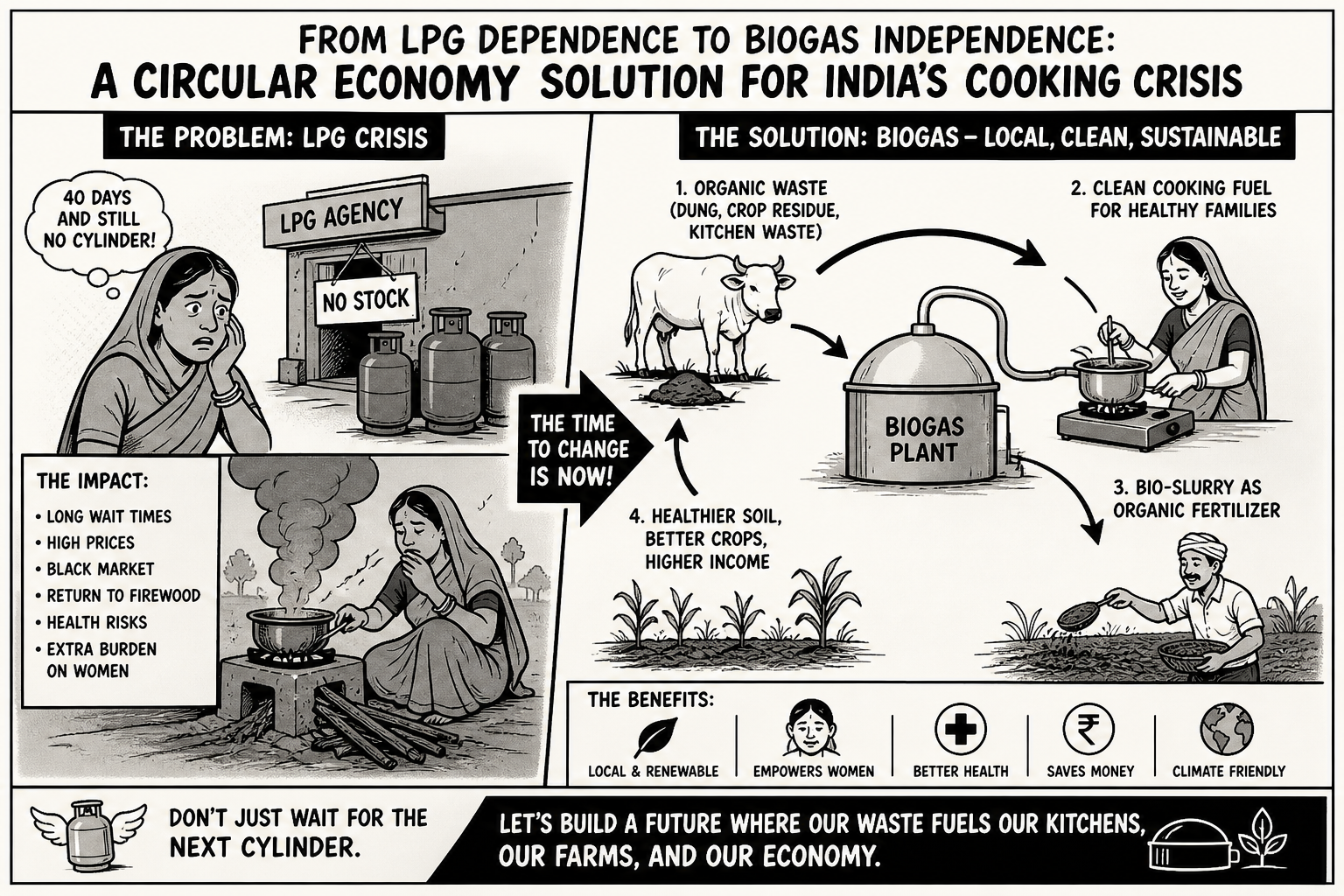
The recent conflict in West Asia has disrupted global energy supply chains and exposed India’s dangerous dependence on imported cooking fuel. With tensions around Iran and the closure of the Strait of Hormuz, India, where nearly 60% of LPG demand is met through imports, and over 90% of those imports typically transit through Hormuz, has found itself in an avoidable crisis. LPG supplies have tightened, transportation costs have increased, and delays in refill deliveries have become common in many rural districts and smaller towns. In several places, households are reportedly waiting over 40 days for a cylinder refill. Prices have surged, black market sales have flourished, and many low-income families are being pushed back toward firewood, charcoal, and kerosene. India is facing its first wave of ‘energy migrants’ as LPG shortages and soaring fuel prices have triggered reverse migration from cities to villages, especially from the major industrial hubs, including Delhi, Mumbai and Surat. A clean cooking transition built on imported fossil fuel has suddenly begun to look alarmingly vulnerable.

India imports a substantial share of its LPG requirements, and a large portion of these imports move through geopolitically sensitive shipping routes. While India is considered a leader in clean cooking access, millions of households remain dependent on an international supply chain shaped by wars, shipping disruptions, currency fluctuations, and global oil politics. The rural poor, as always, bear the highest burden of this volatility. A delayed LPG refill in an urban apartment may be an inconvenience, but in rural India, it often means a family returns to collecting wood, spending additional hours on unpaid labour, or cutting back on cooked meals altogether. Small roadside eateries reduce their menu options, and migrant workers spend more on food. Development gains achieved over the years begin reversing quietly, one delayed cylinder at a time.

Today, the villages struggling with LPG shortages often possess enormous untapped energy resources sitting in plain sight. Across rural India, cattle dung, agricultural residue, poultry waste, kitchen scraps, and other organic materials are abundantly available. India has one of the world’s largest livestock populations, producing massive quantities of dung every single day. Much of this waste is either left to decompose openly, releasing methane into the atmosphere, or converted into traditional dung cakes that burn inefficiently and create harmful smoke. What if this waste could instead become a reliable source of clean cooking fuel? That is precisely where biogas emerges not merely as an alternative, but as a strategic necessity.

Biogas is produced through anaerobic digestion, a process where organic waste decomposes in oxygen-free chambers and releases methane-rich gas that can be used for cooking. The leftover slurry becomes high-quality organic fertiliser. This is an excellent circular economy model where households generate fuel from waste while simultaneously reducing fertiliser costs for farming. For rural families, this means lower dependence on LPG refills, lower household expenditure, improved sanitation, reduced smoke exposure, and additional agricultural benefits. Unlike LPG, biogas is hyperlocal as it does not depend on international shipping routes, refinery outputs, or geopolitical stability. Unlike firewood, it burns cleanly. Unlike solar cookers, it works regardless of weather or time of day. Unlike electric induction stoves, it does not depend on stable electricity supply, which remains inconsistent in many rural areas. In a world increasingly shaped by supply chain disruptions, biogas offers resilience.

India does not need to invent this model from scratch because proven examples already exist. In parts of Rajasthan, Maharashtra, Gujarat, Karnataka, Punjab, and several other Indian states, communities have successfully adopted household and community biogas systems. Villages linked to dairy cooperatives have demonstrated how cattle waste can be transformed into reliable cooking fuel. Some communities have significantly reduced their dependence on LPG altogether. During recent supply disruptions, such villages and farming households were largely insulated from shortages because their cooking fuel was produced locally. No waiting for gas agencies, no inflated black-market prices, and no dependence on international conflict. Their kitchens continue to function because their fuel is local.

What makes India’s underinvestment in biogas particularly frustrating is that the policy architecture already exists. The government has long operated biogas programs through the Ministry of New and Renewable Energy, and initiatives like Sustainable Alternative Towards Affordable Transportation (SATAT) have promoted compressed biogas (CBG). Yet these efforts have often remained fragmented, underfunded, and treated as niche rural welfare programs rather than core components of national energy security. India tends to think big when discussing energy with large refineries, strategic petroleum reserves, international supply agreements, and mega infrastructure. These are important; however, true resilience often comes from decentralisation. A household biogas unit in a rural village may seem small compared to an oil refinery, but millions of such units can collectively create enormous national resilience.

Imagine if even a quarter of India’s livestock-owning rural households had access to functional biogas systems. Or village-level community digesters serving clusters of homes where individual ownership is not feasible. Imagine schools, Anganwadis, hostels, and community kitchens using biogas generated from local organic waste. Think of self-help groups running maintenance services for biogas units as local enterprises. Imagine MGNREGA funding village-level renewable energy infrastructure. Suddenly, biogas can move from being a sustainability experiment to becoming a serious economic and strategic asset.

The climate benefits further strengthen this strategy. Methane emissions from unmanaged livestock waste contribute significantly to global warming. Capturing this methane for productive use helps reduce greenhouse gas emissions. Every cubic meter unit of biogas reduces 2 tons CO2e/year. Reduced firewood usage can lower deforestation pressures. Bio-slurry reduces dependence on chemical fertilisers, moving towards sustainable agriculture. Lower LPG consumption reduces fossil fuel imports. Biogas sits at the intersection of climate policy, rural livelihoods, women’s empowerment, waste management, and energy security, a rare policy intervention that solves multiple problems simultaneously. Biogas directly contributes to SDG 5 (Gender Equality), SDG 7 (Affordable and Clean Energy), and Sustainable Energy for All (SE4ALL). It also delivers results that contribute to SDG 1 (Poverty Eradication), SDG 3 (Good Health and Well-being), and SDG 13 (Climate Action).

The current LPG crisis should serve as a warning. The war in the Middle East did not create India’s vulnerability, merely exposed it. A country aspiring to become a global economic power cannot allow millions of household kitchens to remain hostage to international conflict. Energy security cannot only be discussed in terms of crude oil imports and electricity generation. It must also include the daily cooking needs of ordinary citizens. The woman waiting 40 days for an LPG cylinder in a rural village is experiencing energy insecurity in its most human form. India’s future energy strategy must become far more diversified. LPG will continue to play an important role, particularly in urban areas and transitional markets. But it cannot remain the singular answer for rural cooking energy. Biogas offers India local control that imported LPG can never provide. It transforms waste into wealth, dependency into resilience, and vulnerability into self-reliance. In a century likely to be shaped by geopolitical instability, climate disruptions, and fragile global supply chains, the most strategic energy resource may not be buried deep underground or shipped across oceans. It may be sitting quietly in rural backyards, waiting for India to finally recognise its potential.

Measuring Entrepreneurial Attitude

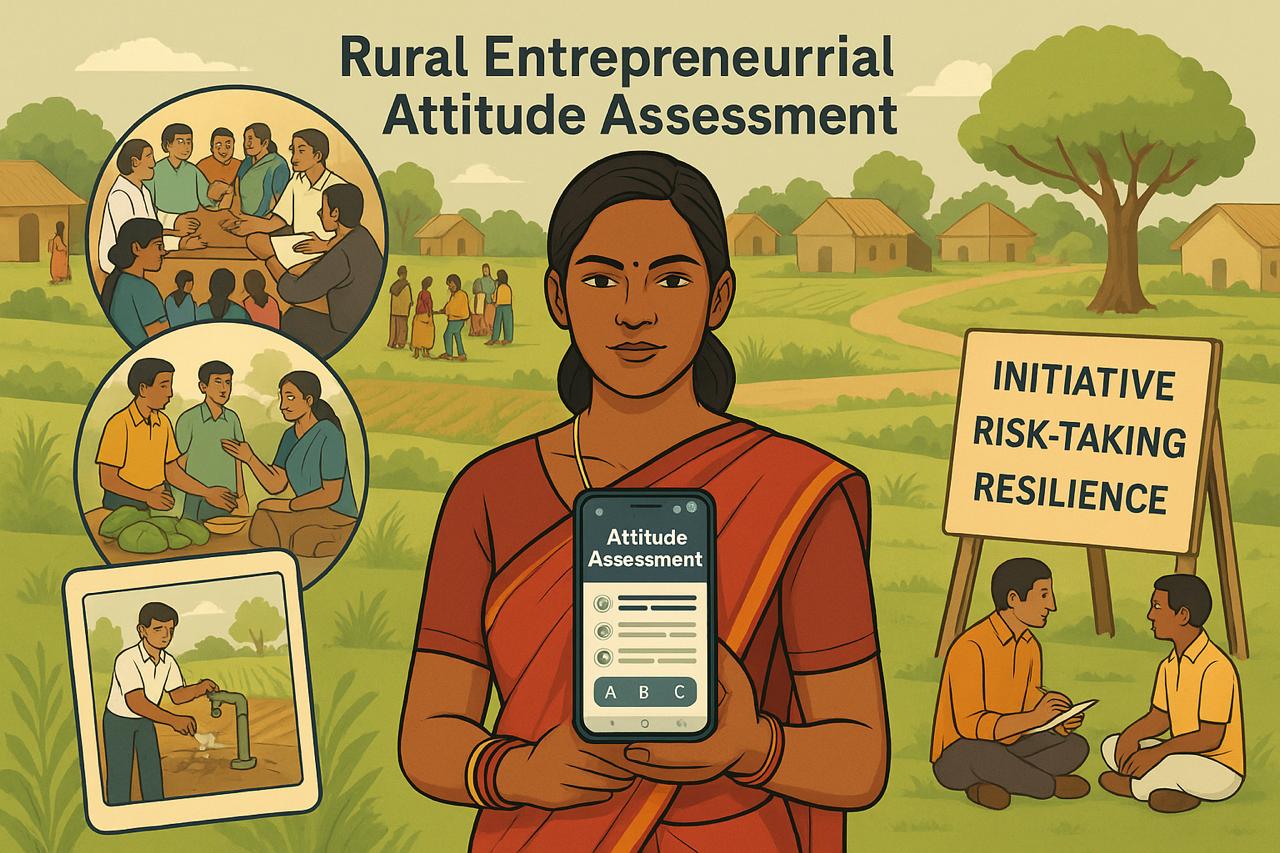
Generated using Ai

In India’s rural economy, entrepreneurship has emerged not merely as a means of livelihood but as a powerful solution for social and economic transformation. While skills development programs like Skill IndiaStartup India, and Deen Dayal Upadhyaya Grameen Kaushalya Yojana, and numerous capacity-building workshops by NGOs have made significant progress in imparting entrepreneurial aptitude, the more elusive and often underappreciated dimension is entrepreneurial attitude. This inner compass and entrepreneurial mindset, shaped by motivation and initiative, resilience, risk-taking ability, adaptability, and opportunity identification, is what ultimately sustains a venture through uncertainty.

Entrepreneurial aptitude is teachable. It usually comprises financial literacy, business planning, marketing, and digital skills, domains that lend themselves well to structured training modules. However, attitude is behavioural, psychological, and deeply contextual, especially in rural environments where social, cultural, and economic factors deeply influence individual motivation and risk behaviour.

While technical institutions, NGOs, and government agencies have scaled up skilling programs in rural areas, the absence of reliable frameworks to assess entrepreneurial attitude results in misdirected investments, high dropout rates, or business failures post-startup.

I believe that the right attitude matters more in rural entrepreneurship, or even entrepreneurship in general. Rural entrepreneurship has its unique challenges, like limited access to finance and markets, lack of required infrastructure, socio-cultural constraints, especially for women, and low institutional support. Here, it is the right attitude of the aspiring entrepreneur, which is a mix of persistence, opportunity-seeking, and resourcefulness, that becomes the decisive factor between failure and success.

Current programs lack structured mechanisms to assess and nurture entrepreneurial attitude at the rural level, leading to inefficient selection of beneficiaries, poor resource utilization, and low sustainability of rural enterprises. Therefore, the critical question remains how we can measure the right entrepreneurial attitude in an aspiring entrepreneur at the rural level.

The challenge of evaluating attitude is not technical; it is conceptual. We must shift from a one-size-fits-all model to contextual diagnostics that honour rural reality. It is easy to dismiss a rural woman hesitant to speak in public as lacking “confidence.” But her daily navigation of caste norms, household labour, social conditioning, and budget constraints may reflect resilience and resourcefulness of the highest order.

What we must measure is not textbook confidence, but contextual courage. In my two decades of working with rural entrepreneurs in India, from tribal regions of the Northeastern states to drought-prone villages in Rajasthan, I’ve learned that talent is universal, but opportunity is not. Entrepreneurial attitude is not the privilege of the urban educated; it is often deeply embedded in rural lived experiences.

Our systems must develop culturally sensitive, grassroots-rooted, participatory frameworks to identify, not implant, an entrepreneurial attitude. Only then can we build truly inclusive ecosystems that tap into the latent power of rural changemakers. The future of rural entrepreneurship lies not in the replication of urban models but in recognizing and nurturing the indigenous spark. It is time we built tools that are beyond skills, to the spirit.

I am developing a framework and associated tools and metrics for measuring entrepreneurial attitude for inclusive rural enterprise development. I am calling it, “Rural Entrepreneurial Attitude Identification and Development (READ) Framework”. I will publish it as my next post.

The cover image is generated using Ai.

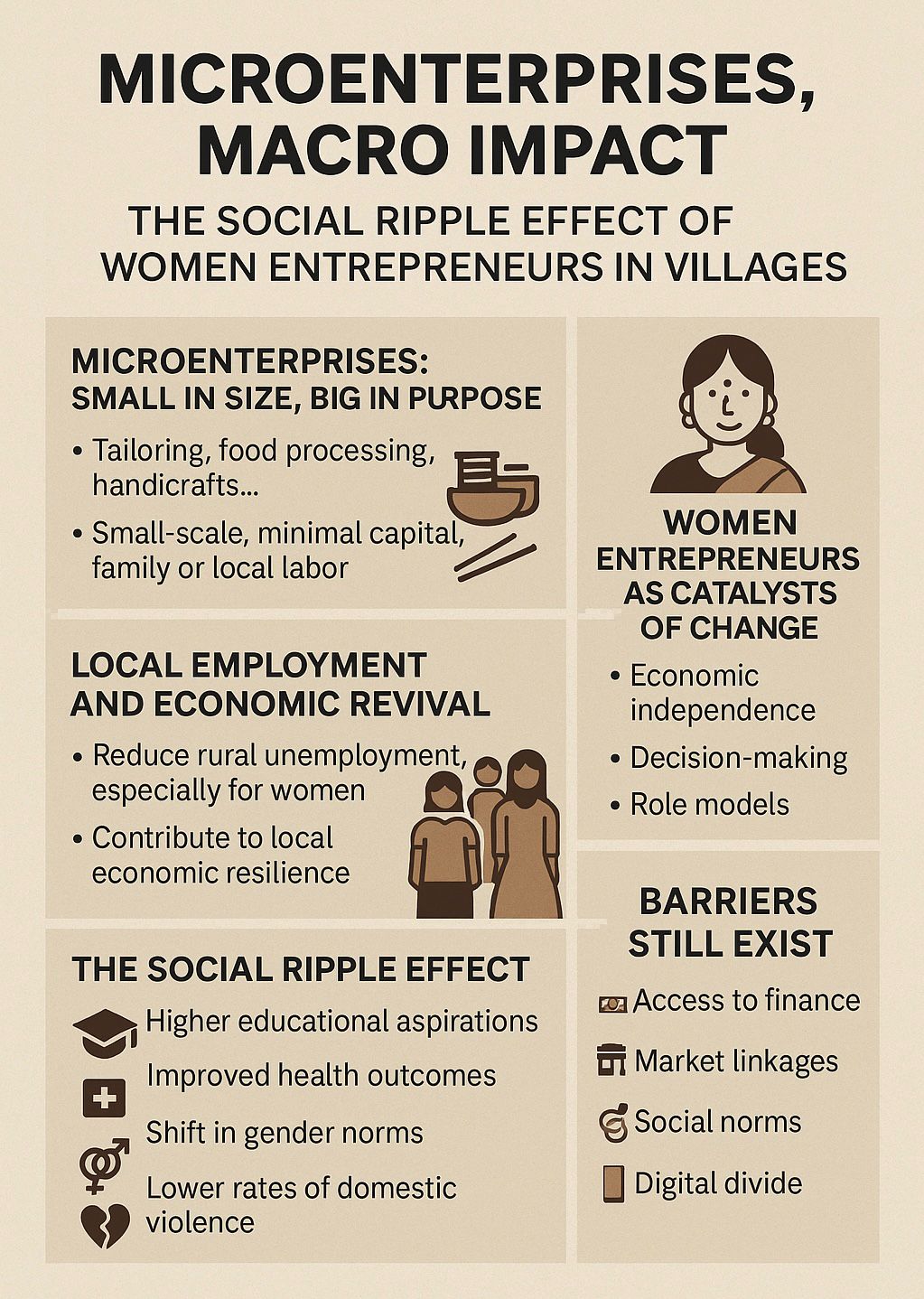
Microenterprises, Macro Impact: The transformative social impact by rural women entrepreneurs

Across India’s villages, a quieter and powerful transformation is unfolding, led by women entrepreneurs building microenterprises that are changing not just their lives but also contributing towards local prosperity.

In rural India, microenterprises (and many a time, even termed as nanoenterprises) are typically small-scale and often home-based ventures. These include tailoring shops, grocery stores, food processing units, poultry farms, handloom or handicraft businesses, among many others. They usually operate with minimal capital, often under INR 1 lakh, and rely on family support systems. While these businesses may appear modest on the surface, they’re laying the foundation for grassroots economic resilience and social transformation.

When a woman in a village starts a business, she’s not just earning an income, she’s stepping into a position of agency. She becomes a decision-maker, a provider, and importantly, a role model.

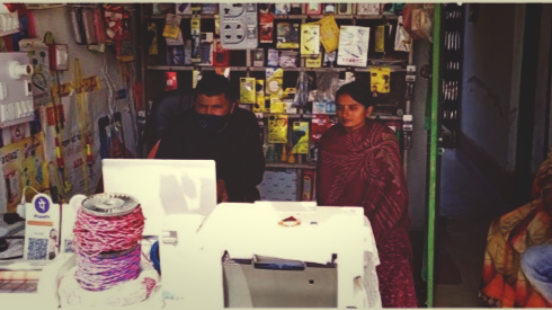
In Jharkhand, Shashi, a determined and resilient woman, has become a role model of empowerment in her village of Kura. With knowledge, financial and device support, she started her Digital Business, which became a hub of convenience and accessibility for people in her village and neighbouring villages. Her journey as a digital entrepreneur empowered her and gave her the agency to make a meaningful contribution to her community. Today, she’s also a Mukhiya (village head) and fondly known as “Digital Mukhiya”, continuing to be the voice of women’s empowerment.

Microenterprises help address the rural employment gap, especially for women who often can’t migrate or work outside the home due to social norms and family responsibilities. These businesses absorb local labour, retain economic value in the village, and reduce dependence on urban employment.

In Assam, Mintai’s Jacquard Handloom Weaving business now employs 3-4 local women who were previously unemployed. They earn and save, and for the first time, imagine futures that include good education for their children or owning a business.

This kind of bottom-up economic activity contributes to local economic resilience, the ability of communities to survive and thrive even during external shocks. The social impact generated by women entrepreneurs is profound. This often translates into higher educational aspirations for children, especially girls staying and completing their school education; increased income leading to better nutrition, access to healthcare and sanitation leading to improved health outcomes; acceptance and shift in gender norms; and financial independence gives women negotiating power within households leading to lower rates of domestic violence.

Despite their success, rural women entrepreneurs continue to face systemic challenges like, (a) collateral requirements and credit histories disqualify many from accessing formal loans, (b) getting products to larger and fairer markets remains a logistical challenge, (c) stifling social norms due to resistance from family or community, (d) accessing business education to develop ‘aptitude’ matching their entrepreneurial ‘attitude’, and ( e) digital divide due to limited access to smartphones and digital tools. While schemes like Stand-Up India and MUDRA loans have made progress, implementation gaps persist.

Rural women’s microenterprises are not side projects. They are economic engines, social change-makers, and community stabilizers. When one woman is empowered to start a business, a ripple begins, touching families, uplifting communities, and reshaping rural India from the ground up.

If you’re a policymaker, social investor, donor, or even just a storyteller, your support can help expand that ripple into a wave and finally a movement of economic security and resilience.

(All views are personal)

(Cover image generated using AI)

#Stand-upIndia #LetsDoMore

Importance of family counseling in entrepreneur selection

A person requires to possess both ‘can do’ attitude and aptitude for business to start on an entrepreneurial journey. But is that enough? Often an entrepreneur’s success is celebrated as an individual, but seldom the support system in the form of family and friends are discussed due to which the entrepreneur has achieved success. This is irrespective of the nature and size of business, geography, gender and backgrounds of the entrepreneur, and investment that goes in the venture.

While there’s no age to starting a business, the development programs I am working with focuses on women and girls in the age group of 18-50 years from poor and low-income households in the rural areas, with a desire to be self-employed and in future create employment for the youth in their respective villages. Selection processes of such aspiring entrepreneurial women vary depending on the model and approach of the programs. For the conventional businesses existing vocational skills and basic business acumen is analyzed, for others apart from these qualities, level of confidence, ability to invest their time, efforts, and money, general awareness, and other aptitude tests are conducted to measure the eligibility. What remains common across, and I believe is one of the most crucial factors for them to succeed from the word go is the support of their families, which remains the backbone of their ventures during and after the programmatic support. Therefore, post shortlisting of a potential entrepreneurial candidate, family counselling becomes the ultimate decider for her to join the program. And no, it has nothing to do with patriarchy. It’s same for any gender, and I think anywhere in the world. I have been a serial entrepreneur in my past, and have experienced in firsthand that without family support, I could have only done so much.

Family background including the size, type, and economic status can influence entrepreneurs’ and, therefore, entrepreneurship development. Even if the entrepreneurial spirit doesn’t necessarily run in the family, their support plays a vital role in an entrepreneur’s journey. Through their belief, encouragement, constant motivation, and involvement, families provide a nurturing environment for entrepreneurial growth.

In the process of meeting the family at their house in the village and discussing about their current livelihood and income sources, level of education in the household, aspirations and future plans, nature of relationship with the potential entrepreneurial candidate, sharing about the program, and earning their commitment of being the wind  beneath the wings of their daughters, daughters-in-law, wife, and in turn building trust is the main agenda of the family counselling. This support is the most important step and measure for induction of an aspiring candidate in our entrepreneurship program. Garnering this support is half the battle won for the aspiring entrepreneur.

The hard work has to be of the entrepreneur, but families give financial assistance and provides the seed capital for the start-up, provides emotional assistance keeping the morale high during those challenging and difficult times that every entrepreneur undergoes, promote the venture in their long curated networks both within and outside their villages through word-of-mouth, volunteer their time at the business to attend to customers and promotion, and more importantly celebrate even the small moments of joy together.

Apart from money and market, family support is the third pillar of the tripod, which drives entrepreneurial success.

If you want to know more about designing rural women entrepreneurship projects and/or learn about family-counselling for rural entrepreneurship, feel free to connect.

(First published on LinkedIn on 6th March 2024)

Bamboo Charcoal and Activated Carbon

Bamboo charcoal and active carbon are new products developed in recent years. Bamboo being of special microstructure possesses extreme absorbing and other special capacities after carbonization. Their uses in the areas of new technology are of importance.

Variety of Bamboo Charcoal: There are many kinds of bamboo charcoal. In line with their origin, bamboo charcoal can be divided into two parts: raw bamboo charcoal and charcoal stick of chips. Raw bamboo charcoal is made of small sized bamboo, old bamboo, and bamboo tops, roots, which are not fit for making other bamboo products. Charcoal stick of chips is made of residue from bamboo processing industries. In the process of making different kinds of industrialized products, there will be residue, which should be broken in chips, dried, and pressed into sticks before carbonization.

Full Post HERE