Why good projects struggle for funding

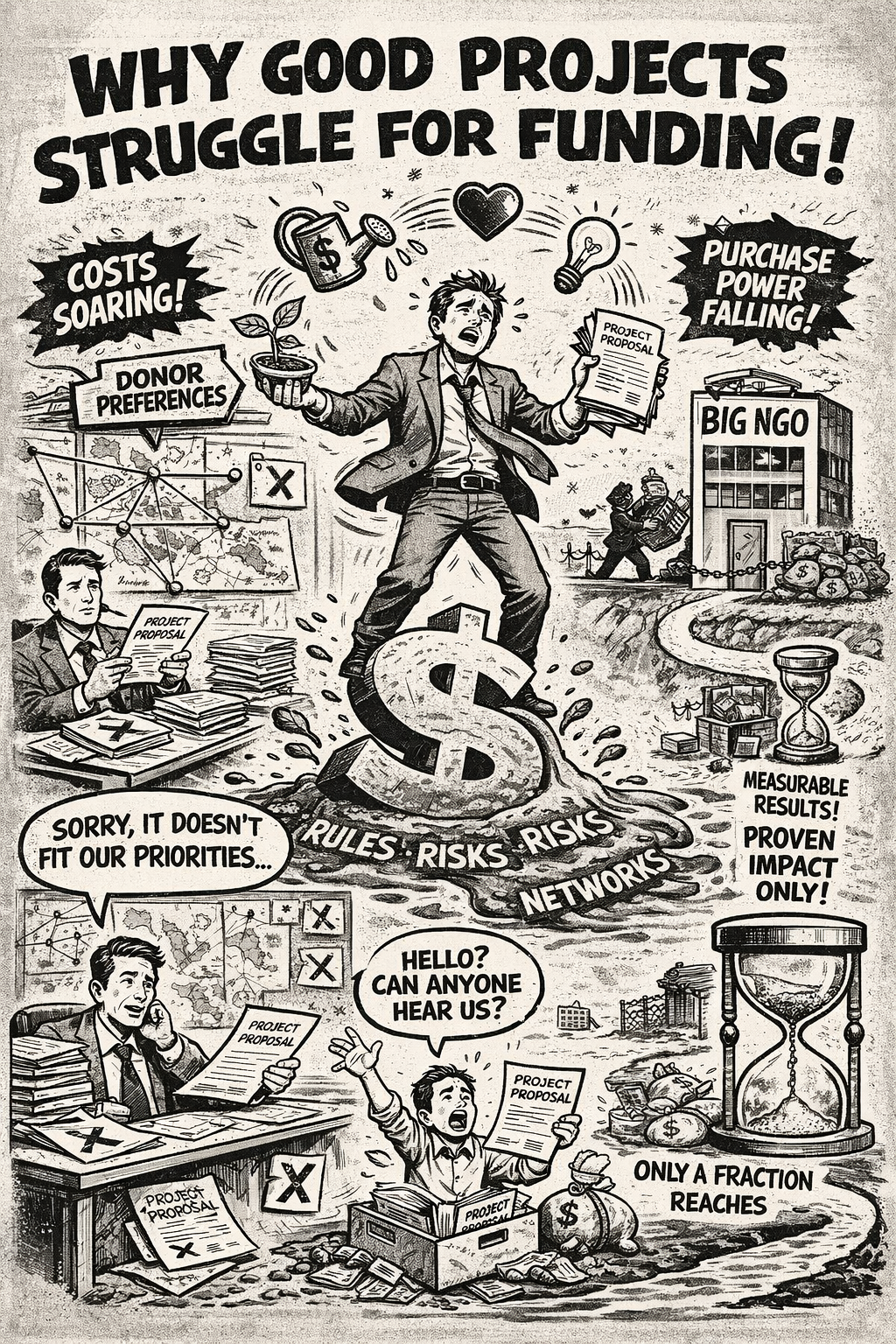
The social impact sector’s irony is that some of the most thoughtful, community-centred, transformative projects struggle to secure funding, while others that are not so well designed, and sometimes even superficial, find their way into donor portfolios. This contradiction is often explained as a failure of proposal writing or organisational capacity, but such explanations only scratch the surface. The deeper truth lies in understanding donor behaviour, including the incentives, constraints, and biases that shape funding decisions. Good projects are overlooked not because they lack merit, as ‘merit’ is not the primary currency in the funding ecosystem, but because of factors like alignment, risk perception, measurability, and institutional incentives.

At the core of the problem is the simple fact that donors do not fund the ‘best’ projects; instead, they support those that align with their priorities. Every donor operates within a specific thematic, geographic, and strategic framework, often influenced by board directives, political factors, or institutional legacy. A project that is highly relevant to a particular community may still be rejected if it does not fit neatly into a donor’s current focus areas. This creates a subtle but significant distortion in the sector, as organisations begin to design projects around donors’ language and preferences rather than the lived realities of communities. In this process, genuinely valuable ideas can become invisible, not because they lack worth, but because they are misaligned with funding narratives.

This is further compounded by the deeply risk-averse nature of development funding. Donors are not neutral actors, and they are accountable upward to their boards, governments, shareholders, or trustees. This shapes a cautious approach to funding, where the emphasis is on minimising risk rather than maximising impact. Established nonprofits with proven track records are preferred over emerging grassroots organisations, even when the latter may have deeper contextual understanding. Similarly, tried-and-tested models are favoured over experimental or innovative approaches. The consequence is a filtering mechanism that systematically excludes many high-potential projects simply because they appear uncertain or difficult to manage. Ironically, the very qualities like innovation, localisation, and adaptability that make a project transformative are often the ones that make it seem risky.

Now there’s a growing emphasis on measurability in funding decisions. Donors desire clear metrics, defined outputs, and quantifiable results for results-based management and data-driven accountability of projects. While this has enhanced transparency, it has also created a bias toward interventions that can demonstrate immediate, tangible results. Projects focused on infrastructure, service delivery, or training programmes tend to perform better because their outputs are easily measurable. Conversely, initiatives aimed at changing social norms, empowering communities, or strengthening institutions struggle to articulate their impact within the same frameworks. The most complex and deeply rooted development challenges are often the least measurable within the funding cycle, and therefore the least fundable. Good projects operating in these areas are disadvantaged not because they are ineffective, but because their effectiveness cannot be readily quantified.

The nature of donor engagement further complicates the picture, despite frequent references to ‘partnership,’ much of development funding remains transactional. Organisations submit proposals in competitive, opaque processes with limited opportunity for dialogue or feedback. In such an environment, relationships matter enormously. Organisations with prior visibility, networks, or access to donor ecosystems often have a significant advantage, even if their projects are not fundamentally stronger. Trust, built over time, can outweigh the intrinsic quality of a proposal. Conversely, new or lesser-known organisations, particularly those operating at the grassroots level, find it difficult to break into these networks. As a result, good projects often fail not on their own terms, but because they are evaluated in isolation, without the benefit of relational context.

This dynamic is closely tied to a broader structural bias within the global development ecosystem. Local organisations, despite being closest to the communities they serve, receive only a small fraction of direct funding. Donors frequently cite concerns around compliance, financial risk, and administrative capacity, which leads them to channel funds through larger intermediaries. While this may simplify management from the donor’s perspective, it creates a distance between resources and realities. Local initiatives, which may be highly effective and deeply embedded, often remain underfunded or entirely excluded. This is not merely an operational issue, but reflects an implicit hierarchy of trust, where proximity to power and familiarity with donor systems are valued over contextual knowledge and lived experience.

Equally important is what might be called the ‘proposal illusion’, with the tendency to compare the quality of a project with the quality of its documentation. In practice, donors assess proposals, not projects. This places a premium on articulation, structure, and the ability to translate complex realities into donor-friendly language. Organisations with access to skilled writers, consultants, or international exposure are better positioned to succeed, even if their fieldwork is not exceptional. On the other hand, grassroots organisations that may be doing outstanding work often struggle to present it in ways that resonate with donor expectations. The result is a system where storytelling can overshadow reality, and where good projects are overlooked because they are not packaged effectively.

Time horizons further skew funding decisions as donors tend to operate within short funding cycles, typically ranging from one to three years, with success evaluated within this limited timeframe. This creates a preference for projects that can demonstrate quick wins, rather than those that require sustained engagement over longer periods. Yet most of the development challenges, like education reform, livelihood transformation, and social cohesion, are inherently long-term and demand patience, continuity, and iterative learning. When funding is short-term, even well-designed projects can struggle to show meaningful results, making them less attractive to donors. This leads to what is often described as the ‘pilot trap,’ where innovative ideas receive initial funding but fail to scale or sustain due to a lack of long-term commitment.

Another big challenge is the persistent reluctance to fund organisational overheads. Donors often prefer to allocate resources directly to programmatic activities, placing limits on administrative costs such as salaries, systems, and governance. This undermines the very foundations that enable effective implementation. Strong organisations require robust systems, skilled personnel, and institutional stability. When these are underfunded, the quality of implementation suffers, reinforcing donor perceptions of risk and inefficiency. This creates a vicious cycle in which organisations are unable to build capacity, and good projects become difficult to execute at scale.

Underlying all of these factors are the incentives that shape donor behaviour. Funding decisions are rarely neutral as they are often influenced by a range of external and internal considerations. Corporate donors are often guided by brand alignment and visibility, favouring projects that can be showcased or communicated easily. Philanthropic foundations may be influenced by leadership vision, legacy goals, or thematic interests. In each case, the logic of funding extends beyond impact alone. Good projects that do not align with these broader incentives may struggle to gain traction, regardless of their potential.

Bilateral and multilateral donors operate within geopolitical frameworks, where aid allocation may reflect strategic interests as much as development priorities. In the wake of global economic slowdowns, traditional sources of Official Development Assistance (ODA) are shrinking. The U.S., U.K., and several European governments have all announced significant cuts to their ODA budgets. These reductions should have sparked debates about the failures of the aid system, but they largely passed with little reflection. The outcome is a development finance environment that’s simultaneously more selective and more risk-averse. Funders now prioritise large-scale, measurable, and politically ‘safe’ projects that can boast short-term, quantifiable results. Small-scale social initiatives, particularly those addressing systemic or cultural issues like inequality or governance, find themselves outside the funding radar. Even when progressive funding streams exist, for example, climate justice or inclusive innovation programs, they come wrapped in new conditionalities of alignment with national development strategies, ESG benchmarks, or private-sector co-financing. These conditions further alienate grassroots actors who can’t meet such formal requirements.

It is also important to acknowledge a more fundamental constraint of scarcity, as the pool of available funding is limited, while the number of worthy projects is vast. Even in a perfectly functioning system, not all good ideas can be supported. This introduces an element of competition that is not purely based on merit. Projects must not only be good, but must also be timely, visible, and strategically positioned. In such an environment, marginal differences in presentation, alignment, or relationships can determine outcomes, leaving many strong proposals unfunded.

Projects that are technically sound but insufficiently rooted in community realities often struggle to convince donors of their sustainability. Funders have been increasingly looking for evidence of participation, co-creation, and local ownership. However, these elements are difficult to demonstrate within conventional proposal formats, leading to a gap between genuine engagement and its representation. Good projects that are deeply participatory may still fall short if they cannot adequately convey this dimension to donors.

These dynamics suggest that the funding ecosystem does not necessarily reward the intrinsic quality of projects. Instead, it rewards alignment, clarity, measurability, and perceived reliability. This does not mean that donors are acting in bad faith; rather, they are responding to their own constraints and accountability structures. The system, in many ways, is functioning as designed. However, the consequences are significant, as innovative, context-specific, and potentially transformative projects often remain unfunded, while safer, more conventional interventions dominate.If we are serious about tackling poverty, inequality, and climate injustice, we must start by rethinking how funding itself operates. It is not enough to design good projects, but one must also learn to translate them into the language of donors without diluting their essence. This requires strategic proposal architecture, effective communication, and relationship-building. For donors, the challenge is more profound as it involves rethinking risk, expanding definitions of impact, and creating funding mechanisms that are flexible, inclusive, and long-term. Without such shifts, the sector will continue to produce good ideas that never see the light of day, not because they are unworthy, but because they do not fit the system that is meant to support them.

Cracking the fundraising code

Fundraising is the art and science of turning good intentions into actual impact! Throughout my career I have been raising funds for social impact, for causes of basic necessities like food, water, shelter, livelihood to a green economy, bridges over rivers to even a roller coaster in a developed country. I have been actively involved in raising funds for these causes from as small as $10 up to $50 million from a variety of sources and instruments. As the Head of Development at a nonprofit organization for social impact projects in India, I’ve navigated the corridors of CSR leaderships and foundation offices, and let me tell you, it’s not always smooth sailing. Often, it feels like trying to surf a tsunami with a paper boat!

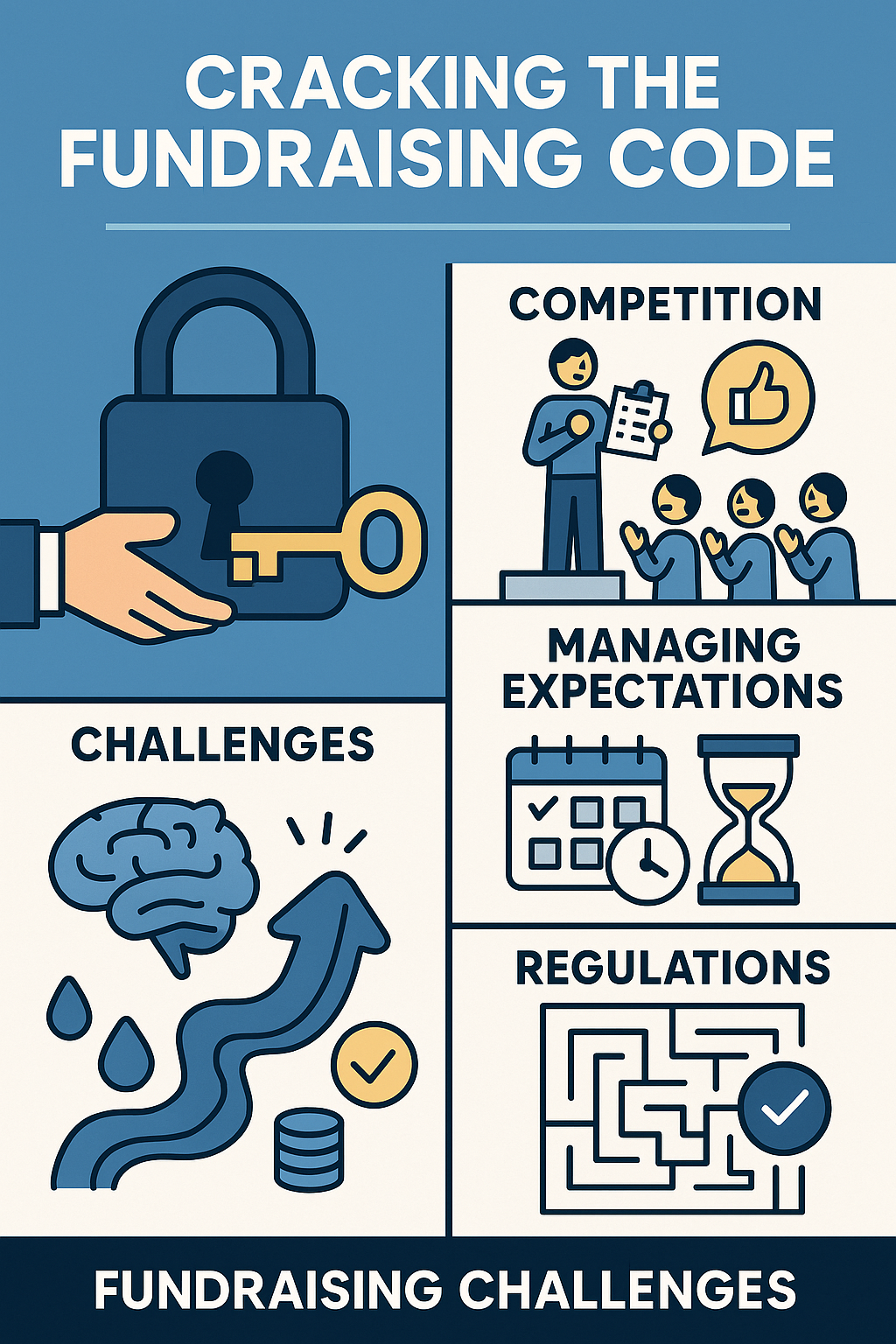
Corporate Social Responsibility isn’t just a box to tick. It’s a strategic dance between business goals, stakeholder expectations, and social impact. With so many initiatives competing for attention, securing a dedicated slice of the CSR pie often feels like requesting a moment on a crowded stage, and convincing the audience that your act is worth their applause.

Foundations receive hundreds of pitches, each expecting to win the golden ticket. Getting noticed requires more than a well-crafted proposal; it demands storytelling that resonates and relationships that endure. Sometimes, it’s less about what you say and more about how you say it, and how quickly you can make a compelling case before the next shiny pitch distracts them.

Donors want results, but impact is often a marathon, not a sprint. Managing expectations without being over promising is an art. We’ve all faced the uncomfortable moment of explaining why a project’s full fruits may take years to ripen, a diplomatic tightrope walk that can test even the most seasoned fundraiser.

India’s complex regulatory landscape can feel like a labyrinth where one wrong turn can lead to delays or disapprovals. Keeping up with FCRA regulations, tax exemptions, and reporting requirements is a full-time job, and sometimes, it’s like speaking a different language altogether. Ironically, securing funds for a project often means fundraising itself. Resource constraints can limit outreach and follow-up, turning what should be a strategic focus into a haphazard firefight.

A mix of storytelling, patience, relationship-building, and a dash of humour helps. When engaging with CSR and foundations, understanding their priorities, aligning your mission with their vision, and communicating impact clearly can turn challenges into opportunities.

To my fellow fundraisers who are navigating this maze: keep your spirits high, your pitches sharper, and remember, every “no” is just a “yes” in disguise waiting to happen!

Let’s keep the conversation going. Share your stories or tips below, because in the game of social impact, we’re all in this together.

Download a brutally honest fundraising checklist!

Navigating the Road to Sustainability for Nonprofits in India

Source: Idea taken from Foraker group model

Sustainability has become a buzzword across industries, and for nonprofits in India, it’s more than just a trend—it’s a necessity! Sustainability in the nonprofit sector is a critical issue that encompasses not only environmental stewardship but also financial stability, organizational resilience, and long-term impact. Nonprofits, by their nature, are dedicated to addressing social, economic, and environmental challenges, often with limited resources and high expectations. With India’s rapid economic shifts and evolving social landscape, understanding and overcoming these hurdles is essential for nonprofits striving to make a lasting difference.

Key Challenges Facing Nonprofits in India

1. Funding Instability:  One of the most significant challenges facing nonprofits is financial instability. Nonprofits rely heavily on donor contributions, government grants, and CSR grants, which can be unpredictable and subject to economic fluctuations. Furthermore, many donors prefer to fund specific projects rather than general operations, leaving nonprofits vulnerable to financial shortfalls. The global economy, changing donor priorities, and a lack of diversified income streams often impact an organization’s ability to plan and execute long-term projects. This gets further compounded by competition among nonprofits for limited resources.

Nonprofits must constantly innovate and demonstrate their impact to attract and retain donors. This requires significant investment in fundraising and partnership strategies, donor relations, and marketing, which are resource-intensive and divert attention from core mission activities, often resulting in chicken-egg situations.

2. Administrative and Operational Inefficiencies:  Many nonprofits in India struggle with limited administrative resources and inefficient operational practices. Limited resources lead to outdated technologies, inefficient processes, and a lack of professional expertise. Inefficiencies in management, compliance, accounting, and reporting undermine the effectiveness of programs and reduce transparency, negatively impacting stakeholders and donors’ trust. This is more challenging for smaller organizations with limited administrative capacity.

3. Regulatory and Compliance Maze: Managing the complex regulatory landscape in India is challenging for nonprofits. Compliance with legal requirements, such as the Foreign Contribution Regulation Act (FCRA) and the Goods and Services Tax (GST), requires careful attention to detail and significant administrative effort. Changes in regulations and stringent reporting requirements add to the administrative burden. Staying compliant while adapting to new regulations can strain organizational resources and divert attention from mission-critical activities.

4. Capacity Building and Skill Gaps: The nonprofit sector often faces challenges related to human resources. There is a growing need for skilled professionals who can handle strategic planning, fundraising, and program management, leading to organizational sustainability. The sector often faces challenges in attracting and retaining skilled professionals due to budget constraints and lower salaries compared to the private sector.

Capacity building requires investing in learning and development for employees. However, many organizations lack the resources to provide comprehensive training programs or to hire experienced professionals. This often limits their ability to effectively manage programs, drive strategic initiatives, and ensure organizational growth.

5. Measuring Impact: Measuring and presenting evidence-backed impact is essential for donor confidence and organizational effectiveness. Nonprofits need to develop robust monitoring and evaluation frameworks to assess the outcomes and effectiveness of their programs. However, many organizations struggle with setting up these systems due to limited resources and expertise.

 Strategies for Enhancing Sustainability

1. Diversifying Funding Sources: To address funding instability, nonprofits need to explore multiple revenue streams. This includes engaging in social entrepreneurship and blended finance opportunities, establishing partnerships with businesses, leveraging online crowdfunding platforms, and digital fundraising. Creating a diversified funding base helps in reducing dependency on a single source and enhances financial stability.

2. Leveraging and Embracing Technology: Technology offers significant opportunities for enhancing operational efficiency and reach. Digital tools can streamline administrative processes, improve data management, and facilitate better communication with stakeholders through online platforms and social media. Adopting technology also opens avenues for online fundraising and virtual program delivery such as webinars, workshops, and training.

3. Building Stronger Partnerships: Collaboration with other nonprofits, governmental agencies, and private sector organizations can amplify the impact of initiatives and improve sustainability. Strategic partnerships can provide access to additional resources, expertise, and networks. Strategic alliances can also lead to cost savings through shared services and joint initiatives. By working together, organizations can leverage each other’s strengths, reduce duplication of efforts, and achieve greater impact.

4. Investing in Human Capital: Prioritizing the development of human resources is crucial for organizational growth and sustainability. Nonprofits should invest in training and capacity-building programs for their staff and volunteers through training programs, workshops, and professional development opportunities. Creating a culture of continuous learning and career advancement opportunities can enhance program delivery, improve management practices, organizational resilience, and employee retention. Leadership development is particularly important for long-term sustainability. Cultivating strong leaders within the organization can drive strategic planning, innovation, and effective decision-making.

5. Enhancing Transparency and Accountability: Building trust with stakeholders through transparency and accountability is essential for long-term success. Nonprofits should adopt the best practices in financial management, regularly publish impact reports, and engage in open communication with donors and stakeholders. Transparency not only attracts more funding but also strengthens community support. Implementing robust internal controls and conducting regular audits can help maintain financial integrity and accountability. Additionally, engaging stakeholders in decision-making processes and soliciting feedback can enhance organizational credibility and responsiveness.

6. Adopting Sustainable Practices: Integrating sustainability into program design and organizational operations can drive long-term impact. Nonprofits should consider the environmental impact of their activities and seek to minimize their footprint. This might involve adopting green practices, such as reducing waste, conserving energy, and promoting eco-friendly initiatives. Sustainable practices also include ensuring the long-term viability of programs. This involves designing initiatives that can be sustained over time, building local capacity, and fostering community ownership. By promoting sustainability within programs, nonprofits can create a transformative impact.

The road to nonprofit sustainability is full of challenges, but with innovation, partnership, and a commitment to continuous improvement, nonprofits can navigate these challenges and continue to make a meaningful impact on society.  As the sector is continuously evolving, embracing sustainability will be key to ensuring that nonprofits can adapt to changing circumstances continue to remain steadfast in their mission, and drive positive social change for years to come.

Disclaimer: The opinions expressed are those of the author and do not purport to reflect the views or opinions of any organization, foundation, CSR, non-profit or others

Impact Funding in the time of COVID-19

Photo source: The New Humanitarian

The global pandemic COVID-19 has triggered the most severe economic recession in nearly a century and is causing enormous damage to people’s health, jobs, and well-being. It has changed the social sector landscape and will continue to impact the sector for the next few years. In the short term, since March 2020, change in the funding trends is already being witnessed by non-profits, especially of the CSR in India, with majority of them contributing to the PM Cares, CM Relief Funds and contributions towards local relief work like food and PPE distribution. The unexpected crisis created due to migrant labour returning to their home states, we are witnessing some of the bigger CSRs channeling their funds towards ‘Rehabilitation during and post COVID-19’ phase with a focus on re-skilling, sustainable livelihoods and job creation, BCC, and food & nutrition security.

Until the next 12-18 months, there will be opportunities for partnerships under the ‘rehabilitation lens’ across geographies, but more focused on states like Bihar, Uttar Pradesh, Madhya Pradesh, Chhattisgarh, Odisha, Assam, and Jharkhand. Apart from relief & rehabilitation, Health (preventive health, strengthening local health systems at block and village levels, and co-morbidity diseases like TB, HIV/AIDS, Diabetes, etc.) and Education (especially working with a sudden increase in out-of-school-children due to in-migration, and skilling School teachers in rural and sub-urban India in virtual classrooms, course development and delivery, and digital communication) are other areas, where donor funds are potentially going to be invested. In other areas, especially environment and climate change (unless CSRs & foundation’s core focus is environment), it is bound to be severe funding cuts (40%-60% from pre-COVID times) over short to mid-term.

Non-profits need to continue building strong partnership with their existing CSR Partners, to continue getting support to even those projects that are not COVID aligned, and build new partnerships using COVID aligned models. It is expected that Government funding will increase and so will partnership opportunities in most of the areas like livelihoods, education and health using innovative implementation mechanisms and digital communication. The World Bank has announced large assistance programs for India, which will be implemented through state governments and may bring non-profits with the opportunities of large partnerships between now and 2025. The current changed funding trend will more or less continue in 2021. However bigger CSR and foundations will see a potential downside of 30-50% in their funding allocations.

As restrictions are being eased world-wide, the path to global economic recovery remains highly uncertain with 6-7.5% negative growth in 2020, it is expected to climb back to around 2.8-3% in 2021 and move slowly towards recovery. In the long run, 2022-25, when both national and international economies are strongly on the recovery path, it is expected that several international aid agencies, which had stopped direct funding in Indian development sector, once again will open a window for 3-5 years of funding, and number of funding opportunities for India and other developing countries will increase. Historically, post mega disaster comes the golden period of funding for impact sector. It is a phase, and it too shall pass. Together, we will continue to drive change and together we will prevail.

Disclaimer: The opinions expressed are those of the author and do not purport to reflect the views or opinions of any organization, foundation, CSR, non-profit or others.

Story of a startup: Part 3

15 days later after our last meeting with S, we met another potential partner, A who showed interest in the idea of Green. Over cups of cappuccinos, we began discussing the idea in detail and crunching numbers and forecasts. The idea was back on track, and it seemed that this is the partnership we have been looking for, that every member of team has set of skills that complements and will help building a strong team to build this start-up and succeed. Read the full post HERE