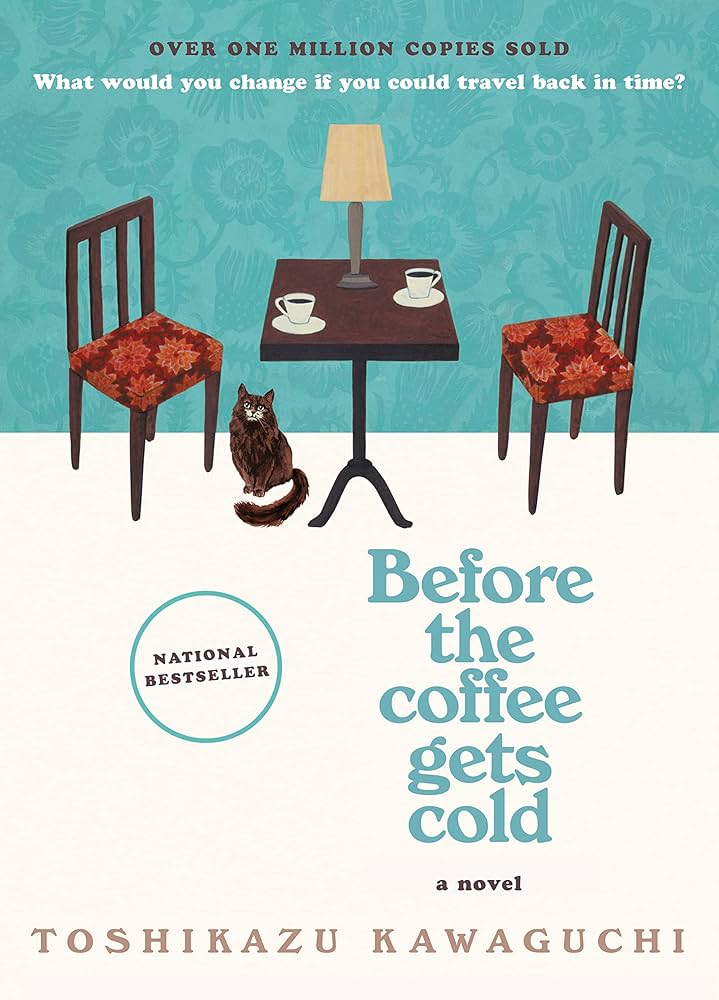
Before the Coffee Gets Cold

Author: Toshikazu Kawaguchi |Translated by Geoffrey Trousselot| 224 Pages | Genre: Fiction | Publisher: Picador | Year: 2019 | My Rating: 8.5/10

” When you go back, no matter how hard you try, the present won’t change”
― Toshikazu Kawaguchi, Before the Coffee Gets Cold

The novel was originally published in Japan in 2015 and translated into English by Geoffrey Trousselot in 2019. The novel was also adapted into a film, Café Funiculi Funicula, which was released in Japan in 2018 and directed by Ayuko Tsukahara. Before the Coffee Gets Cold is an adaptation of a stage play. Kawaguchi was a playwright, and the original story was written for the theatre before being adapted into a novel. The theatrical influence remains visible throughout the book, with ‘clang-dong’ written as a scene shift as characters arrive and leave the cafe. Almost everything happens in one enclosed space where the characters enter, sit, talk, listen, and leave. The narrative is carried by dialogue. The result is a novel that sometimes feels less like conventional fiction than like a collection of intimate dramatic scenes.

The story is set in a small café in Tokyo, Funiculi Funicula, where a customer can travel into the past. There are rules, of course, as one must sit in a particular chair; one may meet only people who have visited the café; nothing said or done in the past can alter the present; and the traveller must return before the coffee becomes cold. The café is therefore less a machine for travelling through time than a chamber for confronting memory. The novel doesn’t have altered timelines, paradoxes, dystopian futures, or battles with destiny. The supernatural mechanism is deliberately narrow, where the past is sealed, and the future remains untouched. Only the traveller’s understanding of what happened can change, and time becomes another technology of human agency.

Kawaguchi is less interested in the mechanics of time travel than in its emotional residue. This novel is about the strange human wish to return to a moment in personal history, in which a conversation that ended a relationship, the apology that was never made, the goodbye that was too hurried, the person whose absence has become more real than their presence ever was. The café does not offer a second chance in the conventional sense. It offers something both smaller and, perhaps, more difficult chance to see the past without being able to repair it. The novel proposes that regret is not necessarily a desire to alter history. Sometimes regret is simply the recognition that we misunderstood history when we were living through it.

The novel’s emotional world is built from ordinary disappointments in life rather than extraordinary tragedies. The narrative follows four distinct visitors: Fumiko, who wishes to speak with the boyfriend who left her; Kohtake, a nurse seeking a letter from her Alzheimer’s-stricken husband, Fusagi; Yaeko, a bar owner mourning a final conversation with her late sister; and Kei, the café owner’s ailing wife who travels to the future to see her unborn daughter. Assisted by the quiet barista Kazu, the cheerful owner Nagare, and a quiet Ghost of a woman who guards the chair, these characters learn that while they cannot alter the present reality, the act of expressing their true feelings completely transforms their hearts and gives them the strength to face the future.

The brilliance of the café’s rules is that they remove the fantasy of control. In most stories about time travel, the past is a problem to be solved. Go back far enough, and one can prevent the accident, save the relationship, kill the tyrant, invest in the right company, or avoid whatever mistake has subsequently become intolerable. Time in the novel is not represented by a clock or some abstract metaphysical force. Instead, it is represented by a cup of steaming coffee and measured by the cup gradually losing its heat. The travellers to their past have only until the coffee becomes cold. The deadline is arbitrary, intimate, almost domestic, and yet it transforms the familiar cup of coffee into a measure of mortality. We have all experienced versions of this deadline. A conversation that we postpone, a phone call that we assume can be made tomorrow, parents we intend to visit during holidays, a friend we imagine will always be there, a relationship we believe has time to repair itself.

The characters who enter the café are not given additional time in any meaningful quantitative sense. They are given a few minutes. What changes is the quality of those minutes. The past becomes suddenly precious because the characters know precisely how little time they possess. Kawaguchi turns the familiar fantasy of ‘more time’ into better attention to the time already available. The novel asks its characters, and by extension its readers, to accept that the past cannot be changed. But it also constructs an elaborate fantasy in which people can return to the past precisely because they cannot bear to leave it alone. Acceptance is rarely achieved by simply deciding to accept. We revisit memories, replay conversations, imagine alternative sentences in our minds. We wonder what would have happened if we had arrived five minutes earlier or stayed five minutes longer. Kawaguchi’s café gives physical form to this universal mental habit. Kawaguchi ultimately asks a question that is simpler than its time travel premise and harder to answer: ‘If you were given one last conversation with someone you had lost, what would you say?’
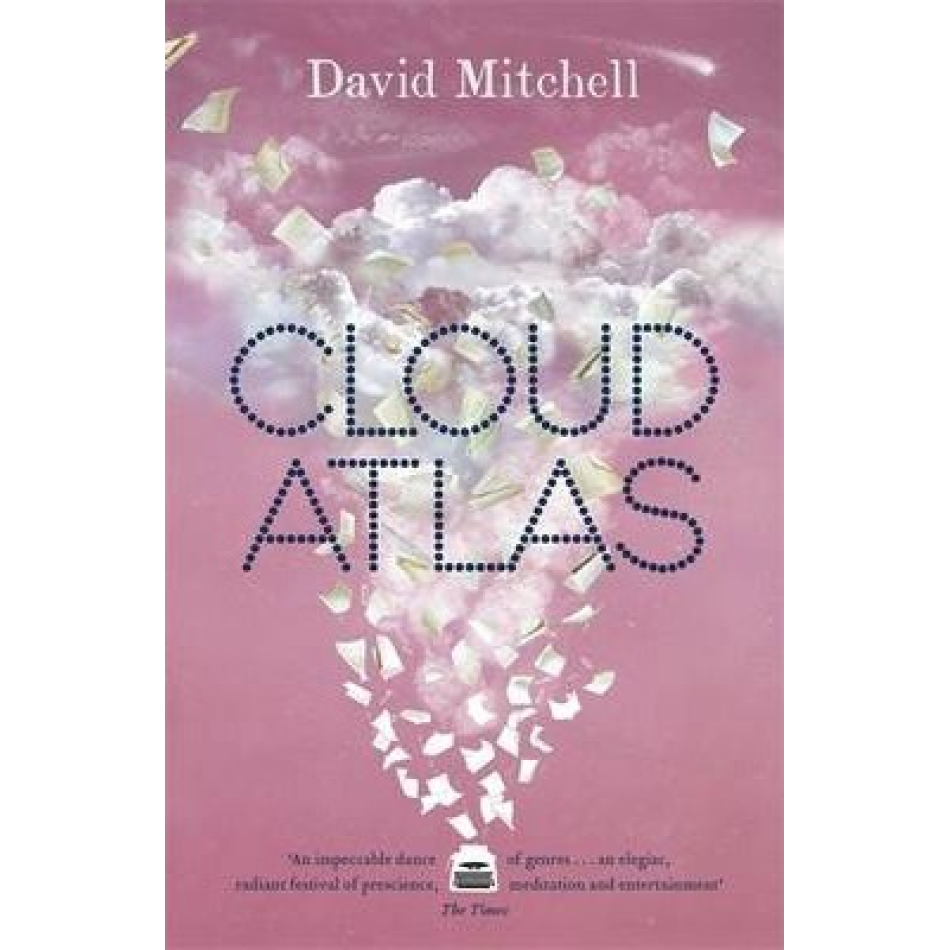
Cloud Atlas

by David Mitchell | 544 Pages | Genre: Fiction | Publisher: Hodder & Stoughton | Year: 2004 | My Rating: 9.5/10

“A half-read book is a half-finished love affair.”
― David Mitchell, Cloud Atlas

Some novels entertain, others provoke. David Mitchell’s Cloud Atlas does both and then something rarer still, it bends the time itself! Since its publication in 2004, this novel has become a cult classic, not only for its intricate structure but also for its audacious attempt to string together the vast tapestry of human existence from past, present and future. The book is one of the most original, unusual, and polarising works on this century.

Mitchell presents us with six interconnected stories that span centuries and genres, a 19th-century Pacific voyage, letters from a young composer in Belgium, a taut thriller set in 1970s California, a satirical farce about a vanity publisher, the interrogation of a genetically engineered clone in a near-future Korea, and a tale told in a fractured dialect after civilization’s collapse. At first, these stories seem like discrete novellas. Yet as each thread is interrupted and later resumed, patterns begin to emerge, as symbols, names, and echoes that ripple across time.

Reading Cloud Atlas is like listening to a symphony in six movements. Each section has its own rhythm, its own instrumentation, yet together they build a haunting, resonant chorus about power, exploitation, love, and resilience. The stories have drama, thrill, humour and fantasy, and takes a deep look into the nature of humanity and moral choices. Mitchell’s message is clear but never heavy-handed, history is cyclical, cruelty and greed recur, but so too do acts of kindness, rebellion, and hope.

A movie was released in 2012 based on the adaptation of the book by the same name featuring Tom Hanks and Halle Berry. The main difference between the book and the movie is the structure and depth, with the book offering distinct, in-depth narratives and complexities, while the movie uses a faster, intercutting cinematic style that emphasizes visual connections and emotion over intellectual understanding, though sometimes oversimplifying plot points like Sonmi-451’s ending. 

This brilliantly written book’s shift in style across the stories can be dizzying, and the patience it demands is substantial. But when the final notes fall into place, the reward is profound, a recognition that our lives, however fleeting, echo forward and backward, part of something infinitely larger.

Cloud Atlas is not just a novel, it is a meditation on the human nature, a daring cartography of time.

I am including some of my most favourite quotes from this book, which is totally worth mentioning with this review.

  • “Power, time, gravity, love. The forces that really kick ass are all invisible.”
  • “My life amounts to no more than one drop in a limitless ocean. Yet what is any ocean, but a multitude of drops?.”
  • “Anticipating the end of the world is humanity’s oldest pastime.”
  • “Nothing is as eloquent as nothing.”

The Sisters Brothers

9781847083180“Come with me into the world and reclaim your independence. You stand to gain so much, and riches are the least of it.”
– Patrick deWitt, The Sisters Brothers
This books made me laugh with its adroit humor and cringe at the same time. Delightful. The story is narrated by Eli Sisters, a hired killer on the American west coast in 1851, around the time of the Gold Rush in the Sierra Nevada mountains. However Eli barely gives the American landscape a glance, and people met along the way are simple figures in his moral drama. Nor does Eli have any larger philosophical or socio-historical insights to offer for the century this story is set in. This hilariously anti-heroic and relentlessly compelling novel is my “Read of the Week”.

The Tiger’s Wife

8366403When your fight has purpose—to free you from something, to interfere on the behalf of an innocent—it has a hope of finality. When the fight is about unraveling—when it is about your name, the places to which your blood is anchored, the attachment of your name to some landmark or event—there is nothing but hate, and the long, slow progression of people who feed on it and are fed it, meticulously, by the ones who come before them. Then the fight is endless, and comes in waves and waves, but always retains its capacity to surprise those who hope against it.”
― Téa Obreht, The Tiger’s Wife

This novel full of historic and human complexities of Balkans through its principal narrator, Natalia Stefanovic, a young doctor who lives with her mother, grandmother and grandfather in an unnamed Balkan city early in the 21st century, is my “Read of the Week”.

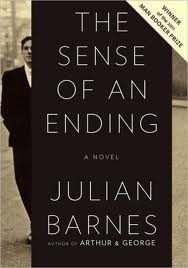
The Sense of an Ending

b3“How often do we tell our own life story? How often do we adjust, embellish, make sly cuts? And the longer life goes on, the fewer are those around to challenge our account, to remind us that our life is not our life, merely the story we have told about our life. Told to others, but – mainly – to ourselves.”
― Julian Barnes, The Sense of an Ending

The Sense of an Ending is a quiet, unsettling novel that lingers long after its final page. The memoir like novel is narrated by Tony Webster, who looks back on his friendships, his first love, and a moral failure he barely understood at the time of his youth. What begins as a calm story in nostalgia gradually turns into an examination of how memory deceives, and flatters us.

The author is less interested in what happened than in how we remember what happened. Tony believes he has lived an ordinary, decent life, but a late-life inheritance forces him to confront the possibility that his past actions had darker consequences than he imagined.

The writing is spare, precise, and simple. Barnes resists sentimentality, allowing ambiguity to do the emotional work. The novel ultimately asks unsettling questions about responsibility, guilt, and time. Do we ever truly understand our own lives, or do we merely settle for a version that feels bearable? It is a small book with a profoundly disturbing aftertaste.

This 2011 Booker Prize winning, witty, cynical and ironic novel is my “Read of theWeek”