The Living Mountain
June 22, 2026 Leave a comment
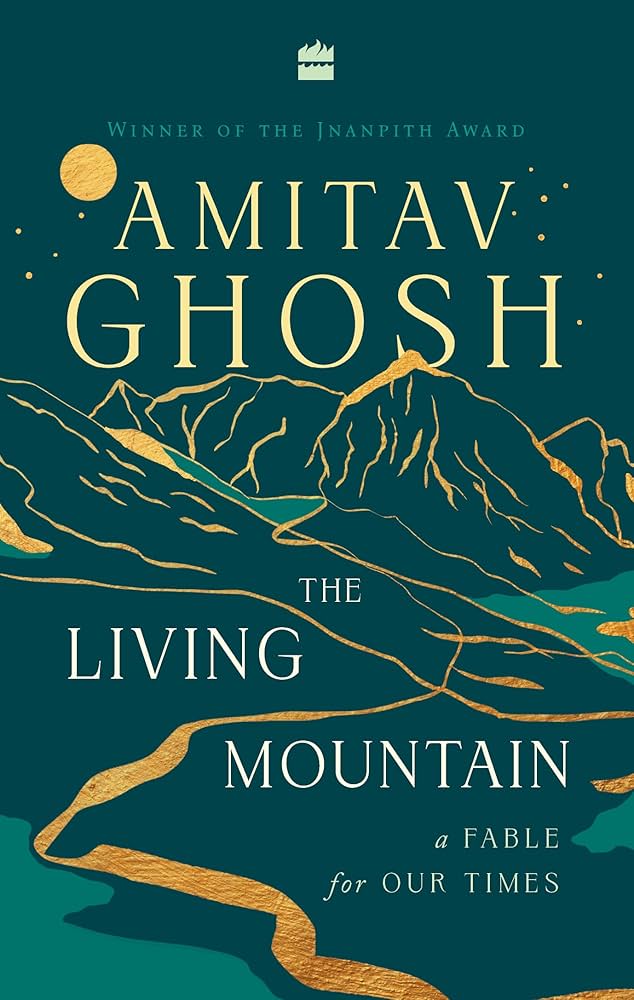
Author: Amitav Ghosh | 48 Pages | Genre: Fiction | Publisher: Fourth Estate India | Year: 2022 | My Rating: 7.5/10
“Earth will survive. It has been through much worse. It’s really us who will suffer unimaginable change”
― Amitav Ghosh, The Living Mountain
The Living Mountain by Amitav Ghosh is a 48-page wonder of a striking ecological fable that narrates a profound moral argument. This book, published during the COVID-19 pandemic, feels less like a conventional story and more like a parable for the Anthropocene, urgent, allegorical, and quietly unsettling.
The narrative revolves around Mahaparbat, a sacred ‘living mountain’ revered by indigenous communities who coexist with it through restraint and ritual. This fragile balance is disrupted when outsiders, symbolically named ‘Anthropoi,’ arrive to exploit the mountain’s resources, triggering ecological and social collapse. The story, framed almost as a dream, distils humanity’s extractive relationship with nature into a stark moral conflict between reverence and domination.
What makes the book compelling is its deliberate simplicity. Ghosh avoids dense scientific exposition, common in his earlier works like The Great Derangement, and instead uses myth and metaphor to communicate the climate crisis. This shift to fable is effective as it bypasses intellectual resistance and speaks directly to ethical intuition. The mountain is not just a setting but a sentient presence, embodying a worldview where nature is alive, reciprocal, and deserving of respect.
However, this same simplicity is also the book’s limitation. There is little narrative ambiguity or character complexity where the Anthropoi represent greed, the villagers represent harmony, and the trajectory is predictably tragic. Readers looking for layered storytelling or nuanced psychological depth may find it overly didactic. I thought that I was reading an Indian version of the Hollywood movie Avatar from 2009!
In a literary landscape crowded with sprawling climate narratives, The Living Mountain functions like a sharp intervention, almost a moral pamphlet disguised as fiction. It can be read in a single sitting, but its implications linger, forcing reflection on how modern development mirrors the destructive ascent of the Anthropoi.
The book also resonates with contemporary India and the Global South, where tensions between development and ecological preservation are immediate and visible. Ghosh subtly aligns indigenous knowledge systems with sustainability, challenging dominant models of progress that equate exploitation with advancement.The Living Mountain is less about storytelling and more about warning. This fable is didactic, symbolic, and purposeful. While it may lack narrative complexity, it succeeds as a powerful ecological allegory, reminding us that the crisis we face is not just environmental, but civilizational.
Discover more from Manu Mayank
Subscribe to get the latest posts sent to your email.
 About Manu Mayank
