Why Philanthropy Needs to Evolve

Philanthropy has been a force for good across continents, building hospitals, funding schools and universities, feeding communities in crises, taking action to solve social challenges, and underwriting research. While intending to create positive and lasting change in people’s lives and strengthening communities, often, take the form of that giving is the classic ‘donor → beneficiary’ pipeline, which has serious limits. When well-meaning philanthropic entities simply transfer money or material goods to presumed beneficiaries without sharing power, listening deeply, or tracking outcomes with humility, aid can be inefficient, short-lived, and even harmful. To move from transactional charity to transformative social change, philanthropy must evolve toward participatory, locally led, and evidence-based models that empower communities to define problems, choose solutions, and steward resources. Several philanthropic models need to evolve into a new, pluralistic philanthropy that can deliver better, fairer, and more sustainable impact.

The donor-beneficiary model often centres on donors’ priorities. Funders set agendas, design programs, select implementing partners, and measure success by indicators they choose, often from a distance. This creates several structural problems, like,

  • Power asymmetry occurs when donors decide what counts as a problem and which solutions are legitimate. Communities become recipients rather than partners, and local knowledge is sidelined, reducing relevance and local ownership.
  • Templates developed for ease of scale often ignore social-cultural and political nuances at the local level. Programs that look good in donor reports may fail on the ground due to ‘One-size-fits-all interventions.’
  • Short funding horizons and volatility of donors with grants tied to campaign cycles, leftover funds, or financial year budgets can stop abruptly, leaving services unsustainable and organisations stranded.
  • When philanthropy substitutes for systemic public investment, it can relieve governments of responsibility or create dependency among groups who lack the voice to advocate for longer-term change.
  • Donors are accountable to boards or taxpayers, with limited accountability to the communities they aim to serve; evaluation is often internal and narrowly framed.

These limitations are not theoretical as reviews of philanthropic practice repeatedly find that participation is often performative, i.e., consultation exercises without power transfer. Scholarly and practitioner literature has called out the gap between rhetoric and sustainable commitment to community-led approaches. This is the moment for a pivot to an evolved philanthropic approach that can complement the traditional giving through,

  1. Participatory and community-led decision-making: Communities should help set priorities and co-design programs. Participatory grant-making moves power to those closest to problems, bringing lived experience into funding decisions and increasing the legitimacy and likely effectiveness of interventions.
  • Local leadership and capacity building: Funding should invest in local institutions (community groups, cooperatives, NGOs, social enterprises), and not only project outputs. That means unrestricted core support, leadership development, and multi-year commitments that enable organisations to mature and adapt.
  • Data-driven learning and accountability: Rigorous use of data and learning systems can help tailor solutions, track impact, and course correct. Data must be used ethically, with local ownership and attention to privacy and power dynamics.

When combined, this approach will shift philanthropy from a mere supplier of goods to an enabler of agency. Some good practices from around the world show how participatory and locally led philanthropy can function in practice, and who can act as torchbearers for philanthropic communities in their regions.

Indian philanthropic institutions combine traditional grant-making with newer models. Tata Trusts has invested heavily in the Data-Driven Governance (DELTA: Data, Evaluation, Learning, Technology, and Analysis) framework for strengthening local governance and planning. Their approach works with government entities and communities to build data systems that inform local decision-making rather than impose external solutions. This demonstrates how philanthropy can facilitate evidence-based public systems while engaging local institutions rather than bypassing them.  

Azim Premji University and Foundation have made community engagement in educational work prominent, emphasising long-term partnerships with local schools and communities rather than one-off interventions. Their community engagement model underscores the importance of listening, iterative learning, and strengthening public institutions rather than substituting for them.  

In Southeast Asia, funder collaboratives demonstrate a shift from isolated donors to pooled funds that support locally relevant priorities. The Asia Community Foundation’s 30×30 Southeast Asia Ocean Fund, launched in January 2025, is a recent example. The fund pools resources to protect coastal and marine ecosystems with an emphasis on inclusion and equity, supporting local stewards and communities rather than exporting conservation blueprints. Collaborative funds like this allow donors to align with regional expertise, reduce duplication, and focus on communities affected by interventions.  

The USA has been an incubator for participatory grant-making experiments. Major foundations and movements, spurred by crises such as the COVID-19 pandemic and racial-justice mobilisations, have explored models that transfer decision-making authority to communities. For instance, mainstream philanthropic institutions like Ford Foundation have published reflections on why participatory grant-making mattered during crises and how it can be institutionalised, noting its capacity to surface local priorities and accelerate equitable responses. While the U.S. landscape is mixed (with many foundations still operating traditionally), the growing body of practice shows that community-led funding can be both rapid and rights-respecting when donors cede control.  

The literature and practice of participatory and community-led philanthropy are growing across Africa, rooted in traditional values of solidarity, mutuality, and shared support. Researchers and practitioners have documented participatory grant-making and community governance innovations, arguing that ceding decision rights to local actors helps align funding with local priorities and sustains outcomes. While capacity and infrastructure challenges exist, the momentum toward locally governed funding systems is notable in contexts where external donors historically dominated the agenda. Recent examples of participatory grant-making (such as Harambee in Kenya, Ujamaa in Tanzania, and Ubuntu across the continent) synthesise these trends and highlight both promise and challenges.  

Participation, local leadership, and data are crucial for effective philanthropy because they shift power dynamics, increase relevance and impact, and improve decision-making based on evidence rather than assumption. This approach moves away from traditional, top-down models toward more equitable, efficient, and sustainable processes. Participatory philanthropy and grant-making processes will lead to,

  • Greater relevance when communities help design interventions, uptake and adaptation increase. Local actors understand cultural norms, political constraints, and practical hurdles that external project designers often miss.
  • Sustainability of programs that are owned by communities beyond the grant cycle. Unrestricted support and capacity building enable organisations to respond flexibly to emerging needs.
  • Data systems that include local stakeholders enable rapid feedback loops, like what’s not working can be quickly spotted and fixed, and successes can be scaled responsibly, improving impact through iterative learning.
  • Participatory philanthropy is not neutral, as it intentionally rebalances power by giving those affected by problems a say in solutions.
  • Cost-effectiveness through local knowledge increases returns on investment.

To evolve to the new and effective models of philanthropy, funders should take practical steps such as shifting money and power by moving a significant percentage of grant money into participatory processes and community-governed pools. They should offer multi-year, unrestricted funding and simplify application and reporting requirements. Investing in intermediary infrastructure is crucial, so supporting local philanthropy platforms, community foundations, and capacity builders, incubators, and accelerators who can channel funds and help communities administer grants is essential. Building data partnerships with communities by funding local data systems, such as community scorecards, participatory monitoring, and open data platforms that are owned and governed by communities, while ensuring ethical data practices, is also important. Co-designing evaluation frameworks with community actors to develop success metrics that prioritise outcomes valued by the community, such as economic stability, dignity, and local governance, rather than just donor KPIs, is very much required. Additionally, funders should reward adaptive learning by creating grant mechanisms that allow for iteration of ‘pilot-learn-adapt-scale’ rather than penalising change as ‘failure.’ Lastly, funders should role model humility and plan for their responsible exit by strengthening local institutions so they can sustain without perpetual external support.

However, it’s important to understand that not every ‘participatory’ label signals a real transfer of power. Donors must avoid superficial practices, like convening consultations for optics, creating advisory committees without decision rights, or funding only projects that align with preselected agendas. Genuine participation requires structural changes like in the boards, budgets, and governance processes, that reflect shared authority.

Philanthropy has great potential to speed up solutions to poverty, climate change, governance problems, and social inequality. To shift from charity to meaningful change, funders need to be willing to relax control, invest in local leaders, and support strong, community-led data and learning systems. Examples from India, Southeast Asia, the U.S., and Africa demonstrate various approaches such as data partnerships that improve governance, pooled funds that empower local stewards, and participatory grant making that changes who makes decisions. Effective, equitable, and sustainable change emerges when those affected by problems help define and lead the response. Philanthropy’s evolution from a one-way pipeline of resources to a platform for shared power is not just desirable, it’s necessary if we want charitable funding to do more than temporarily relieve suffering. They must catalyse systems that let communities thrive on their own terms.

Economics of Diwali

As we celebrate the sparkle of Diwali festivities with lights, the Indian economy, too, is glowing with festive energy. Diwali is not only a cultural and spiritual event but also an economic phenomenon that mobilizes consumption, trade, and emotion on a scale unmatched by any other festival in India. It is a festival where faith, finance, and family come together to illuminate not just homes but entire markets.

Diwali blends culture and commerce. Traditionally marking the return of Lord Ram to Ayodhya after 14 years of vanavasa (exile), the festival has evolved into India’s largest consumption cycle. According to industry estimates, Diwali season alone accounts for 30–40% of annual sales in sectors like jewellery, automobiles, electronics, apparel, and consumer goods.

In 2024, India’s festive spending during Diwali week was estimated at INR 3.2 lakh crore, reflecting a 17% rise over 2023, driven by rising disposable incomes, pent-up post-pandemic demand, and digital retail penetration. Retail chains, e-commerce platforms, and even microenterprises depend on this period to recover annual profits. For small traders, Diwali is often the difference between a good year and a bad one. The festival also synchronizes the Indian economy’s emotional rhythm—consumer sentiment peaks as the festival approaches, heightened by work bonuses, gifts, and an almost cultural belief that new purchases bring prosperity.

Two days before Diwali, Indians celebrate Dhanteras, considered the most auspicious day to buy gold, silver, or anything of value. Historically, this practice was rooted in agrarian prosperity cycles during which, farmers who had completed the harvest season invested their earnings in tangible assets like metals. Today, the sentiment remains, but the scale has exploded. The symbolism has migrated from the vault to the marketplace, aligning tradition with modern consumption.

Diwali’s economic landscape has been radically redrawn by digital commerce. In 2024, online festive sales crossed INR 90,000 crore, driven by e-commerce platforms like Amazon, Flipkart, and Meesho. Tier-II and Tier-III cities accounted for more than 60% of new shoppers, an indication that India’s digital inclusion is now deeply linked with its festive economy.

Algorithms have replaced astrologers in predicting purchasing patterns. AI-driven recommendations, influencer marketing, and digital payment ecosystems like UPI have made the act of buying faster and impulsive. While urban consumers enjoy massive discounts, small offline retailers struggle to match online prices. Many traditional businesses like sweet shops, garment stores, and gift outlets are now adapting with hybrid models, selling on WhatsApp or through community platforms. The local bazaar is not dying; it is simply going online.

Behind the glitter of malls and advertisements lies a quieter but equally powerful story of the informal and rural economy that powers Diwali. Across India, millions of artisans, potters, weavers, and small manufacturers depend on the season for a significant portion of their income. From handmade diyas in Bihar to terracotta idols from Bankura, paper lanterns in Maharashtra, and bamboo crafts from Northeastern states, Diwali sustains local creative economies that embody both tradition and entrepreneurship. In recent years, several NGOs and social enterprises have helped rural producers connect directly with urban buyers through digital platforms. For instance, self-help groups (SHGs) supported by government programs like NRLM (National Rural Livelihoods Mission) and private CSR initiatives now sell festive handicrafts on e-commerce sites and social media. The “Make in Village” movement during Diwali is becoming a quiet counter-narrative to imported mass-produced goods. Every diya sold is not just a source of light but a livelihood.

Gifting is central to Diwali’s economic ecosystem. From corporate gift hampers to sweets exchanged among families, the ritual symbolizes goodwill, reciprocity, and status. In 2024, India’s corporate gifting industry was valued at ₹12,000 crore, with strong growth projected for 2025. Beyond sweets and dry fruits, companies now gift experiences like wellness vouchers, eco-friendly hampers, and handmade products to reflect social consciousness and sustainability. The gifting economy also reveals deeper social psychology. Gifts during Diwali are not just commodities; they are currencies of relationship. In economic terms, they create “social capital”, the trust and goodwill that sustain business and personal networks alike.

In last decade or so, Diwali’s environmental impact has come under scrutiny. Delhi is the best (or worst) example of this intense air pollution from firecrackers making the environment unbreathable, plastic waste from packaging, and excessive electricity consumption have led to rising calls for a Green Diwali. The market is responding with conscious choices. In 2025, the sale of eco-friendly crackers and biodegradable decorations is expected to grow by 30%. Solar-powered lighting, organic sweets, and recycled packaging are becoming mainstream. Conscious consumers, especially younger urban Indians, are now demanding sustainable alternatives that align celebration with responsibility. The shift from conspicuous consumption to conscious consumption marks a new chapter in the economics of Diwali, one where prosperity is measured not just by spending, but by sustainability.

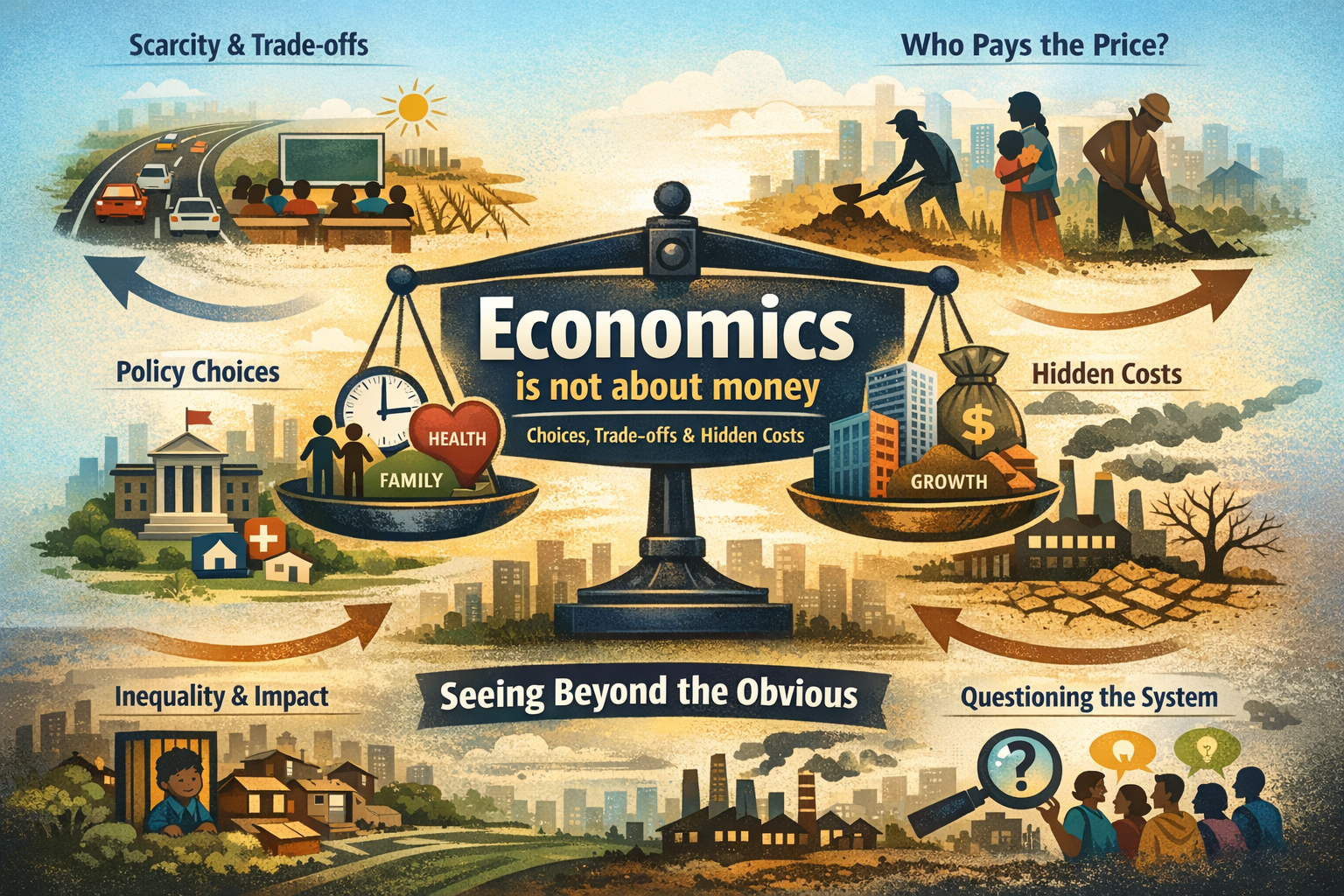
However, Diwali’s prosperity is not evenly distributed. Inflation affects the purchasing power of lower-income families who often face higher food and fuel prices during the season despite the recent GST reforms, which has significantly brought down the prices of most of the consumer goods. While the urban affluent splurge on gadgets and gold, many households cut back on essentials.

This divergence reflects the broader K-shaped recovery post-pandemic of the Indian economy, where upper segments surge ahead while those on the lower segments struggle. The festive glow, though radiant, hides shadows of inequality. For small retailers, rising input costs and competition from online giants have squeezed margins. For daily wage earners, the festival may mean temporary income spikes but little long-term security. Diwali illuminates both the promise and paradox of India’s growth story.

At its core, Diwali celebrates renewal of hope, homes, and human spirit. Economically too, it acts as a reset button for the nation’s consumer sentiment. The act of cleaning homes, buying new things, and lighting lamps mirrors the cyclical nature of economic optimism. For policymakers and economists, the festive season is a real-time barometer of demand. For families, it’s a reminder that prosperity is not just about wealth, but about togetherness and gratitude. In many ways, Diwali teaches an enduring lesson in economics that growth is sustainable only when it is inclusive, joyful, and mindful.

The economics of Diwali is not just about expenditure, but it is also about the exchange of energy, emotion, and enterprise. It reflects India’s evolving story of modernization rooted in tradition, digital transformation anchored in ritual, and capitalism softened by culture. The future of India’s festive economy will shine brightest when it balances profit with purpose, growth with gratitude, and consumption with conscience.

Gold Rush

As the festive season in India is ongoing, jewellers across India are ready, investors tracking bullion prices, and families waiting eagerly for the most “auspicious” day of the year to buy gold. Dhanteras, celebrated two days before Diwali, has long been associated with the purchase of the precious metal, a tradition believed to bring prosperity and good fortune. Similar buying frenzies occur during Akshaya Tritiya, weddings, Karwa Chauth, and harvest festivals, when gold is not merely an adornment but a cultural marker of wealth and status.

Market reports celebrate the crores spent, but beneath the sparkle lies a complex story of culture, aspiration, and economics. Is festival gold-buying a timeless symbol of financial prudence and cultural continuity, or is it a cycle of consumption propelled by social pressure, marketing, and habit?

India’s love affair with gold is centuries old. From the time of the Indus Valley civilisation to the Mauryan emperors to our modern nuclear families, gold has been a medium of exchange, a store of value, and a token of spiritual significance. For millions, gold is not just metal, it is Lakshmi, the goddess of wealth herself. Dhanteras literally means “the thirteenth day of wealth,” and families believe that buying gold on this day invites abundance.

This cultural reverence made economic sense in a pre-banking era. Gold’s intrinsic value and portability provided a hedge against famine, emergency, and currency devaluation. Rural households, lacking access to formal savings mechanism, used jewellery as insurance and collateral. Even today, India remains the world’s second-largest consumer of gold, with annual demand often exceeding 700–800 tonnes. For many, gold remains the most trusted form of intergenerational wealth transfer.

Yet, today’s festival buying is no longer just about family heirlooms or prudent savings. It has evolved into a multi-billion-rupee economic event. According to trade bodies like the All-India Gem and Jewellery Domestic Council, Dhanteras sales often spike by 20–25% year-on-year, depending on price trends. In 2024, for example, despite gold hovering at record highs of around INR61,000 per 10 grams, jewellers reported robust demand, with many urban consumers opting for lighter designs or digital gold to keep up with tradition.

Specific estimates for festival (especially Dhanteras) sales in recent years help show the proportion of demand tied to ritual buying. During Dhanteras in 2024, around 20-22 tonnes of gold were sold, worth nearly INR 16,000 crore. The full jewellery sector during the festival period saw sales in the INR 18,000-20,000 crore.

The annual figures show India’s gold demand continues to be immense, though shifting in nature,

  • In 2024, India’s total gold demand rose to around 802.8 tonnes, up from 761 tonnes in 2023.  
  • The value of gold purchases in 2024 was estimated at INR 5.15 lakh crore (~US$60-70 billion depending on gold price).  
  • Jewellery demand in 2024 was ~ 563 tonnes, with the non-ornamental purchases (coins/bars) making up ~ 239 tonnes.   

These numbers reflect overall demand, not just festival or Dhanteras purchases, but festivals remain a major driver. The data show that although overall demand has often crept upward in value terms (driven by price inflation), the volume of jewellery demand has at times fallen or stagnated. For example, in 2024 jewellery tonnage demand dropped ~2% compared to 2023 even as value increased.

Targeted marketing plays a huge role. Advertisements link gold to auspiciousness and emotional milestones, “Gift prosperity,” “Secure her future,” “Start your Diwali with gold.” Social media influencers and celebrity endorsements reinforce the message that a festival without gold is incomplete. This creates a powerful psychological loop: buying gold is not just desirable, it is expected.

The Dhanteras gold rush is fuelled by a mix of fear and aspiration. Gold retains a near-mystical aura as a hedge against uncertainty. Global financial instability, inflation, and geopolitical tensions often send prices higher, reinforcing the perception of gold as a “safe haven.” For middle-class families, a few grams bought every year feels like both a celebration and a safety net.

But there is also the quieter pressure of status. Weddings, festivals, and social gatherings often showcase jewellery as a measure of success. The fear of “falling behind” relatives or neighbours can nudge families, especially in smaller towns and rural areas, into stretching budgets and even getting into debt trap to maintain appearances. What was once a hedge against uncertainty can change into a source of financial strain.

From a macroeconomic perspective, India’s gold obsession is a double edged sword. While the jewellery industry supports millions of jobs, from miners to artisans to retailers, it also represents a massive outflow of capital. India imports more than 90% of its gold, spending billions of dollars in foreign exchange each year. Economists have long argued that this “dead investment” locks up household savings in a non-productive asset, diverting funds from sectors like manufacturing, infrastructure, or technology that could generate higher returns and employment.

For individual households, the opportunity cost is equally significant. A family buying gold at festival-time may forgo investing in equity markets, mutual funds, or even bank deposits that could provide compounding growth. Gold prices, while generally stable over the long term, are not immune to volatility as we are witnessing now with gold prices rising to INR 120K+ per 10 grams. The metal offers no dividends or interest; its value lies only in resale or emotional satisfaction.

Beyond economics lies an often-ignored cost, the environmental impact of gold mining. Extracting gold is an energy-intensive process that generates toxic waste and contributes to deforestation, soil erosion, and water pollution. Globally, gold mining is associated with mercury contamination and significant carbon emissions. While India imports much of its gold, domestic refining and artisanal mining also pose environmental challenges.

Consumers rarely connect their festival purchases to these ecological consequences. The cultural narrative of purity and prosperity masks the fact that every bangle and coin carries a hidden footprint. Ethical sourcing, such as recycled gold or fair-trade certifications, is slowly gaining traction among urban, environmentally conscious buyers, but remains a niche segment.

As India’s economy digitises, a quiet transformation is underway. Younger consumers, especially in cities, are exploring alternatives to physical gold. Digital gold platforms, gold exchange-traded funds (ETFs), and sovereign gold bonds (SGBs) allow individuals to invest in gold without worrying about purity, storage, or theft.

These products offer flexibility and sometimes better returns. Sovereign gold bonds, for instance, pay annual interest and are exempt from capital gains tax if held to maturity. Yet they also challenge the cultural core of gold-buying: there is no ornament to wear, no glitter to display, no festive ritual of walking into a jewellery shop on Dhanteras. For many families, the emotional experience is as important as the investment itself. Still, the shift is undeniable. Digital gold platforms have reported double-digit growth during recent festivals, particularly among younger investors who value convenience and liquidity over tradition.

So where does this leave the Indian consumer? To dismiss festival gold-buying as mere superstition would be simplistic. Traditions provide continuity, identity, and joy. For rural households with limited access to financial products, gold remains a practical and trusted savings tool.

But to ignore the economic, environmental, and social pressures embedded in this ritual is equally shortsighted. When a practice once rooted in prudence becomes a compulsive annual expense, it risks becoming a trap. The symbolism of prosperity can mask financial strain, and the celebration of abundance can conceal environmental degradation. Festivals can retain their joy without becoming economic burdens. A few grams of gold bought with intention, rather than compulsion, can honour tradition while respecting modern realities.

Dhanteras will always hold a special place in the Indian calendar. The sight of families entering jewellery shops, and elders blessing the new purchase is undeniably heartwarming. Yet it is worth remembering that true prosperity lies not in the weight of gold but in the wisdom of choice.

As India strides into a digital, climate conscious future, perhaps the most auspicious act is not buying more gold, but buying it mindfully acknowledging its beauty, its history, and its hidden costs. The goddess of wealth, after all, smiles brightest on those who balance tradition with thoughtfulness.

Buy thoughtfully. Celebrate responsibly. Live consciously.

Nick’s Italian Kitchen, McLeodganj

Google photo memory showed me a blast-from-past photo from Mcleodganj, and I thought I must write about my favourite breakfast place (and even dinner) from one of my most favourite places in this world. Over last 16-17 years, I have been to McLeodganj several times, and there’s never been a day while being there that I have not spent some quality time relishing food and enjoying the vibe at Nick’s Kitchen.

If you find yourself wandering the streets of McLeodganj, searching for a meal that feels like a warm hug after a trek, Nick’s Kitchen is where you want to be. With its blend of authentic Italian cuisine, a diverse vegetarian menu, and a serene ambiance that captures the essence of McLeodganj’s laid-back, multicultural vibe, being there is not just about the food, it’s a cultural experience! It isn’t just a place to eat – it’s a place to be.

Nick’s Kitchen is located at the Kunga Guest House on the Bhagsunag road. The restaurant features both indoor and outdoor seating, with its expansive rooftop terrace being a standout feature. The first time I went there more than a decade ago, it had few plastic tables and chairs outside, especially in early morning for coffee and breakfast under the sun. Now the terrace is partially covered with multiple seating arrangement, provides breathtaking views of the Dhauladhar valley and surrounding mountains. 

The simple interiors exude a cozy, homey charm with wooden furniture, book-lined shelves, and a relaxed atmosphere. The restaurant’s ability to blend Italian aesthetics with McLeodganj’s monastic, multicultural vibe creates a unique ambiance, which is calm, peaceful, and segmented. Whether you’re a backpacker exchanging stories or a family enjoying a meal together, Nick’s offers a setting that feels inclusive and inviting.

The vibe is relaxed and homely, with a quiet buzz of travellers reading, journaling, or just soaking in the peaceful ambiance. It’s the kind of place where time slows down and conversations linger.

Nick’s Kitchen has a delightful mix of Indian, Tibetan, and Continental dishes, but it’s their delicious comfort food that steals the show. The lasagna is rich, cheesy, and perfectly baked. Their momos (because you musthave momos in McLeodganj) are soft, flavourful, and come with a spicy chutney that wakes up your senses. Don’t leave without trying the banoffee pie, cheesecake or the chocolate walnut cake – they’re nothing short of soul food.

Service is laid-back and friendly, which fits perfectly with the ambiance. You’re not here for fast food; you’re here to unwind, to watch the clouds roll by, get mesmerised by the killer views of snow-capped peaks of Dhauladhar range and to connect either with fellow travellers or simply with yourself. Whether you’re a backpacker, a soul-searcher, a couple, or just someone craving good food with epic views and chill vibe, this little haven in the hills is a must-visit.

Measuring Entrepreneurial Attitude

Generated using Ai

In India’s rural economy, entrepreneurship has emerged not merely as a means of livelihood but as a powerful solution for social and economic transformation. While skills development programs like Skill IndiaStartup India, and Deen Dayal Upadhyaya Grameen Kaushalya Yojana, and numerous capacity-building workshops by NGOs have made significant progress in imparting entrepreneurial aptitude, the more elusive and often underappreciated dimension is entrepreneurial attitude. This inner compass and entrepreneurial mindset, shaped by motivation and initiative, resilience, risk-taking ability, adaptability, and opportunity identification, is what ultimately sustains a venture through uncertainty.

Entrepreneurial aptitude is teachable. It usually comprises financial literacy, business planning, marketing, and digital skills, domains that lend themselves well to structured training modules. However, attitude is behavioural, psychological, and deeply contextual, especially in rural environments where social, cultural, and economic factors deeply influence individual motivation and risk behaviour.

While technical institutions, NGOs, and government agencies have scaled up skilling programs in rural areas, the absence of reliable frameworks to assess entrepreneurial attitude results in misdirected investments, high dropout rates, or business failures post-startup.

I believe that the right attitude matters more in rural entrepreneurship, or even entrepreneurship in general. Rural entrepreneurship has its unique challenges, like limited access to finance and markets, lack of required infrastructure, socio-cultural constraints, especially for women, and low institutional support. Here, it is the right attitude of the aspiring entrepreneur, which is a mix of persistence, opportunity-seeking, and resourcefulness, that becomes the decisive factor between failure and success.

Current programs lack structured mechanisms to assess and nurture entrepreneurial attitude at the rural level, leading to inefficient selection of beneficiaries, poor resource utilization, and low sustainability of rural enterprises. Therefore, the critical question remains how we can measure the right entrepreneurial attitude in an aspiring entrepreneur at the rural level.

The challenge of evaluating attitude is not technical; it is conceptual. We must shift from a one-size-fits-all model to contextual diagnostics that honour rural reality. It is easy to dismiss a rural woman hesitant to speak in public as lacking “confidence.” But her daily navigation of caste norms, household labour, social conditioning, and budget constraints may reflect resilience and resourcefulness of the highest order.

What we must measure is not textbook confidence, but contextual courage. In my two decades of working with rural entrepreneurs in India, from tribal regions of the Northeastern states to drought-prone villages in Rajasthan, I’ve learned that talent is universal, but opportunity is not. Entrepreneurial attitude is not the privilege of the urban educated; it is often deeply embedded in rural lived experiences.

Our systems must develop culturally sensitive, grassroots-rooted, participatory frameworks to identify, not implant, an entrepreneurial attitude. Only then can we build truly inclusive ecosystems that tap into the latent power of rural changemakers. The future of rural entrepreneurship lies not in the replication of urban models but in recognizing and nurturing the indigenous spark. It is time we built tools that are beyond skills, to the spirit.

I am developing a framework and associated tools and metrics for measuring entrepreneurial attitude for inclusive rural enterprise development. I am calling it, “Rural Entrepreneurial Attitude Identification and Development (READ) Framework”. I will publish it as my next post.

The cover image is generated using Ai.