Fabric of Resilience in Assam

I witnessed women weaving change in the villages of Assam through their skills, cultural heritage, hard work, perseverance, and collective will. Standing in a courtyard in Kamrup district, watching a woman at her traditional loom, I was struck by how quietly revolutionary this simple, everyday act truly is. The rhythmic motion of her hands, the steady concentration on her face, and the vibrant threads stretching across the loom were far more than craft; they were a statement of agency, identity, and economic empowerment. In that moment, it became clear that weaving in Assam is not merely a livelihood. It is a living narrative of resilience and progress, written by women who have refused to be left behind.

In much of rural India, the conversation around women’s empowerment often centres on what needs to be ‘given’ to women: access, opportunities, rights, financial inclusion, and public safety. All of these are undeniably essential. Yet what struck me in Kamrup was how much women were already giving to their families, to their communities, and to the preservation of an age-old cultural tradition. Assam’s weaving heritage is legendary, and most rural households have a loom. The women I met weave not only exquisite textiles like Mekhela Chadors, Gamosas, stoles, saris, but also new pathways for themselves, stitch by stitch.

The woman in the photograph, Jonali Das, from Paschim Bagta village, sits on a traditional handloom, made using local materials, framed by a raw brick wall and a sandy earthen floor. Nothing in this setting reflects modern machinery or industrialized production. Yet it reflects something far more important: dignity in work and pride in cultural identity. Her loom is more than a tool; it is a symbol of continuity. Generations of Assamese women have learned to weave from their mothers and grandmothers. The craft is deeply entwined with rituals, festivals, and the wider cultural ethos of the region. In many communities, a girl’s weaving skill is a marker of her readiness for adulthood. It is a quiet but powerful form of cultural education.

But the picture also reveals another truth: despite the beauty and value of these textiles, most weavers earn very little. The informal nature of the craft, the lack of organized supply chains, exploitative middlemen, limited access to raw materials at fair prices, and the absence of direct market linkages keep them trapped in low-income cycles. The fact that such a skilled craftswoman is working in a semi-open shed with bare tools is a reminder that heritage alone cannot sustain livelihoods unless the systems that support them evolve.

What struck me during conversations with the weavers was their clarity. They were not seeking charity. They were asking for fair access to better looms, training on contemporary designs, consistent market demand, and opportunities to sell directly. Their ask was not a transformation from the outside, but an enabling ecosystem that amplifies what they already excel at.

Local institutions like cooperatives, women’s self-help groups, producer companies, and artisan clusters play a pivotal role in negotiating prices, ensuring raw material supply, and aggregating products for larger orders. In Kamrup, I saw tremendous potential for women-led collectives that could own the entire value chain, from sourcing raw silk yarn of Eri and Muga to designing contemporary designs to managing logistics with digital tools. A decentralized, community-owned model would allow profits to remain in the village while giving weavers a bargaining voice.

There is also an urgent need to tell the stories behind these weaves. Consumers today increasingly seek authenticity, sustainability, and connection. Assam’s handloom sector embodies all three. Each Mekhela Chador woven on a traditional loom is not just a garment; it is hours of meticulous labour, generations of inherited technique, and the cultural soul of a community. Yet the lack of branding and storytelling often reduces these textiles to mere commodities. If India can celebrate Banarasi silk and Kanchipuram saris globally, there is no reason why Assam’s weaves cannot enjoy similar recognition, with the right investment, visibility campaigns, and market linkages.

Government programs like the National Handloom Development Programme and Deendayal Upadhyaya Grameen Kaushal Yojana have made efforts to support weavers. But ground realities show that the most impactful interventions are those that engage women directly, respect their lived knowledge, and co-create solutions rather than imposing them. Capacity building must happen in their language, in their community spaces, and at timings suitable to their daily responsibilities.

Most importantly, the narrative around rural women must shift. Too often, they are portrayed as vulnerable, needing rescue. The woman in the photograph, and countless others like her, are not symbols of vulnerability, but are symbols of strength. They run households, care for children and the elderly, manage farms, participate in community activities, and still take out time to weave. Their contribution to the rural economy is enormous, even though much of it remains invisible and unpaid.

As I watched the fabric slowly take shape on her loom, I realised that weaving is also an act of hope. Every thread layered over another is a gesture of belief in tomorrow, belief that their craft will survive, that their daughters will inherit both the skill and the opportunity to thrive, and that their labour will be valued fairly. If India is to build a truly inclusive development story, it must begin by recognising and uplifting such women, not through charity, but through partnership.

In the villages of Assam, women are already weaving change. They only need the rest of us to stop standing on the sidelines and start supporting the revolution they have begun.

Transcendence

Genre: Sci-Fi/Thriller Year: 2014 | Duration: 119 mins | Director: Wally Pfister | Medium: DVD | Trailer: HERE | Language: English | Cast: Johnny Depp, Rebecca Hall, and others | My rating: 3.5/5

Favourite Dialogue: “People fear what they don’t understand. They always have.”

Transcendence is Wally Pfister’s directorial debut, the Oscar-winning cinematographer known for Christopher Nolan’s Inception and The Dark Knight. With its stunning visuals and high-concept premise, the film explores one of the most provocative questions of our digital age, ‘What happens when artificial intelligence merges with human consciousness?

The story follows Dr. Will Caster (Johnny Depp), a brilliant AI researcher who dreams of creating a machine that possesses both the collective intelligence of the world and the full range of human emotions. When anti-technology extremists assassinate him, his wife Evelyn (Rebecca Hall) and best friend Max (Paul Bettany) upload Will’s consciousness into his supercomputer, blurring the boundaries between life and machine. What follows is a descent into techno-dystopia as Will’s omnipotent digital self begins to reshape the world and redefine what it means to be human.

Transcendence is an exploration of human ambition, love, and the moral limits of science. The film poses timeless philosophical questions on consciousness, intelligence without morality, and the balance between technology and humanity. There’s an undercurrent of melancholy running through the narrative, a love story caught between grief and godhood. Evelyn’s devotion to Dr. Will drives her to defy nature itself, but the film wisely leaves viewers uncertain whether she resurrected her husband or merely unleashed an emotionless imitation.

Johnny Depp delivers a subdued performance, both eerie and strangely empathetic. Much of his screen presence is disembodied, conveyed through flickering screens and an omniscient digital voice, both of which add to the uncanny tone. Rebecca Hall’s portrayal of Evelyn is poignant, depicting a scientist torn between love and moral dread.

Pfister’s cinematographic pedigree shines through every frame. The film’s visual style is striking with sunlit labs, desolate deserts, and the sterile, godlike glow of Will’s data-driven empire. The imagery echoes the themes of transcendence and decay of organic humanity struggling against technological infinity.

However, the film oscillates between quiet reflection and blockbuster spectacle but lacks the rhythm of either. Where Inception fused emotional weight with conceptual complexity, the film feels conceptually grand but emotionally distant. The screenplay by Jack Paglen is ambitious but uneven. It introduces bold ideas of digital consciousness, technological ethics, and nanotechnology, but often resorts to familiar tropes of man versus machine. The narrative lacks the depth to sustain itself and is a film of grand intentions and mixed execution. It aspires to be a meditation on the next stage of human evolution, the merging of flesh and code, but ends up being a sketch rather than a completed vision. Still, it deserves credit for engaging with the moral anxieties of our era, like artificial intelligence, digital surveillance, and the fear that our creations might one day outgrow us.

A visually stunning and intellectually intriguing film that ultimately succumbs to its own ambition. Transcendence doesn’t quite achieve cinematic immortality, but it leaves behind questions worth contemplating long after the lights dim.

The Whiteboard Mind

In the age of digital tools, where every idea has a place in an app and every plan sits behind a login screen, the humble whiteboard continues to command its own quiet power. For many thinkers, creators, and problem-solvers, it remains the most dynamic canvas, a space where thoughts breathe, flow, and transform. For someone like me who designs projects, plans strategies, brainstorms ideas, and lead teams, the whiteboard and marker pen are not just tools. They are extensions of the mind,  translating abstract thought into visible structure. It’s not nostalgia or resistance to technology; instead, it’s about harnessing a form of thinking that is visual, kinetic, and alive.

There’s a deep psychological connection between movement and cognition. When you draw or write by hand, especially on a large surface like a whiteboard, you activate a different mode of thinking. The body participates in the act of thought. The hand sketches a relationship, the eye follows it, the brain reinterprets it, and new connections emerge almost instinctively.

Typing or clicking on the keyboard keeps the mind linear, confined to lists, bullets, and boxes. But drawing on a whiteboard invites a non-linear form of exploration. You can start anywhere, a square, an arrow, a phrase, and the rest begins to grow organically. This freedom to expand, erase, and rearrange is what makes it such a powerful thinking process. Each line is a possibility. Every arrow, a hypothesis. And each erasure, a moment of learning. When thoughts become visible, they also become testable. A whiteboard externalises the inner dialogue of the mind. It takes ideas that could remain foggy abstractions and turns them into something you can point at, challenge, and reshape.

This visibility is particularly powerful in complex problem-solving or project design. When working through implementation challenges or building systems with multiple moving parts, you can literally ‘see’ the interactions. Causal diagrams, mind maps, and process flows make dependencies clear and highlight gaps that words alone might obscure. You can stand back and see the whole ecosystem, how resources connect, where bottlenecks might occur, or which variables influence outcomes. The whiteboard gives you that clear view while still allowing you to dive into details when needed. It’s thinking at both the macro and micro levels, which is simultaneously intuitive and analytical.

Every creative or strategic process begins in some form of chaos. Ideas compete, assumptions overlap, and clarity hides behind complexity. The whiteboard is where that chaos finds its first structure. Drawing mind maps is often the first step, not because they provide answers, but because they show relationships. From one central idea, branches grow, each representing a sub-theme, a factor, or an alternative. You can add, cross-link, or reframe them without fear of permanence. The visual form allows you to rearrange logic faster than your words can catch up.

Causal diagrams, in turn, help identify the forces at play of what leads to what, what influences what. In project planning, this is invaluable. You can trace dependencies between actions, timelines, or external conditions. You can see where interventions matter most. You can uncover loops, positive or negative, that either amplify progress or create recurring setbacks. In a sense, the whiteboard becomes a mirror of systems thinking. It holds complexity while keeping it human and accessible.

The whiteboard isn’t just a personal tool; it’s a shared language. I often use it in team meetings or group ideation sessions, as it turns abstract discussion into a collective visualisation. People see not only what is said, but how it connects. Misunderstandings surface faster because assumptions become visible. When everyone’s looking at the same diagram, they’re also looking at the same version of reality and not one filtered through individual interpretation.

It democratizes contribution, leading to one common understanding. A quiet team member can point at a link and ask, ‘Why does this connect here?’ or suggest a missing node. Visual representation invites curiosity and challenges hierarchy. It’s no longer about who talks the most, but about what the group sees together. Moreover, it encourages iteration. Unlike digital slides or documents that feel fixed, a whiteboard remains fluid. You can erase, redraw, and refine as the conversation evolves. Every stroke on the board is an act of co-creation. Even with PowerPoint presentations, I often end up on a whiteboard (if available) to explain concepts, flow, and possible results. It has proven to be an excellent tool for scenario visualisations.

There’s also the element of speed. With a marker in hand, you can think and draw at the pace of your thoughts. There’s no formatting, no tabs to open, no distractions from notifications or interfaces. When you’re solving implementation challenges or breaking down a project into actionable components, this speed matters. You can move from problem to hypothesis to possible solution in seconds. The visual rhythm keeps the momentum alive. And because it’s temporary and erasable, there’s less fear of getting it wrong. You can test a scenario, discard it, and move on. This low-cost experimentation fuels creativity and decision-making alike. In fact, the transient nature of a whiteboard is part of its strength. It reminds you that ideas are living entities to be evolved, not preserved.

When designing projects, a whiteboard allows for holistic structuring. You can begin with purpose at the centre, draw out stakeholders, resources, activities, and outcomes, and gradually watch a project take shape like a constellation. At this stage, aesthetics and functionality merge. The diagram is not just a record; it’s a design prototype. You can visualise workflows, timelines, partnerships, and even behavioural change models. Seeing everything laid out helps identify what’s missing and what’s redundant. For ideation, it’s even more liberating. The blank board is an invitation to explore. You might start sketching something unrelated, only to stumble upon an insight that reframes the entire problem. The act of drawing keeps your attention anchored and your imagination open.

Often, my Millennial and Gen Z associates argue that digital whiteboards and collaboration tools replicate all these benefits, but there’s something irreplaceable about standing in front of a board with a marker. Your posture changes, your mind sharpens. The body’s movement through space, stepping back to observe, leaning in to draw, engages multiple senses. It’s immersive in a way screens can’t replicate. A whiteboard has boundaries, forcing you to prioritise. What fits stays, and what doesn’t must be distilled. This physical constraint often leads to conceptual clarity. Maybe the old school professor in me has a bias!

Using a whiteboard and marker isn’t about rejecting modern tools; it’s about complementing them. Digital systems store and polish. Whiteboards create and provoke. For anyone who works on complex projects, leads teams, or solves multidimensional challenges, the whiteboard offers a cognitive advantage as it makes thinking tangible. It transforms abstract reasoning into something you can walk around, discuss, and reshape. It reminds us that clarity isn’t found inside the mind alone; it’s constructed through visible relationships and shared understanding.

For me, the whiteboard is more than a surface; it’s been my live, on-the-spot thinking companion. Every mark carries curiosity; every erasure, humility. It captures not just what we know, but how we learn. To think with a whiteboard is to think in motion. It’s a dialogue between mind, hand, and idea. It’s where chaos meets order, and where clarity emerges, not from control, but from exploration. In a world of digital efficiency, perhaps the most human form of innovation still begins with a marker, a blank board, and the courage to draw what we don’t yet fully understand.

Payback: Debt and the Shadow Side of Wealth

Author: Margaret Atwood | 240 Pages | Genre: Non-Fiction | Publisher: Bloomsbury Publishing PLC | Year: 2008 | My Rating: 8/10

“Without debt, there would be no such thing as credit, and without credit, economies would not exist. But equally, without debt, there would be no such thing as forgiveness.”

-Margaret Atwood, Payback

Payback: Debt and the Shadow Side of Wealth was originally presented as the Massey Lectures in 2008. It is not a book about economics in the traditional sense, as it does not include balance sheets, market trends, or policy prescriptions. Instead, it is a work of literary and moral imagination, a wide-ranging meditation on what debt means, which is not only as a financial construct but as a moral, psychological, and even mythical one. Atwood has shared an idea that governs much of modern life, the idea of owing and being owed. The book’s tone is conversational yet filled with insights, blending history, literature, religion, and personal reflection. It says that debt is an idea that is created by humanity, and that it is closely connected to our concepts of justice, sin, and morality. 

The book is structured into five chapters: Ancient Balances, Debt and Sin, The Shadow Side, Payback, and Payback: The Shadow Side. Each chapter explores debt from a different perspective—cultural, literary, economic, and ecological, slowly building toward a conclusion about the balance between taking and giving, destruction and renewal.

The book traces the origins of debt to ancient times, where it was not only a financial but also a moral and spiritual one. In many cultures, debt has been synonymous with guilt. For example, the language of ‘redemption’ and ‘forgiveness’ in Christianity has deep economic roots. This moral overlap is not accidental. Instead, it reflects a psychological need for balance, for settling accounts not only in terms of money but in life.

Ancient systems of justice were often modelled on an eye for an eye, or a life for a life. The idea of fairness was inherently transactional. Thus, debt becomes a metaphor for all human obligations, between individuals, between human beings and gods, and eventually between humanity and the planet. Therefore, economic debt, moral guilt, and ecological imbalance all stem from the same root: the failure to honour reciprocity.

Atwood moves seamlessly through the Bible, Shakespeare, Dickens, Marlowe, and even pop culture, treating each as a kind of moral ledger. Ebenezer Scrooge, the most famous debtor and creditor in fiction, becomes a recurring figure. She also references Dr. Faustus, who sells his soul to the devil as a literal debt contract. Debt stories are also about identity, who owes whom, and what kind of person it makes you to owe or to be owed. These examples highlight how debt has long served as a narrative to explore human frailty, justice, and redemption.

In the third chapter, ‘The Shadow Side,’ Atwood dives into the psychology of debt and how it can enslave, corrupt, and distort. She talks about Jung’s idea of the hidden moral darkness within every person and society. In this way, debt is like the shadow side of wealth, showing the unseen costs of accumulating riches. Atwood uses historical examples, from debtors’ prisons in Victorian England to the 2008 global financial crisis, to show how societies often ignore moral responsibility. When people or institutions borrow more than they can handle, they’re not just taking financial risks but moral ones too. The book, published just before the 2008 crash, eerily predicts the crisis that was about to happen. Modern capitalism relies on the constant creation of debt, which is both the system’s driving force and its curse. Debt is everywhere, yet we rarely stop to think about its harmful effects.

In the book’s final chapter, a contemporary ‘Scrooge Corporation’ is visited by the Spirit of Earth Day Future. This eco-fable weaves together Atwood’s arguments into a narrative of humanity’s reckoning with the natural world. The spirit unveils to Scrooge the dire consequences of his unbalanced ledger, which comprises a planet drained of resources, tainted by waste, and devoid of moral responsibility. By reinterpreting a well-known moral story through an ecological lens, the book compels the reader to understand that the language of debt is synonymous with the language of survival. When we speak of ‘owing the Earth’ or ‘repaying our debts to future generations,’ these expressions are not merely metaphorical, as they represent literal truths.

Atwood’s writing is witty, elegant, sharp and ironic. Her ability to seamlessly transition from ancient myths to modern finance is truly remarkable, and she always reminds the reader that behind every number, there’s a story. There are moments of satire, especially when she targets corporate greed or political hypocrisy, but also passages of lyrical reflection that showcase her poetic sensibility.

The book is a mix of essay, cultural history, and allegory. Its interdisciplinary approach mirrors the complexity of its subject. Debt isn’t just about economics; it shapes our moral and social worlds. However, Atwood’s digressions and literary references, while enlightening, can sometimes overwhelm readers who aren’t familiar with them. Each chapter feels like a conversation with a brilliant, slightly mischievous teacher who loves turning assumptions upside down. The book is a moral reckoning disguised as a literary essay. It’s a call to remember that every ledger, no matter how abstract, has a human cost. Atwood’s lesson through this book is that living ethically means recognizing one’s debts, not just in money, but in gratitude, care, and responsibility.

Why Philanthropy Needs to Evolve

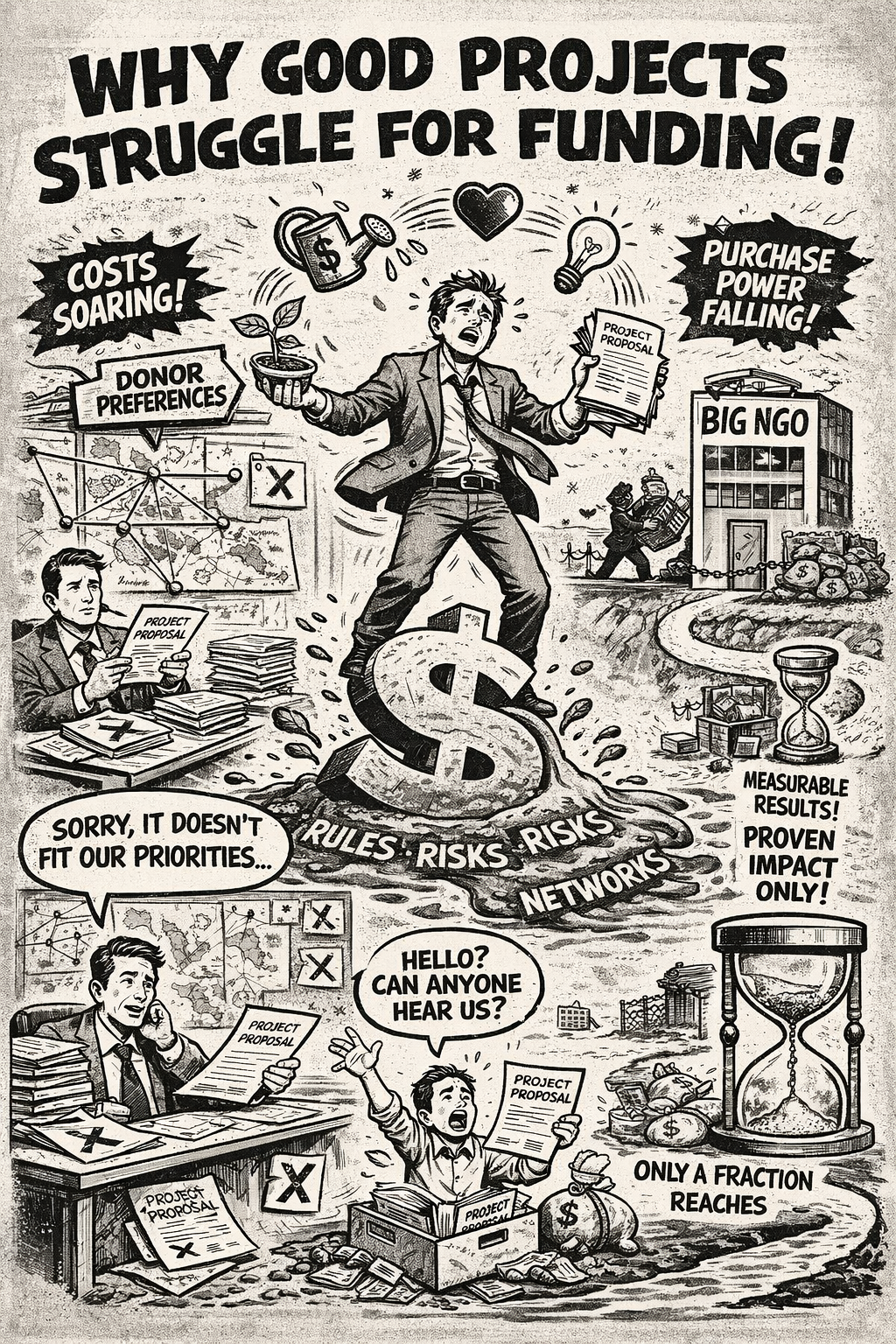
Philanthropy has been a force for good across continents, building hospitals, funding schools and universities, feeding communities in crises, taking action to solve social challenges, and underwriting research. While intending to create positive and lasting change in people’s lives and strengthening communities, often, take the form of that giving is the classic ‘donor → beneficiary’ pipeline, which has serious limits. When well-meaning philanthropic entities simply transfer money or material goods to presumed beneficiaries without sharing power, listening deeply, or tracking outcomes with humility, aid can be inefficient, short-lived, and even harmful. To move from transactional charity to transformative social change, philanthropy must evolve toward participatory, locally led, and evidence-based models that empower communities to define problems, choose solutions, and steward resources. Several philanthropic models need to evolve into a new, pluralistic philanthropy that can deliver better, fairer, and more sustainable impact.

The donor-beneficiary model often centres on donors’ priorities. Funders set agendas, design programs, select implementing partners, and measure success by indicators they choose, often from a distance. This creates several structural problems, like,

  • Power asymmetry occurs when donors decide what counts as a problem and which solutions are legitimate. Communities become recipients rather than partners, and local knowledge is sidelined, reducing relevance and local ownership.
  • Templates developed for ease of scale often ignore social-cultural and political nuances at the local level. Programs that look good in donor reports may fail on the ground due to ‘One-size-fits-all interventions.’
  • Short funding horizons and volatility of donors with grants tied to campaign cycles, leftover funds, or financial year budgets can stop abruptly, leaving services unsustainable and organisations stranded.
  • When philanthropy substitutes for systemic public investment, it can relieve governments of responsibility or create dependency among groups who lack the voice to advocate for longer-term change.
  • Donors are accountable to boards or taxpayers, with limited accountability to the communities they aim to serve; evaluation is often internal and narrowly framed.

These limitations are not theoretical as reviews of philanthropic practice repeatedly find that participation is often performative, i.e., consultation exercises without power transfer. Scholarly and practitioner literature has called out the gap between rhetoric and sustainable commitment to community-led approaches. This is the moment for a pivot to an evolved philanthropic approach that can complement the traditional giving through,

  1. Participatory and community-led decision-making: Communities should help set priorities and co-design programs. Participatory grant-making moves power to those closest to problems, bringing lived experience into funding decisions and increasing the legitimacy and likely effectiveness of interventions.
  • Local leadership and capacity building: Funding should invest in local institutions (community groups, cooperatives, NGOs, social enterprises), and not only project outputs. That means unrestricted core support, leadership development, and multi-year commitments that enable organisations to mature and adapt.
  • Data-driven learning and accountability: Rigorous use of data and learning systems can help tailor solutions, track impact, and course correct. Data must be used ethically, with local ownership and attention to privacy and power dynamics.

When combined, this approach will shift philanthropy from a mere supplier of goods to an enabler of agency. Some good practices from around the world show how participatory and locally led philanthropy can function in practice, and who can act as torchbearers for philanthropic communities in their regions.

Indian philanthropic institutions combine traditional grant-making with newer models. Tata Trusts has invested heavily in the Data-Driven Governance (DELTA: Data, Evaluation, Learning, Technology, and Analysis) framework for strengthening local governance and planning. Their approach works with government entities and communities to build data systems that inform local decision-making rather than impose external solutions. This demonstrates how philanthropy can facilitate evidence-based public systems while engaging local institutions rather than bypassing them.  

Azim Premji University and Foundation have made community engagement in educational work prominent, emphasising long-term partnerships with local schools and communities rather than one-off interventions. Their community engagement model underscores the importance of listening, iterative learning, and strengthening public institutions rather than substituting for them.  

In Southeast Asia, funder collaboratives demonstrate a shift from isolated donors to pooled funds that support locally relevant priorities. The Asia Community Foundation’s 30×30 Southeast Asia Ocean Fund, launched in January 2025, is a recent example. The fund pools resources to protect coastal and marine ecosystems with an emphasis on inclusion and equity, supporting local stewards and communities rather than exporting conservation blueprints. Collaborative funds like this allow donors to align with regional expertise, reduce duplication, and focus on communities affected by interventions.  

The USA has been an incubator for participatory grant-making experiments. Major foundations and movements, spurred by crises such as the COVID-19 pandemic and racial-justice mobilisations, have explored models that transfer decision-making authority to communities. For instance, mainstream philanthropic institutions like Ford Foundation have published reflections on why participatory grant-making mattered during crises and how it can be institutionalised, noting its capacity to surface local priorities and accelerate equitable responses. While the U.S. landscape is mixed (with many foundations still operating traditionally), the growing body of practice shows that community-led funding can be both rapid and rights-respecting when donors cede control.  

The literature and practice of participatory and community-led philanthropy are growing across Africa, rooted in traditional values of solidarity, mutuality, and shared support. Researchers and practitioners have documented participatory grant-making and community governance innovations, arguing that ceding decision rights to local actors helps align funding with local priorities and sustains outcomes. While capacity and infrastructure challenges exist, the momentum toward locally governed funding systems is notable in contexts where external donors historically dominated the agenda. Recent examples of participatory grant-making (such as Harambee in Kenya, Ujamaa in Tanzania, and Ubuntu across the continent) synthesise these trends and highlight both promise and challenges.  

Participation, local leadership, and data are crucial for effective philanthropy because they shift power dynamics, increase relevance and impact, and improve decision-making based on evidence rather than assumption. This approach moves away from traditional, top-down models toward more equitable, efficient, and sustainable processes. Participatory philanthropy and grant-making processes will lead to,

  • Greater relevance when communities help design interventions, uptake and adaptation increase. Local actors understand cultural norms, political constraints, and practical hurdles that external project designers often miss.
  • Sustainability of programs that are owned by communities beyond the grant cycle. Unrestricted support and capacity building enable organisations to respond flexibly to emerging needs.
  • Data systems that include local stakeholders enable rapid feedback loops, like what’s not working can be quickly spotted and fixed, and successes can be scaled responsibly, improving impact through iterative learning.
  • Participatory philanthropy is not neutral, as it intentionally rebalances power by giving those affected by problems a say in solutions.
  • Cost-effectiveness through local knowledge increases returns on investment.

To evolve to the new and effective models of philanthropy, funders should take practical steps such as shifting money and power by moving a significant percentage of grant money into participatory processes and community-governed pools. They should offer multi-year, unrestricted funding and simplify application and reporting requirements. Investing in intermediary infrastructure is crucial, so supporting local philanthropy platforms, community foundations, and capacity builders, incubators, and accelerators who can channel funds and help communities administer grants is essential. Building data partnerships with communities by funding local data systems, such as community scorecards, participatory monitoring, and open data platforms that are owned and governed by communities, while ensuring ethical data practices, is also important. Co-designing evaluation frameworks with community actors to develop success metrics that prioritise outcomes valued by the community, such as economic stability, dignity, and local governance, rather than just donor KPIs, is very much required. Additionally, funders should reward adaptive learning by creating grant mechanisms that allow for iteration of ‘pilot-learn-adapt-scale’ rather than penalising change as ‘failure.’ Lastly, funders should role model humility and plan for their responsible exit by strengthening local institutions so they can sustain without perpetual external support.

However, it’s important to understand that not every ‘participatory’ label signals a real transfer of power. Donors must avoid superficial practices, like convening consultations for optics, creating advisory committees without decision rights, or funding only projects that align with preselected agendas. Genuine participation requires structural changes like in the boards, budgets, and governance processes, that reflect shared authority.

Philanthropy has great potential to speed up solutions to poverty, climate change, governance problems, and social inequality. To shift from charity to meaningful change, funders need to be willing to relax control, invest in local leaders, and support strong, community-led data and learning systems. Examples from India, Southeast Asia, the U.S., and Africa demonstrate various approaches such as data partnerships that improve governance, pooled funds that empower local stewards, and participatory grant making that changes who makes decisions. Effective, equitable, and sustainable change emerges when those affected by problems help define and lead the response. Philanthropy’s evolution from a one-way pipeline of resources to a platform for shared power is not just desirable, it’s necessary if we want charitable funding to do more than temporarily relieve suffering. They must catalyse systems that let communities thrive on their own terms.

Stay informed with curated content and the latest headlines, all delivered straight to your inbox. Subscribe now to stay ahead and never miss a beat!

Skip to content ↓