Heart of the Beast
October 5, 2026 Leave a comment
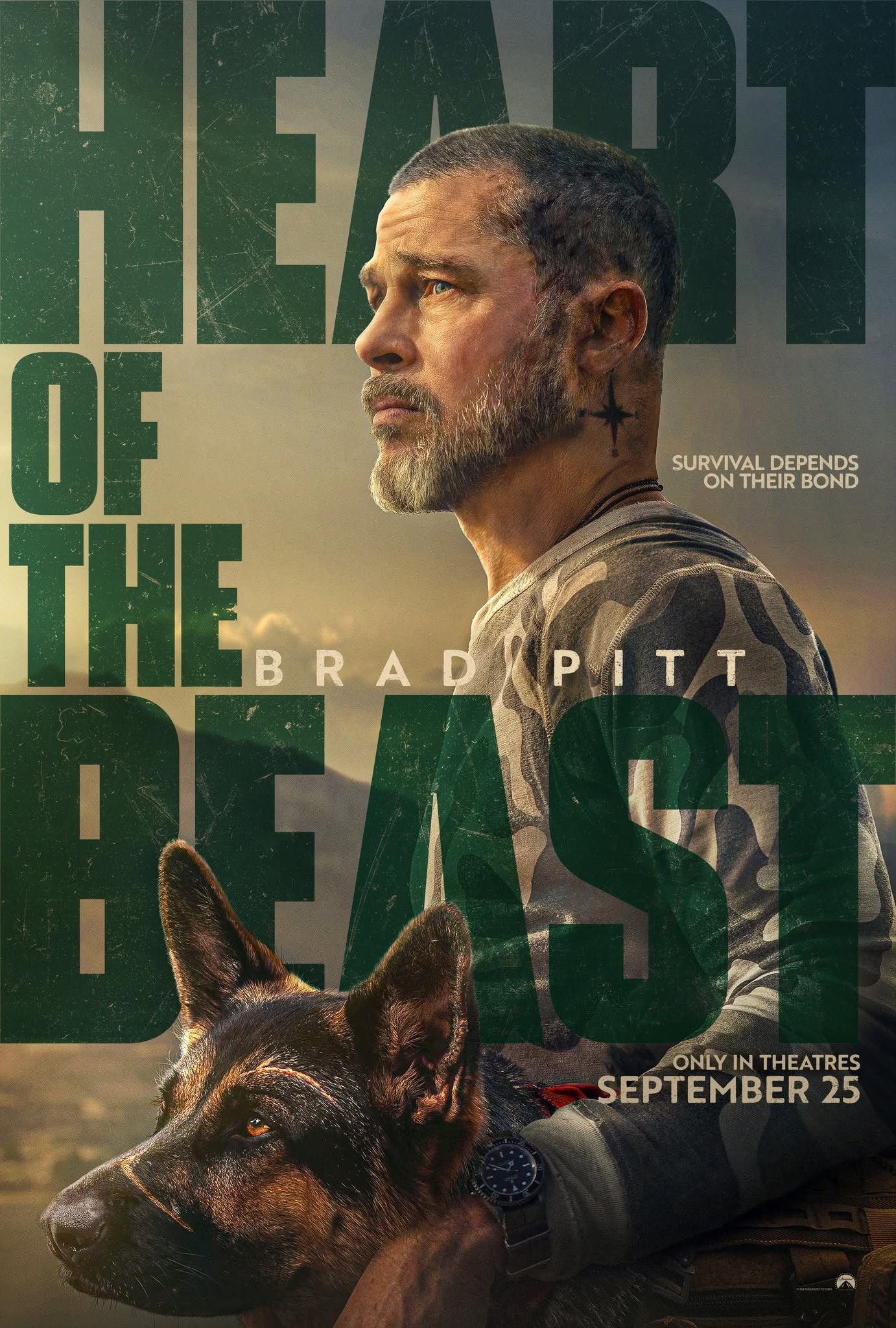
Genre: Survival Thriller | Year: 2026 | Duration: 101 mins | Director: David Ayer| Medium: Theatre (PVR Cinemas) | Trailer: HERE | Language: English| Cast: Brad Pitt, J.K. Simmons, Anna Lambe, and a German Shepherd named Uber | My rating: 4/5
Favourite Dialogue: “What do you say we go find some trouble?”
Heart of the Beast is a survival thriller with exceptional visual storytelling, sparse dialogue, and quieter moments between a former Special Forces officer and his combat dog set in Alaskan wilderness. Add a broken arm, a heart attack, wolves, bears, freezing water, snow, blood and a considerable amount of physical suffering, and you have what appears to be a fairly familiar survival thriller. Yet David Ayer’s film, starring Brad Pitt as James Belmont, turns out to be less interested in survival than in the reason we survive. The core theme is not the wilderness but a relationship between a wounded man and an equally wounded dog who have, in some sense, become each other’s last reason to keep going.
James (Brad Pitt) is a former Special Forces soldier who has travelled to Alaska with Odin, his German Shepherd and former combat companion. Both carry the physical and psychological remnants of war and suffer from PTSD. Odin has lost a leg, while James carries his own injuries and memories. Their retreat into the wilderness initially looks like an attempt at escape, perhaps even healing. But when James’s plane crashes due to a heart attack mid-flight, the landscape that was supposed to offer solitude becomes an obstacle course. The two must make their way back to civilisation across a vast and hostile landscape. The premise is almost elemental with a man, a dog, nature and the distance between life and death.
The film has very few characters and even fewer opportunities for conventional dialogue. J.K. Simmons appears in a small but memorable role, while Anna Lambe has a more peripheral presence. For long stretches, the film belongs almost entirely to James and Odin. The absence of conversation makes every small interaction between the two increasingly important. A look, a gesture, a moment of hesitation or the simple act of the dog following its master begins to carry the emotional weight that another film might try to manufacture through speeches.
And this is where Odin steals the film. Played primarily by a German Shepherd named Uber, Odin is not treated as a cute cinematic accessory. He is a working animal, a veteran, a companion and, eventually, something closer to family. The film avoids turning him into a talking or excessively anthropomorphised dog. He remains recognizably canine, which makes the bond more convincing. Much of the emotional communication between the two comes through glances and physical proximity. The filmmaking is particularly effective here as the combination of Brad Pitt, cinematography, editing and the animal handlers makes Odin’s reactions unusually expressive without forcing them into sentimentality.
Brad Pitt as James is exceptional, and there is little of the easy charm that has defined some of his most recognisable roles. He has very well portrayed James as physically battered, emotionally withdrawn and often barely capable of speaking, and Brad Pitt therefore has communicated this through his posture, exhaustion and facial expression. The result is a performance that depends less on charisma than on vulnerability.
The film’s treatment of masculinity is also more interesting than its muscular exterior initially suggests. Ayer has made plenty of films about men, violence, soldiers and damaged masculinity, and Heart of the Beast initially appears to belong squarely in that tradition. James is capable, physically tough and accustomed to danger, and knows how to survive. But the film gradually undermines the idea that survival is simply a demonstration of strength. He survives because he cares for something outside himself. His relationship with Odin makes vulnerability possible. The soldier who has been trained to endure pain discovers that endurance is not the same thing as living.
That gives the title an additional resonance. The ‘beast’ gestures towards something inside the characters—the violence, fear and instinct that war has left behind.Heart of the Beast is not a reinvention of the survival movie. Brad Pitt’s weathered performance, the spectacular wilderness, the physical tension and, above all, a remarkably expressive dog steal the show. Its occasional clichés and uneven visual effects prevent it from becoming something deeper or more formally adventurous. But the film understands that emotional power does not always require complexity. Sometimes it requires only two beings refusing to abandon each other. And for a film about survival, that is perhaps the most important thing it has to say.
Discover more from Manu Mayank
Subscribe to get the latest posts sent to your email.
 About Manu Mayank
