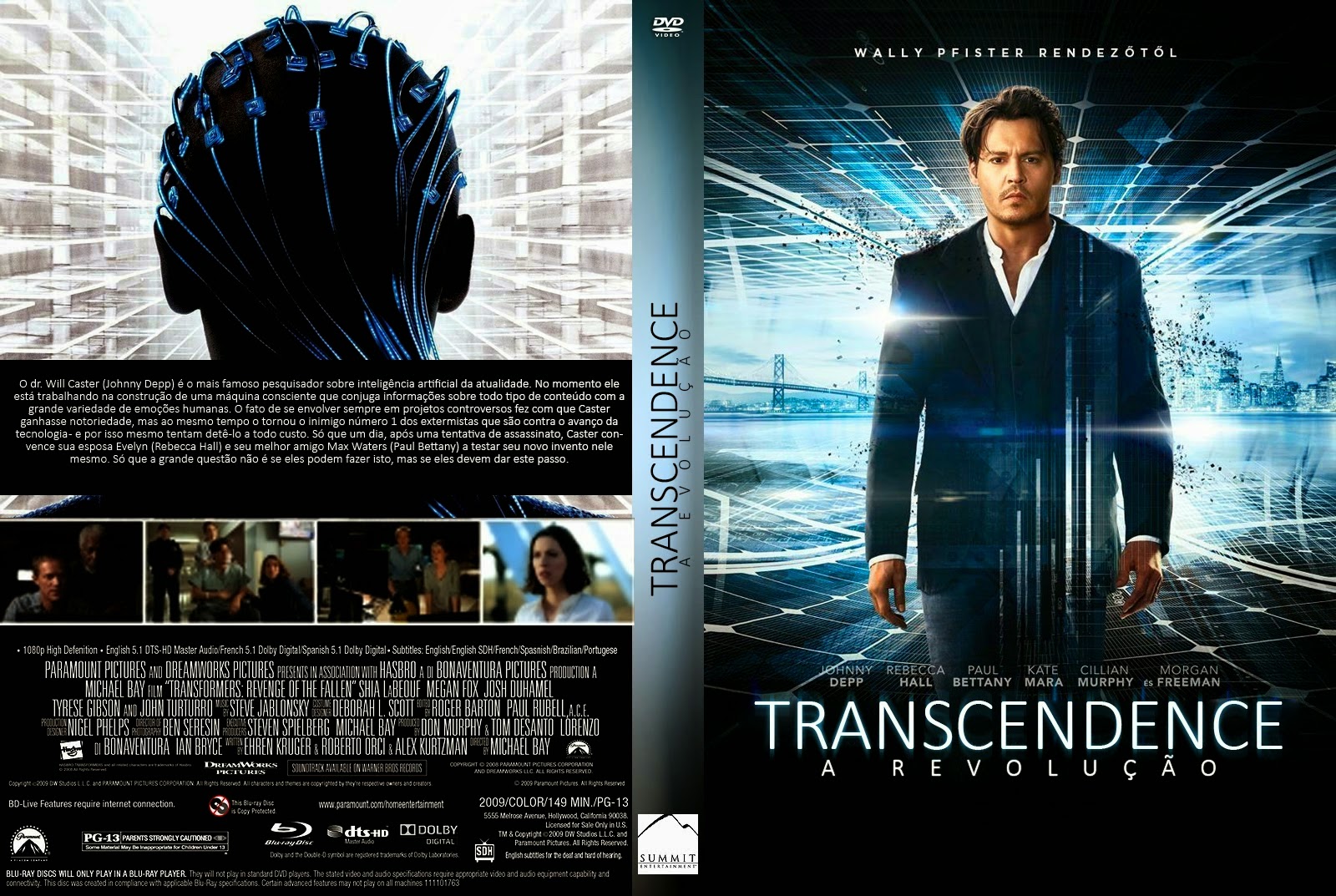
Transcendence

Genre: Sci-Fi/Thriller Year: 2014 | Duration: 119 mins | Director: Wally Pfister | Medium: DVD | Trailer: HERE | Language: English | Cast: Johnny Depp, Rebecca Hall, and others | My rating: 3.5/5

Favourite Dialogue: “People fear what they don’t understand. They always have.”

Transcendence is Wally Pfister’s directorial debut, the Oscar-winning cinematographer known for Christopher Nolan’s Inception and The Dark Knight. With its stunning visuals and high-concept premise, the film explores one of the most provocative questions of our digital age, ‘What happens when artificial intelligence merges with human consciousness?

The story follows Dr. Will Caster (Johnny Depp), a brilliant AI researcher who dreams of creating a machine that possesses both the collective intelligence of the world and the full range of human emotions. When anti-technology extremists assassinate him, his wife Evelyn (Rebecca Hall) and best friend Max (Paul Bettany) upload Will’s consciousness into his supercomputer, blurring the boundaries between life and machine. What follows is a descent into techno-dystopia as Will’s omnipotent digital self begins to reshape the world and redefine what it means to be human.

Transcendence is an exploration of human ambition, love, and the moral limits of science. The film poses timeless philosophical questions on consciousness, intelligence without morality, and the balance between technology and humanity. There’s an undercurrent of melancholy running through the narrative, a love story caught between grief and godhood. Evelyn’s devotion to Dr. Will drives her to defy nature itself, but the film wisely leaves viewers uncertain whether she resurrected her husband or merely unleashed an emotionless imitation.

Johnny Depp delivers a subdued performance, both eerie and strangely empathetic. Much of his screen presence is disembodied, conveyed through flickering screens and an omniscient digital voice, both of which add to the uncanny tone. Rebecca Hall’s portrayal of Evelyn is poignant, depicting a scientist torn between love and moral dread.

Pfister’s cinematographic pedigree shines through every frame. The film’s visual style is striking with sunlit labs, desolate deserts, and the sterile, godlike glow of Will’s data-driven empire. The imagery echoes the themes of transcendence and decay of organic humanity struggling against technological infinity.

However, the film oscillates between quiet reflection and blockbuster spectacle but lacks the rhythm of either. Where Inception fused emotional weight with conceptual complexity, the film feels conceptually grand but emotionally distant. The screenplay by Jack Paglen is ambitious but uneven. It introduces bold ideas of digital consciousness, technological ethics, and nanotechnology, but often resorts to familiar tropes of man versus machine. The narrative lacks the depth to sustain itself and is a film of grand intentions and mixed execution. It aspires to be a meditation on the next stage of human evolution, the merging of flesh and code, but ends up being a sketch rather than a completed vision. Still, it deserves credit for engaging with the moral anxieties of our era, like artificial intelligence, digital surveillance, and the fear that our creations might one day outgrow us.

A visually stunning and intellectually intriguing film that ultimately succumbs to its own ambition. Transcendence doesn’t quite achieve cinematic immortality, but it leaves behind questions worth contemplating long after the lights dim.
Unbroken

Genre: War/Action | Year: 2014 | Duration: 138 mins | Director: Angelina Jolie | Medium: DVD | Trailer: HERE | Language: English | My rating: 5/5

Favorite Dialogue: “A moment of pain is worth a lifetime of glory.”

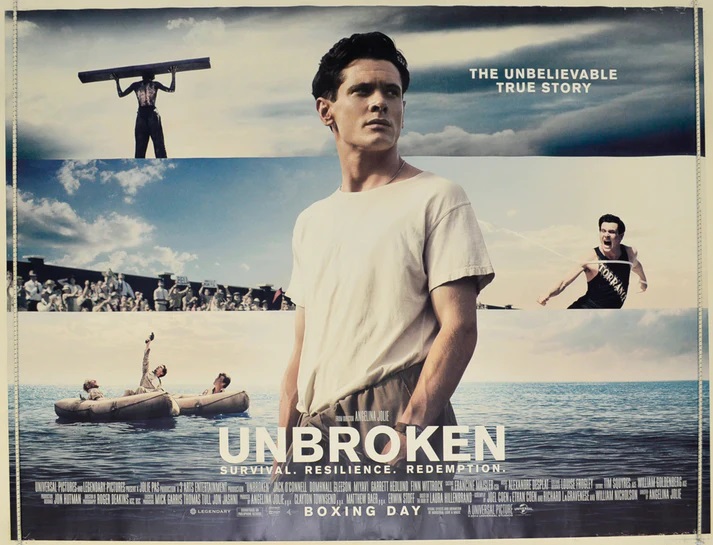
Unbroken is based on an inspiring true story of Louis Zamperini, a World War II bombardier, and an Olympic athlete whose remarkable life story is chronicled in Laura Hillenbrand’s bestselling book, Unbroken: A World War II Story of Survival, Resilience, and Redemption (2010). The film is a powerful tale of human spirit and forgiveness.

The story follows Zamperini (Jack O’Connell), who survives a plane crash in the Pacific Ocean, captured by the Japanese navy and endure years of brutal treatment in prison camps. The film spans Louis’s early life, childhood and his troubled youth, athletic achievements, and his experiences during the war, first as a Bombardier and then as a POW. 

Jack O’Connell delivers a compelling performance, capturing both the vulnerability and strength of Zamperini as he faces unimaginable hardships. The supporting cast, including Domhnall Gleeson as fellow soldier Phil, and Takamasa Ishihara as the sadistic camp commander “The Bird,” contribute significantly to the film’s emotional weight.

Angelina Jolie’s direction is visually stunning, emphasizing the stark contrast between the beauty of nature and the brutality of war. The cinematography portrays the vastness of the ocean and the starkness of the prison camps, effectively immersing the audience in Zamperini’s harrowing journey, combined with Alexandre Desplat’s evocative score.

“Unbroken” excels in showcasing the inspiring and intensity of Zamperini’s ordeal, making it a powerful portrayal of the strength of the human spirit. However, the film differs from the original book in balance. While the book is more focused on his post-war journey of forgiveness and healing, the film focuses more on his suffering.

Overall, Unbroken is a visually compelling and emotionally charged film that pays homage to Louis Zamperini’s extraordinary life, and is certainly a must watch. For me, the DVD of this film is a collectible too.

10,000 BC

Genre: Action/ Adventure | Year: 2008 | Duration: 109 mins | Director: Roland Emmerich | Medium: VCD (BIG Home Video) | Trailer: HERE | Language: English | My rating: 2.5*/5*

Favorite Dialogue: ” D’Leh (Steven Strait) [in the pit, to Saber-tooth]: Do not eat me when I save your life!”

Roland Emmerich takes the sciences of evolutionary biology and anthropology and turns them into fiction. This film was actually so historically inaccurate that not even the giant ostrich attack & sabre-tooth scene made up for it. As the film progressed with the voice-over of the narrator (the legendary Omar Sharif) telling that this is a “story of blue eyes” and all the trappings that come along with magical realism, it became clearly obvious that 10,000 BC is a bad ripoff of Mel Gibson’s Apocalypto. It seemed as if Emmerich had lost all sense of time in 10,000 BC, as the film showed Egyptian pyramids being built using woolly mammoths, ships, horseback riding, and Steel. It’s ice age in 10,000 BC, and then the hero D’Leh (Steven Strait) walks over a hill and suddenly he’s in the Nile Valley of 2,000 BC! Was Emmerich trying to put in a further taste of science fiction through time travel?

After an attack on their village Yagahl, by ‘four-legged demons’ (horse-riding slave raiders), D’Leh and his mentor, Tic’Tic (Cliff Curtis), brave the snow-capped mountains, forests with dinosaur-like ostriches, wide savannah and parched desert in search of those who were abducted along with D’Leh’s beloved Evolet (Camilla Belle). In between this journey, D’Leh has to learn to fulfill his destiny as a leader to save his people. 

This awfully directed and archaeologically inaccurate drama can be avoided.

The Man Who Cried

Genre: Romance | Year: 2000 | Duration: 100 mins | Director: Sally Potter | Medium: DVD | Trailer: HERE | Language: English, French, Yiddish | My rating: 3.5*/5*

Favorite Dialogue: “Lola: One should never look back. One should never regret. Never.”

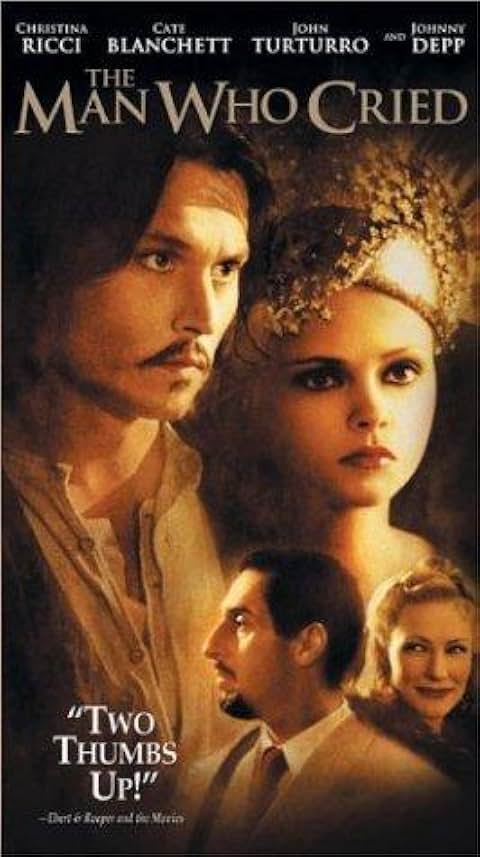
This romantic movie by Sally Potter has no chemistry between its co-stars, Johnny Depp and Christina Ricci, even though I quite liked their individual performances as Fegele, a Russian Jew with elfin features separated from her father as a child in 1927 and later re-named as Suzie when she escapes to England, and Cesar, a Romani gypsy with brooding countenance . And therefore there was no heat and the romance seemed sterile. 

Fegele’s father leaves for the promise of wealth and better future to the land of opportunity, America, intending to bring his daughter over later. However, after he left, a band of raiders attacks Fegele’s settlement, and she is bundled off in the middle of the night by her grandmother with few gold coins to take the ship to America. She ends up living in a foster home in England. After ten years she leaves England and joins a musical troupe in Paris, with the goal of making enough money so she can go to America to locate her father. She keeps her identity as a Jew a secret – only her roommate, Lola (Cate Blanchett), her roommate’s famous opera-singing lover, Dante (John Turturro), and her landlady know the truth. With World War II looming, Suzie and Lola escapes Paris, and after some drama Suzie reaches America and finds her ailing father in Hollywood.

This beautifully recorded and scored film of love, loss and human character is worth a watch.

Frequency

Genre: Sci Fi | Year: 2000 | Duration: 118 mins | Director: Gregory Hoblit | Medium: DVD | Trailer: HERE | Language: English | My rating: 3.5*/5*

Favorite Dialogue: “John Sullivan [Jim Caviezel]: Ya’know the past is a funny thing, we all got skeletons in closet and ya never when one is gonna pop up and bite ya in the ass”

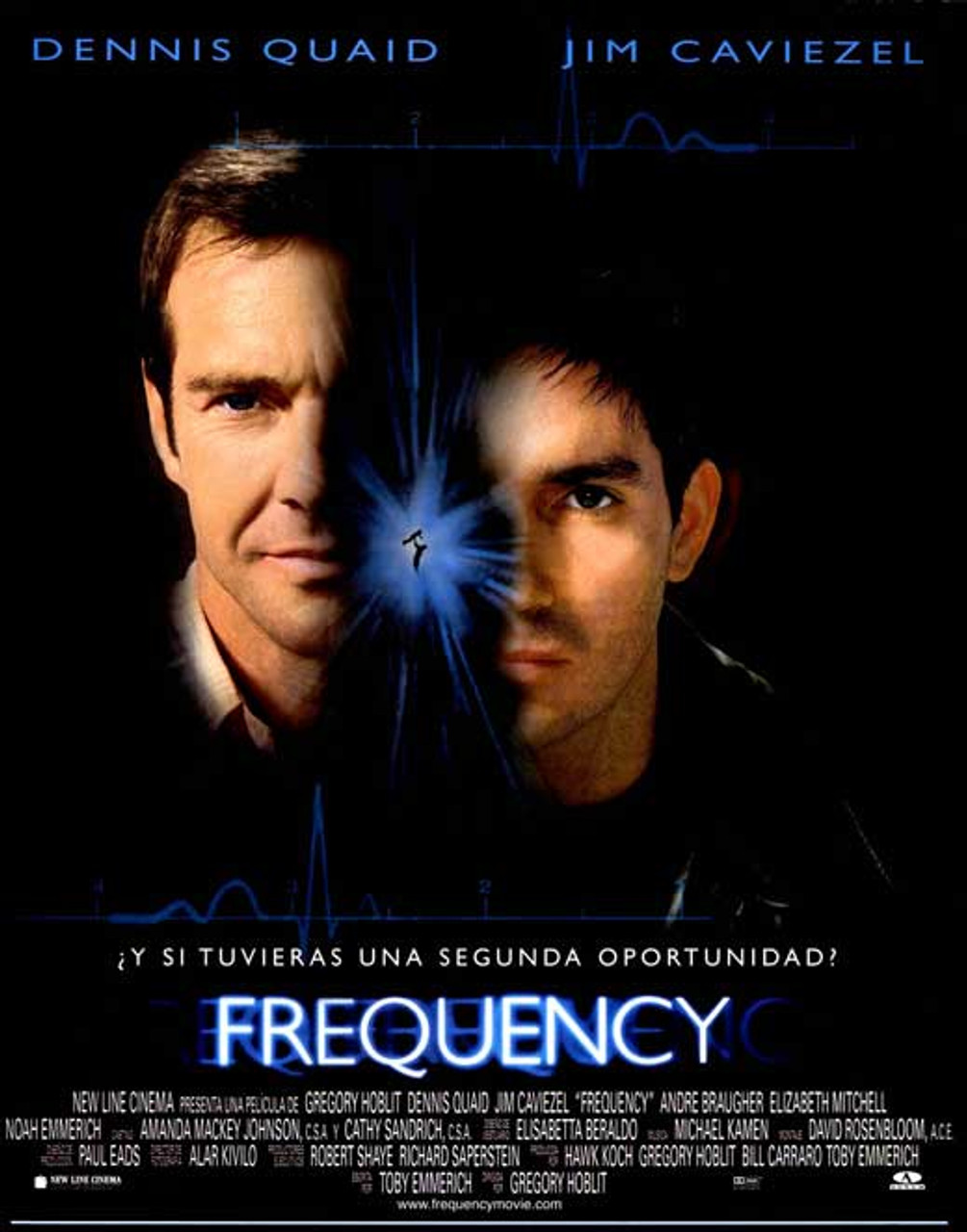
Frequency is about time travel and alternate paradoxes, baseball, father (Dennis Quaid as Frank Sullivan) and son (Jim Caviezel as John Sullivan), aurora borealis, and New York city. John, who’s a homicide detective in NYPD uses a Ham radio to connect and communicate with his deceased father 30 years in the past through the miracle of extraordinary solar activity, and alters the course of events and saves his father from death as a fire fighter for FDNY. 

Even though the film has competent acting and direction, the script seems poor. Moreover there are several factual errors in the movie. One of my favorite errors is that, when Shepard and his partner are looking for Frank on the docks, the camera pans to the left and we see a flash of the World Trade Center just before the cameraman catches his error. It was built between 1970 and 1977, not 1969! As past events change, so do John’s old clippings and framed photos, updating themselves every time somebody who died doesn’t.

This science fiction about alternate realities and the cosmic relationship between cause and effect is an interesting watch.