Economic impact of Tuberculosis in India

Tuberculosis (TB) exacts a significant economic toll in India, affecting individuals, households, and the nation’s economy as a whole. Despite being preventable and treatable, TB continues to pose formidable challenges, impeding economic development and exacerbating poverty. By delving into the economic dimensions of TB in India, we can better understand its impact and the urgent need for concerted action to address this burden.

The economic burden of TB encompasses direct costs related to healthcare services and indirect costs stemming from productivity losses and premature mortality. According to a report by the World Health Organization (WHO), TB costs India an estimated $24 billion annually in terms of lost productivity and healthcare expenses. This staggering figure underscores the magnitude of TB’s economic impact on the nation.

Direct costs of TB care include expenses incurred for diagnosis, treatment, and management of the disease. These costs can be prohibitive for affected individuals and households, particularly those already grappling with poverty. According to the Global Tuberculosis Report 2021, approximately 39% of TB patients in India face catastrophic health expenditures, pushing many families into poverty.

Indirect costs of TB are equally significant, primarily attributable to productivity losses resulting from illness, disability, and premature death. TB often strikes individuals during their prime working years, disrupting employment and income-generating activities. A study published in The Lancet estimated that TB-related productivity losses in India amounted to $340 million annually, reflecting the substantial economic impact of the disease on workforce productivity.

Moreover, TB-related stigma and discrimination can exacerbate indirect costs by impeding social integration and employment opportunities for affected individuals. Fear of transmission and discrimination in the workplace further compound the economic hardships faced by TB patients and their families.

  • India bears the world’s highest burden of TB, accounting for approximately one-quarter of global TB cases.
  • In 2022, there were an estimated 2.8 million incident TB cases in India, with 342,000 TB-related deaths.
  • TB disproportionately affects economically vulnerable populations, including the homeless, slum dwellers, migrants, and marginalized communities.
  • The economic impact of multidrug-resistant TB (MDR-TB) is particularly severe, with higher treatment costs and lower treatment success rates compared to drug-susceptible TB.
  • According to the India TB Report 2021, the economic burden of TB in terms of lost productivity and healthcare costs is estimated to be $32 billion annually, representing a significant drain on the economy.
  • According to The Economic Times, the total cost of TB treatment from the onset of symptoms to one year post-treatment ranged from $330-$375 per PwTB, despite free diagnosis and treatment provided by the government.

Efforts to mitigate the economic impact of TB require a comprehensive approach that integrates health system strengthening, social protection measures, and poverty alleviation strategies. Investing in accessible, affordable, and high-quality TB care services is essential for reducing the financial burden on affected individuals and households. Additionally, addressing social determinants of health such as poverty, malnutrition, and overcrowded living conditions is critical for preventing TB and breaking the cycle of disease and poverty.

Furthermore, enhancing TB control efforts through innovative financing mechanisms, public-private partnerships, and community-based interventions can help alleviate the economic burden of TB while advancing progress toward elimination goals. Prioritizing TB within broader health and development agendas is essential for mobilizing resources, galvanizing political commitment, and fostering multisectoral collaboration to tackle this pervasive public health challenge.

The economic impact of TB in India is substantial, exerting profound consequences on individuals, households, and the nation’s economy. Addressing this burden requires concerted action and sustained investment in TB prevention, diagnosis, and treatment services. By leveraging evidence-based interventions, strengthening health systems, and addressing social determinants of health, India can mitigate the economic impact of TB while advancing progress towards achieving health equity and sustainable development goals. As India strives towards a TB-free future, addressing the economic dimensions of the disease is paramount for fostering inclusive growth and improving the well-being of its citizens.

(First published on LinkedIn on 28th March 2024)

Navigating the Road to Sustainability for Nonprofits in India

Source: Idea taken from Foraker group model

Sustainability has become a buzzword across industries, and for nonprofits in India, it’s more than just a trend—it’s a necessity! Sustainability in the nonprofit sector is a critical issue that encompasses not only environmental stewardship but also financial stability, organizational resilience, and long-term impact. Nonprofits, by their nature, are dedicated to addressing social, economic, and environmental challenges, often with limited resources and high expectations. With India’s rapid economic shifts and evolving social landscape, understanding and overcoming these hurdles is essential for nonprofits striving to make a lasting difference.

Key Challenges Facing Nonprofits in India

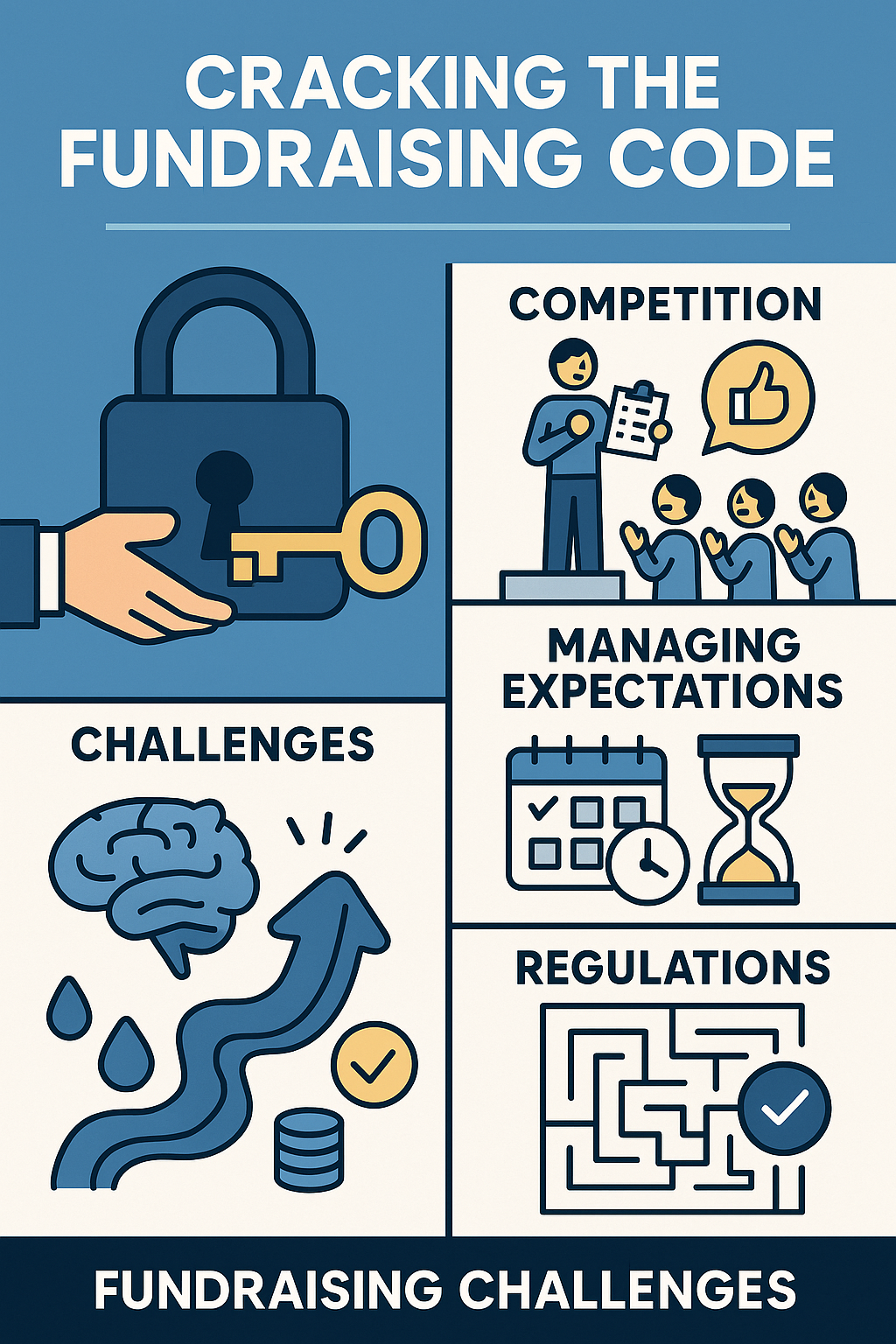
1. Funding Instability:  One of the most significant challenges facing nonprofits is financial instability. Nonprofits rely heavily on donor contributions, government grants, and CSR grants, which can be unpredictable and subject to economic fluctuations. Furthermore, many donors prefer to fund specific projects rather than general operations, leaving nonprofits vulnerable to financial shortfalls. The global economy, changing donor priorities, and a lack of diversified income streams often impact an organization’s ability to plan and execute long-term projects. This gets further compounded by competition among nonprofits for limited resources.

Nonprofits must constantly innovate and demonstrate their impact to attract and retain donors. This requires significant investment in fundraising and partnership strategies, donor relations, and marketing, which are resource-intensive and divert attention from core mission activities, often resulting in chicken-egg situations.

2. Administrative and Operational Inefficiencies:  Many nonprofits in India struggle with limited administrative resources and inefficient operational practices. Limited resources lead to outdated technologies, inefficient processes, and a lack of professional expertise. Inefficiencies in management, compliance, accounting, and reporting undermine the effectiveness of programs and reduce transparency, negatively impacting stakeholders and donors’ trust. This is more challenging for smaller organizations with limited administrative capacity.

3. Regulatory and Compliance Maze: Managing the complex regulatory landscape in India is challenging for nonprofits. Compliance with legal requirements, such as the Foreign Contribution Regulation Act (FCRA) and the Goods and Services Tax (GST), requires careful attention to detail and significant administrative effort. Changes in regulations and stringent reporting requirements add to the administrative burden. Staying compliant while adapting to new regulations can strain organizational resources and divert attention from mission-critical activities.

4. Capacity Building and Skill Gaps: The nonprofit sector often faces challenges related to human resources. There is a growing need for skilled professionals who can handle strategic planning, fundraising, and program management, leading to organizational sustainability. The sector often faces challenges in attracting and retaining skilled professionals due to budget constraints and lower salaries compared to the private sector.

Capacity building requires investing in learning and development for employees. However, many organizations lack the resources to provide comprehensive training programs or to hire experienced professionals. This often limits their ability to effectively manage programs, drive strategic initiatives, and ensure organizational growth.

5. Measuring Impact: Measuring and presenting evidence-backed impact is essential for donor confidence and organizational effectiveness. Nonprofits need to develop robust monitoring and evaluation frameworks to assess the outcomes and effectiveness of their programs. However, many organizations struggle with setting up these systems due to limited resources and expertise.

 Strategies for Enhancing Sustainability

1. Diversifying Funding Sources: To address funding instability, nonprofits need to explore multiple revenue streams. This includes engaging in social entrepreneurship and blended finance opportunities, establishing partnerships with businesses, leveraging online crowdfunding platforms, and digital fundraising. Creating a diversified funding base helps in reducing dependency on a single source and enhances financial stability.

2. Leveraging and Embracing Technology: Technology offers significant opportunities for enhancing operational efficiency and reach. Digital tools can streamline administrative processes, improve data management, and facilitate better communication with stakeholders through online platforms and social media. Adopting technology also opens avenues for online fundraising and virtual program delivery such as webinars, workshops, and training.

3. Building Stronger Partnerships: Collaboration with other nonprofits, governmental agencies, and private sector organizations can amplify the impact of initiatives and improve sustainability. Strategic partnerships can provide access to additional resources, expertise, and networks. Strategic alliances can also lead to cost savings through shared services and joint initiatives. By working together, organizations can leverage each other’s strengths, reduce duplication of efforts, and achieve greater impact.

4. Investing in Human Capital: Prioritizing the development of human resources is crucial for organizational growth and sustainability. Nonprofits should invest in training and capacity-building programs for their staff and volunteers through training programs, workshops, and professional development opportunities. Creating a culture of continuous learning and career advancement opportunities can enhance program delivery, improve management practices, organizational resilience, and employee retention. Leadership development is particularly important for long-term sustainability. Cultivating strong leaders within the organization can drive strategic planning, innovation, and effective decision-making.

5. Enhancing Transparency and Accountability: Building trust with stakeholders through transparency and accountability is essential for long-term success. Nonprofits should adopt the best practices in financial management, regularly publish impact reports, and engage in open communication with donors and stakeholders. Transparency not only attracts more funding but also strengthens community support. Implementing robust internal controls and conducting regular audits can help maintain financial integrity and accountability. Additionally, engaging stakeholders in decision-making processes and soliciting feedback can enhance organizational credibility and responsiveness.

6. Adopting Sustainable Practices: Integrating sustainability into program design and organizational operations can drive long-term impact. Nonprofits should consider the environmental impact of their activities and seek to minimize their footprint. This might involve adopting green practices, such as reducing waste, conserving energy, and promoting eco-friendly initiatives. Sustainable practices also include ensuring the long-term viability of programs. This involves designing initiatives that can be sustained over time, building local capacity, and fostering community ownership. By promoting sustainability within programs, nonprofits can create a transformative impact.

The road to nonprofit sustainability is full of challenges, but with innovation, partnership, and a commitment to continuous improvement, nonprofits can navigate these challenges and continue to make a meaningful impact on society.  As the sector is continuously evolving, embracing sustainability will be key to ensuring that nonprofits can adapt to changing circumstances continue to remain steadfast in their mission, and drive positive social change for years to come.

Disclaimer: The opinions expressed are those of the author and do not purport to reflect the views or opinions of any organization, foundation, CSR, non-profit or others

Garbology: Our Dirty Love Affair with Trash

by Edward Humes | 325 Pages | Genre: Non-Fiction | Publisher: Avery | Year: 2013 | My Rating: 9/10

“The American Dream is inextricably linked to an endless, accelerating accumulation of trash.”
― Edward Humes, Garbology

I discovered this brilliant book by Pulitzer Prize-winning journalist, Edward Humes, when I was searching for books on plastic waste management after attending the screening of a thought-provoking documentary, A Plastic Ocean, by an award-winning filmmaker and journalist, Craig Leeson.

While the book examines how the USA became addicted to garbage, it is a story all around the world with similar environmental and socioeconomic dilemmas of the modern world. The book makes one think that while recycling the waste is the need of the hour, it is the continuous creation of waste in an endless loop that needs to be addressed. The book brings forth examples of activists and outstanding entrepreneurs who are trying to solve the menace of waste. The book also presents an economic history of garbage in the US along with surprising and even shocking statistics and concludes with a compilation of practical steps that individuals can take to reduce the environmental impacts of their generated waste. However, much more is required than just individual practices to overcome plasticisation. Planet and People need to take precedence over profits and combined efforts by communities and businesses alike along with political will are required to win the war on waste. 

I loved the chapter, ‘Down to the sea in chips’ on marine plastics pollution, and their impacts, which is a global environmental concern, converting our once pristine oceans into plastic soup.

This book is a must-read for all, especially if you are a consumer of modern life.

Rowdy Rathore

Theatrical Release Poster

Genre: Action | Year: 2012 | Duration: 140 mins | Director: Prabhu Deva | Medium: Theater (PVR-EDM) in 2012, repeat on DVD in 2020. | Trailer: HERE | Language: Hindi | My rating: 3/5

Favorite Dialogue: “Rowdy Rathore: Don’t angry me.”

Rowdy Rathore, a remake of the Telugu film Vikramarkudu, was supposed to be a come back film for Akshay Kumar as an action heroEven though there’s several good sequences of action throughout those 140 minutes, it somehow lacked the punch of Khiladi Kumar, especially with no story or plot whatsoever, the characters are easily forgettable. Prabhu Deva has used all the tricks that goes in making a successful Telugu hit in this Hindi remake – song, dance, crass humour, romance, thunderous action and a fearless supercop out to outsmart a bunch of fearsome goons. Comic scenes are not so comic, and what really made me laugh was the dialogues in Bihari Hindi of the villains and the way it was delivered UP-style with southy twang. After a very long time, I got to hear words like, ‘Pagalet’, ‘Baklol’, ‘labarchantis‘, etc. Prabhu Deva made Akshay Kumar wear multi-colored pants forgetting Akshay’s style and using Telugu tricks, reminded me of Raja babu of 90s.

The story is of a small time crook Shiva (Akshay Kumar), who is obliged to get in shoes of his look alike, Vikram Rathore, a fearless cop who dies with severe head injuries during a fight, to rescue a fictitious village Devgarh in Bihar, from its despotic feudal lord.  Shiva falls for a girl from Patna, Priya, played by the buxom Sonakshi Sinha, whom Shiva refers as ‘Mera Maal’ repeatedly, and who could have done better than just showing her midriff!

This low-IQ, deafeningly loud, unapologetically crass, regressive drama full of mindless action is my re-watch Movie of 2020.

Impact Funding in the time of COVID-19

Photo source: The New Humanitarian

The global pandemic COVID-19 has triggered the most severe economic recession in nearly a century and is causing enormous damage to people’s health, jobs, and well-being. It has changed the social sector landscape and will continue to impact the sector for the next few years. In the short term, since March 2020, change in the funding trends is already being witnessed by non-profits, especially of the CSR in India, with majority of them contributing to the PM Cares, CM Relief Funds and contributions towards local relief work like food and PPE distribution. The unexpected crisis created due to migrant labour returning to their home states, we are witnessing some of the bigger CSRs channeling their funds towards ‘Rehabilitation during and post COVID-19’ phase with a focus on re-skilling, sustainable livelihoods and job creation, BCC, and food & nutrition security.

Until the next 12-18 months, there will be opportunities for partnerships under the ‘rehabilitation lens’ across geographies, but more focused on states like Bihar, Uttar Pradesh, Madhya Pradesh, Chhattisgarh, Odisha, Assam, and Jharkhand. Apart from relief & rehabilitation, Health (preventive health, strengthening local health systems at block and village levels, and co-morbidity diseases like TB, HIV/AIDS, Diabetes, etc.) and Education (especially working with a sudden increase in out-of-school-children due to in-migration, and skilling School teachers in rural and sub-urban India in virtual classrooms, course development and delivery, and digital communication) are other areas, where donor funds are potentially going to be invested. In other areas, especially environment and climate change (unless CSRs & foundation’s core focus is environment), it is bound to be severe funding cuts (40%-60% from pre-COVID times) over short to mid-term.

Non-profits need to continue building strong partnership with their existing CSR Partners, to continue getting support to even those projects that are not COVID aligned, and build new partnerships using COVID aligned models. It is expected that Government funding will increase and so will partnership opportunities in most of the areas like livelihoods, education and health using innovative implementation mechanisms and digital communication. The World Bank has announced large assistance programs for India, which will be implemented through state governments and may bring non-profits with the opportunities of large partnerships between now and 2025. The current changed funding trend will more or less continue in 2021. However bigger CSR and foundations will see a potential downside of 30-50% in their funding allocations.

As restrictions are being eased world-wide, the path to global economic recovery remains highly uncertain with 6-7.5% negative growth in 2020, it is expected to climb back to around 2.8-3% in 2021 and move slowly towards recovery. In the long run, 2022-25, when both national and international economies are strongly on the recovery path, it is expected that several international aid agencies, which had stopped direct funding in Indian development sector, once again will open a window for 3-5 years of funding, and number of funding opportunities for India and other developing countries will increase. Historically, post mega disaster comes the golden period of funding for impact sector. It is a phase, and it too shall pass. Together, we will continue to drive change and together we will prevail.

Disclaimer: The opinions expressed are those of the author and do not purport to reflect the views or opinions of any organization, foundation, CSR, non-profit or others.

Stay informed with curated content and the latest headlines, all delivered straight to your inbox. Subscribe now to stay ahead and never miss a beat!

Skip to content ↓