Fabric of Resilience in Assam

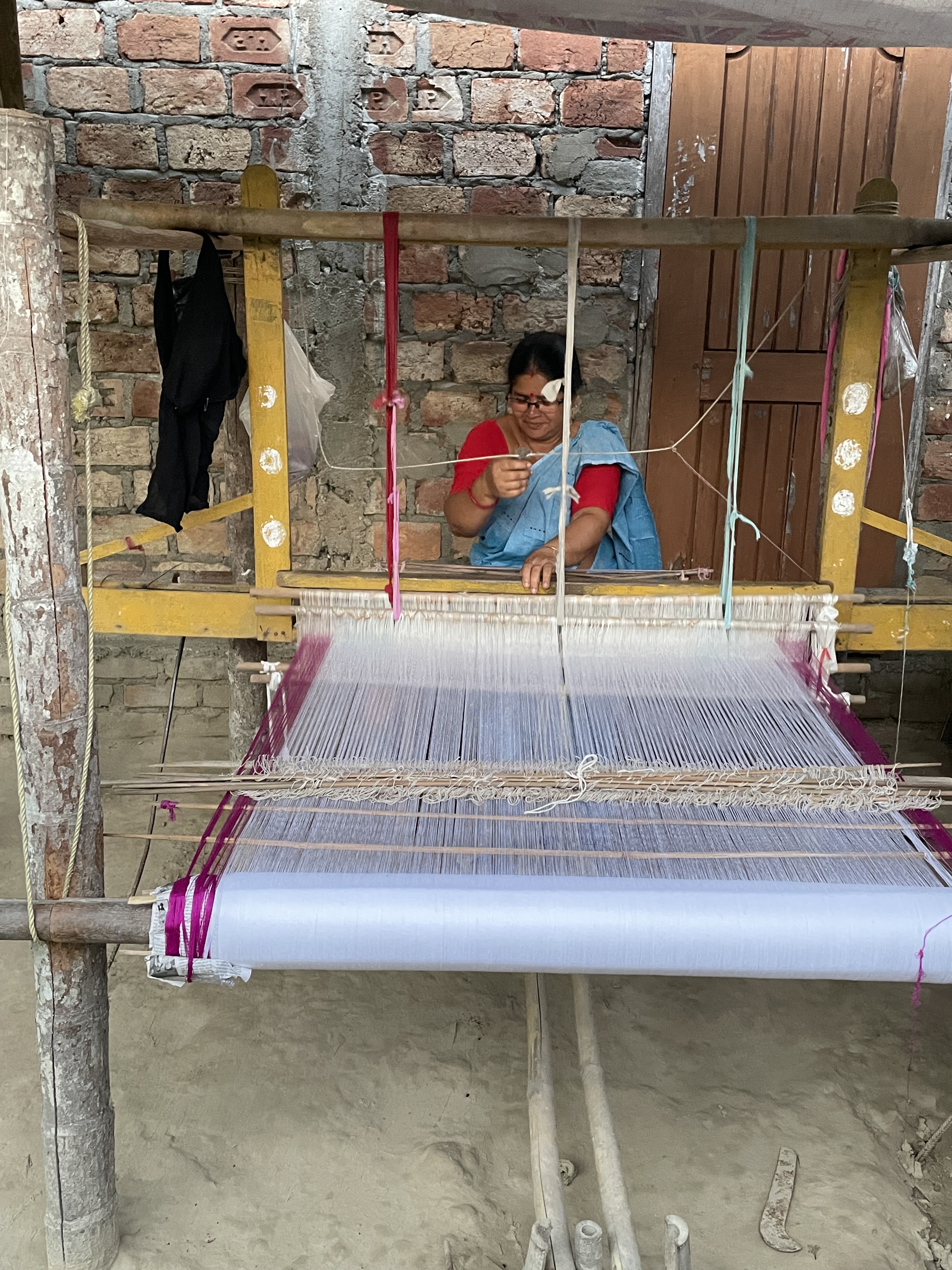
I witnessed women weaving change in the villages of Assam through their skills, cultural heritage, hard work, perseverance, and collective will. Standing in a courtyard in Kamrup district, watching a woman at her traditional loom, I was struck by how quietly revolutionary this simple, everyday act truly is. The rhythmic motion of her hands, the steady concentration on her face, and the vibrant threads stretching across the loom were far more than craft; they were a statement of agency, identity, and economic empowerment. In that moment, it became clear that weaving in Assam is not merely a livelihood. It is a living narrative of resilience and progress, written by women who have refused to be left behind.

In much of rural India, the conversation around women’s empowerment often centres on what needs to be ‘given’ to women: access, opportunities, rights, financial inclusion, and public safety. All of these are undeniably essential. Yet what struck me in Kamrup was how much women were already giving to their families, to their communities, and to the preservation of an age-old cultural tradition. Assam’s weaving heritage is legendary, and most rural households have a loom. The women I met weave not only exquisite textiles like Mekhela Chadors, Gamosas, stoles, saris, but also new pathways for themselves, stitch by stitch.

The woman in the photograph, Jonali Das, from Paschim Bagta village, sits on a traditional handloom, made using local materials, framed by a raw brick wall and a sandy earthen floor. Nothing in this setting reflects modern machinery or industrialized production. Yet it reflects something far more important: dignity in work and pride in cultural identity. Her loom is more than a tool; it is a symbol of continuity. Generations of Assamese women have learned to weave from their mothers and grandmothers. The craft is deeply entwined with rituals, festivals, and the wider cultural ethos of the region. In many communities, a girl’s weaving skill is a marker of her readiness for adulthood. It is a quiet but powerful form of cultural education.

But the picture also reveals another truth: despite the beauty and value of these textiles, most weavers earn very little. The informal nature of the craft, the lack of organized supply chains, exploitative middlemen, limited access to raw materials at fair prices, and the absence of direct market linkages keep them trapped in low-income cycles. The fact that such a skilled craftswoman is working in a semi-open shed with bare tools is a reminder that heritage alone cannot sustain livelihoods unless the systems that support them evolve.

What struck me during conversations with the weavers was their clarity. They were not seeking charity. They were asking for fair access to better looms, training on contemporary designs, consistent market demand, and opportunities to sell directly. Their ask was not a transformation from the outside, but an enabling ecosystem that amplifies what they already excel at.

Local institutions like cooperatives, women’s self-help groups, producer companies, and artisan clusters play a pivotal role in negotiating prices, ensuring raw material supply, and aggregating products for larger orders. In Kamrup, I saw tremendous potential for women-led collectives that could own the entire value chain, from sourcing raw silk yarn of Eri and Muga to designing contemporary designs to managing logistics with digital tools. A decentralized, community-owned model would allow profits to remain in the village while giving weavers a bargaining voice.

There is also an urgent need to tell the stories behind these weaves. Consumers today increasingly seek authenticity, sustainability, and connection. Assam’s handloom sector embodies all three. Each Mekhela Chador woven on a traditional loom is not just a garment; it is hours of meticulous labour, generations of inherited technique, and the cultural soul of a community. Yet the lack of branding and storytelling often reduces these textiles to mere commodities. If India can celebrate Banarasi silk and Kanchipuram saris globally, there is no reason why Assam’s weaves cannot enjoy similar recognition, with the right investment, visibility campaigns, and market linkages.

Government programs like the National Handloom Development Programme and Deendayal Upadhyaya Grameen Kaushal Yojana have made efforts to support weavers. But ground realities show that the most impactful interventions are those that engage women directly, respect their lived knowledge, and co-create solutions rather than imposing them. Capacity building must happen in their language, in their community spaces, and at timings suitable to their daily responsibilities.

Most importantly, the narrative around rural women must shift. Too often, they are portrayed as vulnerable, needing rescue. The woman in the photograph, and countless others like her, are not symbols of vulnerability, but are symbols of strength. They run households, care for children and the elderly, manage farms, participate in community activities, and still take out time to weave. Their contribution to the rural economy is enormous, even though much of it remains invisible and unpaid.

As I watched the fabric slowly take shape on her loom, I realised that weaving is also an act of hope. Every thread layered over another is a gesture of belief in tomorrow, belief that their craft will survive, that their daughters will inherit both the skill and the opportunity to thrive, and that their labour will be valued fairly. If India is to build a truly inclusive development story, it must begin by recognising and uplifting such women, not through charity, but through partnership.

In the villages of Assam, women are already weaving change. They only need the rest of us to stop standing on the sidelines and start supporting the revolution they have begun.

Why Philanthropy Needs to Evolve

Philanthropy has been a force for good across continents, building hospitals, funding schools and universities, feeding communities in crises, taking action to solve social challenges, and underwriting research. While intending to create positive and lasting change in people’s lives and strengthening communities, often, take the form of that giving is the classic ‘donor → beneficiary’ pipeline, which has serious limits. When well-meaning philanthropic entities simply transfer money or material goods to presumed beneficiaries without sharing power, listening deeply, or tracking outcomes with humility, aid can be inefficient, short-lived, and even harmful. To move from transactional charity to transformative social change, philanthropy must evolve toward participatory, locally led, and evidence-based models that empower communities to define problems, choose solutions, and steward resources. Several philanthropic models need to evolve into a new, pluralistic philanthropy that can deliver better, fairer, and more sustainable impact.

The donor-beneficiary model often centres on donors’ priorities. Funders set agendas, design programs, select implementing partners, and measure success by indicators they choose, often from a distance. This creates several structural problems, like,

  • Power asymmetry occurs when donors decide what counts as a problem and which solutions are legitimate. Communities become recipients rather than partners, and local knowledge is sidelined, reducing relevance and local ownership.
  • Templates developed for ease of scale often ignore social-cultural and political nuances at the local level. Programs that look good in donor reports may fail on the ground due to ‘One-size-fits-all interventions.’
  • Short funding horizons and volatility of donors with grants tied to campaign cycles, leftover funds, or financial year budgets can stop abruptly, leaving services unsustainable and organisations stranded.
  • When philanthropy substitutes for systemic public investment, it can relieve governments of responsibility or create dependency among groups who lack the voice to advocate for longer-term change.
  • Donors are accountable to boards or taxpayers, with limited accountability to the communities they aim to serve; evaluation is often internal and narrowly framed.

These limitations are not theoretical as reviews of philanthropic practice repeatedly find that participation is often performative, i.e., consultation exercises without power transfer. Scholarly and practitioner literature has called out the gap between rhetoric and sustainable commitment to community-led approaches. This is the moment for a pivot to an evolved philanthropic approach that can complement the traditional giving through,

  1. Participatory and community-led decision-making: Communities should help set priorities and co-design programs. Participatory grant-making moves power to those closest to problems, bringing lived experience into funding decisions and increasing the legitimacy and likely effectiveness of interventions.
  • Local leadership and capacity building: Funding should invest in local institutions (community groups, cooperatives, NGOs, social enterprises), and not only project outputs. That means unrestricted core support, leadership development, and multi-year commitments that enable organisations to mature and adapt.
  • Data-driven learning and accountability: Rigorous use of data and learning systems can help tailor solutions, track impact, and course correct. Data must be used ethically, with local ownership and attention to privacy and power dynamics.

When combined, this approach will shift philanthropy from a mere supplier of goods to an enabler of agency. Some good practices from around the world show how participatory and locally led philanthropy can function in practice, and who can act as torchbearers for philanthropic communities in their regions.

Indian philanthropic institutions combine traditional grant-making with newer models. Tata Trusts has invested heavily in the Data-Driven Governance (DELTA: Data, Evaluation, Learning, Technology, and Analysis) framework for strengthening local governance and planning. Their approach works with government entities and communities to build data systems that inform local decision-making rather than impose external solutions. This demonstrates how philanthropy can facilitate evidence-based public systems while engaging local institutions rather than bypassing them.  

Azim Premji University and Foundation have made community engagement in educational work prominent, emphasising long-term partnerships with local schools and communities rather than one-off interventions. Their community engagement model underscores the importance of listening, iterative learning, and strengthening public institutions rather than substituting for them.  

In Southeast Asia, funder collaboratives demonstrate a shift from isolated donors to pooled funds that support locally relevant priorities. The Asia Community Foundation’s 30×30 Southeast Asia Ocean Fund, launched in January 2025, is a recent example. The fund pools resources to protect coastal and marine ecosystems with an emphasis on inclusion and equity, supporting local stewards and communities rather than exporting conservation blueprints. Collaborative funds like this allow donors to align with regional expertise, reduce duplication, and focus on communities affected by interventions.  

The USA has been an incubator for participatory grant-making experiments. Major foundations and movements, spurred by crises such as the COVID-19 pandemic and racial-justice mobilisations, have explored models that transfer decision-making authority to communities. For instance, mainstream philanthropic institutions like Ford Foundation have published reflections on why participatory grant-making mattered during crises and how it can be institutionalised, noting its capacity to surface local priorities and accelerate equitable responses. While the U.S. landscape is mixed (with many foundations still operating traditionally), the growing body of practice shows that community-led funding can be both rapid and rights-respecting when donors cede control.  

The literature and practice of participatory and community-led philanthropy are growing across Africa, rooted in traditional values of solidarity, mutuality, and shared support. Researchers and practitioners have documented participatory grant-making and community governance innovations, arguing that ceding decision rights to local actors helps align funding with local priorities and sustains outcomes. While capacity and infrastructure challenges exist, the momentum toward locally governed funding systems is notable in contexts where external donors historically dominated the agenda. Recent examples of participatory grant-making (such as Harambee in Kenya, Ujamaa in Tanzania, and Ubuntu across the continent) synthesise these trends and highlight both promise and challenges.  

Participation, local leadership, and data are crucial for effective philanthropy because they shift power dynamics, increase relevance and impact, and improve decision-making based on evidence rather than assumption. This approach moves away from traditional, top-down models toward more equitable, efficient, and sustainable processes. Participatory philanthropy and grant-making processes will lead to,

  • Greater relevance when communities help design interventions, uptake and adaptation increase. Local actors understand cultural norms, political constraints, and practical hurdles that external project designers often miss.
  • Sustainability of programs that are owned by communities beyond the grant cycle. Unrestricted support and capacity building enable organisations to respond flexibly to emerging needs.
  • Data systems that include local stakeholders enable rapid feedback loops, like what’s not working can be quickly spotted and fixed, and successes can be scaled responsibly, improving impact through iterative learning.
  • Participatory philanthropy is not neutral, as it intentionally rebalances power by giving those affected by problems a say in solutions.
  • Cost-effectiveness through local knowledge increases returns on investment.

To evolve to the new and effective models of philanthropy, funders should take practical steps such as shifting money and power by moving a significant percentage of grant money into participatory processes and community-governed pools. They should offer multi-year, unrestricted funding and simplify application and reporting requirements. Investing in intermediary infrastructure is crucial, so supporting local philanthropy platforms, community foundations, and capacity builders, incubators, and accelerators who can channel funds and help communities administer grants is essential. Building data partnerships with communities by funding local data systems, such as community scorecards, participatory monitoring, and open data platforms that are owned and governed by communities, while ensuring ethical data practices, is also important. Co-designing evaluation frameworks with community actors to develop success metrics that prioritise outcomes valued by the community, such as economic stability, dignity, and local governance, rather than just donor KPIs, is very much required. Additionally, funders should reward adaptive learning by creating grant mechanisms that allow for iteration of ‘pilot-learn-adapt-scale’ rather than penalising change as ‘failure.’ Lastly, funders should role model humility and plan for their responsible exit by strengthening local institutions so they can sustain without perpetual external support.

However, it’s important to understand that not every ‘participatory’ label signals a real transfer of power. Donors must avoid superficial practices, like convening consultations for optics, creating advisory committees without decision rights, or funding only projects that align with preselected agendas. Genuine participation requires structural changes like in the boards, budgets, and governance processes, that reflect shared authority.

Philanthropy has great potential to speed up solutions to poverty, climate change, governance problems, and social inequality. To shift from charity to meaningful change, funders need to be willing to relax control, invest in local leaders, and support strong, community-led data and learning systems. Examples from India, Southeast Asia, the U.S., and Africa demonstrate various approaches such as data partnerships that improve governance, pooled funds that empower local stewards, and participatory grant making that changes who makes decisions. Effective, equitable, and sustainable change emerges when those affected by problems help define and lead the response. Philanthropy’s evolution from a one-way pipeline of resources to a platform for shared power is not just desirable, it’s necessary if we want charitable funding to do more than temporarily relieve suffering. They must catalyse systems that let communities thrive on their own terms.

Top 10 must-read Books for Social Impact Professionals

Social impact professionals face challenges that require both strategic thinking and deep empathy. Whether working in non-profits, CSR, philanthropy, development agencies, or social enterprises, professionals in these fields need to balance passion for change with evidence-based approaches to development. Books remain one of the most powerful ways to gain insight, inspiration, and tools for creating sustainable social impact.

I have put together a list of ten must-read books that every social impact professional should consider adding to their shelf, as they are on mine. These books are on leadership, systems thinking, innovation, fundraising, evaluation, and purpose. They provide both the vision and the practical tools needed to make a lasting difference.

1. “How to Change the World: Social Entrepreneurs and the Power of New Ideas” by David Bornstein

David Bornstein profiles pioneering social entrepreneurs who are solving some of the world’s toughest problems with creativity and determination. From rural health initiatives to innovative education programs; from rural poverty in India to discrimination against gypsies in Central Europe; from industrial pollution in the United States to child prostitution in Thailand, the book shows how individuals and organizations can catalyse systemic change. For social impact professionals, it provides concrete case studies and a roadmap for thinking beyond short-term solutions. It offers inspiration and practical lessons in scaling impact, showing how bold ideas combined with persistence can transform communities.

2. “The Blue Sweater: Bridging the Gap Between Rich and Poor in an Interconnected World” by Jacqueline Novogratz

Jacqueline Novogratz, founder of Acumen, blends personal narrative with the evolution of impact investing. Her journey from traditional philanthropy to patient capital investing shows how financial innovation can tackle poverty while respecting dignity. It challenges professionals to rethink charity and aid, emphasizing sustainable solutions that empower rather than create dependency.

3. “Creating a World Without Poverty: Social Business and the Future of Capitalism” by Muhammad Yunus

Nobel laureate Muhammad Yunus introduces the concept of “social business”, a business model designed not for profit maximization but for solving social problems. Drawing on his work with Grameen Bank and microfinance, Yunus presents a radical yet practical vision of blending entrepreneurship with social change. It inspires a new way of seeing markets and entrepreneurship as allies in social development, especially for professionals exploring hybrid models of impact.

4. “The Lean Startup” by Eric Ries

At first glance, this book seems more suited to tech entrepreneurs than social impact leaders. Yet, its core idea of test, learn, iterate has transformed the way many social innovations are designed and scaled. Social enterprises and NGOs increasingly use lean principles to reduce waste, validate solutions with communities, and adapt quickly. Because social impact efforts often operate under resource constraints, adopting lean experimentation can make interventions more effective and sustainable.

5. “Measuring What Matters: Tools for Aligning Capital and Impact” by Rodney Schwartz & Geoff Mulgan (or substitute with John Doerr’s “Measure What Matters” depending on focus)

Impact measurement remains one of the most pressing challenges for the field. This book provides frameworks and practical tools for defining, measuring, and aligning impact with mission. It explores case studies of organizations that have successfully embedded impact metrics in their operations. It equips professionals with methods to track progress, communicate value to funders, and ensure accountability without losing sight of mission.

6. “Switch: How to Change Things When Change Is Hard” by Chip Heath and Dan Heath

Social impact work is essentially about behaviour change, whether convincing communities to adopt healthier practices, companies to embrace sustainability, or policymakers to reform systems. “Switch” explains why people resist change and offers strategies to inspire collective action. It’s a practical guide to leading change management in complex social contexts, with evidence-based techniques that can be applied across sectors.

7. “Development as Freedom” by Amartya Sen

Economist and Nobel laureate Amartya Sen reframes development not simply as economic growth but as the expansion of human freedoms. He argues that true development empowers individuals with choices, agency, and opportunities. For anyone engaged in social impact, this book provides a philosophical foundation. It reminds professionals that the goal is not just programs or numbers, but human dignity and freedom.

8. “The Infinite Game” by Simon Sinek

Social impact work is not about short-term wins but about long-term transformation. In “The Infinite Game,” Sinek contrasts finite games (with fixed rules and winners) with infinite ones (driven by purpose and adaptability). Social impact is clearly an infinite game, requiring resilience and continuous rethinking. It equips leaders with the mindset needed to sustain impact, avoid burnout, and build organizations that thrive beyond immediate results.

9. “Winners Take All: The Elite Charade of Changing the World” by Anand Giridharadas

This provocative book critiques the global elite’s role in shaping the social impact landscape. Giridharadas argues that many wealthy philanthropists and corporations pursue impact while preserving the very systems that cause inequality. Even if one disagrees with all its conclusions, it challenges professionals to reflect critically on power, privilege, and accountability in the sector.

10. “The Systems Work of Social Change: How to Harness Connection, Context, and Power to Cultivate Deep and Enduring Change” by Cynthia Rayner and Francois Bonnici

Addressing complex issues like poverty or climate change requires a systems lens. This book offers practical insights into how organizations can shift from isolated interventions to systemic approaches that address root causes. It helps professionals understand complexity, collaborate across sectors, and design interventions that endure over time.

The work of social impact professionals is as inspiring as it is demanding. It calls for creativity, humility, persistence, and continuous learning. The ten books highlighted above represent a spectrum of ideas, from the visionary and philosophical to the highly practical. Together, they offer a toolkit for navigating the challenges of creating social good in a complex, globalized world.Reading these books won’t just sharpen your technical skills, they will also deepen your sense of purpose, expand imagination, and foster resilience. For professionals committed to solving humanity’s most pressing problems, these works serve as companions, guides, and sometimes challengers, reminding us that lasting change is possible when ideas, innovation, and values align.

Measuring Entrepreneurial Attitude

Generated using Ai

In India’s rural economy, entrepreneurship has emerged not merely as a means of livelihood but as a powerful solution for social and economic transformation. While skills development programs like Skill IndiaStartup India, and Deen Dayal Upadhyaya Grameen Kaushalya Yojana, and numerous capacity-building workshops by NGOs have made significant progress in imparting entrepreneurial aptitude, the more elusive and often underappreciated dimension is entrepreneurial attitude. This inner compass and entrepreneurial mindset, shaped by motivation and initiative, resilience, risk-taking ability, adaptability, and opportunity identification, is what ultimately sustains a venture through uncertainty.

Entrepreneurial aptitude is teachable. It usually comprises financial literacy, business planning, marketing, and digital skills, domains that lend themselves well to structured training modules. However, attitude is behavioural, psychological, and deeply contextual, especially in rural environments where social, cultural, and economic factors deeply influence individual motivation and risk behaviour.

While technical institutions, NGOs, and government agencies have scaled up skilling programs in rural areas, the absence of reliable frameworks to assess entrepreneurial attitude results in misdirected investments, high dropout rates, or business failures post-startup.

I believe that the right attitude matters more in rural entrepreneurship, or even entrepreneurship in general. Rural entrepreneurship has its unique challenges, like limited access to finance and markets, lack of required infrastructure, socio-cultural constraints, especially for women, and low institutional support. Here, it is the right attitude of the aspiring entrepreneur, which is a mix of persistence, opportunity-seeking, and resourcefulness, that becomes the decisive factor between failure and success.

Current programs lack structured mechanisms to assess and nurture entrepreneurial attitude at the rural level, leading to inefficient selection of beneficiaries, poor resource utilization, and low sustainability of rural enterprises. Therefore, the critical question remains how we can measure the right entrepreneurial attitude in an aspiring entrepreneur at the rural level.

The challenge of evaluating attitude is not technical; it is conceptual. We must shift from a one-size-fits-all model to contextual diagnostics that honour rural reality. It is easy to dismiss a rural woman hesitant to speak in public as lacking “confidence.” But her daily navigation of caste norms, household labour, social conditioning, and budget constraints may reflect resilience and resourcefulness of the highest order.

What we must measure is not textbook confidence, but contextual courage. In my two decades of working with rural entrepreneurs in India, from tribal regions of the Northeastern states to drought-prone villages in Rajasthan, I’ve learned that talent is universal, but opportunity is not. Entrepreneurial attitude is not the privilege of the urban educated; it is often deeply embedded in rural lived experiences.

Our systems must develop culturally sensitive, grassroots-rooted, participatory frameworks to identify, not implant, an entrepreneurial attitude. Only then can we build truly inclusive ecosystems that tap into the latent power of rural changemakers. The future of rural entrepreneurship lies not in the replication of urban models but in recognizing and nurturing the indigenous spark. It is time we built tools that are beyond skills, to the spirit.

I am developing a framework and associated tools and metrics for measuring entrepreneurial attitude for inclusive rural enterprise development. I am calling it, “Rural Entrepreneurial Attitude Identification and Development (READ) Framework”. I will publish it as my next post.

The cover image is generated using Ai.

Cracking the fundraising code

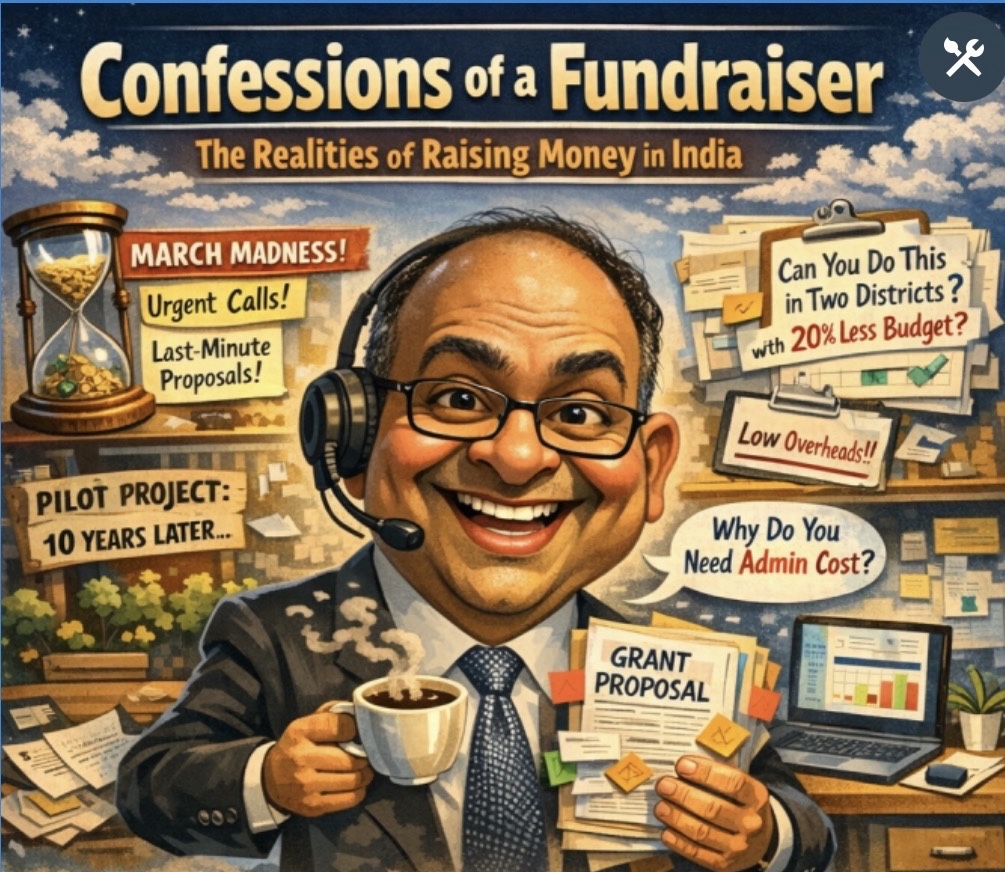
Ah, fundraising, the art and science of turning good intentions into actual impact! Throughout my career I have been raising funds for social impact, for causes of basic necessities like food, water, shelter, livelihood to a green economy, bridges over rivers to even a roller coaster in a developed country. I have been actively involved in raising funds for these causes from as small as $10 up to $50 million from a variety of sources and instruments. As the Head of Development at a nonprofit organization for social impact projects in India, I’ve navigated the corridors of CSR leaderships and foundation offices, and let me tell you, it’s not always smooth sailing. Often, it feels like trying to surf a tsunami with a paper boat!

Corporate Social Responsibility isn’t just a box to tick. It’s a strategic dance between business goals, stakeholder expectations, and social impact. With so many initiatives competing for attention, securing a dedicated slice of the CSR pie often feels like requesting a moment on a crowded stage, and convincing the audience that your act is worth their applause.

Foundations receive hundreds of pitches, each expecting to win the golden ticket. Getting noticed requires more than a well-crafted proposal; it demands storytelling that resonates and relationships that endure. Sometimes, it’s less about what you say and more about how you say it, and how quickly you can make a compelling case before the next shiny pitch distracts them.

Donors want results, but impact is often a marathon, not a sprint. Managing expectations without being over promising is an art. We’ve all faced the uncomfortable moment of explaining why a project’s full fruits may take years to ripen, a diplomatic tightrope walk that can test even the most seasoned fundraiser.

India’s complex regulatory landscape can feel like a labyrinth where one wrong turn can lead to delays or disapprovals. Keeping up with FCRA regulations, tax exemptions, and reporting requirements is a full-time job, and sometimes, it’s like speaking a different language altogether. Ironically, securing funds for a project often means fundraising itself. Resource constraints can limit outreach and follow-up, turning what should be a strategic focus into a haphazard firefight.

A mix of storytelling, patience, relationship-building, and a dash of humour helps. When engaging with CSR and foundations, understanding their priorities, aligning your mission with their vision, and communicating impact clearly can turn challenges into opportunities.

To my fellow fundraisers who are navigating this maze: keep your spirits high, your pitches sharper, and remember, every “no” is just a “yes” in disguise waiting to happen!

Let’s keep the conversation going. Share your stories or tips below, because in the game of social impact, we’re all in this together.