Tomorrow, and Tomorrow, and Tomorrow
August 17, 2026 Leave a comment
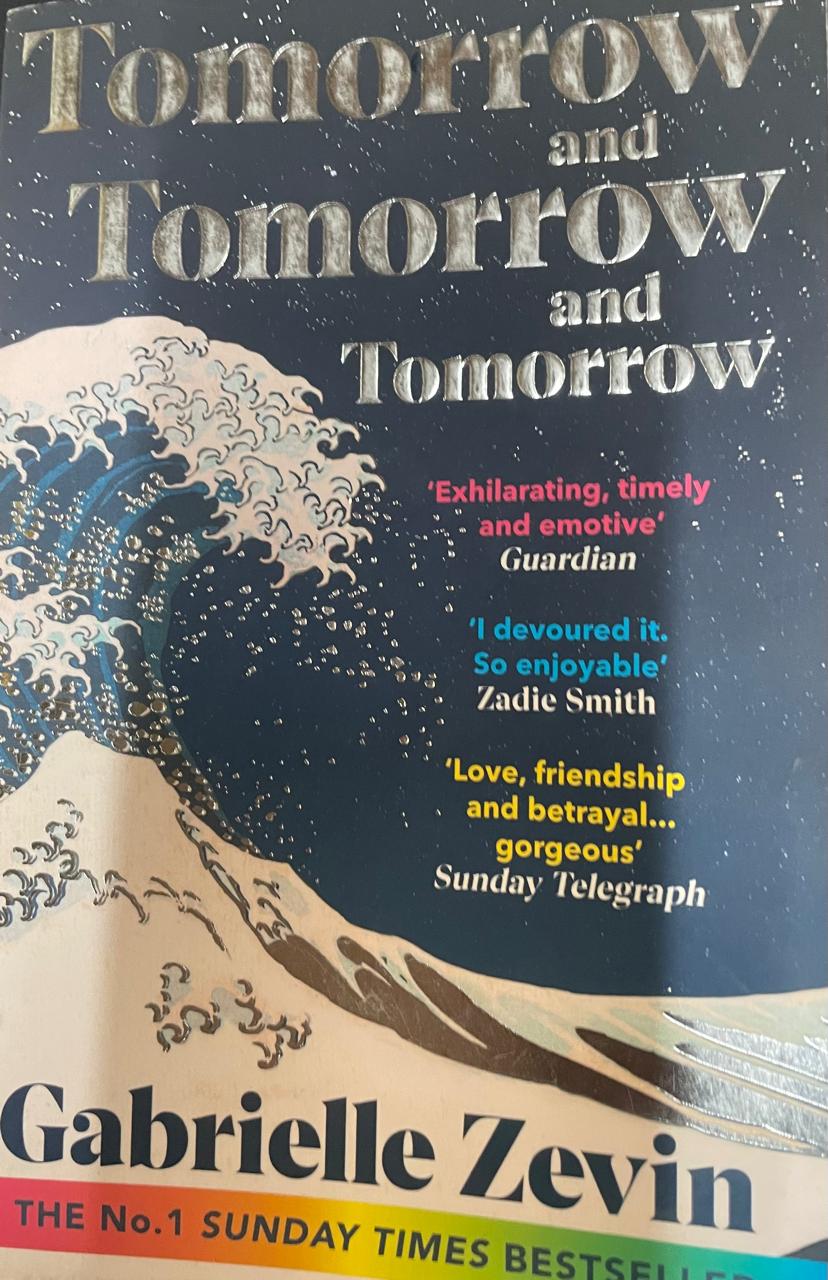
Author: Gabrielle Zevin | 476 Pages | Genre: Fiction | Publisher: Knopf Publishing Group | Year: 2022 | My Rating: 9/10
“What is a game?” Marx said. “It’s tomorrow, and tomorrow, and tomorrow. It’s the possibility of infinite rebirth, infinite redemption. The idea that if you keep playing, you could win. No loss is permanent, because nothing is permanent, ever“
― Gabrielle Zevin, Tomorrow, and Tomorrow, and Tomorrow
Tomorrow, and tomorrow, and tomorrow,
Creeps in this petty pace from day to day,
To the last syllable of recorded time;
And all our yesterdays have lighted fools
The way to dusty death. Out, out, brief candle!
Life’s but a walking shadow, a poor player,
That struts and frets his hour upon the stage,
And then is heard no more. It is a tale
Told by an idiot, full of sound and fury,
Signifying nothing.
This famous passage is a soliloquy spoken by the title character in William Shakespeare’s tragedy Macbeth (Act 5, Scene 5)
Tomorrow, and Tomorrow, and Tomorrow by Gabrielle Zevin is a novel about two friends who make video games together, but to describe it merely as a story about gaming would be as misleading as describing Moby-Dick as a novel about whale hunting. Zevin’s masterpiece is an exploration of creativity, friendship, ambition, grief, identity, and the fragile ways in which human beings love one another without always knowing how to express that love.
When I first picked up the novel, I expected an engaging literary story set against the backdrop of the video game industry. A few chapters later, I realised that the games were merely the canvas. Zevin was painting the extraordinary complexity of human relationships and the strange ways in which we create worlds, both real and imaginary, to survive the one we inhabit. Zevin understands that every act of creation, whether writing a novel, composing music, designing a game, or building a company, is an attempt to answer one of humanity’s oldest questions: how do we leave something meaningful behind? The medium, in this case video games, becomes almost incidental. The real story is about people trying to make worlds because they often struggle to inhabit the one they have been given.
The story follows two childhood friends and extraordinarily gifted individuals, Sam Masur and Sadie Green, whose lives become intertwined through collaboration, separation, misunderstanding, and extraordinary creative success. Their relationship defies easy categorisation, as they are not conventional lovers or just friends. They are collaborators, rivals, emotional anchors, and occasionally strangers to one another. Zevin refuses to reduce their bond into the familiar romantic template that dominates contemporary fiction. Instead, she asks a more difficult question, that can two people become the defining relationship in each other’s lives without ever fitting into society’s conventional definitions of love? That question becomes the emotional centre of the novel.
Reading their story reminded me that the people who influence us most are not always those we fall in love with. Sometimes they are the ones who challenge us intellectually, provoke us creatively, infuriate us endlessly and yet remain impossible to erase from our lives. Some relationships cannot be explained because they are not meant to fit into conventional categories. They simply exist, shaping us in ways we understand only in retrospect.
Having spent much of my own professional life designing programmes, developing products and trying to build ideas into reality, I found these sections deeply familiar. Every creator knows the strange mixture of excitement and insecurity that accompanies making something new. You begin with certainty. Halfway through, you become convinced the entire idea is flawed. Then, somehow, persistence carries you to the finish line. Creation is less an act of inspiration than an act of endurance. That may be why the novel resonated so deeply with me. It understands that building anything worthwhile, whether a business, a social movement, a novel or even a meaningful life, is emotionally expensive. Every achievement extracts a cost that outsiders rarely notice.
Popular culture often celebrates the myth of the solitary genius—the lone inventor, the brilliant artist, the visionary entrepreneur. Tomorrow, and Tomorrow, and Tomorrow dismantles that myth. Great creations emerge not only from talent but from friction where ideas are challenged, egos bruised, compromises negotiated, and failures endured. Sam and Sadie create remarkable games because they disagree passionately.
The novel treats video games as an art form deserving the same intellectual seriousness traditionally reserved for literature, cinema, or painting. This is perhaps the novel’s most refreshing contribution. Too often, games are dismissed as entertainment or escapism, but Zevin recognises that games are narrative architecture. They are spaces where people rehearse choices, explore identities, confront loss, and imagine alternative futures. The novel argues that games possess a unique emotional power because they require participation. Unlike readers or film audiences, players make decisions. They fail, they try again, they persist, and in that sense, games resemble life more closely than almost any other artistic medium.
Another remarkable strength of the novel is its understanding of friendship. Contemporary fiction often privileges romance as the highest form of intimacy. Friendships frequently exist only to support romantic plots. Zevin reverses that hierarchy and makes friendship the central emotional relationship, possessing every complexity usually reserved for marriage or romance. Sam and Sadie hurt one another in ways that only deeply significant people can. Their conflicts rarely emerge from malice. Instead, they arise from silence, assumptions, pride, and emotional immaturity. Zevin understands that relationships often fail not because people stop caring but because they become incapable of communicating what they most need to say.
The supporting characters deserve equal appreciation, particularly Marx Watanabe, whose warmth and emotional intelligence provide a necessary counterbalance to Sam and Sadie’s intensity. Marx embodies generosity without becoming sentimental. He possesses the rare gift of seeing people as they are rather than as they wish to appear. In many ways, he becomes the novel’s emotional conscience.
What impressed me most was the novel’s refusal to produce heroes or villains. Every major character behaves selfishly at times and generously at others. They make admirable decisions alongside regrettable ones. Zevin understands that adulthood rarely consists of moral certainty. Instead, it is an ongoing negotiation between personal ambition and responsibility toward others. Relationships remain ambiguous because real relationships often are. Love does not always seek possession. Friendship does not always remain stable. Success does not guarantee happiness. Closure, when it arrives, is partial rather than complete.
By the final page, I realised that the book’s most profound insight had very little to do with technology or gaming. It was about the people who make us more creative, more courageous and more ourselves. The greatest masterpieces we produce are rarely individual achievements. They emerge from conversations, collaborations, disagreements and relationships that leave permanent fingerprints on our lives.
Tomorrow, and Tomorrow, and Tomorrow deserves its reputation as one of the finest contemporary literary novels not because it speaks to gamers but because it speaks to anyone who has ever created something, lost someone, pursued an impossible ambition, or struggled to articulate love in all its imperfect forms. Gabrielle Zevin has written a novel that is intellectually stimulating, emotionally devastating, and quietly hopeful. Long after finishing the novel, I found myself thinking that the most important creations in our lives are often not the products we build, but the relationships that make those creations possible. Everything else is temporary. The worlds we imagine together, however, continue to echo, tomorrow, and tomorrow, and tomorrow.