Art of Gifting Books

A few of my friends, family members, and a couple of my colleagues gift me books, often on my birthdays, and sometimes in between. I inherited a love for reading from my parents, especially my mother and my grandfather, both of whom have been voracious readers. I received my first book as a birthday gift from my father when I was in school. It was ‘The History of Western Philosophy’ by Bertrand Russel. 

Few gifts in life feel as personal, thoughtful, and lasting as a book. When someone hands you a neatly wrapped rectangle hiding a world within its covers, the gesture means more than just the promise of pages. It carries thought, intimacy, and a recognition of who you are. A book is not merely a gift; it shows understanding. For a book lover like me, it has always represented one of the highest forms of affection, a conversation without words, a silent connection of minds and feelings.

Books reflect both the giver and the receiver. A book requires careful thought, unlike routine gifts like perfume, gadgets, clothes, or vouchers. This act of choosing is intimate, showing familiarity not just with the recipient’s reading habits but also with their inner lives, beliefs, and hidden thoughts. When a friend gives you a book, they often imply, “This reminded me of you.” That unspoken message carries emotional weight. It suggests that they have seen you through the lens of a character, a philosophy, or a poem. It’s like the giver is handing you a mirror showing part of yourself, which possibly one you hadn’t noticed before.

For avid readers, this connection is unmatched as a new book means a new journey and a new companionship. Receiving it as a gift indicates that someone cared enough to guide you toward that path. I have always viewed books as a form of emotional currency. They are not consumed quickly or superficially; they unfold over days or weeks, creating a lasting connection between the giver and receiver. Each time you open a gifted book, you also revisit the memory of the person who gave it to you.

A note inside the cover, like “Hope you love this as much as I did” or “Read and Reflect,” becomes an emotional bookmark for years. Even after the friendship has changed, the note remains, tangible and unforgettable. The book turns into a keepsake of that moment, of that relationship. In this way, books gather layers of meaning beyond their content; they absorb personal histories.

Unlike many modern gifts that can age or fade, books age gracefully. A book received in your twenties might reveal new insights in your forties. A book of poetry shared during a tough year can later offer comfort. In this way, books outlast their occasions; they evolve with the reader. I have re-read several books in my ever-growing collection over the last 20 to 30 years, and each time, I have gleaned a deeper understanding and gained more from the same pages.

Receiving books from family carries a sense of heritage, adding another layer of intimacy and history. Parents who give books to their children often share not just stories but also values and perspectives. When a parent gifts their favourite childhood novel or a worn copy of a classic, it reflects continuity. It communicates, “This shaped me, and I hope it shapes you too.”

Books create a kind of generational dialogue in many homes. A shelf represents a lineage of thought, with dog-eared pages and underlined passages marking the intellectual footprints of those before us. When you receive a book from a family member, you are essentially invited into their memory, to share their inner world for a while. I often have long conversations with my mother about a book, discussing its theme, author, and philosophy. For a book lover, inherited or gifted books become sacred objects. They may have notes in fading ink, dates marking birthdays or milestones, or the faint scent of another home. They are pieces of family history, connected not just by blood but also by shared words and ideas.

Books exchanged among colleagues hold a subtler but equally significant meaning. In professional settings often focused on efficiency and formality, a book gift feels almost revolutionary, reminding us of our shared humanity. When a colleague gives you a book, it usually reflects admiration or intellectual connection. It might be a management classic that inspired them, a work of fiction that echoes your discussions, or a slim volume of essays that reminds them of your curiosity. This gesture crosses the impersonal barriers of the workplace. It conveys, “I see more in you than just your title. I recognise a mind worth connecting with.”

At a time of emails and digital interactions, such gestures feel refreshingly real. A physical book on your desk serves as a reminder of shared curiosity and trust, sometimes sparking discussions that go beyond work. For a book lover, receiving books is like receiving invitations to journeys, friendships, and moments of reflection. The smell of new pages, the design of a cover, and the promise of a new story all bring joy that few other gifts can match. When people give books to an avid reader, they validate and celebrate a part of their identity. It’s as if they are saying, “I respect your passion enough to contribute to it.” 

Book lovers often remember who gave them which book. Their collections become social maps, each title linked to a person, a moment, or a story. That book from a college friend, that poetry collection from a sister, that biography from a mentor—they all combine to create an autobiography of relationships. Every gifted book is also an act of trust. It assumes that the receiver will take the time, reflect, and engage. By giving a book, one offers not instant pleasure but delayed joy. This trust that the recipient will fully experience those pages is deeply personal. Unlike digital or temporary gifts, books require solitude and contemplation. Receiving one gently reminds us of the value of slowing down in a fast-paced world. Perhaps this is why books promote patience, reflection, and empathy.

Moreover, books can be challenging gifts as they can push the reader’s perspectives, encourage new ideas, or even provoke discomfort. A well-chosen book can disrupt complacency while still showing care. This balance between affection and intellectual challenge makes gifting books a refined art. Over time, a personal library becomes a mosaic of gifts and acquisitions, but the gifted ones stand out. They are the volumes we seldom lend or part with. They carry signatures, notes, or memories that root them in our emotional landscape. There’s something almost sacred about rereading a book that once came wrapped in the hands of someone dear to us. The words on the page remain constant, but their meaning shifts as our memories of the giver change. At times, after the giver is gone, the book transforms into a presence, a voice that still echoes in the silence of our shelves.

Therefore, books are not just gifts; they also extend the presence of people. They traverse time, holding fragments of affection, thought, and memory. A gifted book is both a message and a monument as it says, “I thought of you,” and continues to do so long after. For a book lover, each gifted book is a quiet act of love—sometimes romantic, sometimes platonic, sometimes familial, but always genuine. It is a gift that does not fade and grows richer with each reading. In giving and receiving books, we engage in a timeless exchange, not of objects but of selves. Ultimately, every gifted book conveys one simple yet profound message: I see you, and for any reader, there is no greater gift than that.

Economics of Diwali

As we celebrate the sparkle of Diwali festivities with lights, the Indian economy, too, is glowing with festive energy. Diwali is not only a cultural and spiritual event but also an economic phenomenon that mobilizes consumption, trade, and emotion on a scale unmatched by any other festival in India. It is a festival where faith, finance, and family come together to illuminate not just homes but entire markets.

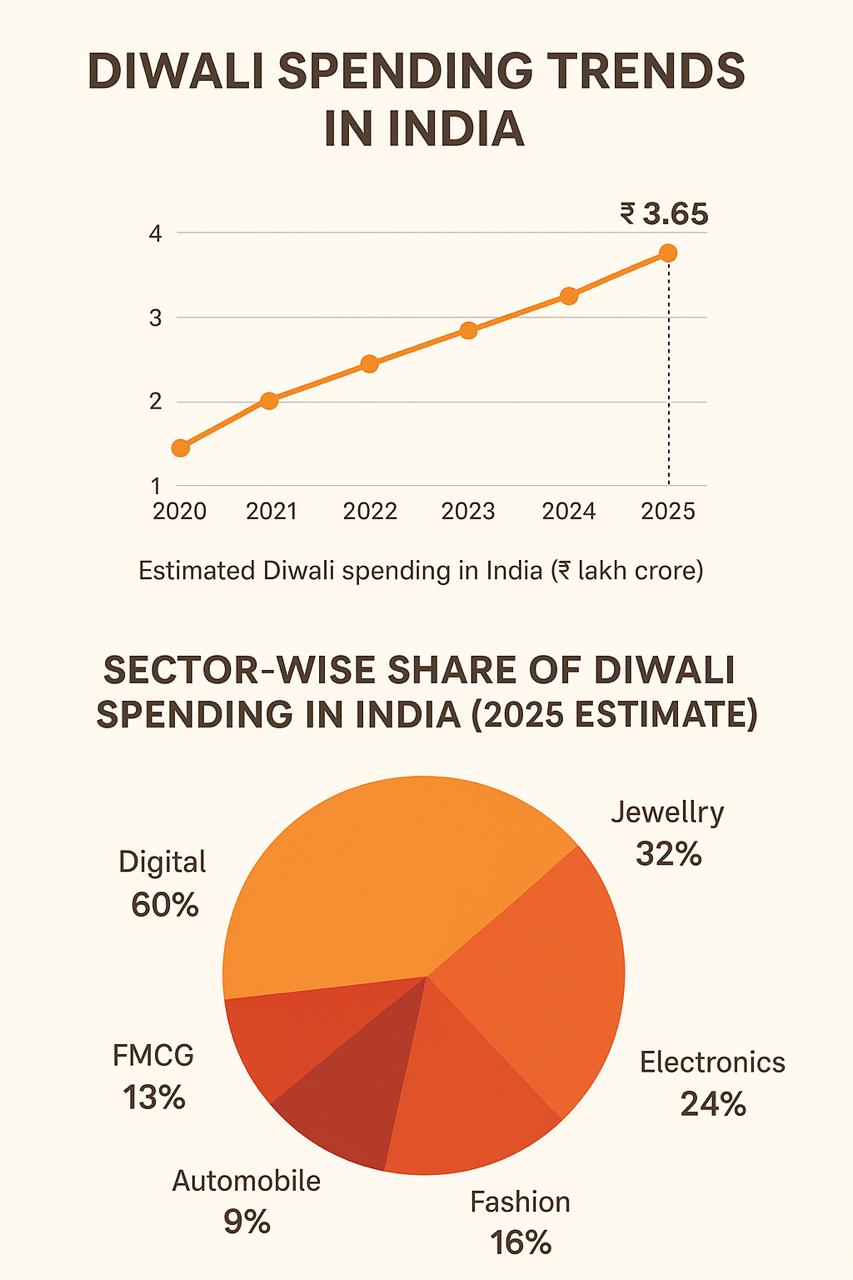
Diwali blends culture and commerce. Traditionally marking the return of Lord Ram to Ayodhya after 14 years of vanavasa (exile), the festival has evolved into India’s largest consumption cycle. According to industry estimates, Diwali season alone accounts for 30–40% of annual sales in sectors like jewellery, automobiles, electronics, apparel, and consumer goods.

In 2024, India’s festive spending during Diwali week was estimated at INR 3.2 lakh crore, reflecting a 17% rise over 2023, driven by rising disposable incomes, pent-up post-pandemic demand, and digital retail penetration. Retail chains, e-commerce platforms, and even microenterprises depend on this period to recover annual profits. For small traders, Diwali is often the difference between a good year and a bad one. The festival also synchronizes the Indian economy’s emotional rhythm—consumer sentiment peaks as the festival approaches, heightened by work bonuses, gifts, and an almost cultural belief that new purchases bring prosperity.

Two days before Diwali, Indians celebrate Dhanteras, considered the most auspicious day to buy gold, silver, or anything of value. Historically, this practice was rooted in agrarian prosperity cycles during which, farmers who had completed the harvest season invested their earnings in tangible assets like metals. Today, the sentiment remains, but the scale has exploded. The symbolism has migrated from the vault to the marketplace, aligning tradition with modern consumption.

Diwali’s economic landscape has been radically redrawn by digital commerce. In 2024, online festive sales crossed INR 90,000 crore, driven by e-commerce platforms like Amazon, Flipkart, and Meesho. Tier-II and Tier-III cities accounted for more than 60% of new shoppers, an indication that India’s digital inclusion is now deeply linked with its festive economy.

Algorithms have replaced astrologers in predicting purchasing patterns. AI-driven recommendations, influencer marketing, and digital payment ecosystems like UPI have made the act of buying faster and impulsive. While urban consumers enjoy massive discounts, small offline retailers struggle to match online prices. Many traditional businesses like sweet shops, garment stores, and gift outlets are now adapting with hybrid models, selling on WhatsApp or through community platforms. The local bazaar is not dying; it is simply going online.

Behind the glitter of malls and advertisements lies a quieter but equally powerful story of the informal and rural economy that powers Diwali. Across India, millions of artisans, potters, weavers, and small manufacturers depend on the season for a significant portion of their income. From handmade diyas in Bihar to terracotta idols from Bankura, paper lanterns in Maharashtra, and bamboo crafts from Northeastern states, Diwali sustains local creative economies that embody both tradition and entrepreneurship. In recent years, several NGOs and social enterprises have helped rural producers connect directly with urban buyers through digital platforms. For instance, self-help groups (SHGs) supported by government programs like NRLM (National Rural Livelihoods Mission) and private CSR initiatives now sell festive handicrafts on e-commerce sites and social media. The “Make in Village” movement during Diwali is becoming a quiet counter-narrative to imported mass-produced goods. Every diya sold is not just a source of light but a livelihood.

Gifting is central to Diwali’s economic ecosystem. From corporate gift hampers to sweets exchanged among families, the ritual symbolizes goodwill, reciprocity, and status. In 2024, India’s corporate gifting industry was valued at ₹12,000 crore, with strong growth projected for 2025. Beyond sweets and dry fruits, companies now gift experiences like wellness vouchers, eco-friendly hampers, and handmade products to reflect social consciousness and sustainability. The gifting economy also reveals deeper social psychology. Gifts during Diwali are not just commodities; they are currencies of relationship. In economic terms, they create “social capital”, the trust and goodwill that sustain business and personal networks alike.

In last decade or so, Diwali’s environmental impact has come under scrutiny. Delhi is the best (or worst) example of this intense air pollution from firecrackers making the environment unbreathable, plastic waste from packaging, and excessive electricity consumption have led to rising calls for a Green Diwali. The market is responding with conscious choices. In 2025, the sale of eco-friendly crackers and biodegradable decorations is expected to grow by 30%. Solar-powered lighting, organic sweets, and recycled packaging are becoming mainstream. Conscious consumers, especially younger urban Indians, are now demanding sustainable alternatives that align celebration with responsibility. The shift from conspicuous consumption to conscious consumption marks a new chapter in the economics of Diwali, one where prosperity is measured not just by spending, but by sustainability.

However, Diwali’s prosperity is not evenly distributed. Inflation affects the purchasing power of lower-income families who often face higher food and fuel prices during the season despite the recent GST reforms, which has significantly brought down the prices of most of the consumer goods. While the urban affluent splurge on gadgets and gold, many households cut back on essentials.

This divergence reflects the broader K-shaped recovery post-pandemic of the Indian economy, where upper segments surge ahead while those on the lower segments struggle. The festive glow, though radiant, hides shadows of inequality. For small retailers, rising input costs and competition from online giants have squeezed margins. For daily wage earners, the festival may mean temporary income spikes but little long-term security. Diwali illuminates both the promise and paradox of India’s growth story.

At its core, Diwali celebrates renewal of hope, homes, and human spirit. Economically too, it acts as a reset button for the nation’s consumer sentiment. The act of cleaning homes, buying new things, and lighting lamps mirrors the cyclical nature of economic optimism. For policymakers and economists, the festive season is a real-time barometer of demand. For families, it’s a reminder that prosperity is not just about wealth, but about togetherness and gratitude. In many ways, Diwali teaches an enduring lesson in economics that growth is sustainable only when it is inclusive, joyful, and mindful.

The economics of Diwali is not just about expenditure, but it is also about the exchange of energy, emotion, and enterprise. It reflects India’s evolving story of modernization rooted in tradition, digital transformation anchored in ritual, and capitalism softened by culture. The future of India’s festive economy will shine brightest when it balances profit with purpose, growth with gratitude, and consumption with conscience.

The bark side of friendship

You know how people say imitation is the sincerest form of flattery? I used to believe that until my friend named his dog after me. I’m still not sure whether to feel honoured or insulted.

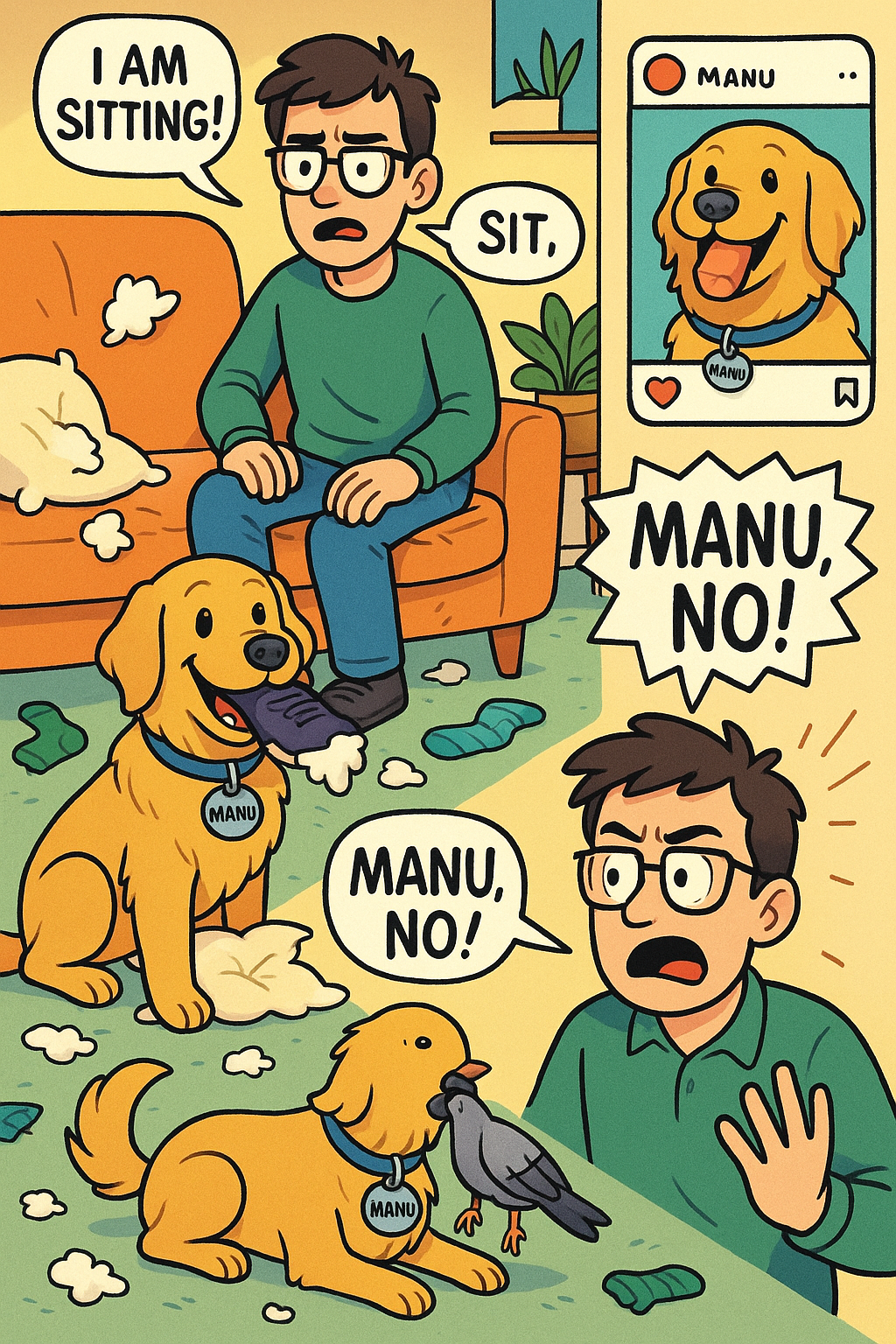
This isn’t just any dog. This is a fluffy, drooling tornado that eats sofa cushions and socks for breakfast. It once proudly presented a dead pigeon as a “gift”. And now, thanks to my dear lifelong friend, this creature shares my name.

Meet Manu.

Or rather, meet Dog-Manu.

I, the human Manu, now live in a world where people often mistake me for a top dog with boundary issues. It started innocently enough. One day, my friend called me and said, “Hey, I got a dog!” Sweet. Dogs are great. Then he added, “And I named him Manu!”

“After me?” I asked, thinking I might have misheard.  

“Yes! Because you’re loyal, funny, and always hungry. It just felt right.”

Right. Because who doesn’t want to be compared to a creature that thinks toilet water is a delicacy?

Even though my friend tried to placate me by saying that dog-manu has been named after his favourite football team, Manchester United (Man-U), it was just too fake for me to digest. 

To make things worse, every time I visit his house, it turns into a comedy of mistaken identity.

“Sit, Manu!”  

“I am sitting.”  

“No, not you. The one licking his nether regions.”

Oh. Good to know I’m the one who isn’t licking anything. Progress.

The other day, our mutual friend called me and exclaimed, “I saw a video of Manu on Instagram with a cube in his mouth!”  

I panicked. “What? When was this? Was I sleepwalking?”  

“No! The dog. Your namesake.”  

Of course. Because nothing screams “legacy” like being remembered as a four-legged menace with a vendetta against all household items.

I’ve also been getting some strange compliments.  

“Wow, Manu, you have such soft ears!”  

“Thanks, since childhood?”  

“Oh no, I meant the dog.”

Sure. Because I definitely needed another blow to my self-esteem.

There are some benefits, though. For example, now I know what it feels like to be loved unconditionally, vicariously, through a golden retriever. People light up when they hear my name, until they realize I don’t respond to belly rubs with tail wags.

But maybe the best part? Every time Dog-Manu gets in trouble for chewing a shoe or peeing on a rug, my friend yells, “MANU, NO!” and then looks at me apologetically, as if he just scolded me personally, which in a way, he has.

So if you’re wondering what it’s like to have your friend name a dog after you, I must say that it’s confusing, mildly humiliating, and an ultimate compliment in a weird way! 

After all, in dog years, I’ll be legendary for at least 87 more.

And let’s be honest, if someone had to be named after a stubborn, loyal, treat-obsessed creature who occasionally pees on rugs during thunderstorms, it might as well be me.

Long live Manu—the dog. And also me, I guess.

Importance of family counseling in entrepreneur selection

A person requires to possess both ‘can do’ attitude and aptitude for business to start on an entrepreneurial journey. But is that enough? Often an entrepreneur’s success is celebrated as an individual, but seldom the support system in the form of family and friends are discussed due to which the entrepreneur has achieved success. This is irrespective of the nature and size of business, geography, gender and backgrounds of the entrepreneur, and investment that goes in the venture.

While there’s no age to starting a business, the development programs I am working with focuses on women and girls in the age group of 18-50 years from poor and low-income households in the rural areas, with a desire to be self-employed and in future create employment for the youth in their respective villages. Selection processes of such aspiring entrepreneurial women vary depending on the model and approach of the programs. For the conventional businesses existing vocational skills and basic business acumen is analyzed, for others apart from these qualities, level of confidence, ability to invest their time, efforts, and money, general awareness, and other aptitude tests are conducted to measure the eligibility. What remains common across, and I believe is one of the most crucial factors for them to succeed from the word go is the support of their families, which remains the backbone of their ventures during and after the programmatic support. Therefore, post shortlisting of a potential entrepreneurial candidate, family counselling becomes the ultimate decider for her to join the program. And no, it has nothing to do with patriarchy. It’s same for any gender, and I think anywhere in the world. I have been a serial entrepreneur in my past, and have experienced in firsthand that without family support, I could have only done so much.

Family background including the size, type, and economic status can influence entrepreneurs’ and, therefore, entrepreneurship development. Even if the entrepreneurial spirit doesn’t necessarily run in the family, their support plays a vital role in an entrepreneur’s journey. Through their belief, encouragement, constant motivation, and involvement, families provide a nurturing environment for entrepreneurial growth.

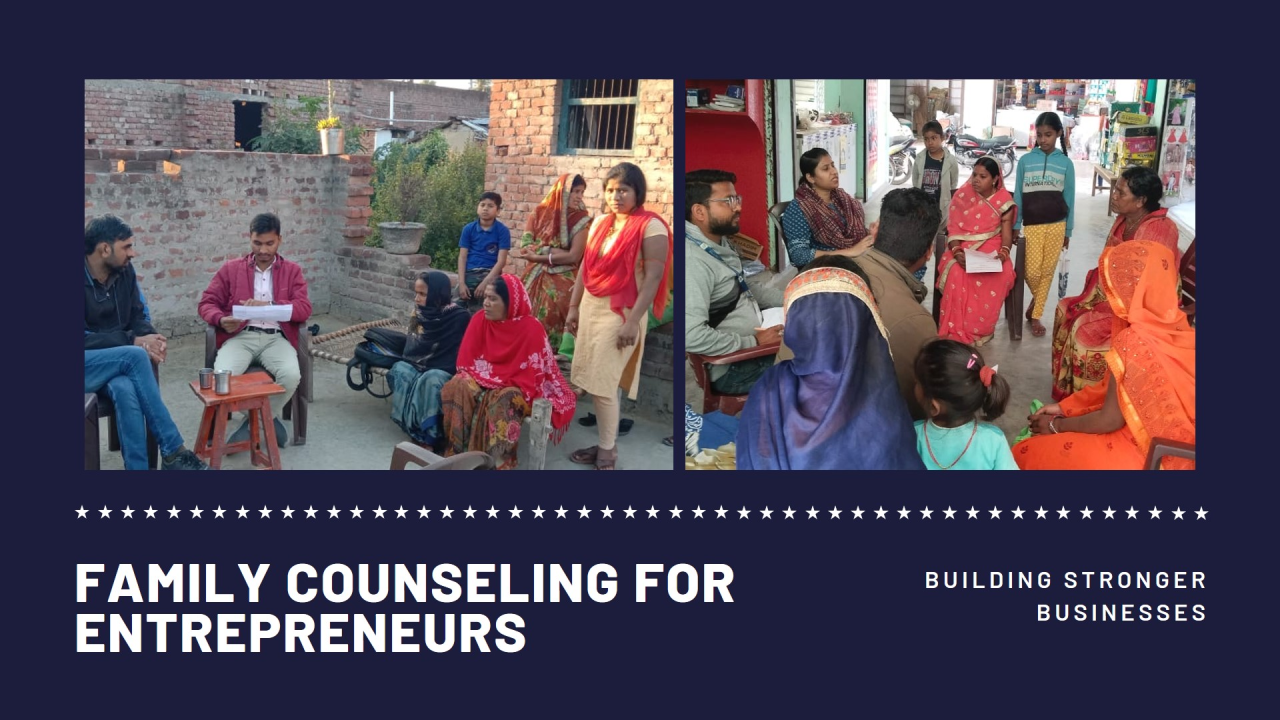
In the process of meeting the family at their house in the village and discussing about their current livelihood and income sources, level of education in the household, aspirations and future plans, nature of relationship with the potential entrepreneurial candidate, sharing about the program, and earning their commitment of being the wind  beneath the wings of their daughters, daughters-in-law, wife, and in turn building trust is the main agenda of the family counselling. This support is the most important step and measure for induction of an aspiring candidate in our entrepreneurship program. Garnering this support is half the battle won for the aspiring entrepreneur.

The hard work has to be of the entrepreneur, but families give financial assistance and provides the seed capital for the start-up, provides emotional assistance keeping the morale high during those challenging and difficult times that every entrepreneur undergoes, promote the venture in their long curated networks both within and outside their villages through word-of-mouth, volunteer their time at the business to attend to customers and promotion, and more importantly celebrate even the small moments of joy together.

Apart from money and market, family support is the third pillar of the tripod, which drives entrepreneurial success.

If you want to know more about designing rural women entrepreneurship projects and/or learn about family-counselling for rural entrepreneurship, feel free to connect.

(First published on LinkedIn on 6th March 2024)