Gold Rush

As the festive season in India is ongoing, jewellers across India are ready, investors tracking bullion prices, and families waiting eagerly for the most “auspicious” day of the year to buy gold. Dhanteras, celebrated two days before Diwali, has long been associated with the purchase of the precious metal, a tradition believed to bring prosperity and good fortune. Similar buying frenzies occur during Akshaya Tritiya, weddings, Karwa Chauth, and harvest festivals, when gold is not merely an adornment but a cultural marker of wealth and status.

Market reports celebrate the crores spent, but beneath the sparkle lies a complex story of culture, aspiration, and economics. Is festival gold-buying a timeless symbol of financial prudence and cultural continuity, or is it a cycle of consumption propelled by social pressure, marketing, and habit?

India’s love affair with gold is centuries old. From the time of the Indus Valley civilisation to the Mauryan emperors to our modern nuclear families, gold has been a medium of exchange, a store of value, and a token of spiritual significance. For millions, gold is not just metal, it is Lakshmi, the goddess of wealth herself. Dhanteras literally means “the thirteenth day of wealth,” and families believe that buying gold on this day invites abundance.

This cultural reverence made economic sense in a pre-banking era. Gold’s intrinsic value and portability provided a hedge against famine, emergency, and currency devaluation. Rural households, lacking access to formal savings mechanism, used jewellery as insurance and collateral. Even today, India remains the world’s second-largest consumer of gold, with annual demand often exceeding 700–800 tonnes. For many, gold remains the most trusted form of intergenerational wealth transfer.

Yet, today’s festival buying is no longer just about family heirlooms or prudent savings. It has evolved into a multi-billion-rupee economic event. According to trade bodies like the All-India Gem and Jewellery Domestic Council, Dhanteras sales often spike by 20–25% year-on-year, depending on price trends. In 2024, for example, despite gold hovering at record highs of around INR61,000 per 10 grams, jewellers reported robust demand, with many urban consumers opting for lighter designs or digital gold to keep up with tradition.

Specific estimates for festival (especially Dhanteras) sales in recent years help show the proportion of demand tied to ritual buying. During Dhanteras in 2024, around 20-22 tonnes of gold were sold, worth nearly INR 16,000 crore. The full jewellery sector during the festival period saw sales in the INR 18,000-20,000 crore.

The annual figures show India’s gold demand continues to be immense, though shifting in nature,

  • In 2024, India’s total gold demand rose to around 802.8 tonnes, up from 761 tonnes in 2023.  
  • The value of gold purchases in 2024 was estimated at INR 5.15 lakh crore (~US$60-70 billion depending on gold price).  
  • Jewellery demand in 2024 was ~ 563 tonnes, with the non-ornamental purchases (coins/bars) making up ~ 239 tonnes.   

These numbers reflect overall demand, not just festival or Dhanteras purchases, but festivals remain a major driver. The data show that although overall demand has often crept upward in value terms (driven by price inflation), the volume of jewellery demand has at times fallen or stagnated. For example, in 2024 jewellery tonnage demand dropped ~2% compared to 2023 even as value increased.

Targeted marketing plays a huge role. Advertisements link gold to auspiciousness and emotional milestones, “Gift prosperity,” “Secure her future,” “Start your Diwali with gold.” Social media influencers and celebrity endorsements reinforce the message that a festival without gold is incomplete. This creates a powerful psychological loop: buying gold is not just desirable, it is expected.

The Dhanteras gold rush is fuelled by a mix of fear and aspiration. Gold retains a near-mystical aura as a hedge against uncertainty. Global financial instability, inflation, and geopolitical tensions often send prices higher, reinforcing the perception of gold as a “safe haven.” For middle-class families, a few grams bought every year feels like both a celebration and a safety net.

But there is also the quieter pressure of status. Weddings, festivals, and social gatherings often showcase jewellery as a measure of success. The fear of “falling behind” relatives or neighbours can nudge families, especially in smaller towns and rural areas, into stretching budgets and even getting into debt trap to maintain appearances. What was once a hedge against uncertainty can change into a source of financial strain.

From a macroeconomic perspective, India’s gold obsession is a double edged sword. While the jewellery industry supports millions of jobs, from miners to artisans to retailers, it also represents a massive outflow of capital. India imports more than 90% of its gold, spending billions of dollars in foreign exchange each year. Economists have long argued that this “dead investment” locks up household savings in a non-productive asset, diverting funds from sectors like manufacturing, infrastructure, or technology that could generate higher returns and employment.

For individual households, the opportunity cost is equally significant. A family buying gold at festival-time may forgo investing in equity markets, mutual funds, or even bank deposits that could provide compounding growth. Gold prices, while generally stable over the long term, are not immune to volatility as we are witnessing now with gold prices rising to INR 120K+ per 10 grams. The metal offers no dividends or interest; its value lies only in resale or emotional satisfaction.

Beyond economics lies an often-ignored cost, the environmental impact of gold mining. Extracting gold is an energy-intensive process that generates toxic waste and contributes to deforestation, soil erosion, and water pollution. Globally, gold mining is associated with mercury contamination and significant carbon emissions. While India imports much of its gold, domestic refining and artisanal mining also pose environmental challenges.

Consumers rarely connect their festival purchases to these ecological consequences. The cultural narrative of purity and prosperity masks the fact that every bangle and coin carries a hidden footprint. Ethical sourcing, such as recycled gold or fair-trade certifications, is slowly gaining traction among urban, environmentally conscious buyers, but remains a niche segment.

As India’s economy digitises, a quiet transformation is underway. Younger consumers, especially in cities, are exploring alternatives to physical gold. Digital gold platforms, gold exchange-traded funds (ETFs), and sovereign gold bonds (SGBs) allow individuals to invest in gold without worrying about purity, storage, or theft.

These products offer flexibility and sometimes better returns. Sovereign gold bonds, for instance, pay annual interest and are exempt from capital gains tax if held to maturity. Yet they also challenge the cultural core of gold-buying: there is no ornament to wear, no glitter to display, no festive ritual of walking into a jewellery shop on Dhanteras. For many families, the emotional experience is as important as the investment itself. Still, the shift is undeniable. Digital gold platforms have reported double-digit growth during recent festivals, particularly among younger investors who value convenience and liquidity over tradition.

So where does this leave the Indian consumer? To dismiss festival gold-buying as mere superstition would be simplistic. Traditions provide continuity, identity, and joy. For rural households with limited access to financial products, gold remains a practical and trusted savings tool.

But to ignore the economic, environmental, and social pressures embedded in this ritual is equally shortsighted. When a practice once rooted in prudence becomes a compulsive annual expense, it risks becoming a trap. The symbolism of prosperity can mask financial strain, and the celebration of abundance can conceal environmental degradation. Festivals can retain their joy without becoming economic burdens. A few grams of gold bought with intention, rather than compulsion, can honour tradition while respecting modern realities.

Dhanteras will always hold a special place in the Indian calendar. The sight of families entering jewellery shops, and elders blessing the new purchase is undeniably heartwarming. Yet it is worth remembering that true prosperity lies not in the weight of gold but in the wisdom of choice.

As India strides into a digital, climate conscious future, perhaps the most auspicious act is not buying more gold, but buying it mindfully acknowledging its beauty, its history, and its hidden costs. The goddess of wealth, after all, smiles brightest on those who balance tradition with thoughtfulness.

Buy thoughtfully. Celebrate responsibly. Live consciously.

Who are urban marginalized people

Photo Credit: https://humana-india.org/

In last 2-3 years, I have been part of several discussions to define and build a consensus on understanding of urban marginalised and vulnerable population (UMVP) in the context of India, and how this population group has been evolving and growing in numbers. India’s rapid urbanization over the past few decades has transformed its cities into economic powerhouses contributing 60% of India’s GDP. While in 2023 around 37% of India’s population lived in urban areas, it is estimated that by 2036, half of India’s population will live in cities. However, this growth has also led to the marginalization of a significant portion of the population. Cities Alliance estimated that 25% of the population living in urban areas are below the poverty line. By this estimate, a shocking 125+ million people are marginalised and vulnerable living in the urban areas. The urban marginalized and vulnerable groups comprising of slum dwellers, informal workers, migrant labourers, women, children, and the homeless face numerous challenges like access to basic citizens’ rights, services, and opportunities. As India continues its urban transition, addressing the vulnerabilities of these populations is critical to achieving inclusive development.

The UMVPs live in precarious conditions, often lacking access to basic services like clean water, housing, sanitation, healthcare, and education. Their vulnerabilities are shaped by socio-economic, cultural, political, and structural factors that leave them excluded from mainstream urban life. They often lack the necessary documentation to access government schemes and services, such as ration cards, Aadhaar cards, or voter identification. This exclusion prevents them from benefiting from welfare programs like the Public Distribution System (PDS), healthcare subsidies, or housing schemes. The UMVPs can broadly be classified in five sub-groups,

  1. Slum Dwellers: According to the 2011 Census, about 65 million people in India live in urban slums. Slums across India have poor housing, lack of sanitation, overcrowding, and a high risk of diseases, especially communicable. People living in the slums often have insecure tenure, making them vulnerable to eviction and displacement due to urban development projects. Displacement not only disrupts their livelihoods but also pushes them further into poverty. Poor living conditions contribute to health problems, including respiratory diseases (especially TB) and waterborne infections.
  • Homeless Population: India’s urban homeless population is particularly vulnerable, facing extreme marginalization. With no permanent shelter, the homeless are exposed to harsh weather conditions, violence, and health risks. They have limited access to government welfare schemes and often fall outside the purview of census data, making it difficult to design targeted interventions. HLRN estimates that there could be more than 3 million homeless individuals. Extreme poverty, unemployment, displacement due to natural disasters, mental illness, substance abuse, runaways, are often the causes of homelessness, and their numbers are continuously increasing in urban India.
  • Informal Workers: The informal sector accounts for nearly 80% of India’s urban workforce. This includes daily wage labourers, street vendors, domestic workers, and construction workers, among others. Informal workers lack job security, social protection, and access to formal financial systems, leaving them vulnerable to economic shocks. The COVID-19 pandemic exposed the extreme vulnerability of informal workers, who faced sudden job losses and had low-to-no access to financial aid. Informal workers often are slum dwellers, or live in low income housing colonies, or are even homeless.
  • Migrant Laborers: Migration to cities in search of employment and better life is common in India. However, migrant labourers, often from rural areas both intra- and inter-state, face significant challenges in urban settings. They often find employment in low-paying jobs with little to no benefits, live in temporary or inadequate housing, and struggle to access public services due to a lack of local identification documents. Temporary migratory population is also a sub-set of this group, who come to cities for seasonal work, migrate from one place to another, also migrate within the cities in search of work. Construction workers and artisanal nomadic groups can be good examples of migratory population.
  • Women and Children: Women and children within urban marginalized communities living in slums or informal settlements often work in low-paid informal jobs while managing household responsibilities. They are more likely to experience gender-based violence, discrimination and exploitation, limited access to healthcare, and lack of educational/skilling opportunities. Children in these settings suffer from malnutrition, poor schooling, and limited opportunities for social mobility. They often attend poorly equipped government schools or are forced to drop out to contribute to household income.

India’s urban marginalized and vulnerable populations represent a significant and often overlooked segment of society. Ensuring their inclusion in the country’s urban development is essential for sustainable and equitable growth, while bestowing opportunity and dignity for all citizens as their Right.

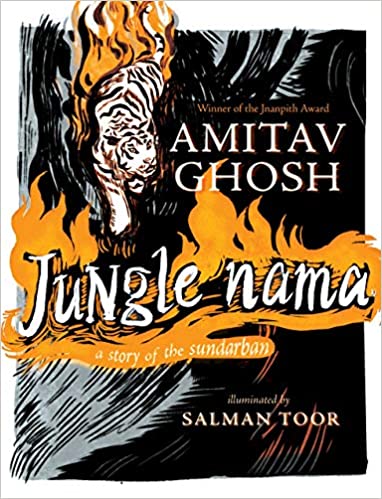
Jungle Nama: A Story of the Sundarban

Jungle Nama: A Story of the Sundarban

by Amitav Ghosh | 88 Pages | Genre:  Literary Fiction | Publisher: Fourth Estate | Year: 2021 | My Rating: 8.5/10

“All you need do, is be content with what you’ve got, to be always craving more, is a demon’s lot.”
― Amitav Ghosh, Jungle Nama

“Jungle Nama” by Amitav Ghosh is a captivating verse adaptation of a Bengali folktale from the Sundarbans, the world’s largest mangrove forest shared between India and Bangladesh. Written in a lyrical, rhythmic style, and illustrated by Salman Toor, the book tells the story of “Bon Bibi,” a benovelent goddess of the Sundarbans who safeguards the jungle and its people, and her conflict with Dokkhin Rai, a powerful demon-like figure who seeks to exploit the forest’s riches.

Ghosh’s decision to render this ancient tale in verse brings a unique musicality to the story, echoing the cadence of oral storytelling introducing music to current speech that has kept the folktale alive for generations. His prose is imbued with both reverence for the source material and a contemporary sensibility that makes the story accessible to a modern audience. Accompanying the text are hauntingly beautiful illustrations by artist Salman Toor, whose work enhances the mystical and otherworldly atmosphere of the Sundarbans and its lore.

Beyond its enchanting style, Jungle Nama explores timeless themes of balance between nature and humanity, the perils of human greed, and the importance of respecting natural boundaries. Ghosh subtly draws parallels to modern issues like climate change and environmental degradation, suggesting that the ancient wisdom in the Bon Bibi story holds valuable lessons for today’s world. Through Bon Bibi’s character, he raises questions about stewardship, sustainability, and the price of human ambition.

The book is more than a poetic retelling; it’s an immersive experience that connects readers to both nature and folklore. Ghosh’s evocative language and Toor’s illustrations work in harmony to capture the spirit of the Sundarbans and its lore, making this book a visually and intellectually rich addition to Ghosh’s body of work. The poem-like style of the book follows twelve syllables in each line, and each couplet has twenty-four syllables. After each line there is a natural pause or a caesura, replicating the cadence of the original legend.

This book by one of my all-time favourite authors is a mesmerizing read for anyone interested in myth, poetry, linguistic hybridity, and environment, offering a rare glimpse into a world where nature and spirituality are deeply intertwined.

Garbology: Our Dirty Love Affair with Trash

by Edward Humes | 325 Pages | Genre: Non-Fiction | Publisher: Avery | Year: 2013 | My Rating: 9/10

“The American Dream is inextricably linked to an endless, accelerating accumulation of trash.”
― Edward Humes, Garbology

I discovered this brilliant book by Pulitzer Prize-winning journalist, Edward Humes, when I was searching for books on plastic waste management after attending the screening of a thought-provoking documentary, A Plastic Ocean, by an award-winning filmmaker and journalist, Craig Leeson.

While the book examines how the USA became addicted to garbage, it is a story all around the world with similar environmental and socioeconomic dilemmas of the modern world. The book makes one think that while recycling the waste is the need of the hour, it is the continuous creation of waste in an endless loop that needs to be addressed. The book brings forth examples of activists and outstanding entrepreneurs who are trying to solve the menace of waste. The book also presents an economic history of garbage in the US along with surprising and even shocking statistics and concludes with a compilation of practical steps that individuals can take to reduce the environmental impacts of their generated waste. However, much more is required than just individual practices to overcome plasticisation. Planet and People need to take precedence over profits and combined efforts by communities and businesses alike along with political will are required to win the war on waste. 

I loved the chapter, ‘Down to the sea in chips’ on marine plastics pollution, and their impacts, which is a global environmental concern, converting our once pristine oceans into plastic soup.

This book is a must-read for all, especially if you are a consumer of modern life.

The World Bamboo Market

The world bamboo market is currently worth USD 7 Billion/year, of which China has USD 5.5 Billion. The largest markets are handicraft (USD 3 Billion), bamboo shoots (USD 1.5 Billion) and traditional furniture (USD 1.1 Billion). Traditional markets cover handicrafts, blinds, bamboo shoots, chopsticks and traditional bamboo furniture, which count for 95% of the market. Emerging bamboo markets are wood substitutes such as flooring, panels and non-traditional furniture. The growth of the global market is expected to grow to USD 15-20 Billion/year in 2017. Non-traditional markets are expected to claim 45% of the total bamboo market. 

Read the full article at: http://www.greenflip.in/blog/the-world-bamboo-market/