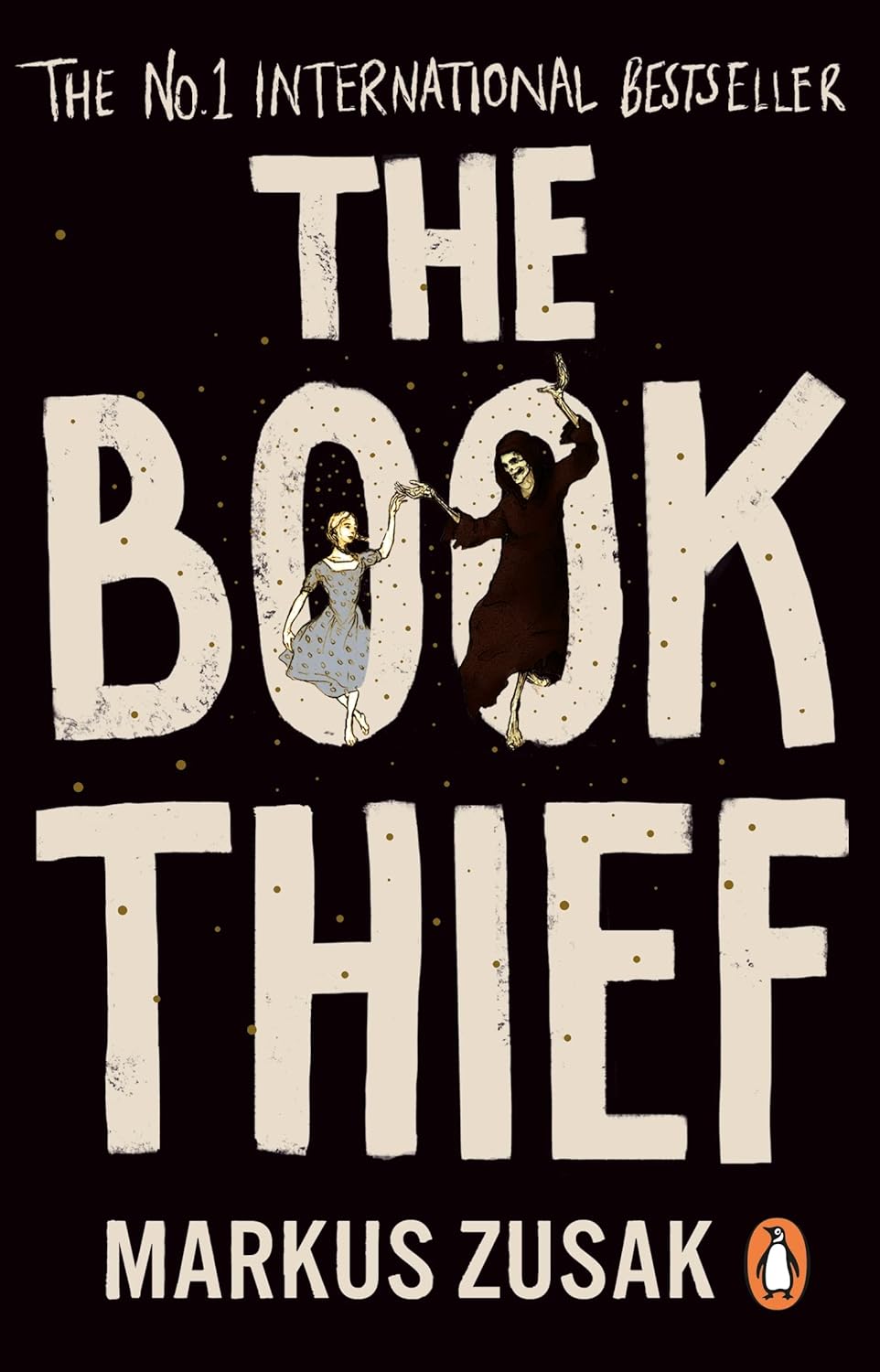
The Book Thief

Author: Markus Zusak | 560 PagesGenre: Historical Fiction | Publisher: First edition published by Alpha 2 Omega Books. My edition published by Penguin Random House (2018) | Year: 2005 | My Rating: 9/10

“The human heart is a line, whereas my own is a circle, and I have the endless ability to be in the right place at the right time. The consequence of this is that I’m always finding humans at their best and worst. I see their ugly and their beauty, and I wonder how the same thing can be both”
― Markus Zusak, The Book Thief

The Book Thief combines brutality and beauty with extraordinary grace, and I found it to be truly unique and spectacular. The novel is set in 1939 Nazi Germany, during World War II, where the story is a haunting exploration of love, loss, language, and the power of storytelling to preserve humanity. Narrated through the unexpected voice of Death, the novel redefines the familiar war narrative, which is both poetic and profoundly human.

The story centres on Liesel Meminger, a young girl sent to live with foster parents Hans and Rosa Hubermann in Molching, near Munich. After her brother dies en route to their new home in 1939, Liesel steals her first book, marking the beginning of her quiet rebellion through reading. Liesel’s foster father, Hans, patiently teaches her to read during late-night sessions in their basement. Liesel’s foster mother, Rosa, is gruff yet deeply protective. For Liesel, books become both a refuge and a means of resisting the Nazi regime’s manipulation of language.

When the Hubermanns shelter Max Vandenburg, a Jewish man fleeing Nazi persecution, Liesel’s world broadens. Her friendship with Max, rooted in fear and hope, highlights the power of imagination to endure hardship. Max’s stories, especially “The Word Shaker,” reinforce the novel’s central theme that ‘words can both harm and heal.’

The author’s decision to use Death as the narrator is both bold and effective. Death is portrayed as weary, compassionate, and reflective, observing humanity’s capacity for both cruelty and kindness. His tone shifts between irony and melancholy, providing both distance and intimacy. Death’s closing line, “I am haunted by humans,” underlines the novel’s meditation on human fragility and resilience.

Zusak removes sentimentality from tragedy through his narration by Death. I knew early in my reading that the story would end in loss, and Death tells plainly who will die, but this foreknowledge deepened rather than diminished my emotional investment. Zusak’s central theme of the power of language could not be more resonant. The Nazi regime weaponized words to manipulate a nation and justify genocide. In contrast, Liesel and Max reclaim language as a force for healing and remembrance. Books become tools of freedom, teaching Liesel not only literacy but empathy and defiance. There is also a profound theme of ordinary heroism. The Hubermanns, Liesel, and her friend Rudy Steiner resist in small, quiet ways, sharing bread with starving prisoners, hiding a Jew in their basement, refusing to let fear extinguish decency. These are acts of rebellion born not of ideology but of humanity.

The novel also explores how even in a time of death, there are moments of laughter, friendship, and love. It portrays war as a lived experience through the eyes of a child who learns too soon about loss but clings to hope through storytelling. Zusak’s prose is poetic, fragmented, and rhythmic, a departure from conventional realism. He uses vivid imagery and typographical experimentation, breaking the fourth wall and inserting short notes, sketches, and lists. These stylistic quirks mirror Death’s fragmented perception of events and add texture to the reading experience. Like his description of the sky as Death collects souls, “The sky was the colour of Jews.” It is shocking, ambiguous, and heartbreaking, capturing the moral weight of genocide in those six words. It made me pause at the sentence and page for a while, feeling the sentence rather than merely understanding. Liesel is one of contemporary literature’s most memorable protagonists, who is resilient, curious, and brave. Through her eyes, one can experience both the innocence of childhood and the disillusionment of war. Her evolution from an illiterate girl to a book thief who reads to others in bomb shelters symbolizes the redemptive arc of language.

The moral core of the novel, Hans Hubermann, embodies quiet courage. His act of painting over antisemitic graffiti and hiding Max is not grand heroism but the moral defiance of an ordinary man. Rosa, abrasive yet loving, offers a realism often absent in depictions of maternal figures. Rudy Steiner, Liesel’s best friend, brings youthful vitality and heartbreak into the story. His dream of kissing Liesel becomes a symbol of innocence stolen by war. Max, the Jewish fugitive, represents endurance and the power of imagination, writing his own story literally over the pages of “Mein Kampf,” transforming an instrument of hate into one of creation. Each character feels deeply human, flawed, frightened, and compassionate, and their relationships form the emotional spine of the novel.

The Book Thief focuses on ordinary citizens rather than soldiers or political figures. Zusak reminds us that history is lived by common people, those who make small moral choices every day. Since its first publication in 2005, The Book Thief has also been adapted into a film released in 2013. Its endurance over the years lies in its emotional honesty and narrative innovation. It teaches us that even in times of darkness, stories can keep the flame of humanity alive. The Book Thief is not just a story about war or death; it is about the defiance of the human spirit through words and empathy.

This novel reminded me that reading, too, is an act of resistance. It is a book that stays with you, not because of the horrors it depicts, but because of the beauty it finds amidst them. As Death himself observes, “It’s only small stories like this one that can make the bigger ones bearable.”

Economics of Diwali

As we celebrate the sparkle of Diwali festivities with lights, the Indian economy, too, is glowing with festive energy. Diwali is not only a cultural and spiritual event but also an economic phenomenon that mobilizes consumption, trade, and emotion on a scale unmatched by any other festival in India. It is a festival where faith, finance, and family come together to illuminate not just homes but entire markets.

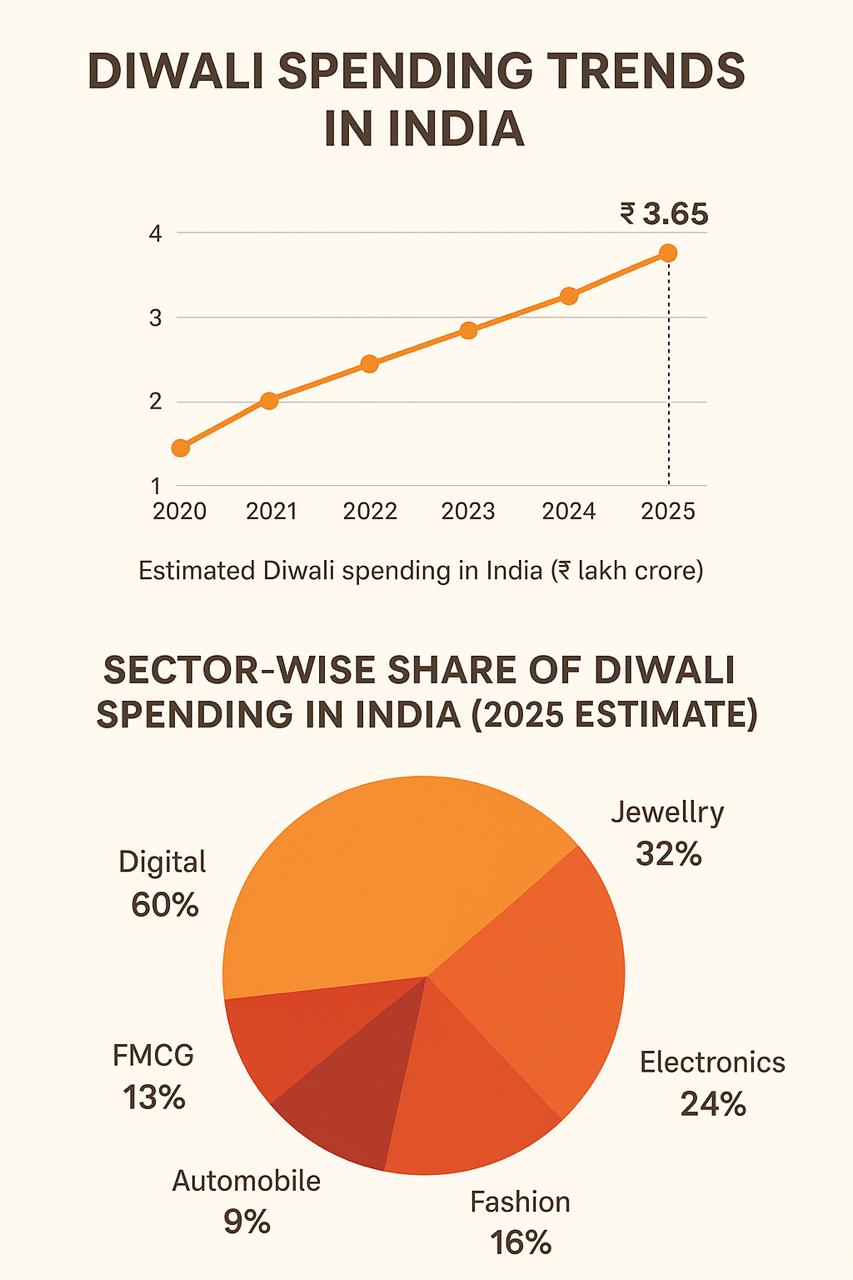
Diwali blends culture and commerce. Traditionally marking the return of Lord Ram to Ayodhya after 14 years of vanavasa (exile), the festival has evolved into India’s largest consumption cycle. According to industry estimates, Diwali season alone accounts for 30–40% of annual sales in sectors like jewellery, automobiles, electronics, apparel, and consumer goods.

In 2024, India’s festive spending during Diwali week was estimated at INR 3.2 lakh crore, reflecting a 17% rise over 2023, driven by rising disposable incomes, pent-up post-pandemic demand, and digital retail penetration. Retail chains, e-commerce platforms, and even microenterprises depend on this period to recover annual profits. For small traders, Diwali is often the difference between a good year and a bad one. The festival also synchronizes the Indian economy’s emotional rhythm—consumer sentiment peaks as the festival approaches, heightened by work bonuses, gifts, and an almost cultural belief that new purchases bring prosperity.

Two days before Diwali, Indians celebrate Dhanteras, considered the most auspicious day to buy gold, silver, or anything of value. Historically, this practice was rooted in agrarian prosperity cycles during which, farmers who had completed the harvest season invested their earnings in tangible assets like metals. Today, the sentiment remains, but the scale has exploded. The symbolism has migrated from the vault to the marketplace, aligning tradition with modern consumption.

Diwali’s economic landscape has been radically redrawn by digital commerce. In 2024, online festive sales crossed INR 90,000 crore, driven by e-commerce platforms like Amazon, Flipkart, and Meesho. Tier-II and Tier-III cities accounted for more than 60% of new shoppers, an indication that India’s digital inclusion is now deeply linked with its festive economy.

Algorithms have replaced astrologers in predicting purchasing patterns. AI-driven recommendations, influencer marketing, and digital payment ecosystems like UPI have made the act of buying faster and impulsive. While urban consumers enjoy massive discounts, small offline retailers struggle to match online prices. Many traditional businesses like sweet shops, garment stores, and gift outlets are now adapting with hybrid models, selling on WhatsApp or through community platforms. The local bazaar is not dying; it is simply going online.

Behind the glitter of malls and advertisements lies a quieter but equally powerful story of the informal and rural economy that powers Diwali. Across India, millions of artisans, potters, weavers, and small manufacturers depend on the season for a significant portion of their income. From handmade diyas in Bihar to terracotta idols from Bankura, paper lanterns in Maharashtra, and bamboo crafts from Northeastern states, Diwali sustains local creative economies that embody both tradition and entrepreneurship. In recent years, several NGOs and social enterprises have helped rural producers connect directly with urban buyers through digital platforms. For instance, self-help groups (SHGs) supported by government programs like NRLM (National Rural Livelihoods Mission) and private CSR initiatives now sell festive handicrafts on e-commerce sites and social media. The “Make in Village” movement during Diwali is becoming a quiet counter-narrative to imported mass-produced goods. Every diya sold is not just a source of light but a livelihood.

Gifting is central to Diwali’s economic ecosystem. From corporate gift hampers to sweets exchanged among families, the ritual symbolizes goodwill, reciprocity, and status. In 2024, India’s corporate gifting industry was valued at ₹12,000 crore, with strong growth projected for 2025. Beyond sweets and dry fruits, companies now gift experiences like wellness vouchers, eco-friendly hampers, and handmade products to reflect social consciousness and sustainability. The gifting economy also reveals deeper social psychology. Gifts during Diwali are not just commodities; they are currencies of relationship. In economic terms, they create “social capital”, the trust and goodwill that sustain business and personal networks alike.

In last decade or so, Diwali’s environmental impact has come under scrutiny. Delhi is the best (or worst) example of this intense air pollution from firecrackers making the environment unbreathable, plastic waste from packaging, and excessive electricity consumption have led to rising calls for a Green Diwali. The market is responding with conscious choices. In 2025, the sale of eco-friendly crackers and biodegradable decorations is expected to grow by 30%. Solar-powered lighting, organic sweets, and recycled packaging are becoming mainstream. Conscious consumers, especially younger urban Indians, are now demanding sustainable alternatives that align celebration with responsibility. The shift from conspicuous consumption to conscious consumption marks a new chapter in the economics of Diwali, one where prosperity is measured not just by spending, but by sustainability.

However, Diwali’s prosperity is not evenly distributed. Inflation affects the purchasing power of lower-income families who often face higher food and fuel prices during the season despite the recent GST reforms, which has significantly brought down the prices of most of the consumer goods. While the urban affluent splurge on gadgets and gold, many households cut back on essentials.

This divergence reflects the broader K-shaped recovery post-pandemic of the Indian economy, where upper segments surge ahead while those on the lower segments struggle. The festive glow, though radiant, hides shadows of inequality. For small retailers, rising input costs and competition from online giants have squeezed margins. For daily wage earners, the festival may mean temporary income spikes but little long-term security. Diwali illuminates both the promise and paradox of India’s growth story.

At its core, Diwali celebrates renewal of hope, homes, and human spirit. Economically too, it acts as a reset button for the nation’s consumer sentiment. The act of cleaning homes, buying new things, and lighting lamps mirrors the cyclical nature of economic optimism. For policymakers and economists, the festive season is a real-time barometer of demand. For families, it’s a reminder that prosperity is not just about wealth, but about togetherness and gratitude. In many ways, Diwali teaches an enduring lesson in economics that growth is sustainable only when it is inclusive, joyful, and mindful.

The economics of Diwali is not just about expenditure, but it is also about the exchange of energy, emotion, and enterprise. It reflects India’s evolving story of modernization rooted in tradition, digital transformation anchored in ritual, and capitalism softened by culture. The future of India’s festive economy will shine brightest when it balances profit with purpose, growth with gratitude, and consumption with conscience.

Gold Rush

As the festive season in India is ongoing, jewellers across India are ready, investors tracking bullion prices, and families waiting eagerly for the most “auspicious” day of the year to buy gold. Dhanteras, celebrated two days before Diwali, has long been associated with the purchase of the precious metal, a tradition believed to bring prosperity and good fortune. Similar buying frenzies occur during Akshaya Tritiya, weddings, Karwa Chauth, and harvest festivals, when gold is not merely an adornment but a cultural marker of wealth and status.

Market reports celebrate the crores spent, but beneath the sparkle lies a complex story of culture, aspiration, and economics. Is festival gold-buying a timeless symbol of financial prudence and cultural continuity, or is it a cycle of consumption propelled by social pressure, marketing, and habit?

India’s love affair with gold is centuries old. From the time of the Indus Valley civilisation to the Mauryan emperors to our modern nuclear families, gold has been a medium of exchange, a store of value, and a token of spiritual significance. For millions, gold is not just metal, it is Lakshmi, the goddess of wealth herself. Dhanteras literally means “the thirteenth day of wealth,” and families believe that buying gold on this day invites abundance.

This cultural reverence made economic sense in a pre-banking era. Gold’s intrinsic value and portability provided a hedge against famine, emergency, and currency devaluation. Rural households, lacking access to formal savings mechanism, used jewellery as insurance and collateral. Even today, India remains the world’s second-largest consumer of gold, with annual demand often exceeding 700–800 tonnes. For many, gold remains the most trusted form of intergenerational wealth transfer.

Yet, today’s festival buying is no longer just about family heirlooms or prudent savings. It has evolved into a multi-billion-rupee economic event. According to trade bodies like the All-India Gem and Jewellery Domestic Council, Dhanteras sales often spike by 20–25% year-on-year, depending on price trends. In 2024, for example, despite gold hovering at record highs of around INR61,000 per 10 grams, jewellers reported robust demand, with many urban consumers opting for lighter designs or digital gold to keep up with tradition.

Specific estimates for festival (especially Dhanteras) sales in recent years help show the proportion of demand tied to ritual buying. During Dhanteras in 2024, around 20-22 tonnes of gold were sold, worth nearly INR 16,000 crore. The full jewellery sector during the festival period saw sales in the INR 18,000-20,000 crore.

The annual figures show India’s gold demand continues to be immense, though shifting in nature,

  • In 2024, India’s total gold demand rose to around 802.8 tonnes, up from 761 tonnes in 2023.  
  • The value of gold purchases in 2024 was estimated at INR 5.15 lakh crore (~US$60-70 billion depending on gold price).  
  • Jewellery demand in 2024 was ~ 563 tonnes, with the non-ornamental purchases (coins/bars) making up ~ 239 tonnes.   

These numbers reflect overall demand, not just festival or Dhanteras purchases, but festivals remain a major driver. The data show that although overall demand has often crept upward in value terms (driven by price inflation), the volume of jewellery demand has at times fallen or stagnated. For example, in 2024 jewellery tonnage demand dropped ~2% compared to 2023 even as value increased.

Targeted marketing plays a huge role. Advertisements link gold to auspiciousness and emotional milestones, “Gift prosperity,” “Secure her future,” “Start your Diwali with gold.” Social media influencers and celebrity endorsements reinforce the message that a festival without gold is incomplete. This creates a powerful psychological loop: buying gold is not just desirable, it is expected.

The Dhanteras gold rush is fuelled by a mix of fear and aspiration. Gold retains a near-mystical aura as a hedge against uncertainty. Global financial instability, inflation, and geopolitical tensions often send prices higher, reinforcing the perception of gold as a “safe haven.” For middle-class families, a few grams bought every year feels like both a celebration and a safety net.

But there is also the quieter pressure of status. Weddings, festivals, and social gatherings often showcase jewellery as a measure of success. The fear of “falling behind” relatives or neighbours can nudge families, especially in smaller towns and rural areas, into stretching budgets and even getting into debt trap to maintain appearances. What was once a hedge against uncertainty can change into a source of financial strain.

From a macroeconomic perspective, India’s gold obsession is a double edged sword. While the jewellery industry supports millions of jobs, from miners to artisans to retailers, it also represents a massive outflow of capital. India imports more than 90% of its gold, spending billions of dollars in foreign exchange each year. Economists have long argued that this “dead investment” locks up household savings in a non-productive asset, diverting funds from sectors like manufacturing, infrastructure, or technology that could generate higher returns and employment.

For individual households, the opportunity cost is equally significant. A family buying gold at festival-time may forgo investing in equity markets, mutual funds, or even bank deposits that could provide compounding growth. Gold prices, while generally stable over the long term, are not immune to volatility as we are witnessing now with gold prices rising to INR 120K+ per 10 grams. The metal offers no dividends or interest; its value lies only in resale or emotional satisfaction.

Beyond economics lies an often-ignored cost, the environmental impact of gold mining. Extracting gold is an energy-intensive process that generates toxic waste and contributes to deforestation, soil erosion, and water pollution. Globally, gold mining is associated with mercury contamination and significant carbon emissions. While India imports much of its gold, domestic refining and artisanal mining also pose environmental challenges.

Consumers rarely connect their festival purchases to these ecological consequences. The cultural narrative of purity and prosperity masks the fact that every bangle and coin carries a hidden footprint. Ethical sourcing, such as recycled gold or fair-trade certifications, is slowly gaining traction among urban, environmentally conscious buyers, but remains a niche segment.

As India’s economy digitises, a quiet transformation is underway. Younger consumers, especially in cities, are exploring alternatives to physical gold. Digital gold platforms, gold exchange-traded funds (ETFs), and sovereign gold bonds (SGBs) allow individuals to invest in gold without worrying about purity, storage, or theft.

These products offer flexibility and sometimes better returns. Sovereign gold bonds, for instance, pay annual interest and are exempt from capital gains tax if held to maturity. Yet they also challenge the cultural core of gold-buying: there is no ornament to wear, no glitter to display, no festive ritual of walking into a jewellery shop on Dhanteras. For many families, the emotional experience is as important as the investment itself. Still, the shift is undeniable. Digital gold platforms have reported double-digit growth during recent festivals, particularly among younger investors who value convenience and liquidity over tradition.

So where does this leave the Indian consumer? To dismiss festival gold-buying as mere superstition would be simplistic. Traditions provide continuity, identity, and joy. For rural households with limited access to financial products, gold remains a practical and trusted savings tool.

But to ignore the economic, environmental, and social pressures embedded in this ritual is equally shortsighted. When a practice once rooted in prudence becomes a compulsive annual expense, it risks becoming a trap. The symbolism of prosperity can mask financial strain, and the celebration of abundance can conceal environmental degradation. Festivals can retain their joy without becoming economic burdens. A few grams of gold bought with intention, rather than compulsion, can honour tradition while respecting modern realities.

Dhanteras will always hold a special place in the Indian calendar. The sight of families entering jewellery shops, and elders blessing the new purchase is undeniably heartwarming. Yet it is worth remembering that true prosperity lies not in the weight of gold but in the wisdom of choice.

As India strides into a digital, climate conscious future, perhaps the most auspicious act is not buying more gold, but buying it mindfully acknowledging its beauty, its history, and its hidden costs. The goddess of wealth, after all, smiles brightest on those who balance tradition with thoughtfulness.

Buy thoughtfully. Celebrate responsibly. Live consciously.

Top 10 must-read Books for Social Impact Professionals

Social impact professionals face challenges that require both strategic thinking and deep empathy. Whether working in non-profits, CSR, philanthropy, development agencies, or social enterprises, professionals in these fields need to balance passion for change with evidence-based approaches to development. Books remain one of the most powerful ways to gain insight, inspiration, and tools for creating sustainable social impact.

I have put together a list of ten must-read books that every social impact professional should consider adding to their shelf, as they are on mine. These books are on leadership, systems thinking, innovation, fundraising, evaluation, and purpose. They provide both the vision and the practical tools needed to make a lasting difference.

1. “How to Change the World: Social Entrepreneurs and the Power of New Ideas” by David Bornstein

David Bornstein profiles pioneering social entrepreneurs who are solving some of the world’s toughest problems with creativity and determination. From rural health initiatives to innovative education programs; from rural poverty in India to discrimination against gypsies in Central Europe; from industrial pollution in the United States to child prostitution in Thailand, the book shows how individuals and organizations can catalyse systemic change. For social impact professionals, it provides concrete case studies and a roadmap for thinking beyond short-term solutions. It offers inspiration and practical lessons in scaling impact, showing how bold ideas combined with persistence can transform communities.

2. “The Blue Sweater: Bridging the Gap Between Rich and Poor in an Interconnected World” by Jacqueline Novogratz

Jacqueline Novogratz, founder of Acumen, blends personal narrative with the evolution of impact investing. Her journey from traditional philanthropy to patient capital investing shows how financial innovation can tackle poverty while respecting dignity. It challenges professionals to rethink charity and aid, emphasizing sustainable solutions that empower rather than create dependency.

3. “Creating a World Without Poverty: Social Business and the Future of Capitalism” by Muhammad Yunus

Nobel laureate Muhammad Yunus introduces the concept of “social business”, a business model designed not for profit maximization but for solving social problems. Drawing on his work with Grameen Bank and microfinance, Yunus presents a radical yet practical vision of blending entrepreneurship with social change. It inspires a new way of seeing markets and entrepreneurship as allies in social development, especially for professionals exploring hybrid models of impact.

4. “The Lean Startup” by Eric Ries

At first glance, this book seems more suited to tech entrepreneurs than social impact leaders. Yet, its core idea of test, learn, iterate has transformed the way many social innovations are designed and scaled. Social enterprises and NGOs increasingly use lean principles to reduce waste, validate solutions with communities, and adapt quickly. Because social impact efforts often operate under resource constraints, adopting lean experimentation can make interventions more effective and sustainable.

5. “Measuring What Matters: Tools for Aligning Capital and Impact” by Rodney Schwartz & Geoff Mulgan (or substitute with John Doerr’s “Measure What Matters” depending on focus)

Impact measurement remains one of the most pressing challenges for the field. This book provides frameworks and practical tools for defining, measuring, and aligning impact with mission. It explores case studies of organizations that have successfully embedded impact metrics in their operations. It equips professionals with methods to track progress, communicate value to funders, and ensure accountability without losing sight of mission.

6. “Switch: How to Change Things When Change Is Hard” by Chip Heath and Dan Heath

Social impact work is essentially about behaviour change, whether convincing communities to adopt healthier practices, companies to embrace sustainability, or policymakers to reform systems. “Switch” explains why people resist change and offers strategies to inspire collective action. It’s a practical guide to leading change management in complex social contexts, with evidence-based techniques that can be applied across sectors.

7. “Development as Freedom” by Amartya Sen

Economist and Nobel laureate Amartya Sen reframes development not simply as economic growth but as the expansion of human freedoms. He argues that true development empowers individuals with choices, agency, and opportunities. For anyone engaged in social impact, this book provides a philosophical foundation. It reminds professionals that the goal is not just programs or numbers, but human dignity and freedom.

8. “The Infinite Game” by Simon Sinek

Social impact work is not about short-term wins but about long-term transformation. In “The Infinite Game,” Sinek contrasts finite games (with fixed rules and winners) with infinite ones (driven by purpose and adaptability). Social impact is clearly an infinite game, requiring resilience and continuous rethinking. It equips leaders with the mindset needed to sustain impact, avoid burnout, and build organizations that thrive beyond immediate results.

9. “Winners Take All: The Elite Charade of Changing the World” by Anand Giridharadas

This provocative book critiques the global elite’s role in shaping the social impact landscape. Giridharadas argues that many wealthy philanthropists and corporations pursue impact while preserving the very systems that cause inequality. Even if one disagrees with all its conclusions, it challenges professionals to reflect critically on power, privilege, and accountability in the sector.

10. “The Systems Work of Social Change: How to Harness Connection, Context, and Power to Cultivate Deep and Enduring Change” by Cynthia Rayner and Francois Bonnici

Addressing complex issues like poverty or climate change requires a systems lens. This book offers practical insights into how organizations can shift from isolated interventions to systemic approaches that address root causes. It helps professionals understand complexity, collaborate across sectors, and design interventions that endure over time.

The work of social impact professionals is as inspiring as it is demanding. It calls for creativity, humility, persistence, and continuous learning. The ten books highlighted above represent a spectrum of ideas, from the visionary and philosophical to the highly practical. Together, they offer a toolkit for navigating the challenges of creating social good in a complex, globalized world.Reading these books won’t just sharpen your technical skills, they will also deepen your sense of purpose, expand imagination, and foster resilience. For professionals committed to solving humanity’s most pressing problems, these works serve as companions, guides, and sometimes challengers, reminding us that lasting change is possible when ideas, innovation, and values align.