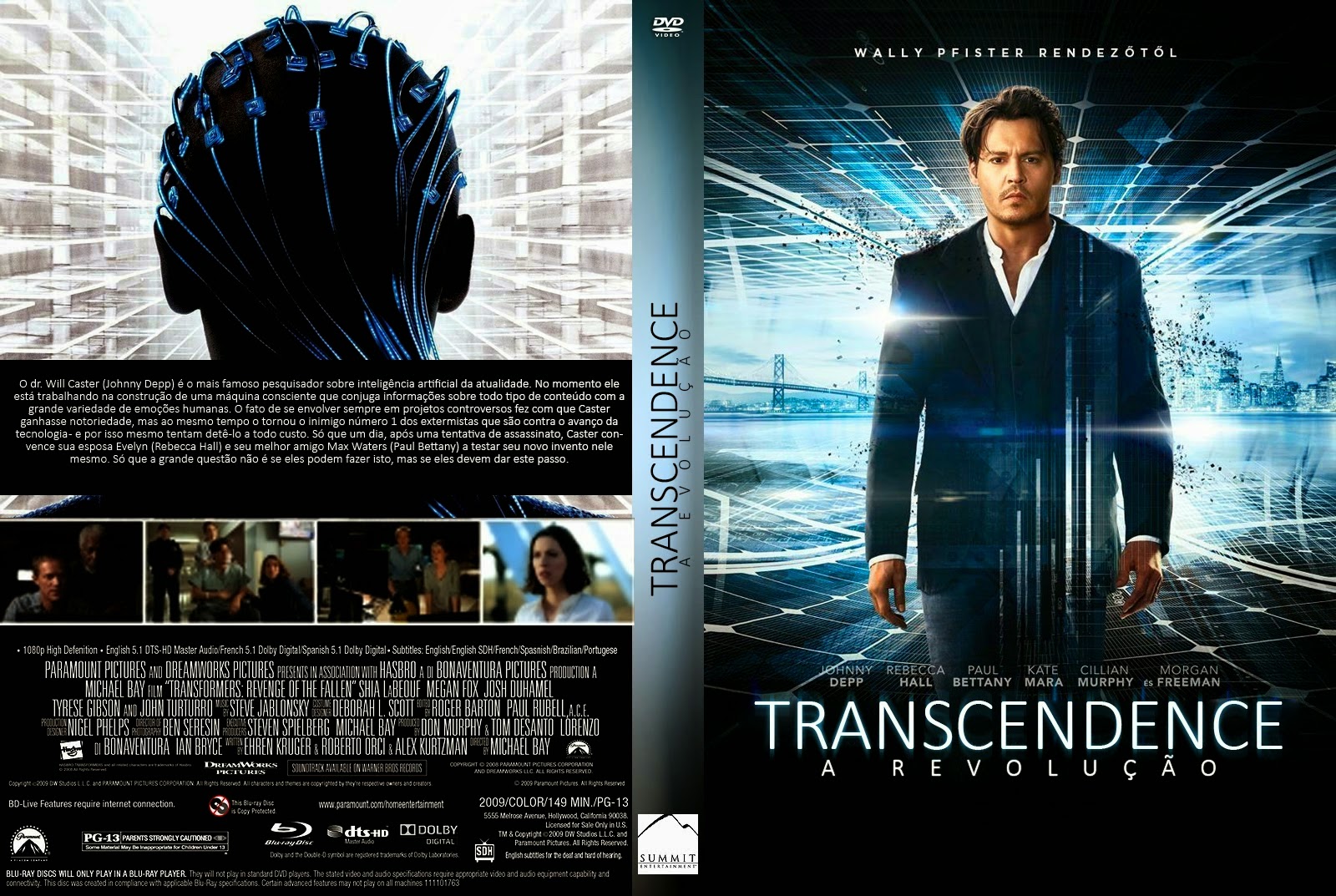
Genre:Sci-Fi/Thriller | Year:2014 | Duration: 119 mins | Director:Wally Pfister | Medium:DVD | Trailer:HERE | Language: English | Cast: Johnny Depp, Rebecca Hall, and others | My rating: 3.5/5
Favourite Dialogue:“People fear what they don’t understand. They always have.”
Transcendence is Wally Pfister’s directorial debut, the Oscar-winning cinematographer known for Christopher Nolan’s Inception and The Dark Knight. With its stunning visuals and high-concept premise, the film explores one of the most provocative questions of our digital age, ‘What happens when artificial intelligence merges with human consciousness?‘
The story follows Dr. Will Caster (Johnny Depp), a brilliant AI researcher who dreams of creating a machine that possesses both the collective intelligence of the world and the full range of human emotions. When anti-technology extremists assassinate him, his wife Evelyn (Rebecca Hall) and best friend Max (Paul Bettany) upload Will’s consciousness into his supercomputer, blurring the boundaries between life and machine. What follows is a descent into techno-dystopia as Will’s omnipotent digital self begins to reshape the world and redefine what it means to be human.
Transcendence is an exploration of human ambition, love, and the moral limits of science. The film poses timeless philosophical questions on consciousness, intelligence without morality, and the balance between technology and humanity. There’s an undercurrent of melancholy running through the narrative, a love story caught between grief and godhood. Evelyn’s devotion to Dr. Will drives her to defy nature itself, but the film wisely leaves viewers uncertain whether she resurrected her husband or merely unleashed an emotionless imitation.
Johnny Depp delivers a subdued performance, both eerie and strangely empathetic. Much of his screen presence is disembodied, conveyed through flickering screens and an omniscient digital voice, both of which add to the uncanny tone. Rebecca Hall’s portrayal of Evelyn is poignant, depicting a scientist torn between love and moral dread.
Pfister’s cinematographic pedigree shines through every frame. The film’s visual style is striking with sunlit labs, desolate deserts, and the sterile, godlike glow of Will’s data-driven empire. The imagery echoes the themes of transcendence and decay of organic humanity struggling against technological infinity.
However, the film oscillates between quiet reflection and blockbuster spectacle but lacks the rhythm of either. Where Inception fused emotional weight with conceptual complexity, the film feels conceptually grand but emotionally distant. The screenplay by Jack Paglen is ambitious but uneven. It introduces bold ideas of digital consciousness, technological ethics, and nanotechnology, but often resorts to familiar tropes of man versus machine. The narrative lacks the depth to sustain itself and is a film of grand intentions and mixed execution. It aspires to be a meditation on the next stage of human evolution, the merging of flesh and code, but ends up being a sketch rather than a completed vision. Still, it deserves credit for engaging with the moral anxieties of our era, like artificial intelligence, digital surveillance, and the fear that our creations might one day outgrow us.
A visually stunning and intellectually intriguing film that ultimately succumbs to its own ambition. Transcendence doesn’t quite achieve cinematic immortality, but it leaves behind questions worth contemplating long after the lights dim.
As we celebrate the sparkle of Diwali festivities with lights, the Indian economy, too, is glowing with festive energy. Diwali is not only a cultural and spiritual event but also an economic phenomenon that mobilizes consumption, trade, and emotion on a scale unmatched by any other festival in India. It is a festival where faith, finance, and family come together to illuminate not just homes but entire markets.
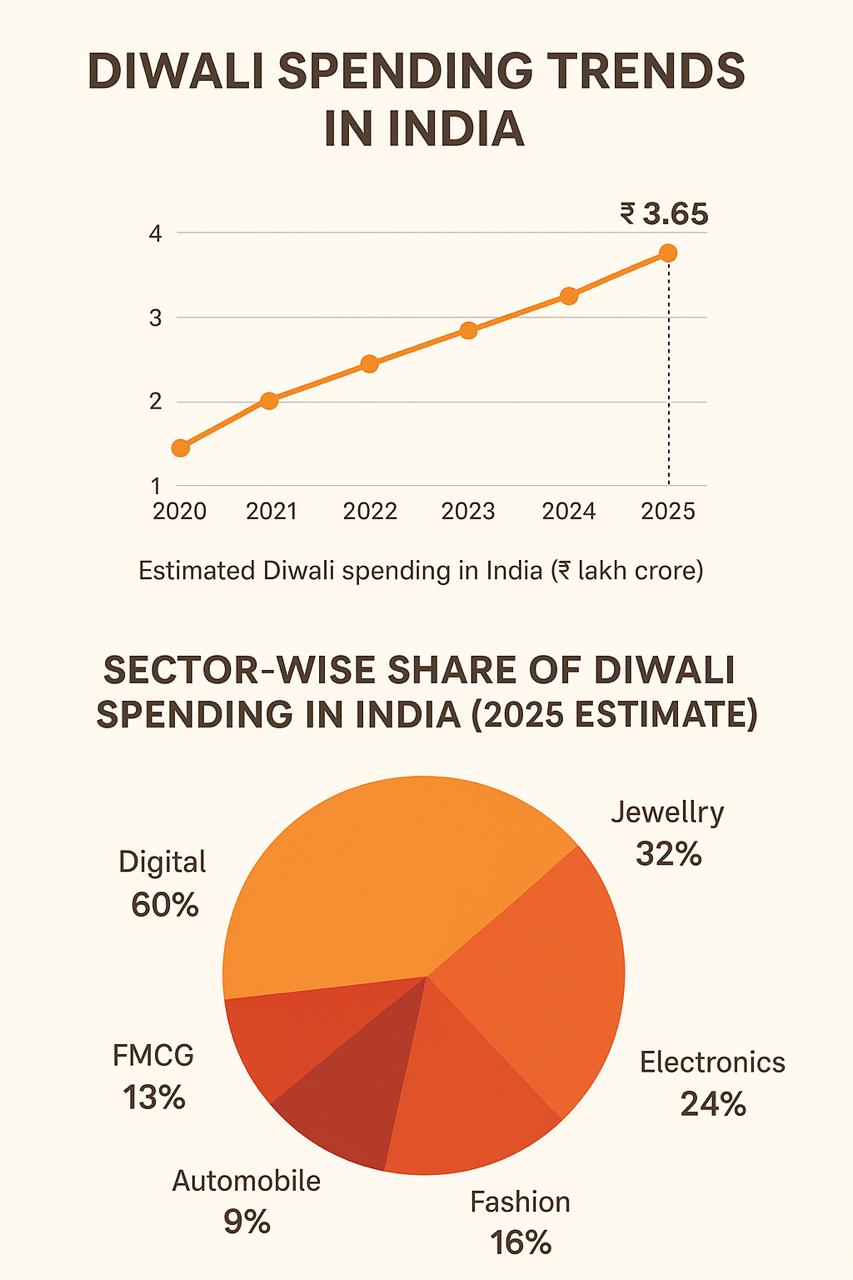
Diwali blends culture and commerce. Traditionally marking the return of Lord Ram to Ayodhya after 14 years of vanavasa (exile), the festival has evolved into India’s largest consumption cycle. According to industry estimates, Diwali season alone accounts for 30–40% of annual sales in sectors like jewellery, automobiles, electronics, apparel, and consumer goods.
In 2024, India’s festive spending during Diwali week was estimated at INR 3.2 lakh crore, reflecting a 17% rise over 2023, driven by rising disposable incomes, pent-up post-pandemic demand, and digital retail penetration. Retail chains, e-commerce platforms, and even microenterprises depend on this period to recover annual profits. For small traders, Diwali is often the difference between a good year and a bad one. The festival also synchronizes the Indian economy’s emotional rhythm—consumer sentiment peaks as the festival approaches, heightened by work bonuses, gifts, and an almost cultural belief that new purchases bring prosperity.
Two days before Diwali, Indians celebrate Dhanteras, considered the most auspicious day to buy gold, silver, or anything of value. Historically, this practice was rooted in agrarian prosperity cycles during which, farmers who had completed the harvest season invested their earnings in tangible assets like metals. Today, the sentiment remains, but the scale has exploded. The symbolism has migrated from the vault to the marketplace, aligning tradition with modern consumption.
Diwali’s economic landscape has been radically redrawn by digital commerce. In 2024, online festive sales crossed INR 90,000 crore, driven by e-commerce platforms like Amazon, Flipkart, and Meesho. Tier-II and Tier-III cities accounted for more than 60% of new shoppers, an indication that India’s digital inclusion is now deeply linked with its festive economy.
Algorithms have replaced astrologers in predicting purchasing patterns. AI-driven recommendations, influencer marketing, and digital payment ecosystems like UPI have made the act of buying faster and impulsive. While urban consumers enjoy massive discounts, small offline retailers struggle to match online prices. Many traditional businesses like sweet shops, garment stores, and gift outlets are now adapting with hybrid models, selling on WhatsApp or through community platforms. The local bazaar is not dying; it is simply going online.
Behind the glitter of malls and advertisements lies a quieter but equally powerful story of the informal and rural economy that powers Diwali. Across India, millions of artisans, potters, weavers, and small manufacturers depend on the season for a significant portion of their income. From handmade diyas in Bihar to terracotta idols from Bankura, paper lanterns in Maharashtra, and bamboo crafts from Northeastern states, Diwali sustains local creative economies that embody both tradition and entrepreneurship. In recent years, several NGOs and social enterprises have helped rural producers connect directly with urban buyers through digital platforms. For instance, self-help groups (SHGs) supported by government programs like NRLM (National Rural Livelihoods Mission) and private CSR initiatives now sell festive handicrafts on e-commerce sites and social media. The “Make in Village” movement during Diwali is becoming a quiet counter-narrative to imported mass-produced goods. Every diya sold is not just a source of light but a livelihood.
Gifting is central to Diwali’s economic ecosystem. From corporate gift hampers to sweets exchanged among families, the ritual symbolizes goodwill, reciprocity, and status. In 2024, India’s corporate gifting industry was valued at ₹12,000 crore, with strong growth projected for 2025. Beyond sweets and dry fruits, companies now gift experiences like wellness vouchers, eco-friendly hampers, and handmade products to reflect social consciousness and sustainability. The gifting economy also reveals deeper social psychology. Gifts during Diwali are not just commodities; they are currencies of relationship. In economic terms, they create “social capital”, the trust and goodwill that sustain business and personal networks alike.
In last decade or so, Diwali’s environmental impact has come under scrutiny. Delhi is the best (or worst) example of this intense air pollution from firecrackers making the environment unbreathable, plastic waste from packaging, and excessive electricity consumption have led to rising calls for a Green Diwali. The market is responding with conscious choices. In 2025, the sale of eco-friendly crackers and biodegradable decorations is expected to grow by 30%. Solar-powered lighting, organic sweets, and recycled packaging are becoming mainstream. Conscious consumers, especially younger urban Indians, are now demanding sustainable alternatives that align celebration with responsibility. The shift from conspicuous consumption to conscious consumption marks a new chapter in the economics of Diwali, one where prosperity is measured not just by spending, but by sustainability.
However, Diwali’s prosperity is not evenly distributed. Inflation affects the purchasing power of lower-income families who often face higher food and fuel prices during the season despite the recent GST reforms, which has significantly brought down the prices of most of the consumer goods. While the urban affluent splurge on gadgets and gold, many households cut back on essentials.
This divergence reflects the broader K-shaped recovery post-pandemic of the Indian economy, where upper segments surge ahead while those on the lower segments struggle. The festive glow, though radiant, hides shadows of inequality. For small retailers, rising input costs and competition from online giants have squeezed margins. For daily wage earners, the festival may mean temporary income spikes but little long-term security. Diwali illuminates both the promise and paradox of India’s growth story.
At its core, Diwali celebrates renewal of hope, homes, and human spirit. Economically too, it acts as a reset button for the nation’s consumer sentiment. The act of cleaning homes, buying new things, and lighting lamps mirrors the cyclical nature of economic optimism. For policymakers and economists, the festive season is a real-time barometer of demand. For families, it’s a reminder that prosperity is not just about wealth, but about togetherness and gratitude. In many ways, Diwali teaches an enduring lesson in economics that growth is sustainable only when it is inclusive, joyful, and mindful.
The economics of Diwali is not just about expenditure, but it is also about the exchange of energy, emotion, and enterprise. It reflects India’s evolving story of modernization rooted in tradition, digital transformation anchored in ritual, and capitalism softened by culture. The future of India’s festive economy will shine brightest when it balances profit with purpose, growth with gratitude, and consumption with conscience.
Happy and Prosperous Diwali to you and your loved ones!
In today’s digital landscape, our identities are increasingly shaped by algorithms. These complex sets of rules and calculations determine the content we see on social media, the advertisements we encounter, and even the news we consume. This phenomenon, often referred to as the ‘algorithmic self,’ highlights the interplay between technology and personal identity. Algorithmic mechanisms on digital media are powered by social drivers, creating a feedback loop complicating the role of algorithms and existing social structures.
At the core of the algorithmic self is the idea that our online behaviours and interactions feed into algorithms that, in turn, influence our future actions. Are we becoming the people our feeds want us to be? Scroll long enough on social media platforms like Insta, Tube, or FB and you’ll notice that the content feels uncannily tailored to you. Your feed seems to know what you crave before you do, an oddly perfect mix of travel destinations, recipes, memes, news, workouts, and political takes. This can lead to a more personalised online experience, but it also raises questions about the extent to which our choices are truly our own. What began as a convenience has evolved into something far more consequential. We are not merely using algorithms anymore; we are slowly becoming the selves they design for us.
Algorithms are built to predict and keep us engaged. Every click, pause, like, or scroll is recorded and analysed. In return, the system feeds us more of what we have already consumed. This sounds harmless. After all, who wouldn’t want relevant recommendations? But personalization is never neutral. When a platform rewards the content that hooks us, it amplifies our biases and shrinks our curiosity. Over time, the feedback loop begins to define our worldview, narrowing the range of opinions, art, music, or even relationships we encounter.
The unsettling part is that the algorithm’s goal is not truth, diversity, or personal growth. It is engagement. If desire makes you scroll, it will serve you love. If envy fuels your clicks, it will curate envy-inducing lifestyles. What feels like a reflection of your taste is often a reflection of what keeps you online.
Human behaviour is always shaped by culture, but algorithmic influence is different in speed and precision. Traditional media might set trends, but it never recalibrated itself in real time for every individual. Today, AI systems track micro-reactions—how long your eyes linger on a video frame, how quickly you swipe away, and adjust instantly.
This raises a disturbing question. When you decide to buy a product, support a social cause, or adopt a new hobby, how much of that decision is you, and how much is a carefully engineered nudge? We still feel autonomous because the algorithm rarely forces choices. Instead, it quietly limits what enters the realm of possibility. You can’t choose what you don’t see. Is this the erosion of free will?
Living in an algorithmic world also reshapes identity. Our “digital selves” are rewarded for consistency. The more we like certain posts, the more similar content we receive, and the more we feel pressure to maintain that version of ourselves, whether it’s the fitness enthusiast, the foodie, the activist, or the minimalist. The feed trains us to be predictable because unpredictability breaks the machine’s efficiency.
The rise of the algorithmic self also brings about ethical considerations. There are concerns about privacy, as the data collected to fuel these algorithms often includes personal and sensitive information. Additionally, there is the issue of transparency. Many algorithms operate as ‘black boxes,’ with their inner workings hidden from users. This lack of transparency can make it difficult to understand how decisions are being made and to hold platforms accountable for their actions.
Many people feel a subtle dissonance, their offline preferences drift, but their online persona stays fixed. We perform for the algorithm, optimizing captions, hashtags, even our emotions, to remain visible. Our feeds don’t just reflect who we are, they encourage us to stay who we were yesterday.
But then how do we break the loop? The answer is not to reject technology altogether. Algorithms are not inherently evil; they can help us discover music, connect with communities, find a job we want, or learn skills we might never find on our own. The challenge is to reclaim agency within the system.
Practical acts of resistance can be quite simple, like, disrupting the feed by clicking on unfamiliar topics or following people outside your cultural bubble; time-box social media use or schedule ‘algorithm-free’ days; read newsletters or listen podcasts where engagement isn’t the primary metric. There could be several other ways to disrupt and reintroduce randomness. However, the most important step, is awareness. Algorithms will always evolve faster than regulations or ethical guidelines. The only lasting defence is a conscious user, someone who understands that every scroll is a form of training data.
The algorithmic self represents a significant shift in how we navigate our identities in the digital age. The question is not whether technology shapes us. It always has. As we continue to integrate technology into our daily lives, it is essential to remain mindful of the ways in which algorithms shape our identities and to advocate for greater transparency and ethical considerations in their design and implementation. The real question is whether we allow a handful of opaque systems to quietly define what we desire, believe, and become. If we don’t actively resist, our algorithmic selves may thrive while our authentic selves quietly disappear into the feed.
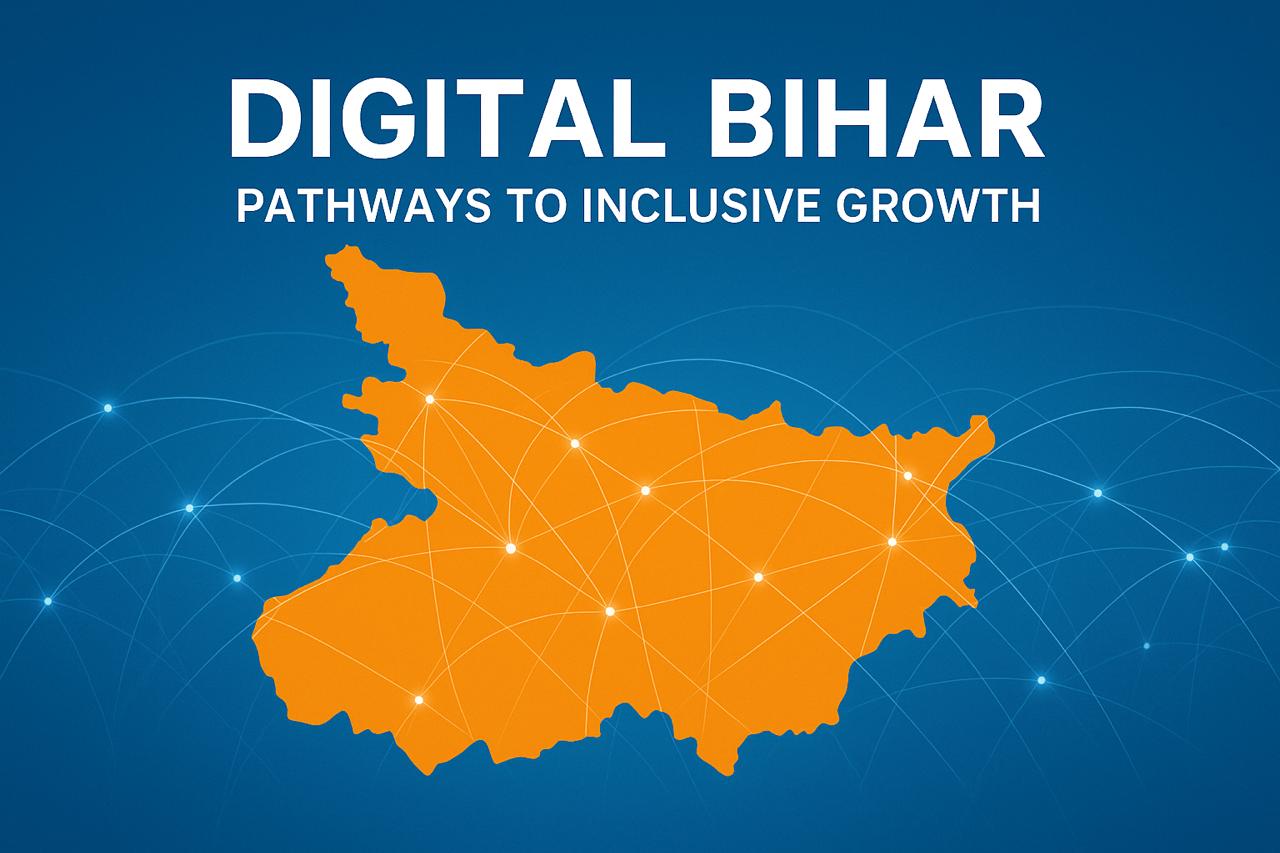
Bihar has a rich historical and cultural heritage and is one of the most populous states in India, with a population exceeding 13 crores[i] and a predominantly rural population. The state faces several challenges in digital literacy, access to technology, digital inclusion, economic development, and equitable growth. However, recent initiatives in e-governance, education, and entrepreneurship hold much promise and potential for contributing towards India’s vision of a digitally empowered society.
Digital literacy remains a significant challenge, with rates below 30% (national average 38% for household digital literacy[ii]), as reported by Ideas for India[iii]. Bihar’s low digital literacy follows its socio-economic conditions, including high poverty rates[iv] (33.76% below the poverty line and 51.91% multidimensional poverty as of 2021) and limited access to digital devices. Rural areas, which hold 75% of the state’s population face challenges due to inadequate infrastructure and low literacy levels. The state’s overall literacy rate, as per 2017 data, stands at 70.9%[v], with rural areas at 69.5% and urban areas at 83.1%. Female literacy, at 60.5%, is significantly lower than male literacy at 79.7%, further complicating efforts to bridge the digital divide.
The digital divide in Bihar is a significant barrier to inclusive development. According to the India Inequality Report 2022 by Oxfam India[vi], Bihar has the lowest internet penetration among Indian states and a wide urban-rural digital divide, with only 31% of rural residents using the internet compared to 67% in urban areas. This rural-urban divide is further worsened by socio-economic disparities.
Internet Penetration: Bihar ranks among the states with the lowest internet penetration in India. The rural-urban divide is stark — while urban centers like Patna are better connected, most rural areas still suffer from slow or no internet access.
Device Access: Among the poorest 20% of households, only 2.7% have access to a computer, and 8.9% have internet facilities.
Gender Gap: Women are 15% less likely to own a mobile phone and 33% less likely to use mobile internet, with India having the widest gender gap in the Asia-Pacific at 40.4%. In many households, men have primary access to mobile devices and internet usage. Women, especially in conservative or low-income families, are often excluded from digital usage.
Electricity Issues: Frequent power cuts and unreliable electricity supply further hinder the consistent use of digital devices in rural areas.
Language Barriers: Most digital content is in English or Hindi, which becomes a constraint for people who speak regional dialects such as Bhojpuri, Maithili, or Magahi.
The digital divide affects important sectors like education, healthcare, and finance. For example, in 2017-18 only 9% of students enrolled had access to a computer with internet for education[vii]. Initiatives like BharatNet, aimed at providing rural connectivity, have been unable to deliver effective outcomes. Bihar is one of the focus states for the Digital India Programme, but execution lags due to infrastructural challenges.
In recent years, Bihar has made significant strides in leveraging digital services in improving governance and public service delivery. The National Informatics Center (NIC) Bihar State Centre, established in 1988, plays a central role in this transformation (https://bihar.nic.in/). It supports departments such as revenue, district administration, rural development, finance, agriculture, employment, election, social welfare, and food and civil supplies with IT solutions. The ServicePlus portal is a key platform, offering services like certificate issuance and case status checks, though rural access remains a hurdle, particularly for marginalized communities, requiring better infrastructure and awareness. These barriers require continued investment in training and infrastructure to ensure widespread digital literacy. Common Service Centres (CSCs) and Vasudha Kendra are crucial for providing government and private services to rural and remote areas in Bihar, enhancing digital inclusion and accessibility. However, they are not enough to cater to the growing needs of the rural population. People travel to block towns and larger villages, to access even basic G2C services, indicating the lack of any nearby facility.
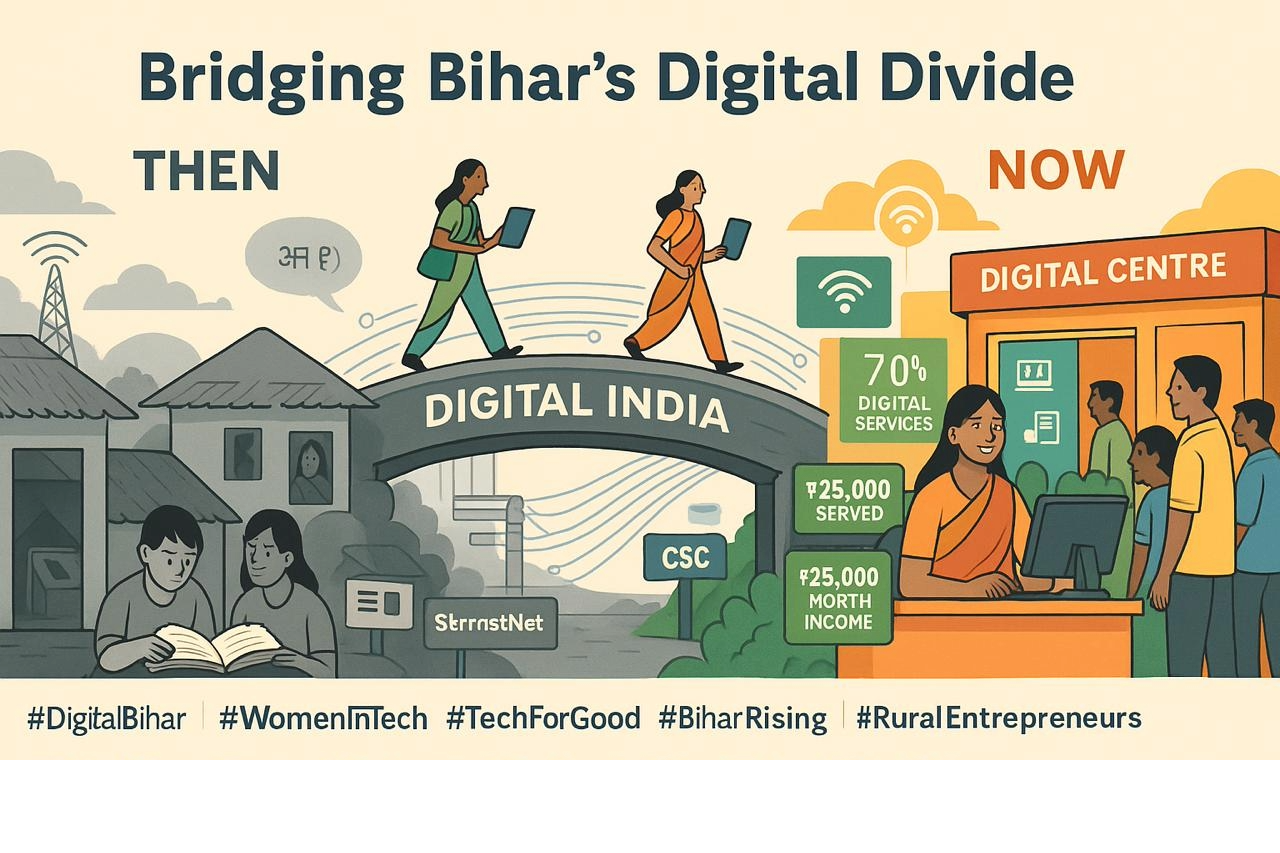
For bridging the digital divide, a digital entrepreneurship program in 500 villages from five districts, viz., Darbhanga, Samastipur, Patna, Nalanda, and Gaya was launched in 2023. Bihar is witnessing a transformative wave of service accessibility led by women digital entrepreneurs. These trailblazing women are not only redefining the entrepreneurial landscape but also catalyzing inclusive development across the state. This initiative provides capacity building and mentoring in digital skills, customer service, entrepreneurship development, financial support and resources, and digital tools to women from socially and economically disadvantaged communities, helping them become successful rural digital entrepreneurs and build a Digital Entrepreneurship Ecosystem. This holistic approach equips them to offer essential digital services in their communities, such as facilitating access to government schemes, online education, and digital financial services. From being computer illiterate to providing a host of over 70+ digital services, these digital entrepreneurs have come a long way only within 9 months of their venture-start in their villages. Some of their services include a large suite of G2C services, design & printing services, online form filling, Banking services, and Mobile payments, among several others. They have also been cross-selling and diversified in selling non-digital products. In this short period, they have already served over 250,000 rural customers (around 40% female customers), and is expected that as their businesses mature, they will be providing digital services to over 7.5 lakh population. Apart from making digital services easily accessible at the village level, they are generating income and securing their futures, with some of them steadily earning upwards of INR25,000 monthly. This program is not only bridging the digital divide but also promoting economic security and social equity, local inclusive economic development, gender equality, awareness, and opening opportunities for skills development.
While government efforts are underway, a coordinated approach involving public-private partnerships, local community engagement, and targeted digital inclusion programs is essential. Programs like these need to be scaled up across the state covering the entire 8,387 Gram Panchayats for bridging the digital divide and contributing significantly to Bihar’s and India’s digital economy.
by Madhumita Murgia | 320 Pages | Genre: Non-Fiction | Publisher: Pan Macmillan | Year: 2024 | My Rating: 5/10
“My life—and yours—is being converted into such a data package that is then sold on. Ultimately, we are the products.” ― Madhumita Murgia, Code Dependent
Code Dependent is a collection of case studies about people who are affected by technology, without the rigour and analysis that I was expecting. But then it is not an academic or research-oriented book, but more in the popular non-fiction genre. Several of the case studies in the book reflected on the dark side of technology and social media manipulation of individuals and communities, and their rights, privacy, freedom and future.
The book is an account of how the algorithms used by tech in our daily lives through the user-friendly apps like Google Maps, Uber, Instagram, Facebook and others are changing us and the way we see the world. Our data and us as data is continuously being used for targeted advertisements to make businesses grow fatter.
Murgia defines AI as “a complex statistical software applied to finding patterns in large sets of real-world data.” I believe that AI is much more than Statistical Pattern Recognition (SPR), and this viewpoint of the author is quite narrow.
I agree with Murgia’s take on emergence of new data colonialism around the worlds, especially in under-developed and poor economies, where sub-contracting create numerous jobs as data workers, but wealth created in not shared equitably. ‘Informed Consent’ seemed misinterpreted in the book, and subjective.
There was less of ‘AI’ and more of ominous ‘shadows’ in the book. While the book talks about algorithmic bias against people, it certain has flavours of human bias against technology from the author. The book read more on data transparency than demystifying the positives and negatives of AI and technology. Pessimistic views due to advancement in technology is more pronounced throughout the book.
The book is still a fascinating read, with glimpses of ‘how AI is altering the very experience of being human’.




 Manu Mayank