What is Social Planning
May 8, 2012 7 Comments
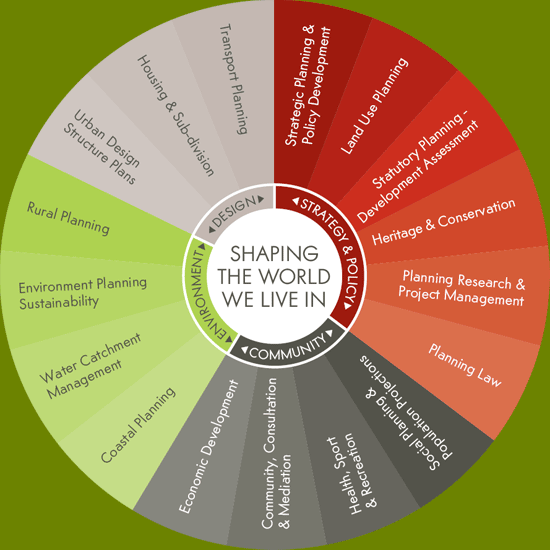 The definitions for social planning are diverse. This is a reflection of the vast field of activities that the term social planning can be applied (Archibugi, 1996) and the range of perceptions and expectations of the term held by different groups. Local Governments have always undertaken a range of activities that are now encompassed under the definition of social planning (NSW Department of Local Government, 2002b). These activities are based on the promotion of ‘well-being’ in a community and may include: transport, health, housing, employment, community safety, recreation, education, culture, community facilities and the environment. Despite the variations, there are fundamental consistencies that underpin all definitions, including that social planning is value based, people focused, participatory and equitable.
An element of social planning is the assessment, evaluation and provision of community facilities. Menzies (2004) defines community facilities as ‘buildings (structures) providing physical resources that are used substantially for community activities and services. They can include “offices, meeting or functions rooms, specialist activity spaces, outdoor areas, support facilities, equipment and/or adequate storage facilities”. Similarly, Brisbane City Council (1999) defines community facilities “…as informal or formal places and spaces providing physical resources that are used substantially for community activities and services”. For the purpose of this review and in the context of the Redcliffe Community Facilities Audit 2004, the definition of community facilities will only include formal physical spaces used substantially for community activities and services.
The consolidation of social or community planning as a defined field and its elevated position in terms of being a component of environmentally sustainable development (ESD) and therefore its statutory reinforcement in the Local Government Act 1993 and the Integrated Planning Act 1997 has ensured that social planning has received a higher degree of attention in Queensland over the past decade. This evolution has been occurring in most western cultures for a longer period, including NSW, which began experimenting with social plans in the early 1980’s (NSW Local Government, 2002). Much of this work has involved the identification of underlying principles that should provide the basis of any social planning activity, including the provision of community facilities.
The NSW Department of Local Government (2002a) state four social justice principles as the basis of social or community planning: equity, access, rights and participation. The Local Government Community Services Association of Australia (1999) itemize 11 principles: accessibility, adequacy, appropriateness, fair pricing, ecological sustainability, participation, non-discrimination, flexibility, creative, efficiency and responsiveness. Menzies (2004) in ‘Social Planning Guidelines for Queensland’, acknowledges both of these, and for identifies five key principles specifically for the provision of community facilities: spatial equity, population equity, socio-economic equity, community development and collaborative planning. A discussion on each of these five principles and Integrated Local Government Planning (ILAP) is the basis of this paper.
Integrated Local Area Planning (ILAP)
Integrated Local Area Planning (ILAP) has become an integral part of community planning in local authorities. ILAP is a whole of government, whole of community approach to strategic local and regional planning. Within this framework, key issues are identified locally or regionally, and a shared vision is developed among all spheres of government, the private sector and the community.
ILAP is based on the following principles:
- Partnership. Forging dynamic and productive relationships within and between governments with community and commercial sectors.
- Linkage across sectors. Adopting a holistic approach to planning, which links related physical, environmental, economic, social and cultural issues rather than treating them separately.
- Agreed key issues/shared vision. Developing a shared understanding of key issues and a shared vision of desired futures.
- Community participation. Ensuring significant involvement in planning and management processes.
- Coordinated action. Coordinating related activities of different departments, organizations and spheres of government is necessary in order to address key issues and achieve desired futures.
- Local government leadership. Recognising can play a leading role in facilitating and implementing integrated strategic planning.
- Acknowledge diversity. Local areas and communities differ, and emphasis should be placed on devising responses to distinctive local circumstances.
Source: Dept. of Environment & Heritage, 1995
These principles are in line with the United Nations recommendations of best practice in local government leadership. The UN recognizes that integrated participatory planning, incorporating the principles of Eco-design, provides the guidelines and regulatory framework for housing; urban development; management of urban environment; protection of natural resources; and disaster prevention (Chengdu Declaration, 2000).
The trend in many countries now is towards integrated planning. In South Africa for instance, local municipalities use integrated development as a method to plan future development, which among other things ensures effective use of scarce resources and promotes coordination between local governments and the national government (www.etu.org).
Spatial Equity
Menzies (2004) defines spatial equity as providing equitable access to a community facility for residents of all deistricts and that developing areas provide for future facilities.
One of the key elements of spatial equity is efficiency. The optimal location of community facility to some extent could considerably reduce the transportation and production cost. The proximity of community facility’s location could also be seen as an instrument to increase the consumer’s surplus and has expected to improve the human service capacity (Ye and Yezer, 1992). As a result, it also recognizes the importance of balancing community facility patterns between clients and communities in the local and citywide scales (DeVerteuil, 2000). While the other key element is the performance, in terms of ‘the number and the location of service facilities and the deployment of service resources’ (Savas, 1978).
Regarding the location issue, community facility could also be linked with the issue of the private sector, in terms of selecting the optimal location, particularly in relation with the value of positive economics, which is the primary concern of the private sector (Thisse and Wildasin, 1992).
The selection of the location of a community facility is mainly based on policy decision making process and often involves many stakeholders such as landowners, developers, and ‘persons interested in public investment as an instrument for dealing with urban blight, etc’ (Thisse and Wildasin, 1992). It also relies on governmental welfare criteria, which based on neoclassical welfare economic, to increase economic output and encourage rapid social progress (DeVerteuil, 2000).
The concept of spatial equity is also linked to the process to encourage community participation. For instance, it is useful to promote the ongoing maintenance process of the community facilities by the members of the community. Community participation also demands a collective action for example to pay for the services as well as to distribute them (Savas, 1978).
The concept of spatial equity could also be explained according to a number of general principles (Savas, 1978):
- Equal payment, for instance if a particular area demands a service, they can have as much as they request, as long as they are willing to pay for it.
- Equal output, for example if one could assign an ambulance throughout an area in such a way as to produce equal result in the different sub areas.
- Equal input, which could be distinguished as equal input per district and equal input per unit area, for instance per one square kilometre.
Population Equity
Population equity is the principle whereby facilities should be provided for all age groups in accordance with their particular need and priority afforded to those where private facilities are lacking (Menzies, 2004). With regards to equity, Leeder (2003) defines equity as “a sense of fairness”. He further explains that fairness is sharpened by adding equality and fellow – feeling. Equity is an ethical value and should be understood as similarities of status, capacity or opportunity while Braverman and Gruskin, US health and human rights academics, define “equity as an ethical concept grounded in the principle of distributive justice” (Leeder, 2003).
They further stress that equity in health is a reflection of a concern to reduce unequal opportunities to be healthy, which are associated with membership in less privileged social groups such as the poor peoples, ethic and religious groups etc. In this regard, Leeder (2003) further states that equity primarily centers on socially disadvantaged, marginalized or disenfranchised groups within and/or among countries but not limited to the poor. According to Leeder (2003), there is a huge number of Australians who do not have equitable access to good quality healthcare. One of the reasons for this is public hospitals are growing old and need replacement. Another reason is that “up front” payments for consultations have been significantly increasing whereas bulk – billing is in sharp decline. It is clear that there is a remarkable difference between services provided to those with less money and cannot afford a surcharge and those who are willing to pay a surcharge. This also means that people with less income for instance the seniors (over 65) who live by themselves with little pension and indigenous people are not given equal opportunities for medical care as compared to those who are wealthier. In this connection, it will be appropriate to add that Australia has an aging population, and this will grow more rapidly over the coming decades (source: www.alga.asn.au).
It is therefore important to take the equity issue into full account in making facility development plans, in this case the healthcare system, particularly with regards to the public sector. The reason is that people’s general tendency is to visit private clinics, which are far better equipped and which normally provide better and speedier treatment than the public ones. The major concern in this case is not everyone can afford consultations and treatment in private clinics.
Much has been written and discussed about the issue of equity, especially in the field of healthcare. By and large, the point on which all Australia’s health economists’ discussions centre is the “equal access to equal care for equal need”. This point is extremely vital in ensuring the equity for the people and worthwhile taking into consideration when preparing developmental plans in Australiaas a whole.
Socio-Economic Equity
Areas of socio-economic disadvantage are perceived by the wider community as a prime beneficiary of social planning. Aged pensioners, the unemployed and low income earners are recognised as groups that require assistance from governments. It is the community’s expectation that assessments of needs within the community recognise and address the needs of the socio-economically disadvantaged.
Community needs assessments are often used for the purpose of community development in disadvantaged areas. These communities are regularly characterised by multiple disadvantage (Percy-Smith, 1996). The community may exhibit low employment, high welfare dependency, low education and skills base and a limited wealth base. Percy-Smith (1996) states that a community needs assessment for community development should have the following key elements:
- Holistic approach – as the community may have multiple disadvantages.
- Multi-agency responsibility – because the approach is holistic, effective community development is unlikely to occur through only one government agency or industry sector.
- Involve, enable and empower the community.
- Ethical analysis – an open and transparent methodology and community involvement encourages ethical practices
- Benefits should outweigh the cost of the assessment.
The final phase of a community needs assessment is to outline and prioritise strategies and action plans to address the needs of the community. Formulating strategies for socio-economic development at the local level follows from the objectives of the study and the analysis in earlier stages. Blakely and Bradshaw (2002) identify four strategic approaches for socio-economic development which can be used in conjunction with each other or in isolation:
- Locality development – infrastructure development, planning policies, housing, street-scaping.
- Business development – stimulate job growth through business attraction.
- Human resource development – improve the skills of the workforce.
- Community based employment development – create neighborhood-level employment opportunities through Council or non-profit organisations, cooperatives between workers and businesses or similar community ownership initiatives. This approach promotes ownership of and participation in community development.
The community needs assessment approach, incorporating identification of community needs, data collection, consultation, analysis and strategy development enables authorities to promote and implement community development that assists disadvantaged groups within the community.
Community Development
Community development has been defined in a number of ways. Du Sautoy (1962) defines community development as any activity undertaken by any agency which is primarily designed to benefit the community (du Sautoy, 1962:1). He also cites the United Nations definition of community development, which is defined as the ‘process by which the efforts of people themselves are united with those of governmental authorities to improve the economic, social and cultural conditions of communities, to integrate those communities into the life of the nation and to enable them to contribute fully to national progress’ (du Sautoy, 1962:1). The UN goes on to further highlight the two essential elements that must be present for community development to be successful. These are, firstly, the participation of the people of a community, not only within a government directed program but also acting under their own initiative to improve their circumstances in life (du Sautoy, 1962:1). Secondly, the provision of technical and other services to these motivated people to encourage people to take the initiative, instigate self help and mutual help and basically to assist peoples established, methods to make them more effective (du Sautoy, 1962:1).
Du Sautoy has therefore raised the point that community development is not simply a government organisation pointing at people and telling them what to do. Rather, it is the provision of services and ideas that serve to encourage people to take the initiative and act themselves to improve their community. Biddle and Biddle (1968:2) further elaborate upon this point by suggesting that for a community developer to be successful in instigating development, they must play the role of encourager, and not salesperson. For community development to occur the developer must work from within the community, establishing themselves as a friend, offering minimal direction and access to resources, while mainly trying to encourage people to reach their own conclusions about what is needed to improve the community (Biddle and Biddle, 1968:40). Community development is also about building cohesion, as many people any not readily identified as being part of a community. The role of the developer is then to make them aware of this, and encourage communication within the community (Biddle and Biddle, 1968:37). By doing this the developer is able to steer people towards identified community needs, and also make the community more accepting of these changes as they have reached these conclusions themselves (Biddle and Biddle, 1968:38).
Community development, from the view of the developer, can then be said to be the process through which the developer integrates themselves into the community in order to makes suggestions and give guidance as a friend in order to assist the wider community to effect positive changes.
Collaborative Planning
Another important aspect of social planning is that of collaborative planning, in which the targeted community plays a significant role in the planning, design and implementation process.
Social planning is, by its nature, community based. As such, it requires the support of the whole community – from political leaders to key stakeholders to the general public. Without broad based support, a potentially successful plan may become a futile exercise relegated to a few interested individuals, with no community ownership or commitment. Only with community support will a plan lead to meaningful results.
To ensure collaborative planning, support must be sought even before the program is formally initiated. All major interest groups should be informed and given the opportunity to be represented, such as key officials, local managers, community stakeholders, informal leaders, institutions and existing community groups. Each group should be informed as to why a project has been proposed, how it is expected to work and what it hopes to accomplish in terms of outcomes and benefits to the community.
Involving the community allows for the project to be strongly geared to their values; provides a greater sense of ownership; ensures a shared community image of the future; and allows for the inclusion of additional ideas on the design and implementation of the project.
During the formal stages of a community planning exercise, there are a number of ways in which to include collaborative planning. Different types of community will require different forms of collaboration. In reality, a comprehensive process will only be possible where there is sufficient time and resources. Usually, the project coordinators will attempt to ensure a project has targeted representation, rather than attempt to include all of the public. These ‘representative’ groups should come from a cross-section of the community, and be chosen based on their orientation to the entire community. As such, some or all of the following methods may be utilized (see the Oregon Visions Project, 1998: 18):
- Surveys on public attitudes and values
- Public meetings
- Planning workshops
- Focus groups
- Representative groups
- Community tours
- Newsletter and publications
- Special events and activities
Another way of improving a project’s chances of success is to arrange a steering committee or task force run by the community. This helps to ensure the public’s involvement, and also helps the project reach its longer-term goals. These groups may oversee the implementation of the final design, review and approve policy decisions, or be involved in the grass roots planning stages. If the overall project is complex, it is advisable to ensure the committees include members of the public with a variety of skills, such as project management, practical abilities, and the “visionaries” who are able to see the community from a large scale and more creative aspect.
Finally, as part of the collaborative process, efficient and successful communication is crucial. In order to ensure the community feels they are involved and have ownership, they must be continuously be kept up to date with the status of the project. This allows them to understand “where they are” in the process, and what is expected of them. Good communication also assists the coordinators, in that by regularly providing updates, they are able to keep track of who needs to know what, and when.
Although collaborative planning, with its corresponding large numbers of views, interests and agendas, has the potential to become unwieldy, ultimately it is a vital tool in the goal of ensuring a broad representation of, and ownership by, the targeted community.
Conclusion
Social planning is underpinned by a hierarchy of principles. For example the broad social justice principles of Equity, Access, Participation and Equality can be applied broadly to most social planning exercises. More specific principles will also be appropriate for specific social planning activities. These are spatial equity, population equity, socio-economic equity, community development and collaborative planning. A brief discussion on Integrated Local Area Planning has also been provided as a recent dominating trend in social and community planning.
Community facility planning should:
- Be in accordance with a shared vision between all spheres of government, the private sector and the community.
- Be based on partnerships between these three groups.
- Be facilitated by Local Government – i.e. leadership.
- Recognise the diversity of communities, and within communities.
- Prioritise those needs where private sector facilities are not available.
- Promote its role as a catalyst for skill basing and job creation.
- Be dynamic and creative.
Community facilities should be:
- Located to ensure accessibility to all residents of the community.
- Facilities should be responsive to the needs of specific groups within the community.
- Priced so not as to exclude those who are excluded from other commercial or private facilities.
- Capable of multipurpose use and flexible.
- Non-discriminatory and inclusive.
- Environmentally responsive.
[Article Source: Mayank, M., et. al., (2004) Redcliffe City Council Social Plan, Qld, Australia]



 Manu Mayank