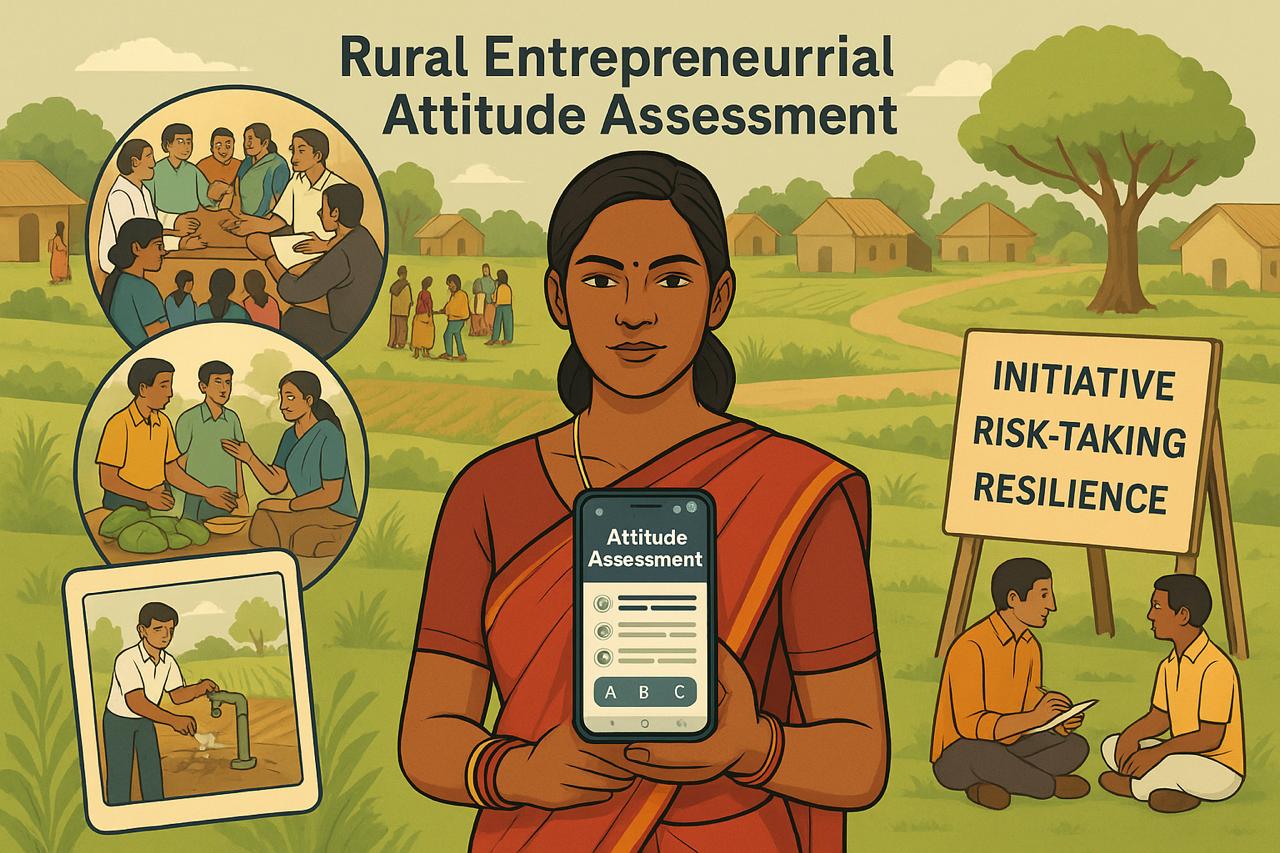
Measuring Entrepreneurial Attitude

Generated using Ai

In India’s rural economy, entrepreneurship has emerged not merely as a means of livelihood but as a powerful solution for social and economic transformation. While skills development programs like Skill IndiaStartup India, and Deen Dayal Upadhyaya Grameen Kaushalya Yojana, and numerous capacity-building workshops by NGOs have made significant progress in imparting entrepreneurial aptitude, the more elusive and often underappreciated dimension is entrepreneurial attitude. This inner compass and entrepreneurial mindset, shaped by motivation and initiative, resilience, risk-taking ability, adaptability, and opportunity identification, is what ultimately sustains a venture through uncertainty.

Entrepreneurial aptitude is teachable. It usually comprises financial literacy, business planning, marketing, and digital skills, domains that lend themselves well to structured training modules. However, attitude is behavioural, psychological, and deeply contextual, especially in rural environments where social, cultural, and economic factors deeply influence individual motivation and risk behaviour.

While technical institutions, NGOs, and government agencies have scaled up skilling programs in rural areas, the absence of reliable frameworks to assess entrepreneurial attitude results in misdirected investments, high dropout rates, or business failures post-startup.

I believe that the right attitude matters more in rural entrepreneurship, or even entrepreneurship in general. Rural entrepreneurship has its unique challenges, like limited access to finance and markets, lack of required infrastructure, socio-cultural constraints, especially for women, and low institutional support. Here, it is the right attitude of the aspiring entrepreneur, which is a mix of persistence, opportunity-seeking, and resourcefulness, that becomes the decisive factor between failure and success.

Current programs lack structured mechanisms to assess and nurture entrepreneurial attitude at the rural level, leading to inefficient selection of beneficiaries, poor resource utilization, and low sustainability of rural enterprises. Therefore, the critical question remains how we can measure the right entrepreneurial attitude in an aspiring entrepreneur at the rural level.

The challenge of evaluating attitude is not technical; it is conceptual. We must shift from a one-size-fits-all model to contextual diagnostics that honour rural reality. It is easy to dismiss a rural woman hesitant to speak in public as lacking “confidence.” But her daily navigation of caste norms, household labour, social conditioning, and budget constraints may reflect resilience and resourcefulness of the highest order.

What we must measure is not textbook confidence, but contextual courage. In my two decades of working with rural entrepreneurs in India, from tribal regions of the Northeastern states to drought-prone villages in Rajasthan, I’ve learned that talent is universal, but opportunity is not. Entrepreneurial attitude is not the privilege of the urban educated; it is often deeply embedded in rural lived experiences.

Our systems must develop culturally sensitive, grassroots-rooted, participatory frameworks to identify, not implant, an entrepreneurial attitude. Only then can we build truly inclusive ecosystems that tap into the latent power of rural changemakers. The future of rural entrepreneurship lies not in the replication of urban models but in recognizing and nurturing the indigenous spark. It is time we built tools that are beyond skills, to the spirit.

I am developing a framework and associated tools and metrics for measuring entrepreneurial attitude for inclusive rural enterprise development. I am calling it, “Rural Entrepreneurial Attitude Identification and Development (READ) Framework”. I will publish it as my next post.

The cover image is generated using Ai.
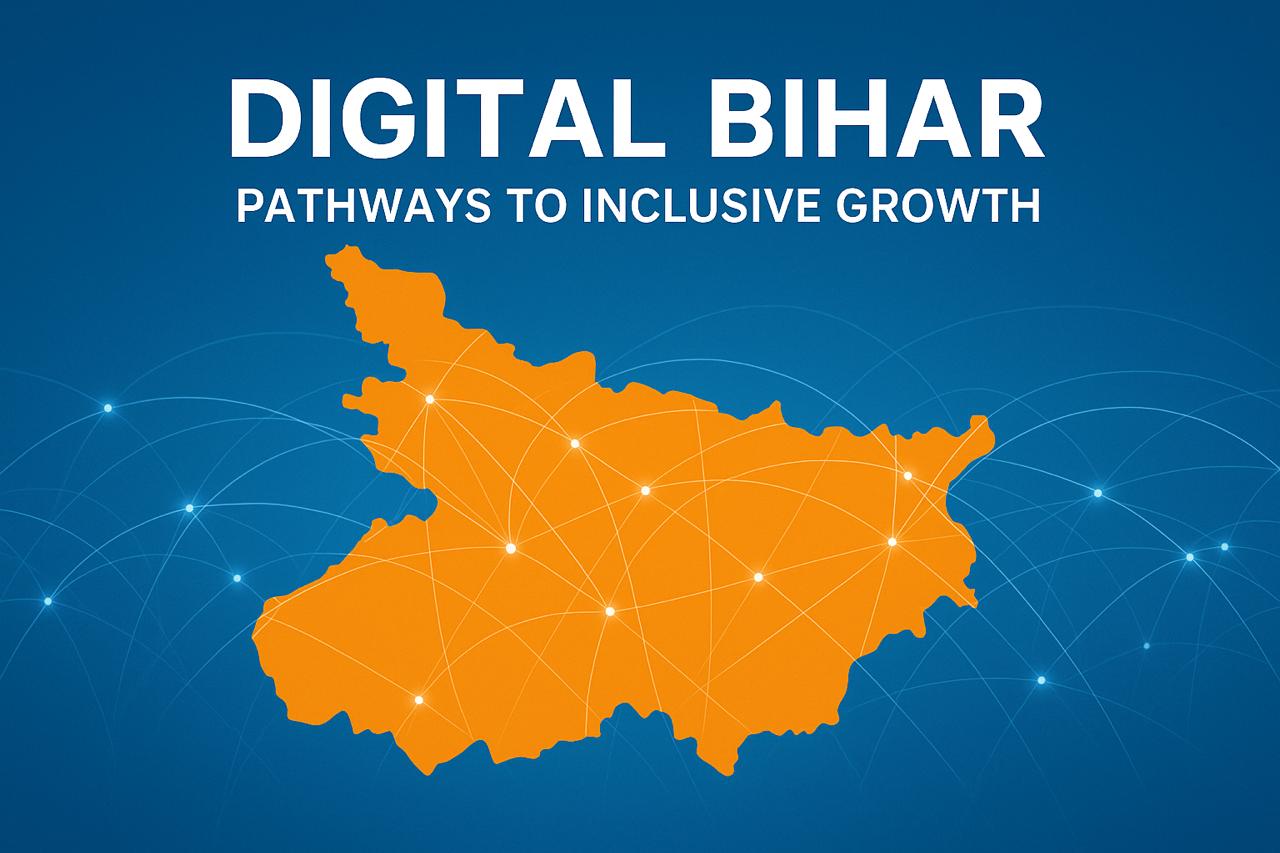
Digital Bihar, Inclusive Growth

Image generated using AI

Bihar has a rich historical and cultural heritage and is one of the most populous states in India, with a population exceeding 13 crores[i] and a predominantly rural population. The state faces several challenges in digital literacy, access to technology, digital inclusion, economic development, and equitable growth. However, recent initiatives in e-governance, education, and entrepreneurship hold much promise and potential for contributing towards India’s vision of a digitally empowered society.

Digital literacy remains a significant challenge, with rates below 30% (national average 38% for household digital literacy[ii]), as reported by Ideas for India[iii]. Bihar’s low digital literacy follows its socio-economic conditions, including high poverty rates[iv] (33.76% below the poverty line and 51.91% multidimensional poverty as of 2021) and limited access to digital devices. Rural areas, which hold 75% of the state’s population face challenges due to inadequate infrastructure and low literacy levels. The state’s overall literacy rate, as per 2017 data, stands at 70.9%[v], with rural areas at 69.5% and urban areas at 83.1%. Female literacy, at 60.5%, is significantly lower than male literacy at 79.7%, further complicating efforts to bridge the digital divide.

The digital divide in Bihar is a significant barrier to inclusive development. According to the India Inequality Report 2022 by Oxfam India[vi], Bihar has the lowest internet penetration among Indian states and a wide urban-rural digital divide, with only 31% of rural residents using the internet compared to 67% in urban areas. This rural-urban divide is further worsened by socio-economic disparities.

The digital divide affects important sectors like education, healthcare, and finance. For example, in 2017-18 only 9% of students enrolled had access to a computer with internet for education[vii]. Initiatives like BharatNet, aimed at providing rural connectivity, have been unable to deliver effective outcomes. Bihar is one of the focus states for the Digital India Programme, but execution lags due to infrastructural challenges.

In recent years, Bihar has made significant strides in leveraging digital services in improving governance and public service delivery. The National Informatics Center (NIC) Bihar State Centre, established in 1988, plays a central role in this transformation (https://bihar.nic.in/). It supports departments such as revenue, district administration, rural development, finance, agriculture, employment, election, social welfare, and food and civil supplies with IT solutions. The ServicePlus portal is a key platform, offering services like certificate issuance and case status checks, though rural access remains a hurdle, particularly for marginalized communities, requiring better infrastructure and awareness. These barriers require continued investment in training and infrastructure to ensure widespread digital literacy. Common Service Centres (CSCs) and Vasudha Kendra are crucial for providing government and private services to rural and remote areas in Bihar, enhancing digital inclusion and accessibility. However, they are not enough to cater to the growing needs of the rural population. People travel to block towns and larger villages, to access even basic G2C services, indicating the lack of any nearby facility.

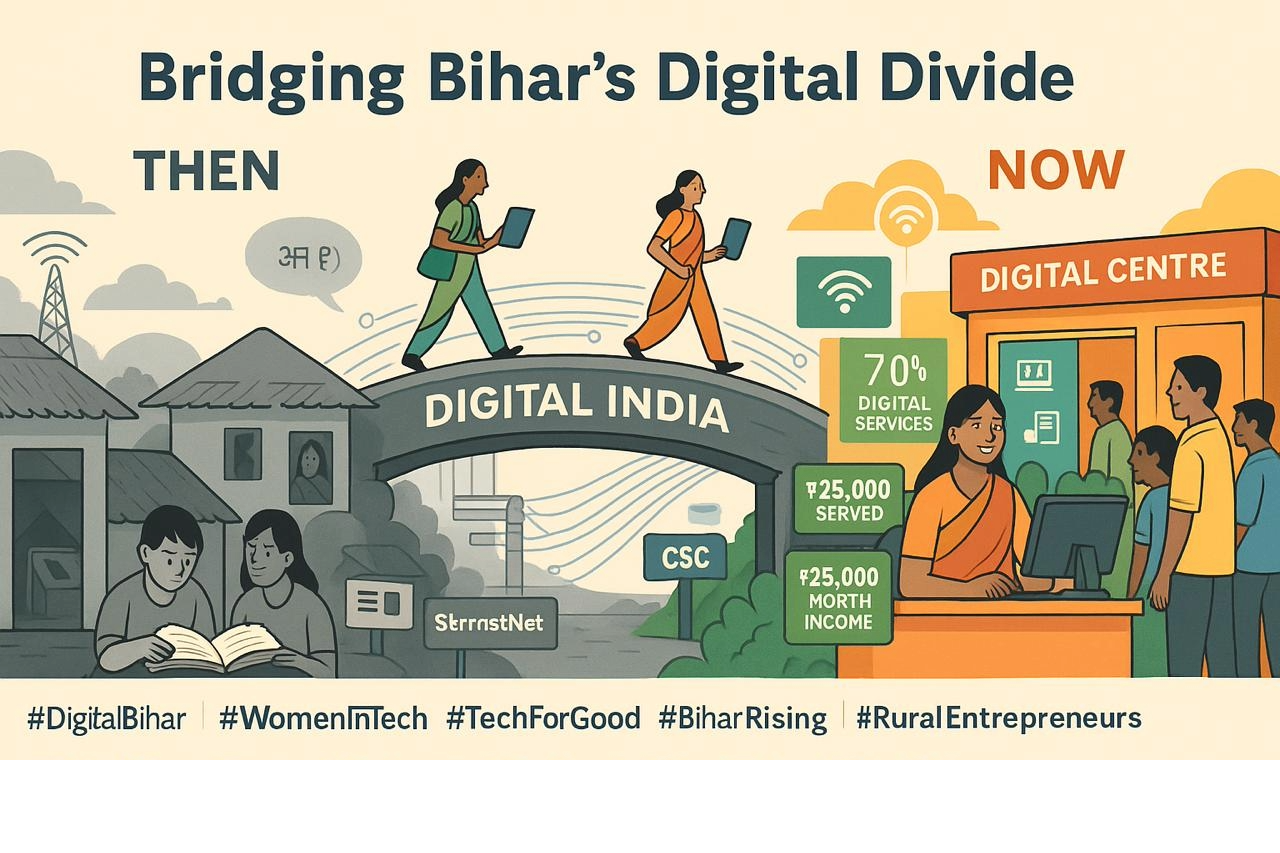
For bridging the digital divide, a digital entrepreneurship program in 500 villages from five districts, viz., Darbhanga, Samastipur, Patna, Nalanda, and Gaya was launched in 2023. Bihar is witnessing a transformative wave of service accessibility led by women digital entrepreneurs. These trailblazing women are not only redefining the entrepreneurial landscape but also catalyzing inclusive development across the state. This initiative provides capacity building and mentoring in digital skills, customer service, entrepreneurship development, financial support and resources, and digital tools to women from socially and economically disadvantaged communities, helping them become successful rural digital entrepreneurs and build a Digital Entrepreneurship Ecosystem. This holistic approach equips them to offer essential digital services in their communities, such as facilitating access to government schemes, online education, and digital financial services. From being computer illiterate to providing a host of over 70+ digital services, these digital entrepreneurs have come a long way only within 9 months of their venture-start in their villages. Some of their services include a large suite of G2C services, design & printing services, online form filling, Banking services, and Mobile payments, among several others. They have also been cross-selling and diversified in selling non-digital products. In this short period, they have already served over 250,000 rural customers (around 40% female customers), and is expected that as their businesses mature, they will be providing digital services to over 7.5 lakh population. Apart from making digital services easily accessible at the village level, they are generating income and securing their futures, with some of them steadily earning upwards of INR25,000 monthly. This program is not only bridging the digital divide but also promoting economic security and social equity, local inclusive economic development, gender equality, awareness, and opening opportunities for skills development.

While government efforts are underway, a coordinated approach involving public-private partnerships, local community engagement, and targeted digital inclusion programs is essential. Programs like these need to be scaled up across the state covering the entire 8,387 Gram Panchayats for bridging the digital divide and contributing significantly to Bihar’s and India’s digital economy.


Importance of family counseling in entrepreneur selection

A person requires to possess both ‘can do’ attitude and aptitude for business to start on an entrepreneurial journey. But is that enough? Often an entrepreneur’s success is celebrated as an individual, but seldom the support system in the form of family and friends are discussed due to which the entrepreneur has achieved success. This is irrespective of the nature and size of business, geography, gender and backgrounds of the entrepreneur, and investment that goes in the venture.

While there’s no age to starting a business, the development programs I am working with focuses on women and girls in the age group of 18-50 years from poor and low-income households in the rural areas, with a desire to be self-employed and in future create employment for the youth in their respective villages. Selection processes of such aspiring entrepreneurial women vary depending on the model and approach of the programs. For the conventional businesses existing vocational skills and basic business acumen is analyzed, for others apart from these qualities, level of confidence, ability to invest their time, efforts, and money, general awareness, and other aptitude tests are conducted to measure the eligibility. What remains common across, and I believe is one of the most crucial factors for them to succeed from the word go is the support of their families, which remains the backbone of their ventures during and after the programmatic support. Therefore, post shortlisting of a potential entrepreneurial candidate, family counselling becomes the ultimate decider for her to join the program. And no, it has nothing to do with patriarchy. It’s same for any gender, and I think anywhere in the world. I have been a serial entrepreneur in my past, and have experienced in firsthand that without family support, I could have only done so much.

Family background including the size, type, and economic status can influence entrepreneurs’ and, therefore, entrepreneurship development. Even if the entrepreneurial spirit doesn’t necessarily run in the family, their support plays a vital role in an entrepreneur’s journey. Through their belief, encouragement, constant motivation, and involvement, families provide a nurturing environment for entrepreneurial growth.

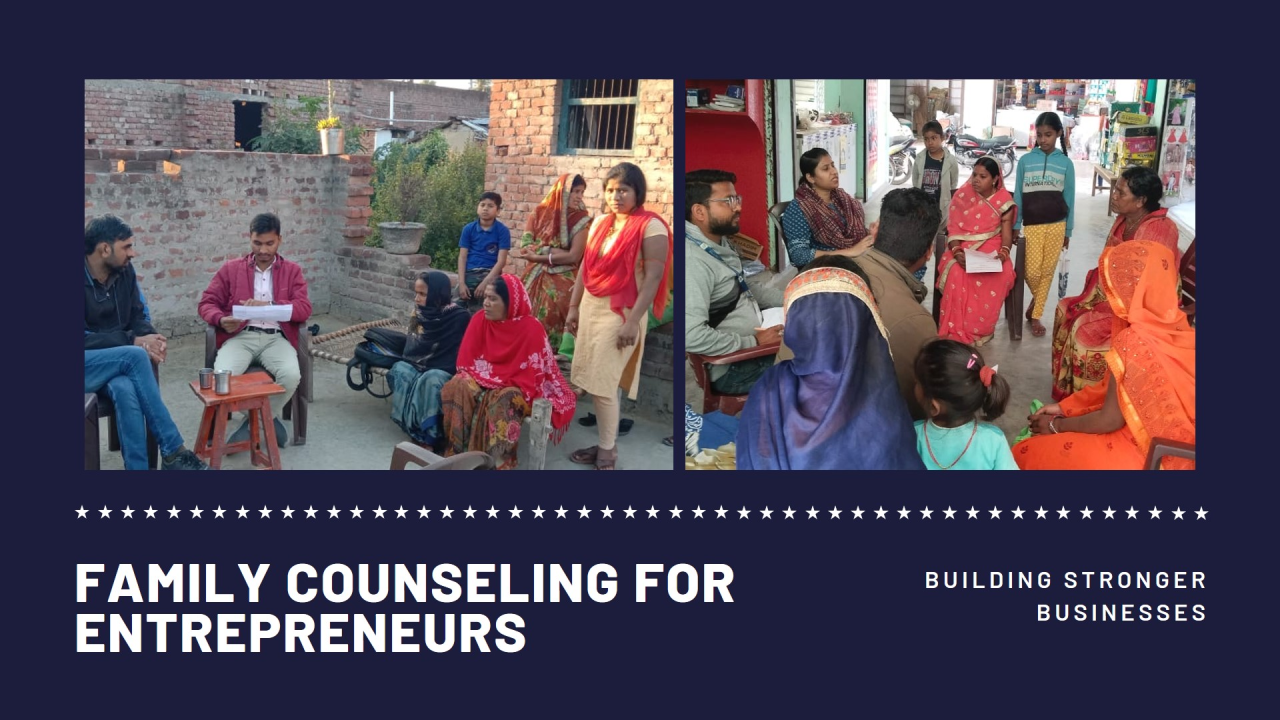
In the process of meeting the family at their house in the village and discussing about their current livelihood and income sources, level of education in the household, aspirations and future plans, nature of relationship with the potential entrepreneurial candidate, sharing about the program, and earning their commitment of being the wind  beneath the wings of their daughters, daughters-in-law, wife, and in turn building trust is the main agenda of the family counselling. This support is the most important step and measure for induction of an aspiring candidate in our entrepreneurship program. Garnering this support is half the battle won for the aspiring entrepreneur.

The hard work has to be of the entrepreneur, but families give financial assistance and provides the seed capital for the start-up, provides emotional assistance keeping the morale high during those challenging and difficult times that every entrepreneur undergoes, promote the venture in their long curated networks both within and outside their villages through word-of-mouth, volunteer their time at the business to attend to customers and promotion, and more importantly celebrate even the small moments of joy together.

Apart from money and market, family support is the third pillar of the tripod, which drives entrepreneurial success.

If you want to know more about designing rural women entrepreneurship projects and/or learn about family-counselling for rural entrepreneurship, feel free to connect.

(First published on LinkedIn on 6th March 2024)

Business networking for your startup

Networking is extremely important for entrepreneurs. Most of the startupreneurs are restricted in time and resources, therefore a good network can help them access suppliers, markets, information and guidance necessary for their startup’s development. I understood the importance of networking while working as an intrapreneur at the beginning of my career and since then have been able to build a robust professional network that I leverage and get support from now as an entrepreneur.

Start your networking with people you know. Among them, look for key characteristics like competency, dependability, and helpfulness that can be useful in your entrepreneurial venture. Focus more on proactive networking and reach out to people. This will also help you in tapping into other people’s networks. Over time your network will grow through reactive networking of others in the ecosystem. Typically your start-up network should have people from your suppliers, customers, service providers, industry ecosystem including your competitors, financial services, government officials and policy makers, colleagues and key contacts from your past workplaces, key connects from your alumni groups, industry specific experts and professionals, among others. However, your focus should not be on building a very large network, but on the intensity of the network. You can build the intensity by selecting the right people and communicating with them regularly to keep the network alive.

While communicating with your network, remember to project your ideas as professionally as possible, be prompt in returning calls and replying to e-mails, refrain from talking bad about people, do not reveal and talk about your flaws, and don’t whine. Keep details of your network contacts handy and periodically update the key information. Remember that its not only ‘who you know’ but what really counts is ‘what they know about you’ for building and managing an effective network.

Some best practices of effective networking are,

  • Establish a relationship with people much before you need them. People who have known you for a while will be more inclined to help you.
  • Understand what you can do for others as this will help you set your expectations right while asking for help from your network.
  • Attend conferences, trade shows, social events, lectures, etc and meet people. Making the first impression is the key here. So do not talk too much, ask smart questions and let them talk. Never forget to carry your business cards and pass it while you are introducing yourself.
  • Unless you are rock sure of your points, do not contradict others.
  • Read stuff beyond your direct professional subject and expand your information horizon. This will help you connect with a wider audience while engaging them in intelligent conversations.

The final tip: Grow it. Nourish it. Reap it.

Team conflicts at your startup

Individuals from diverse backgrounds face perpetual gaps when they come together to work as a team. Since conflict within a team exists, it must be managed. I believe that collaboration is the key to managing that conflict. The first step is to identify whether the conflict is based on task disagreements or personality related issues. Task conflicts can often be beneficial during the design and preparatory phases. Personality conflicts tend to be detrimental to the team, interfering with the project at hand, taking valuable time away from the efforts, and at times exacerbating personality differences that prevent team members from communicating at all. The goal is to minimize personality conflicts and manage it outside the start-up environment. Team building exercises through social activity is certainly a good way to build confidence and cohesiveness.

It’s not important that team members need to like each other, rather they need to respect each other professionally and focus on the task to get the job done. Once the focus is on disagreements about the job at hand, collaboration can take place. Through collaboration, disagreements can be altered into joint gains. Collaboration here doesn’t mean compromise or giving-in, but more mutually beneficial results based on more effective communication. Following three techniques could be used to support collaboration at your Startup,

  1. Create a group atmosphere that supports team focus, the capability to solve the problem, trust among each other, and open conflict communication channels. Trust is the critical factor here.
  2. Look for and act on opportunities for promoting joint gain between the conflicting members. It is also important that team members exchange factual information, that in turn can facilitate trade-offs across different issues. Exchange of views and insights thus becomes very critical, as usually people tend to “one up” each other and the conflict get worse and more personal. They key here is to recognize that this is happening and try to respond with a new tact, a direct response that brings the conflict into the open, or a more integrative and collaborative response that might shift the process back on track.
  3. Develop and build an attitude of cooperation, collaboration and openness to creative thinking that can often lead to win-win situation during conflict, which often leads to innovative, superior solutions.

Collaboration requires interdependence on other team members. Negative emotional outbursts and attitudes such as frustration and anger tend to interfere with collaboration. These emotions need to be kept in check and resolved as personal conflict outside the work.