Cracking the fundraising code

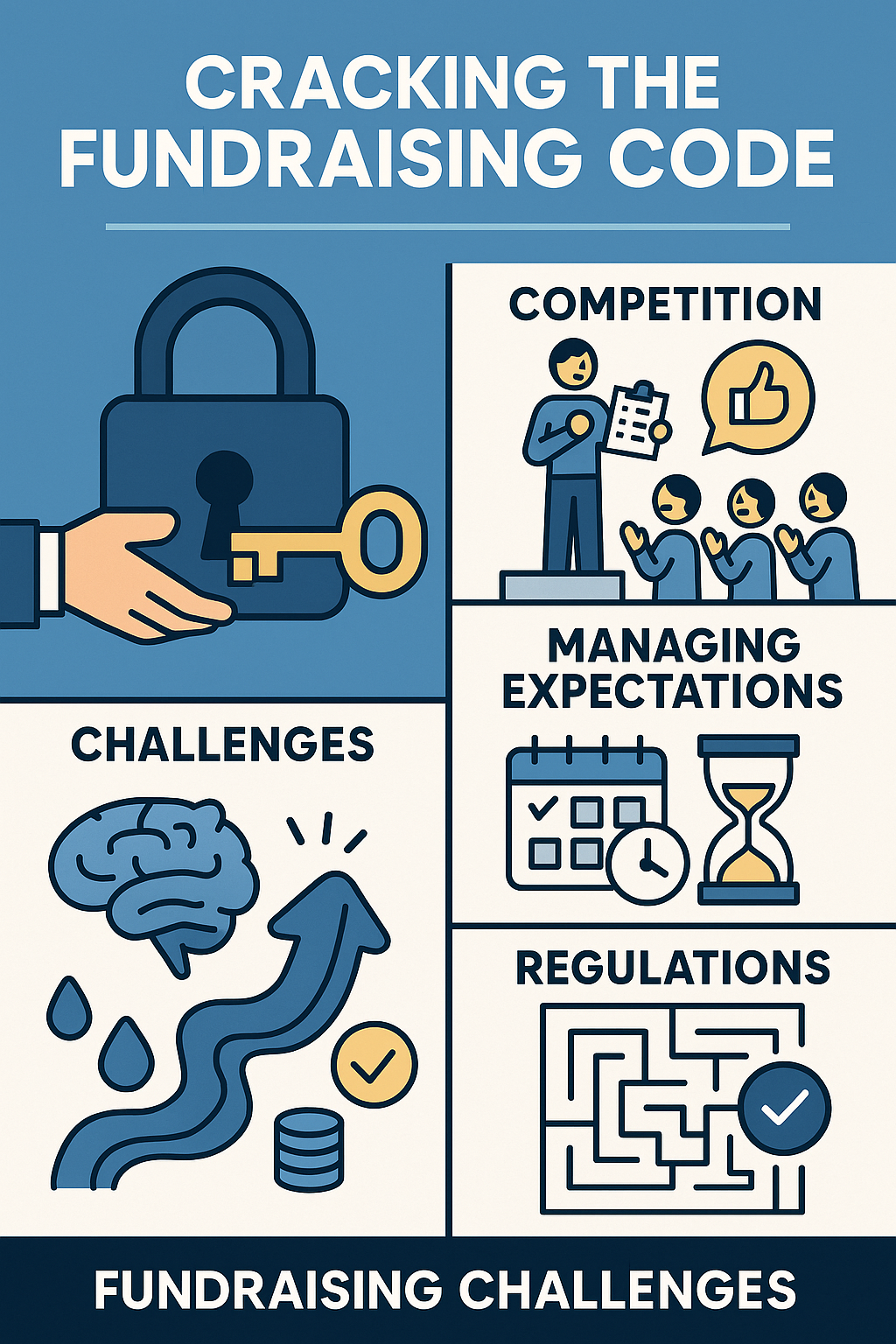
Ah, fundraising, the art and science of turning good intentions into actual impact! Throughout my career I have been raising funds for social impact, for causes of basic necessities like food, water, shelter, livelihood to a green economy, bridges over rivers to even a roller coaster in a developed country. I have been actively involved in raising funds for these causes from as small as $10 up to $50 million from a variety of sources and instruments. As the Head of Development at a nonprofit organization for social impact projects in India, I’ve navigated the corridors of CSR leaderships and foundation offices, and let me tell you, it’s not always smooth sailing. Often, it feels like trying to surf a tsunami with a paper boat!

Corporate Social Responsibility isn’t just a box to tick. It’s a strategic dance between business goals, stakeholder expectations, and social impact. With so many initiatives competing for attention, securing a dedicated slice of the CSR pie often feels like requesting a moment on a crowded stage, and convincing the audience that your act is worth their applause.

Foundations receive hundreds of pitches, each expecting to win the golden ticket. Getting noticed requires more than a well-crafted proposal; it demands storytelling that resonates and relationships that endure. Sometimes, it’s less about what you say and more about how you say it, and how quickly you can make a compelling case before the next shiny pitch distracts them.

Donors want results, but impact is often a marathon, not a sprint. Managing expectations without being over promising is an art. We’ve all faced the uncomfortable moment of explaining why a project’s full fruits may take years to ripen, a diplomatic tightrope walk that can test even the most seasoned fundraiser.

India’s complex regulatory landscape can feel like a labyrinth where one wrong turn can lead to delays or disapprovals. Keeping up with FCRA regulations, tax exemptions, and reporting requirements is a full-time job, and sometimes, it’s like speaking a different language altogether. Ironically, securing funds for a project often means fundraising itself. Resource constraints can limit outreach and follow-up, turning what should be a strategic focus into a haphazard firefight.

A mix of storytelling, patience, relationship-building, and a dash of humour helps. When engaging with CSR and foundations, understanding their priorities, aligning your mission with their vision, and communicating impact clearly can turn challenges into opportunities.

To my fellow fundraisers who are navigating this maze: keep your spirits high, your pitches sharper, and remember, every “no” is just a “yes” in disguise waiting to happen!

Let’s keep the conversation going. Share your stories or tips below, because in the game of social impact, we’re all in this together.

Who are urban marginalized people

Photo Credit: https://humana-india.org/

In last 2-3 years, I have been part of several discussions to define and build a consensus on understanding of urban marginalised and vulnerable population (UMVP) in the context of India, and how this population group has been evolving and growing in numbers. India’s rapid urbanization over the past few decades has transformed its cities into economic powerhouses contributing 60% of India’s GDP. While in 2023 around 37% of India’s population lived in urban areas, it is estimated that by 2036, half of India’s population will live in cities. However, this growth has also led to the marginalization of a significant portion of the population. Cities Alliance estimated that 25% of the population living in urban areas are below the poverty line. By this estimate, a shocking 125+ million people are marginalised and vulnerable living in the urban areas. The urban marginalized and vulnerable groups comprising of slum dwellers, informal workers, migrant labourers, women, children, and the homeless face numerous challenges like access to basic citizens’ rights, services, and opportunities. As India continues its urban transition, addressing the vulnerabilities of these populations is critical to achieving inclusive development.

The UMVPs live in precarious conditions, often lacking access to basic services like clean water, housing, sanitation, healthcare, and education. Their vulnerabilities are shaped by socio-economic, cultural, political, and structural factors that leave them excluded from mainstream urban life. They often lack the necessary documentation to access government schemes and services, such as ration cards, Aadhaar cards, or voter identification. This exclusion prevents them from benefiting from welfare programs like the Public Distribution System (PDS), healthcare subsidies, or housing schemes. The UMVPs can broadly be classified in five sub-groups,

  1. Slum Dwellers: According to the 2011 Census, about 65 million people in India live in urban slums. Slums across India have poor housing, lack of sanitation, overcrowding, and a high risk of diseases, especially communicable. People living in the slums often have insecure tenure, making them vulnerable to eviction and displacement due to urban development projects. Displacement not only disrupts their livelihoods but also pushes them further into poverty. Poor living conditions contribute to health problems, including respiratory diseases (especially TB) and waterborne infections.
  • Homeless Population: India’s urban homeless population is particularly vulnerable, facing extreme marginalization. With no permanent shelter, the homeless are exposed to harsh weather conditions, violence, and health risks. They have limited access to government welfare schemes and often fall outside the purview of census data, making it difficult to design targeted interventions. HLRN estimates that there could be more than 3 million homeless individuals. Extreme poverty, unemployment, displacement due to natural disasters, mental illness, substance abuse, runaways, are often the causes of homelessness, and their numbers are continuously increasing in urban India.
  • Informal Workers: The informal sector accounts for nearly 80% of India’s urban workforce. This includes daily wage labourers, street vendors, domestic workers, and construction workers, among others. Informal workers lack job security, social protection, and access to formal financial systems, leaving them vulnerable to economic shocks. The COVID-19 pandemic exposed the extreme vulnerability of informal workers, who faced sudden job losses and had low-to-no access to financial aid. Informal workers often are slum dwellers, or live in low income housing colonies, or are even homeless.
  • Migrant Laborers: Migration to cities in search of employment and better life is common in India. However, migrant labourers, often from rural areas both intra- and inter-state, face significant challenges in urban settings. They often find employment in low-paying jobs with little to no benefits, live in temporary or inadequate housing, and struggle to access public services due to a lack of local identification documents. Temporary migratory population is also a sub-set of this group, who come to cities for seasonal work, migrate from one place to another, also migrate within the cities in search of work. Construction workers and artisanal nomadic groups can be good examples of migratory population.
  • Women and Children: Women and children within urban marginalized communities living in slums or informal settlements often work in low-paid informal jobs while managing household responsibilities. They are more likely to experience gender-based violence, discrimination and exploitation, limited access to healthcare, and lack of educational/skilling opportunities. Children in these settings suffer from malnutrition, poor schooling, and limited opportunities for social mobility. They often attend poorly equipped government schools or are forced to drop out to contribute to household income.

India’s urban marginalized and vulnerable populations represent a significant and often overlooked segment of society. Ensuring their inclusion in the country’s urban development is essential for sustainable and equitable growth, while bestowing opportunity and dignity for all citizens as their Right.

Impact Funding in the time of COVID-19

Photo source: The New Humanitarian

The global pandemic COVID-19 has triggered the most severe economic recession in nearly a century and is causing enormous damage to people’s health, jobs, and well-being. It has changed the social sector landscape and will continue to impact the sector for the next few years. In the short term, since March 2020, change in the funding trends is already being witnessed by non-profits, especially of the CSR in India, with majority of them contributing to the PM Cares, CM Relief Funds and contributions towards local relief work like food and PPE distribution. The unexpected crisis created due to migrant labour returning to their home states, we are witnessing some of the bigger CSRs channeling their funds towards ‘Rehabilitation during and post COVID-19’ phase with a focus on re-skilling, sustainable livelihoods and job creation, BCC, and food & nutrition security.

Until the next 12-18 months, there will be opportunities for partnerships under the ‘rehabilitation lens’ across geographies, but more focused on states like Bihar, Uttar Pradesh, Madhya Pradesh, Chhattisgarh, Odisha, Assam, and Jharkhand. Apart from relief & rehabilitation, Health (preventive health, strengthening local health systems at block and village levels, and co-morbidity diseases like TB, HIV/AIDS, Diabetes, etc.) and Education (especially working with a sudden increase in out-of-school-children due to in-migration, and skilling School teachers in rural and sub-urban India in virtual classrooms, course development and delivery, and digital communication) are other areas, where donor funds are potentially going to be invested. In other areas, especially environment and climate change (unless CSRs & foundation’s core focus is environment), it is bound to be severe funding cuts (40%-60% from pre-COVID times) over short to mid-term.

Non-profits need to continue building strong partnership with their existing CSR Partners, to continue getting support to even those projects that are not COVID aligned, and build new partnerships using COVID aligned models. It is expected that Government funding will increase and so will partnership opportunities in most of the areas like livelihoods, education and health using innovative implementation mechanisms and digital communication. The World Bank has announced large assistance programs for India, which will be implemented through state governments and may bring non-profits with the opportunities of large partnerships between now and 2025. The current changed funding trend will more or less continue in 2021. However bigger CSR and foundations will see a potential downside of 30-50% in their funding allocations.

As restrictions are being eased world-wide, the path to global economic recovery remains highly uncertain with 6-7.5% negative growth in 2020, it is expected to climb back to around 2.8-3% in 2021 and move slowly towards recovery. In the long run, 2022-25, when both national and international economies are strongly on the recovery path, it is expected that several international aid agencies, which had stopped direct funding in Indian development sector, once again will open a window for 3-5 years of funding, and number of funding opportunities for India and other developing countries will increase. Historically, post mega disaster comes the golden period of funding for impact sector. It is a phase, and it too shall pass. Together, we will continue to drive change and together we will prevail.

Disclaimer: The opinions expressed are those of the author and do not purport to reflect the views or opinions of any organization, foundation, CSR, non-profit or others.

Bamboo for sustainable economic development

Bamboo is an important means for generating income and improving the nutritional status of over 2 billion poor and disadvantaged people. It also provides the resource base for expanding Small and Medium Enterprise sector, providing employment and income generating opportunities to alleviate poverty. As such it constitutes an excellent entry point for local poverty alleviation initiatives. Read the full post HERE