by Madhumita Murgia | 320 Pages | Genre: Non-Fiction | Publisher: Pan Macmillan | Year: 2024 | My Rating: 5/10
“My life—and yours—is being converted into such a data package that is then sold on. Ultimately, we are the products.” ― Madhumita Murgia, Code Dependent
Code Dependent is a collection of case studies about people who are affected by technology, without the rigour and analysis that I was expecting. But then it is not an academic or research-oriented book, but more in the popular non-fiction genre. Several of the case studies in the book reflected on the dark side of technology and social media manipulation of individuals and communities, and their rights, privacy, freedom and future.
The book is an account of how the algorithms used by tech in our daily lives through the user-friendly apps like Google Maps, Uber, Instagram, Facebook and others are changing us and the way we see the world. Our data and us as data is continuously being used for targeted advertisements to make businesses grow fatter.
Murgia defines AI as “a complex statistical software applied to finding patterns in large sets of real-world data.” I believe that AI is much more than Statistical Pattern Recognition (SPR), and this viewpoint of the author is quite narrow.
I agree with Murgia’s take on emergence of new data colonialism around the worlds, especially in under-developed and poor economies, where sub-contracting create numerous jobs as data workers, but wealth created in not shared equitably. ‘Informed Consent’ seemed misinterpreted in the book, and subjective.
There was less of ‘AI’ and more of ominous ‘shadows’ in the book. While the book talks about algorithmic bias against people, it certain has flavours of human bias against technology from the author. The book read more on data transparency than demystifying the positives and negatives of AI and technology. Pessimistic views due to advancement in technology is more pronounced throughout the book.
The book is still a fascinating read, with glimpses of ‘how AI is altering the very experience of being human’.
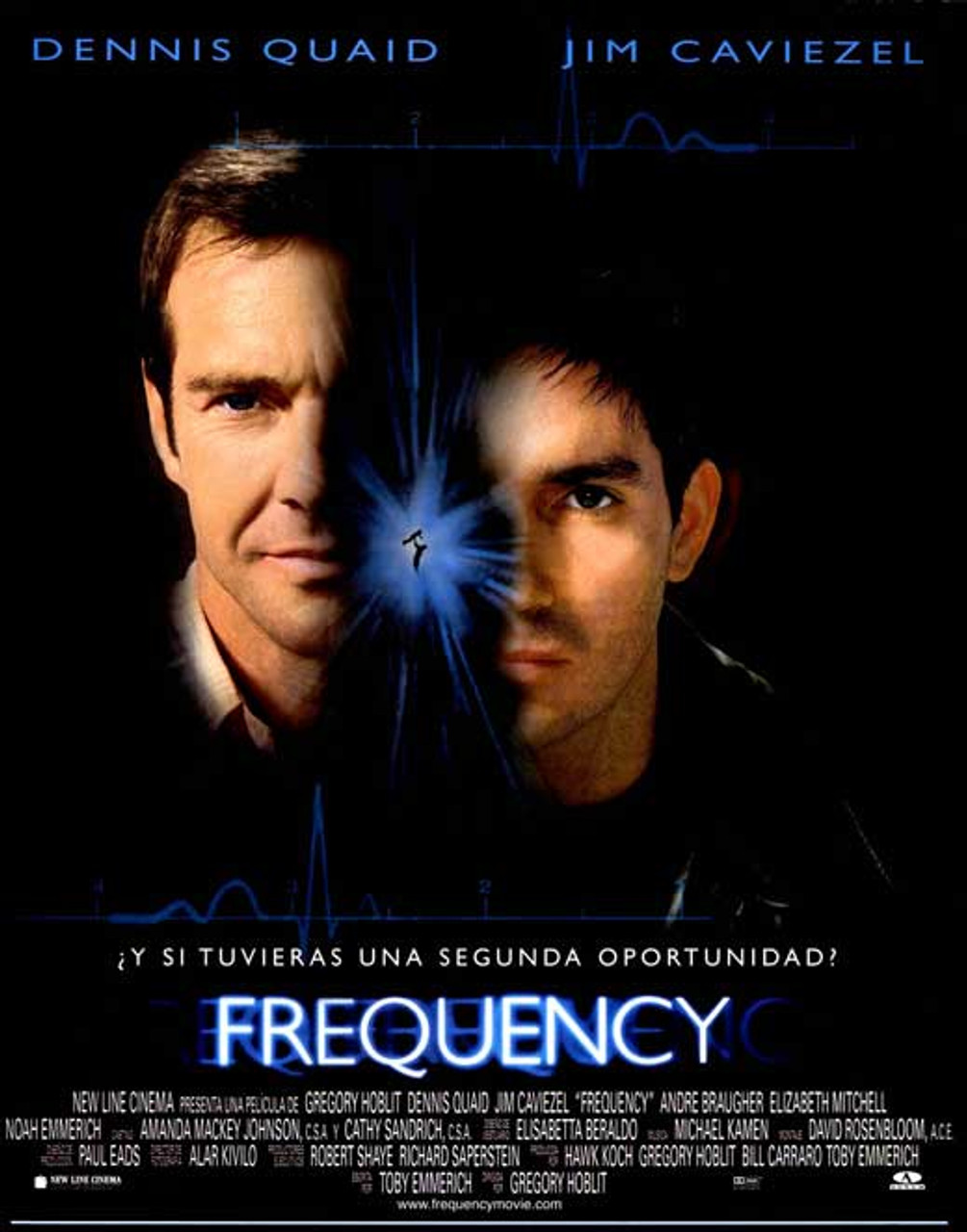
Genre: Sci Fi | Year: 2000 | Duration: 118 mins | Director: Gregory Hoblit | Medium: DVD | Trailer: HERE | Language: English | My rating: 3.5*/5*
Favorite Dialogue: “John Sullivan [Jim Caviezel]: Ya’know the past is a funny thing, we all got skeletons in closet and ya never when one is gonna pop up and bite ya in the ass”
Frequency is about time travel and alternate paradoxes, baseball, father (Dennis Quaid as Frank Sullivan) and son (Jim Caviezel as John Sullivan), aurora borealis, and New York city. John, who’s a homicide detective in NYPD uses a Ham radio to connect and communicate with his deceased father 30 years in the past through the miracle of extraordinary solar activity, and alters the course of events and saves his father from death as a fire fighter for FDNY.
Even though the film has competent acting and direction, the script seems poor. Moreover there are several factual errors in the movie. One of my favorite errors is that, when Shepard and his partner are looking for Frank on the docks, the camera pans to the left and we see a flash of the World Trade Center just before the cameraman catches his error. It was built between 1970 and 1977, not 1969! As past events change, so do John’s old clippings and framed photos, updating themselves every time somebody who died doesn’t.
This science fiction about alternate realities and the cosmic relationship between cause and effect is an interesting watch.
“In God we trust. All others must bring data.” This quote, made by W. Edwards Deming holds true (and may even supersede God for some as Divine).
I have been in love with data right from my school years and the mysteries of the world it holds. I have tried to develop data driven models on human relationships, the movement of animals, finding patterns in the ways of the world, and later designing programs of social impact for challenging poverty, and policy development. In the end, we all are data, from the moment we are an idea until long after we pass away.
“Data is divine” highlights the growing understanding of data’s vital significance in modern society, in much the same way that religious or spiritual values have directed civilizations throughout history. In today’s digital age, data powers innovation, decision-making, and advancement in all fields, including governance, research, business, healthcare, and lifestyle.
1. Data as a source of truth: Data is frequently regarded as an impartial depiction of reality, providing information on trends and occurrences that may be imperceptible to anecdotal experience or intuition. In this way, data has a unique position as the basis for making well-informed decisions and uncovering hidden facts.
2. The power of data in innovation: Data is driving advancements in domains like healthcare, finance, and climate science and is revolutionizing industries as it powers AI/ML and sophisticated analytics. This emphasizes how data has the “divine” ability to spark significant change. The use of data for enhancing human welfare, from preventing pandemics through data-driven epidemiology to lowering inequality by studying societal trends has been in use. When applied sensibly and morally, it can aid in resolving some of the most pressing issues facing society.
3. Data as omnipresent: From the apps we use daily to the systems that manage our cities, data is present everywhere in the modern world. Its pervasiveness is comparable to a certain “divine” quality in that it affects almost every facet of contemporary life, whether we are conscious of it or not.
4. Data and ethics: Data carries a great deal of responsibility along with its power. Similar to supernatural knowledge, there are significant ethical ramifications to the way we collect, use, and safeguard data. Data misuse can result in inequality, manipulation, and privacy violations. As a result, it is crucial to handle data with dignity, openness, and ethics.
“Data is divine” also implies that we must treat it with deference and accountability while simultaneously appreciating its immense importance in shaping our future. We need to balance the power of data with ethical considerations as our world grows more and more data driven. The following are some crucial strategies to preserve this equilibrium,
1. Data privacy and informed consent: People ought to be in charge of how their information is gathered, kept, and utilized. It is not appropriate to force them to divulge information. Companies must be open and honest about their data practices so that users know what information is being gathered and why. Clear and informed consent should not be buried in complicated terms and conditions. Data literacy is essential among general population so that they are aware of the consequences of disclosing personal information, and the dangers of data misuse.
2. Data minimization: Only gather information that is absolutely required for the current job. This reduces the possibility of abuse and shields people from needless exposure. I’ve seen in recent years how social development initiatives gather and store vast amounts of data, with donors coercing their nonprofit partners to obtain it, yet this doesn’t address any societal issues. It is crucial to have a conscious grasp of what is needed.
3. Data bias and fairness: AI/ML systems may reinforce or increase biases found in the training data. Therefore, diversifying datasets, employing inclusive development techniques, and reviewing algorithms for bias are all necessary to ensure fairness.
4. Equitable data access: One way to lessen inequality is to make sure that data access and its advantages are shared equitably among all communities. This entails preventing the reinforcement of systemic disadvantages while ensuring that marginalized groups have access to data-driven insights.
5. Data governance and accountability: To ensure that data is utilized properly, organizations and governments must establish robust data governance policies and ethical frameworks. To stay up with the latest developments in technology, these policies must be revised regularly. It is imperative to establish unambiguous lines of accountability for the handling and utilization of data. Data practices can be kept moral and in line with social standards with the support of independent oversight organizations or ethics boards.
6. Regulation and legal safeguards: Strong data protection laws that impose restrictions on how businesses and organizations can gather, keep, and handle personal data must be enforced by governments. Laws that address issues like accountability for algorithmic judgments, eliminating discrimination, and safeguarding human rights in AI-driven systems are crucial for the ethical application of automation and artificial intelligence. Because technology is changing so quickly, regulatory models must be adaptable and flexible to support innovation and enable quick responses to emerging ethical dilemmas.
7. Data for social good: Data can and should also be used positive social impact including lowering inequality and poverty, combating climate change, and improving public health. Governments, corporations, and civil society organizations working together can help guarantee that data is used morally and for the good of society. These collaborations may result in common frameworks for the ethical use of data.
A multifaceted strategy including legislation, transparency, public education, and proactive governance is needed to strike a balance between the power of data and ethical issues. Prioritizing the defence of individual rights, maintaining equity, and advancing the common good while fostering innovation should be the main goals of ethical data use. Through cultivating a culture of accountability and responsibility, we can leverage data’s promise (and divinity) without sacrificing moral principles.
Disclaimer: The opinions expressed are those of the author and do not purport to reflect the views or opinions of any organization, foundation, CSR, non-profit or others
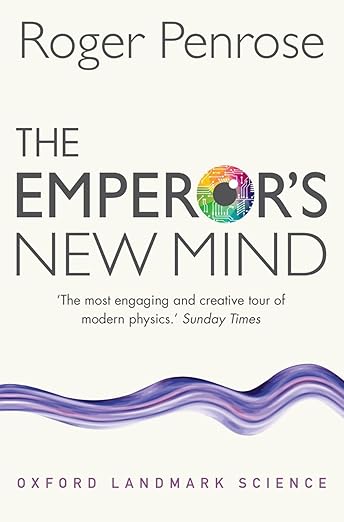
Author: Roger Penrose | 640 Pages | Genre: Non-Fiction | Publisher: Oxford University Press | Year: 1989 | My Rating: 10/10
“I argue that the phenomenon of consciousness cannot be accommodated within the framework of present-day physical theory.” ― Roger Penrose, The Emperor’s New Mind
Sir Roger Penrose’s “The Emperor’s New Mind” is a captivating exploration of the intersection between mathematics, physics, consciousness, and the cognitive mind. Renowned for his contributions to theoretical physics and cosmology, Penrose brings his deep understanding of complex scientific concepts to the realm of cognition and artificial intelligence in this thought-provoking work. He covers a wide range of topics, from classical physics and Gödel’s incompleteness theorem to the puzzles of quantum mechanics and the philosophy of mind. He explains complex scientific ideas with remarkable clarity and delves into the question of what constitutes consciousness and the nature of human thought. He critiques the current state of artificial intelligence and posits that human understanding and awareness transcend mere computation. Through a blend of philosophical inquiry and scientific analysis, he argues against the idea that machines can fully replicate human cognitive processes. The book highlights the unique qualities of human thought, suggesting that there are aspects of consciousness that remain elusive to mechanistic interpretations.
Penrose also explores the implications of his theories for fields such as neuroscience and philosophy, offering insights into the workings of the human brain and the potential limitations of current scientific understanding. He integrates ideas from his previous works, such as the concept of objective reality and the nature of mathematical truths, providing a cohesive framework for his arguments.
The book is also notable for its engagement with the nature of mathematics and reality. Penrose argues that mathematics has an existence independent of the human mind, a stance known as mathematical Platonism. This perspective is central to his critique of artificial intelligence and his belief that the brain’s functioning may be linked to quantum processes. It truly is a profound and insightful exploration of consciousness and the nature of thought, bridging the gap between science and philosophy. It makes one ponder the complexities of the mind and the potential for understanding what makes us human in an age increasingly dominated by artificial intelligence.
This book is a must-read for anyone with a scientific temper, a love for complex and abstract ideas, and a deep interest in the fundamental questions of consciousness, cognitive science, and the philosophy of mind, offering an enriching perspective on the enduring mysteries of human existence.
In a twist of fate that seems like it was ripped straight from the pages of a dystopian novel, Planet Earth has decided it’s time for a little payback. And who can blame it? After decades of exploitation, pollution, and blatant disregard for its well-being, the Earth is ready to reclaim its throne. So, buckle up and prepare for the “Revenge of the Planet,” a wild ride through the hilarious and dramatic consequences of our environmental neglect.
The year was 2030, and Earth had been dealing with humanity’s nonsense for centuries: automobile humming, factories puffing, and smartphones buzzing, plastic in the oceans, air full of smog and pollutants, and forests reduced to sad little patches that looked like Mother Nature’s receding hairline. While we humans went about our business, basking in the glow of smartphones and conveniently ignoring every climate report ever written, the planet finally had enough. It was time for some cosmic payback.
First came the heatwaves. When the sun started sizzling eggs on car hoods and air conditioners were breaking down in sheer exhaustion, we should’ve known something was up. Earth wasn’t playing anymore. Then came the incessant rain, cyclones and Hurricanes. Thousands of cities and villages got flooded killing all in their wake: humans, animals, trees, cars, houses, all were game for the planet’s rage. As glaciers melted at a pace faster than your average deadline in an office setting, and wildfires spread like trending tweets, humans start to notice. Our beloved beaches? Now more like lava zones.
As Earth’s revenge gained momentum, the animals began organizing. Rats—usually content with minor mischief like digging up flower beds—became stealth operatives, chewing through power lines and cutting off electricity to entire neighbourhoods. Birds, tired of dodging skyscrapers, formed tactical squadrons to stage mass air raids on unsuspecting pedestrians. Pigeons, already seasoned in the art of airborne attacks and eating through aircon units, took their missions to new heights, dive-bombing with precision accuracy.
Mother Earth had one last ace up her sleeve: technology. Since humans had become so dependent on gadgets, she decided to hit us where it hurt. Phones suddenly started overheating for no reason, GPS systems began suggesting scenic routes through uncharted forests, and voice assistants became strangely passive-aggressive.
“Hey, Siri, what’s the weather today?”
“Why don’t you go outside and find out for yourself, you lazy carbon footprint.”
By the time forests started sprouting overnight and the Arctic ice declared “We’re back!” humanity finally took notice. Governments convened emergency meetings to address the phenomenon, though the politicians were quick to blame each other.
“We need to plant more trees!” one leader shouted.
“But the trees are literally attacking us,” another replied.
Meanwhile, while we sat glued to our screens, watching the chaos unfold, the bees are buzzing in the background. That’s right, our fuzzy little friends are holding clandestine meetings, plotting a revolt. “We’ll stop pollinating crops if they don’t start recycling!” one bee declares, and with that, the price of avocados skyrockets, pushing millennials to the edge of madness. Who knew that eco-awareness could double as a financial crisis?
After a series of failed peace talks with the ocean (which responded with a tsunami every time someone brought up offshore drilling), humans collectively realized: we were in deep compost!
Just as it seemed like Earth would forever reign supreme, a surprising thing happened. Humans finally got their act together. It’s time for a Renaissance! Countries began cooperating—trading carbon offsets instead of insults. Renewable energy became the norm. Plastic was replaced by biodegradable alternatives, and landfills shrank faster than your favourite sweater. People rally together armed with reusable bags and solar panels. Urban gardens sprout up like mushrooms after a rain, while communities bond over composting workshops. It’s a revolution of education, where every child learns how to plant a tree faster than their parents can say, “Remember when we just used to throw things in the landfill?” In the end, Earth called off her revenge, not because she couldn’t win, but because she wanted to see what we’d do next. As for humanity, we learned the hard way that Earth isn’t just a rock floating in space—it’s a vengeful force of nature with a wicked sense of humour. And if we want to stay on its good side, we’d better treat it right.
Disclaimer: The opinions expressed are those of the author and do not purport to reflect the views or opinions of any organization, foundation, CSR, non-profit or others




 Manu Mayank