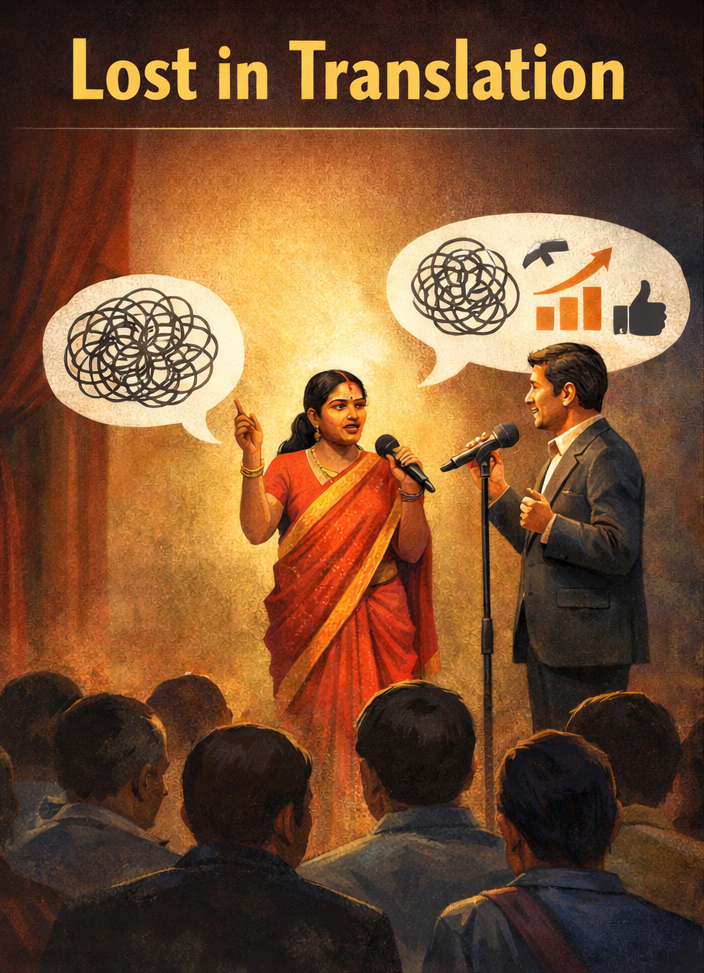
At a recent social impact conference that I attended, a woman from a village in Gujarat took the stage to share her success story. She spoke in Gujarati, her native language, addressing an audience that mostly did not understand her language. To bridge this gap, an educated, articulate, and well-positioned man was tasked with translating her words into Hindi. What followed was not a simple act of linguistic mediation but a revealing demonstration of how women’s agency is often compromised, even in spaces that claim to celebrate their empowerment. The translator did not translate her speech faithfully, and instead, he offered a compressed interpretation, presenting what he believed to be the ‘gist.’ Sensing that her meaning was being altered, the woman interjected repeatedly, attempting to reclaim her narrative. This was not a one-off, and I have witnessed this often at several conferences and during multi-stakeholder field visits to villages.
This moment captures a broader and deep-rooted pattern. Translation is rarely a neutral act, and it is more like an exercise of power. The person who translates decides what matters, what can be omitted, and what should be softened or sharpened. When men translate for rural women who are less formally educated, speaking to urban or elite audiences, they often filter lived experience through institutional and patriarchal lenses. Emotion becomes excess, complexity becomes confusion, and struggle is smoothed into success. In the process, women’s narratives are made more palatable but less truthful. What the audience receives is not the woman’s voice, but a curated version shaped by male interpretation.
The woman’s interjections were particularly instructive. Her repeated attempts to stop the translator were efforts to assert control over her own story. A man interrupting to ‘clarify’ is viewed as confident and authoritative, while a woman interrupting to reclaim her meaning is seen as difficult or ungrateful. This double standard reflects a long-standing patriarchal belief that women are unreliable narrators of their own lives and that male mediation is both necessary and superior. The conference scene I described is simply a contemporary indicator of this enduring injustice.
There is also a fundamental difference between how women often choose to speak and how men often interpret. Women from marginalised contexts tend to narrate their lives through stories that are relational, nonlinear, and emotionally textured. They speak of collective effort, ongoing uncertainty, unpaid labour, and the fragility that coexists with success. Male interpreters, shaped by institutional norms, often prioritise outcomes, efficiency, and coherence. In translation, vulnerability is trimmed away, contradictions are resolved, and struggle is reframed as triumph. This is not a harmless simplification; rather, it is an injustice that strips women’s knowledge of its depth and political significance.
The quest for gender equity requires more than symbolic representation. It demands that women retain control over their narratives, including how they are translated and transmitted. This means valuing verbatim translation over interpretation, and creating spaces where speech is not rushed or sanitised. It also requires a cultural shift in how interruptions are understood. When a woman interrupts a translator, it should be recognised as an assertion of dignity and agency, not as a breach of decorum. Gender justice is not achieved by merely giving women a mic, but will only be achieved when their words are allowed to travel without being reshaped by male authority. Until then, even the most empowered women will remain vulnerable to having their voices lost—not in silence, but in translation.
(Cover image is created using AI)
(Disclaimer: The opinions expressed are those of the author and do not purport to reflect the views or opinions of any organisation, foundation, CSR, non-profit or others.)
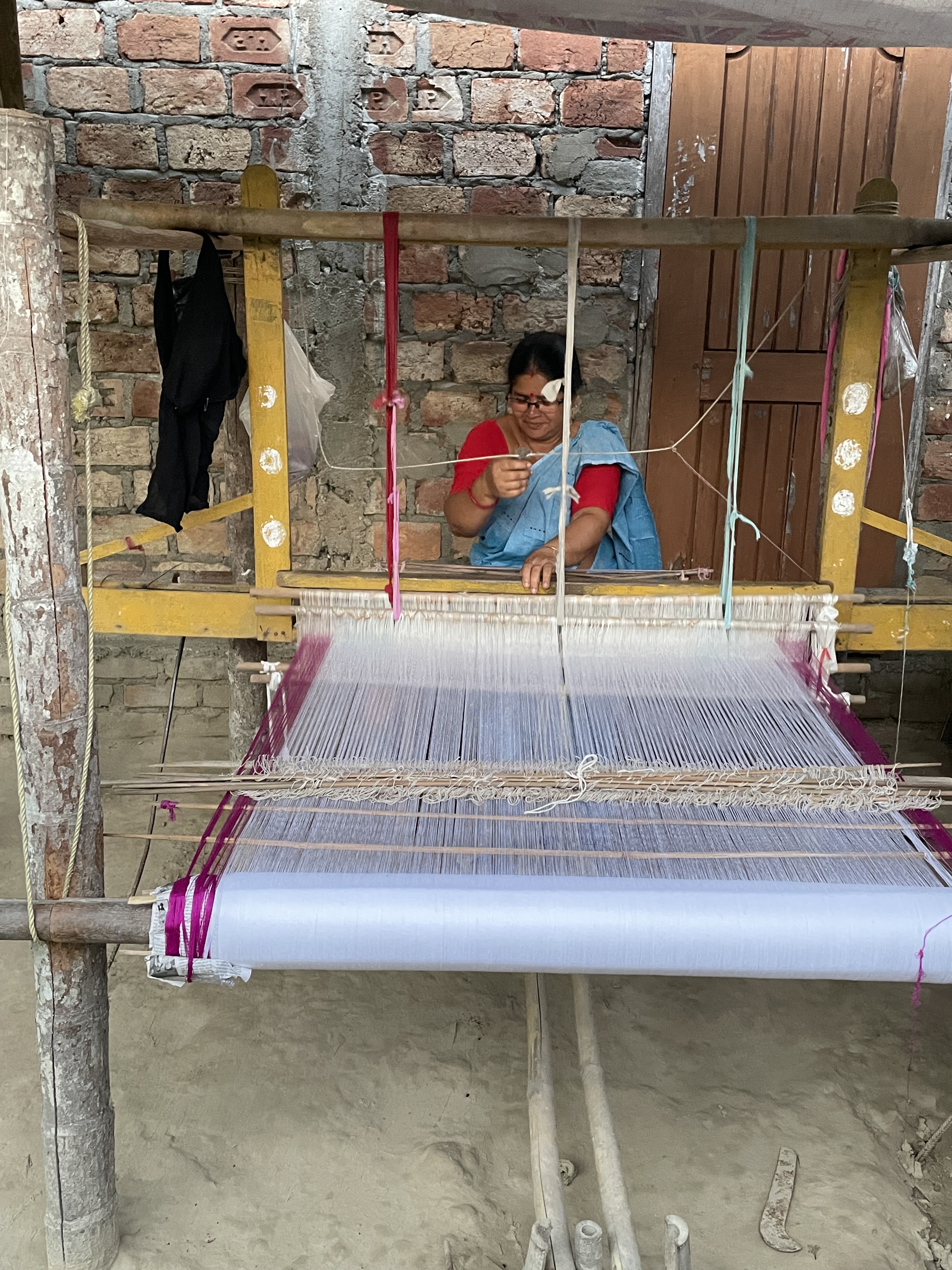
I witnessed women weaving change in the villages of Assam through their skills, cultural heritage, hard work, perseverance, and collective will. Standing in a courtyard in Kamrup district, watching a woman at her traditional loom, I was struck by how quietly revolutionary this simple, everyday act truly is. The rhythmic motion of her hands, the steady concentration on her face, and the vibrant threads stretching across the loom were far more than craft; they were a statement of agency, identity, and economic empowerment. In that moment, it became clear that weaving in Assam is not merely a livelihood. It is a living narrative of resilience and progress, written by women who have refused to be left behind.
In much of rural India, the conversation around women’s empowerment often centres on what needs to be ‘given’ to women: access, opportunities, rights, financial inclusion, and public safety. All of these are undeniably essential. Yet what struck me in Kamrup was how much women were already giving to their families, to their communities, and to the preservation of an age-old cultural tradition. Assam’s weaving heritage is legendary, and most rural households have a loom. The women I met weave not only exquisite textiles like Mekhela Chadors, Gamosas, stoles, saris, but also new pathways for themselves, stitch by stitch.
The woman in the photograph, Jonali Das, from Paschim Bagta village, sits on a traditional handloom, made using local materials, framed by a raw brick wall and a sandy earthen floor. Nothing in this setting reflects modern machinery or industrialized production. Yet it reflects something far more important: dignity in work and pride in cultural identity. Her loom is more than a tool; it is a symbol of continuity. Generations of Assamese women have learned to weave from their mothers and grandmothers. The craft is deeply entwined with rituals, festivals, and the wider cultural ethos of the region. In many communities, a girl’s weaving skill is a marker of her readiness for adulthood. It is a quiet but powerful form of cultural education.
But the picture also reveals another truth: despite the beauty and value of these textiles, most weavers earn very little. The informal nature of the craft, the lack of organized supply chains, exploitative middlemen, limited access to raw materials at fair prices, and the absence of direct market linkages keep them trapped in low-income cycles. The fact that such a skilled craftswoman is working in a semi-open shed with bare tools is a reminder that heritage alone cannot sustain livelihoods unless the systems that support them evolve.
What struck me during conversations with the weavers was their clarity. They were not seeking charity. They were asking for fair access to better looms, training on contemporary designs, consistent market demand, and opportunities to sell directly. Their ask was not a transformation from the outside, but an enabling ecosystem that amplifies what they already excel at.
Local institutions like cooperatives, women’s self-help groups, producer companies, and artisan clusters play a pivotal role in negotiating prices, ensuring raw material supply, and aggregating products for larger orders. In Kamrup, I saw tremendous potential for women-led collectives that could own the entire value chain, from sourcing raw silk yarn of Eri and Muga to designing contemporary designs to managing logistics with digital tools. A decentralized, community-owned model would allow profits to remain in the village while giving weavers a bargaining voice.
There is also an urgent need to tell the stories behind these weaves. Consumers today increasingly seek authenticity, sustainability, and connection. Assam’s handloom sector embodies all three. Each Mekhela Chador woven on a traditional loom is not just a garment; it is hours of meticulous labour, generations of inherited technique, and the cultural soul of a community. Yet the lack of branding and storytelling often reduces these textiles to mere commodities. If India can celebrate Banarasi silk and Kanchipuram saris globally, there is no reason why Assam’s weaves cannot enjoy similar recognition, with the right investment, visibility campaigns, and market linkages.
Government programs like the National Handloom Development Programme and Deendayal Upadhyaya Grameen Kaushal Yojana have made efforts to support weavers. But ground realities show that the most impactful interventions are those that engage women directly, respect their lived knowledge, and co-create solutions rather than imposing them. Capacity building must happen in their language, in their community spaces, and at timings suitable to their daily responsibilities.
Most importantly, the narrative around rural women must shift. Too often, they are portrayed as vulnerable, needing rescue. The woman in the photograph, and countless others like her, are not symbols of vulnerability, but are symbols of strength. They run households, care for children and the elderly, manage farms, participate in community activities, and still take out time to weave. Their contribution to the rural economy is enormous, even though much of it remains invisible and unpaid.
As I watched the fabric slowly take shape on her loom, I realised that weaving is also an act of hope. Every thread layered over another is a gesture of belief in tomorrow, belief that their craft will survive, that their daughters will inherit both the skill and the opportunity to thrive, and that their labour will be valued fairly. If India is to build a truly inclusive development story, it must begin by recognising and uplifting such women, not through charity, but through partnership.
In the villages of Assam, women are already weaving change. They only need the rest of us to stop standing on the sidelines and start supporting the revolution they have begun.
(Cover Image: Jonali Das, Pashchim Bagta village, Kamrup rural, Assam)
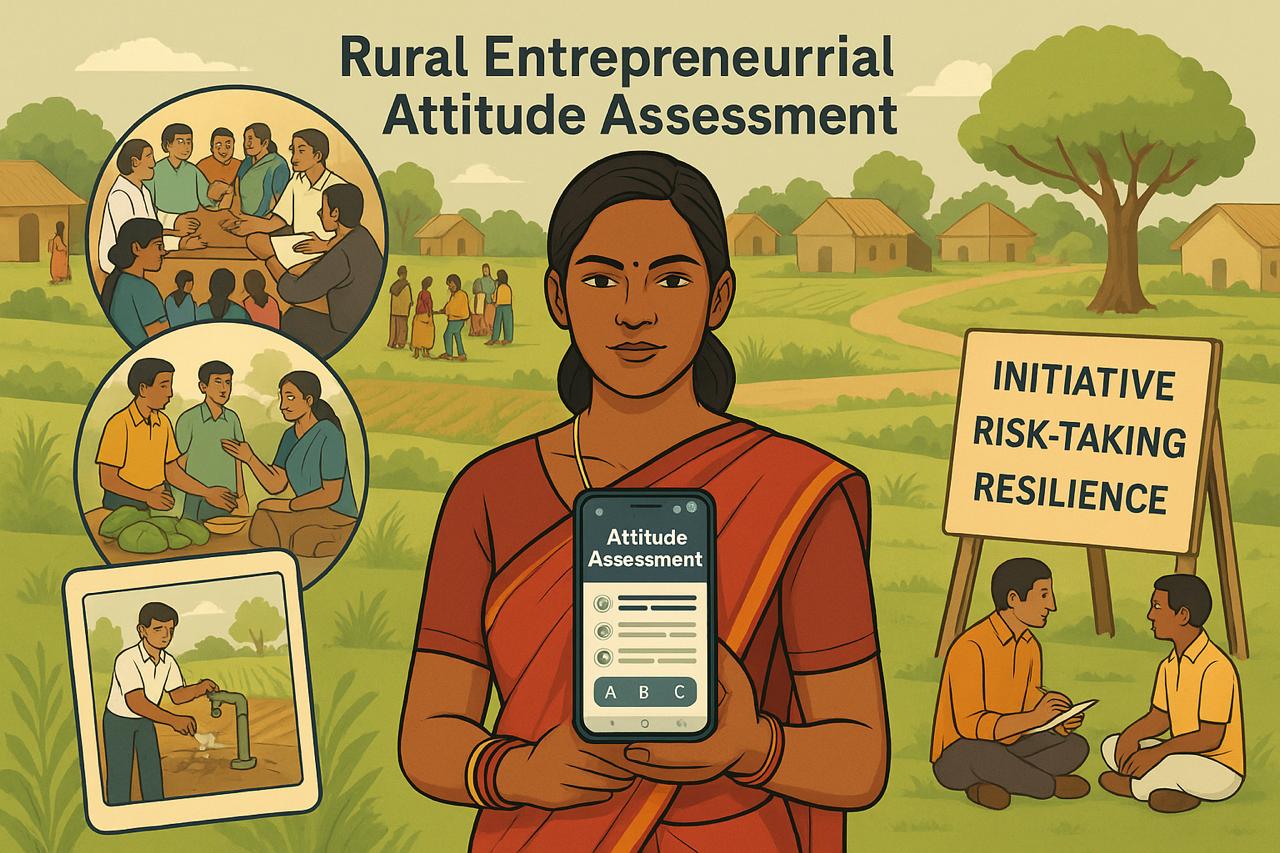
In India’s rural economy, entrepreneurship has emerged not merely as a means of livelihood but as a powerful solution for social and economic transformation. While skills development programs like Skill India, Startup India, and Deen Dayal Upadhyaya Grameen Kaushalya Yojana, and numerous capacity-building workshops by NGOs have made significant progress in imparting entrepreneurial aptitude, the more elusive and often underappreciated dimension is entrepreneurial attitude. This inner compass and entrepreneurial mindset, shaped by motivation and initiative, resilience, risk-taking ability, adaptability, and opportunity identification, is what ultimately sustains a venture through uncertainty.
Entrepreneurial aptitude is teachable. It usually comprises financial literacy, business planning, marketing, and digital skills, domains that lend themselves well to structured training modules. However, attitude is behavioural, psychological, and deeply contextual, especially in rural environments where social, cultural, and economic factors deeply influence individual motivation and risk behaviour.
While technical institutions, NGOs, and government agencies have scaled up skilling programs in rural areas, the absence of reliable frameworks to assess entrepreneurial attitude results in misdirected investments, high dropout rates, or business failures post-startup.
I believe that the right attitude matters more in rural entrepreneurship, or even entrepreneurship in general. Rural entrepreneurship has its unique challenges, like limited access to finance and markets, lack of required infrastructure, socio-cultural constraints, especially for women, and low institutional support. Here, it is the right attitude of the aspiring entrepreneur, which is a mix of persistence, opportunity-seeking, and resourcefulness, that becomes the decisive factor between failure and success.
Current programs lack structured mechanisms to assess and nurture entrepreneurial attitude at the rural level, leading to inefficient selection of beneficiaries, poor resource utilization, and low sustainability of rural enterprises. Therefore, the critical question remains how we can measure the right entrepreneurial attitude in an aspiring entrepreneur at the rural level.
The challenge of evaluating attitude is not technical; it is conceptual. We must shift from a one-size-fits-all model to contextual diagnostics that honour rural reality. It is easy to dismiss a rural woman hesitant to speak in public as lacking “confidence.” But her daily navigation of caste norms, household labour, social conditioning, and budget constraints may reflect resilience and resourcefulness of the highest order.
What we must measure is not textbook confidence, but contextual courage. In my two decades of working with rural entrepreneurs in India, from tribal regions of the Northeastern states to drought-prone villages in Rajasthan, I’ve learned that talent is universal, but opportunity is not. Entrepreneurial attitude is not the privilege of the urban educated; it is often deeply embedded in rural lived experiences.
Our systems must develop culturally sensitive, grassroots-rooted, participatory frameworks to identify, not implant, an entrepreneurial attitude. Only then can we build truly inclusive ecosystems that tap into the latent power of rural changemakers. The future of rural entrepreneurship lies not in the replication of urban models but in recognizing and nurturing the indigenous spark. It is time we built tools that are beyond skills, to the spirit.
I am developing a framework and associated tools and metrics for measuring entrepreneurial attitude for inclusive rural enterprise development. I am calling it, “Rural Entrepreneurial Attitude Identification and Development (READ) Framework”. I will publish it as my next post.
Disclaimer: The opinions expressed are those of the author and do not purport to reflect the views or opinions of any organization, foundation, CSR, non-profit or others.
Across India’s villages, a quieter and powerful transformation is unfolding, led by women entrepreneurs building microenterprises that are changing not just their lives but also contributing towards local prosperity.
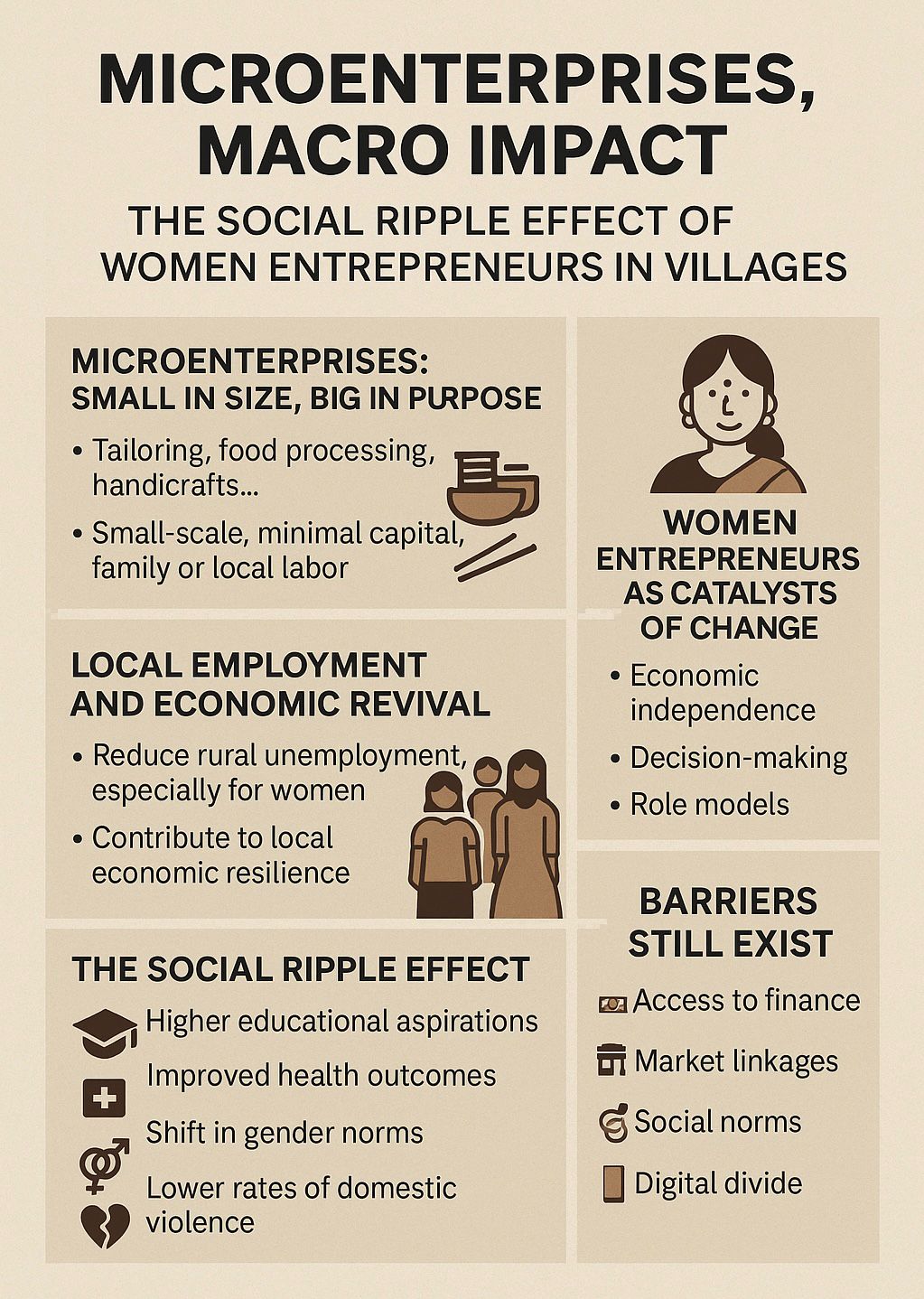
In rural India, microenterprises (and many a time, even termed as nanoenterprises) are typically small-scale and often home-based ventures. These include tailoring shops, grocery stores, food processing units, poultry farms, handloom or handicraft businesses, among many others. They usually operate with minimal capital, often under INR 1 lakh, and rely on family support systems. While these businesses may appear modest on the surface, they’re laying the foundation for grassroots economic resilience and social transformation.
When a woman in a village starts a business, she’s not just earning an income, she’s stepping into a position of agency. She becomes a decision-maker, a provider, and importantly, a role model.
In Jharkhand, Shashi, a determined and resilient woman, has become a role model of empowerment in her village of Kura. With knowledge, financial and device support, she started her Digital Business, which became a hub of convenience and accessibility for people in her village and neighbouring villages. Her journey as a digital entrepreneur empowered her and gave her the agency to make a meaningful contribution to her community. Today, she’s also a Mukhiya (village head) and fondly known as “Digital Mukhiya”, continuing to be the voice of women’s empowerment.
Microenterprises help address the rural employment gap, especially for women who often can’t migrate or work outside the home due to social norms and family responsibilities. These businesses absorb local labour, retain economic value in the village, and reduce dependence on urban employment.
In Assam, Mintai’s Jacquard Handloom Weaving business now employs 3-4 local women who were previously unemployed. They earn and save, and for the first time, imagine futures that include good education for their children or owning a business.
This kind of bottom-up economic activity contributes to local economic resilience, the ability of communities to survive and thrive even during external shocks. The social impact generated by women entrepreneurs is profound. This often translates into higher educational aspirations for children, especially girls staying and completing their school education; increased income leading to better nutrition, access to healthcare and sanitation leading to improved health outcomes; acceptance and shift in gender norms; and financial independence gives women negotiating power within households leading to lower rates of domestic violence.
Despite their success, rural women entrepreneurs continue to face systemic challenges like, (a) collateral requirements and credit histories disqualify many from accessing formal loans, (b) getting products to larger and fairer markets remains a logistical challenge, (c) stifling social norms due to resistance from family or community, (d) accessing business education to develop ‘aptitude’ matching their entrepreneurial ‘attitude’, and ( e) digital divide due to limited access to smartphones and digital tools. While schemes like Stand-Up India and MUDRA loans have made progress, implementation gaps persist.
Rural women’s microenterprises are not side projects. They are economic engines, social change-makers, and community stabilizers. When one woman is empowered to start a business, a ripple begins, touching families, uplifting communities, and reshaping rural India from the ground up.
If you’re a policymaker, social investor, donor, or even just a storyteller, your support can help expand that ripple into a wave and finally a movement of economic security and resilience.
India has huge natural bamboo stocks that have been an integral part of Indian culture for many millennia. Bamboo in many ways is the mainstay of the rural Indian economy, sparking considerable social and ecological spin-offs. In the early part of the century, large tracts of bamboo occurred in many parts of the country but were treated by the forestry sector (which was then cast in a production forestry mode) as a weed of little economic value and was used mostly by the rural communities for crafts, making implements and as housing material. It was the discovery of bamboo as a source of long-fiber by the Forest Research Institute in Dehradun that started the process of using bamboo in a variety of industrial applications, so far unexplored, with several paper mills and rayon mills being set up. But in the absence of a clear policy there was rapid degradation and decimation of the resource in much of the country. Bamboo resources plummeted so alarmingly that at present the resource is limited to few pockets in the country. Two-thirds of the bamboo in the country is restricted to the North-Eastern Region (NER) while the remaining one-third is spread across the country.
But there is hope for the resurgence of bamboo, and this is based on evidence of significant new and contemporary economic opportunities that have emerged over the past decades. A bamboo revolution that holds the potential of reversing economic downturns and ensuring profitability, is very much possible. Bamboo is an untapped avenue of economic growth, and a burgeoning bamboo sector can rope in prosperity, profits, and sustainable livelihoods.
Despite the severe degradation of the resource in the past, India still has a considerable growing stock of bamboo, and comparative annual harvest figures[1] still place India at the top of the global league. It is important to realize the considerable latent potential that bamboo has to contribute to economic growth, poverty alleviation, generating employment, rehabilitating vast tracts of degraded land generated due to past agricultural and industrial practices and policies, and revitalizing the social, economic and ecological well-being of rural economies.
In line with this, goals should be aimed at focusing on recovering the resources lost to the rural poor as it has been a natural capital that has helped them to keep their economies afloat even in times of significant cash crunches. Attempts should be made to replenish bamboo stocks, make it economically beneficial to rural communities in a way that it provides them opportunities to earn a sustainable income and improve their standard of living. Efforts should also be made to increase the economic opportunity from the use of bamboo as an industrial raw material, to raise employment opportunities (especially for the educated and unemployed rural youth), and to rehabilitate the degraded lands across the country (making available and productive a natural resource which is increasingly becoming scarce and expensive).
Over the years a variety of strategies have been developed to reduce the poverty of rural and rurban population through small enterprise development, based on various forest produce. In rural areas, the poor are overwhelmingly dependent on natural resources and in most cases, it is the only capital they possess. They have little power or ability to climb out of poverty. They are not only financially poor, but also opportunity-and knowledge-poor. In this respect, bamboo is one of the few natural resources that could provide a lifeline to sagging rural economies and help integrate them into the market economy. As bamboo is not one commodity but the fountainhead of many products, it could open up a number of markets simultaneously for the rural poor with the added advantage of being a low-risk option.
The bamboo sector also forges personal links with the rural community, allowing them to participate closely in production processes and directly access profits through value addition as compared to other industrialized processes. As the sector is dependent to a large extent on manual labour, it demands many hands to contribute to the cultivation, harvesting, preservation and value-added manufacturing processes. The upshot is that it provides livelihood options in varying activities to a large number of rural workers. This is the main reason why developing countries find it more viable to be involved with the sector whereas developed countries prefer becoming consumptive markets for these very products. Women in particular stand to gain from this sector as they secure means of livelihood due to their dexterity with the material and their ability to shape it into products and more important, they gain from the flexible work hours this sector affords. Bamboo can thus break marginalization through empowerment and also bridge gender divides.
Employment generation and livelihood creation are enabled through strong backward integration of bamboo production and processing. Though tree-like in stature, bamboo is best grown and managed like an agricultural crop or managed as such within the forest. This needs labour input, which calls for significant people involvement. Again, volume production in bamboo is achieved through a large number of unit poles, unlike timber where one large log provides a substantial quantity of wood. But on the other hand, the lightweight poles enable people participation in its transport. Furthermore, the easy linear splitting ability of bamboo, quite unlike that of wood, enables primary processing for a final industrial product to be undertaken by the rural community. The above properties lay the economic basis for definite win-win community-industry partnerships in bamboo, with the bamboo being managed or grown, and primary processing undertaken by communities in rural areas.
Experience has shown natural resources can be harvested sustainably if people stand to benefit from it. The development of bamboo as a cash crop will result in the conservation and protection of the existing resource, and the scaling up of cultivation, which would be a natural outcome of the increased cash value of the resource, as against its present low cash to mere-subsistence value. The environmental benefits from the economic development of bamboo can be very significant.
As a resource that can be harvested annually, it could provide a regular supply of construction material to the communities. If the use of wood could be replaced with that of bamboo, it could reverse the process of severe and rapid degradation of forests and forest cover. Bamboo also helps protect soil from erosion, especially in the upland areas. Bamboo should also be strategically grown to reduce or prevent soil cutting from riverbanks, which is perhaps the major cause of siltation of riverbanks, resulting in reduced carrying capacity of rivers and flooding during the peak rainy season.
In last 3-4 decades, intensifying patterns of land and resource utilization, primarily due to pressure from the rapidly increasing population, have caused land and natural resource degradation in many parts of India. Bamboo is an ideal resource for rehabilitation, even in extremely degraded situations such as land used for brick making.
India with its rich potential of bamboo resources has only just started to develop bamboo marketing and trade. However, the significant bamboo resources in India make it ideally placed to benefit from the experience of China and other countries around the globe. Bamboo holds within it the promise of bailing people out from below poverty line levels.
Bamboo finds many uses today in addition to its conventional uses for handicrafts, scaffolding and the paper industry. It can be used as construction material, as a wood substitute and as food, fuel and a filtration medium. Its real contribution to housing lies in the dual role it can play – of providing a cheap and affordable wood alternative to the homeless while at the same time generating livelihood options for those involved with it.
Bamboo can propel economic growth through increased local production and the sale of high-value wood-substitute products, especially in bamboo-rich states. Robust local production of a local natural resource capital like bamboo will lead to the retention and circulation of cash within the state economies itself, rather than the cash flowing out for purchase of goods from outside the state. Export of cash value-added bamboo products to markets outside the bamboo states could enable incremental cash earnings that will add to the economic growth of the state. Asset creation and local consumption can get a fillip from the increased circulation of money within the state economy from local consumption of locally manufactured products. This consumption will be enabled not only by government purchases, but also as a result of the higher disposable incomes that will be generated.
In India, as elsewhere in other developing countries, strong correlative linkages exist between economic growth, rural poverty and the environment. Firstly, the poor are more vulnerable to the health effects of pollution because of their inadequate nutrition, poor access to health care and their unhealthy living environment. Secondly, the poor are affected faster by degradation of natural resources because of their greater reliance on them to meet basic needs. Environmental degradation, in turn, adversely affects the economy’s capacity to grow, because growth relies on the sustainable productivity of natural resources and the health of the population.
It is a vicious circle, which can be broken through a growth solution that is not only income generating for rural communities but also environmentally sound. Bamboo, a natural resource and one that protects the environment, enables the development of industries, which function through a symbiotic linkage between small and large enterprise that significantly benefits the community.
Bamboo is available throughout the country barring the states of Jammu and Kashmir and Rajasthan (except for some areas). Existing traditional bamboo and cane handicraft products, though not many, could be improved, diversified, produced along industrial assembly lines and converted into value-added products that are already a part of mainstream industry. Value additions could be made to its use in the paper industry and its use in the unorganized scaffolding industry can be doubled. Simultaneously, other mainstream micro and small enterprise products such as matchsticks, pencils, toothpicks, skewer sticks, and blinds, as well as medium-scale industrial panel products that rival wood products, with strong backward community linkages and benefits can be explored. An increase in bamboo products and market opportunities will also result in increases in demand for raw bamboo, besides the production of fresh bamboo shoots and their processed products. There is considerable potential to set up medium and large-scale industries for generating value-added food and wood-substitute products for export markets.
The value-added bamboo industry is ideally placed to adopt that model. Given the right policy atmosphere and thrust, the value-added bamboo industry in India has the potential of reaching a size of USD 2.3 billion (USD 131.5 billion globally) in the next 10 years with a CAGR of 10.3%, employing 11-15 million people in the primary, secondary and tertiary sectors[2].
The bamboo industry also fulfils the criteria needed by sectors that aim to achieve double-digit economic growth. Bamboo has a very strong and direct with rural communities, which would allow them to partake directly and in a more significant way to value addition as compared to other industrialized processes. The value-added bamboo industry thus provides an integrated solution that uses an abundant natural resource that protects the environment and can be processed and generated through community-owned enterprises, both small and large.
Disclaimer: The opinions expressed are those of the author and do not purport to reflect the views or opinions of any organization, foundation, CSR, non-profit or others


 Manu Mayank