The Cat’s Table

Cat's TableWe all have an old knot in the heart we wish to untie.”
― Michael Ondaatje, The Cat’s Table

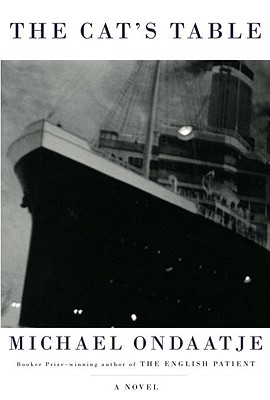
 The Cat’s Table by Michael Ondaatje is a luminous novel about memory, chance, and the strange alchemy of growing up. The story is set aboard a ship sailing from Colombo to England in the early 1950s. It follows a 11 year-old boy, Michael, who is seated at the ‘cat’s table,’ the least prestigious place in the dining room, far from the authority of adults. From this marginal position, the novel unfolds the ability to see the world obliquely, through curiosity rather than control.

Ondaatje writes with a restraint that is deceptive. The plot is episodic, almost drifting, mirroring the ocean that carries its characters. Michael and his companions—Cassius and Ramadhin move through a floating society of eccentrics, which includes a jazz pianist in disgrace, a mysterious prisoner, a silent tailor, and adults whose private griefs remain partially hidden. These encounters linger like half-remembered stories, suggesting that childhood understanding is always incomplete.

What elevates The Cat’s Table beyond a simple coming-of-age tale is its adult consciousness looking back. The older narrator reflects on how friendships, betrayals, and moments of wonder gained meaning only years later. Memory, is less an archive than a reconstruction shaped by emotion and loss.

The sea voyage becomes a metaphor for life in transition between cultures, innocence and knowledge, belonging and exile. There is no dramatic climax, no grand revelation. Instead, the novel leaves a gentle ache, the sense that some journeys matter not for where they end, but for the fleeting connections made along the way.

The Cat’s Table is a beautiful novel on how childhood experiences quietly, irrevocably shape the adults we become. This bittersweet story of memory & place, of three boys who take a journey by sea from one world to another, which flourishes in the gaps between fact and fiction is my “Read of the Week”

River of Smoke

150px-River_of_smoke“Opium is like the wind or the tides: it is outside my power to affect its course. A man is neither good nor evil because he sails his ship upon the wind. It is his conduct towards those around him – his friends, his family, his servants – by which he must be judged”

– Amitav Ghosh, River of Smoke

‘River of Smoke’, a brilliant historical fiction set in late 19th century China is my “Read of the week”.

Snow

“How much can we ever know about the love and pain in another heart? How much can we hope to   understand those who have suffered deeper anguish, greater deprivation, and more crushing disappointments than we ourselves have known?”
― Orhan Pamuk, Snow

Snow is a powerful, unsettling novel set in the snow covered isolation of Kars, a remote Turkish town and uses this landscape as a crucible for deep cultural, political, and emotional conflict.

At the heart of the novel is Ka, a poet and returned political exile, who arrives in Kars hoping for poetic inspiration and solace, and possible reconnection with an old love, Ipek. As the town becomes caught in a tense standoff between secularists, Islamists, and political opportunists, Ka’s personal longings become entangled in tragic social realities.

Pamuk’s strength lies in his subtle, unsentimental portrayal of clashing worldviews. He reveals how secularism, religious fundamentalism, political ambition, all contribute to heartbreak, betrayal, and disillusionment. The snow itself becomes a metaphor for erasure, silence, and the fragility of truth.

Through Ka’s inner turmoil and bursts of poetic inspiration, Pamuk reflects a universal search for identity, belonging, and meaning in a world fractured by ideology. The result is a novel that is both timely and timeless, a stark meditation on faith, freedom, and the cost of dividing lines.

 This political thriller set in Turkey is my “Read of the Week”