Birthday Stories
February 22, 2026 Leave a comment
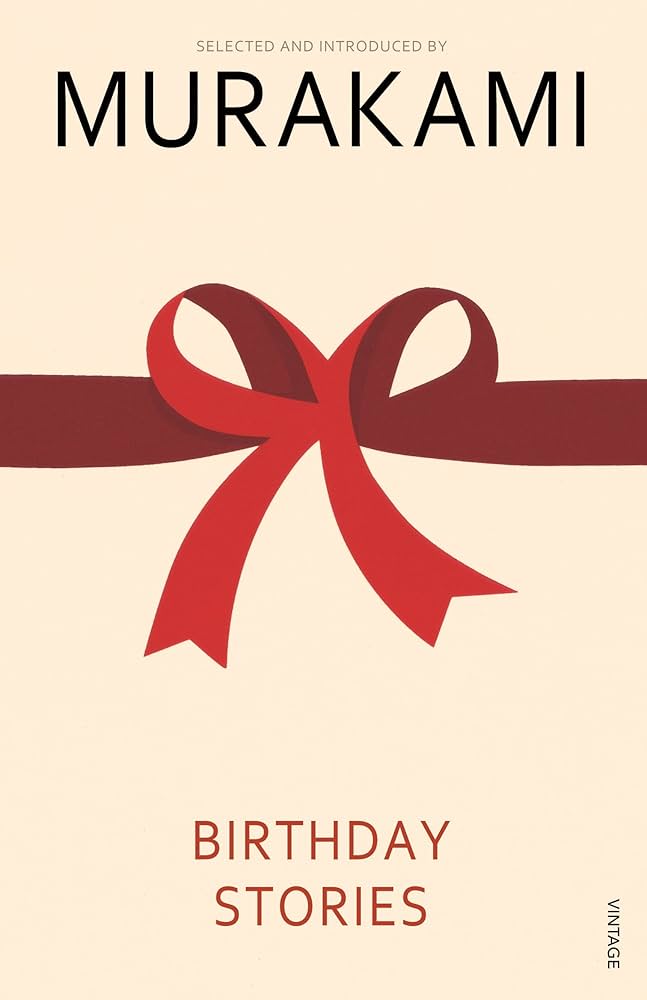
Edited by Haruki Murakami | 224 Pages | Genre: Fiction | Publisher: Vintage Books | Year: 2006 | My Rating: 8/10
“No matter how far you go, you can never be anything but yourself”
― Haruki Murakami, Birthday Stories
I’ve always loved receiving books on my birthdays, as far back as I can remember. When I was in elementary and middle school, my parents used to gift me books, and for several years, since I can recall, I often used my saved pocket money to buy myself the best books, something I still do on my birthdays. On my last birthday in 2025, a few friends and family members gifted me books that could keep me occupied for six months. Among them was “Birthday Stories” by Haruki Murakami. What an amazing way to start my birthday year!
Something is mesmerising about beginning a new year of one’s life with a book that itself revolves around birthdays, those strange markers of time when we pause, introspect and reflect, and sometimes feel the weight of becoming. Birthday Stories is not a novel by Murakami in the conventional sense, but a curated collection of short stories written by various authors, commissioned by Murakami for the Japanese magazine Monkey. The book is a rich anthology that explores how a single day in one’s life can hold joy, dread, memory, regret, longing, and transformation.
A birthday is such a universal ritual of cake, candles, wishes, gifts, and phone calls. Yet, through these 13 stories, the birthday becomes a moment where ordinary life tilts, revealing hidden fractures or unexpected openings. Some stories are gentle and reflective, others unsettling, a few laced with humour or quiet absurdity. As a reader beginning a personal ‘birthday year’ of reading, I found myself slipping into these stories with a peculiar intimacy, as if each one was asking me to examine my own relationship with time and personal evolution.
Murakami’s presence is felt more as a curator than as a dominating voice, which is refreshing. He resists the temptation to turn the anthology into a showcase of ‘Murakami-esque’ surrealism. Instead, he assembles a diverse range of voices that are playful, melancholic, and even experimental. The result is a collage of sensibilities that mirrors the many ways people experience birthdays, often not as a single emotion, but as a spectrum of moods. This diversity keeps the collection from becoming repetitive. Each story feels like a different room in the same house of memory and anticipation.
One of the pleasures of Birthday Stories is how subtly it captures the loneliness that can accompany birthdays. Even when surrounded by people, birthdays can heighten our awareness of time passing, unmet expectations, and relationships that have shifted gears. Several stories linger in this emotional space, portraying characters who are quietly dislocated on their special day. A birthday becomes a reminder of what has not happened as much as what has. This emotional undercurrent resonated deeply with me. Birthdays, after all, are checkpoints reviewing the year that has finished, and not just celebrations. They ask uncomfortable questions, like ‘where am I in my life? What have I become since the last candle was blown out?’
The collection of stories has a playfulness about it, a recognition that birthdays can be absurd social performances. Some stories gently mock the rituals we perform around ageing: the forced cheer, the obligatory gratitude, the awkward gifts. Others find wonder in small moments of a conversation, a remembered taste, a fleeting encounter that feels more meaningful than any grand celebration. This balance between lightness and introspection makes the book an easy yet thoughtful read.
The anthology format also invites a particular kind of reading rhythm. I found myself reading one story at a time, allowing each to settle, and eventually taking 13 weeks to complete the book. It felt like savouring my favourite Lindt Intense Orange, one piece at a time. In doing so, Birthday Stories began to feel less like a book to be finished and more like a companion to the year ahead with short meditations on time, chance, and the quiet dramas of ordinary lives. It suited the idea of a reading calendar stretching over weeks, not rushing through but returning to in small, reflective doses.
Reading Birthday Stories at the start of my birthday year felt quietly symbolic. It reminded me that growing older is not a singular narrative of progress or decline, but a series of small, often unnoticed stories we accumulate. Some are strange, some tender, some unresolved. Murakami’s editorial touch brings these fragments together on how time moves through us. The book does not offer grand revelations about ageing or purpose; it brings an honest recognition of the ordinary magic and quiet unease that accompany the simple act of marking another year lived. In that sense, Birthday Stories was the perfect birthday gift. Not because it dazzled with literary fireworks, but because it sat beside me, nudging me to notice the emotional textures of passing time. As the months of my reading calendar unfold, I don’t think I will remember this book less for specific plots and more for the reflective awareness it left me with that every birthday, like every story, is a small doorway into who we are becoming.