Importance of family counseling in entrepreneur selection
September 24, 2024 Leave a comment
A person requires to possess both ‘can do’ attitude and aptitude for business to start on an entrepreneurial journey. But is that enough? Often an entrepreneur’s success is celebrated as an individual, but seldom the support system in the form of family and friends are discussed due to which the entrepreneur has achieved success. This is irrespective of the nature and size of business, geography, gender and backgrounds of the entrepreneur, and investment that goes in the venture.
While there’s no age to starting a business, the development programs I am working with focuses on women and girls in the age group of 18-50 years from poor and low-income households in the rural areas, with a desire to be self-employed and in future create employment for the youth in their respective villages. Selection processes of such aspiring entrepreneurial women vary depending on the model and approach of the programs. For the conventional businesses existing vocational skills and basic business acumen is analyzed, for others apart from these qualities, level of confidence, ability to invest their time, efforts, and money, general awareness, and other aptitude tests are conducted to measure the eligibility. What remains common across, and I believe is one of the most crucial factors for them to succeed from the word go is the support of their families, which remains the backbone of their ventures during and after the programmatic support. Therefore, post shortlisting of a potential entrepreneurial candidate, family counselling becomes the ultimate decider for her to join the program. And no, it has nothing to do with patriarchy. It’s same for any gender, and I think anywhere in the world. I have been a serial entrepreneur in my past, and have experienced in firsthand that without family support, I could have only done so much.
Family background including the size, type, and economic status can influence entrepreneurs’ and, therefore, entrepreneurship development. Even if the entrepreneurial spirit doesn’t necessarily run in the family, their support plays a vital role in an entrepreneur’s journey. Through their belief, encouragement, constant motivation, and involvement, families provide a nurturing environment for entrepreneurial growth.
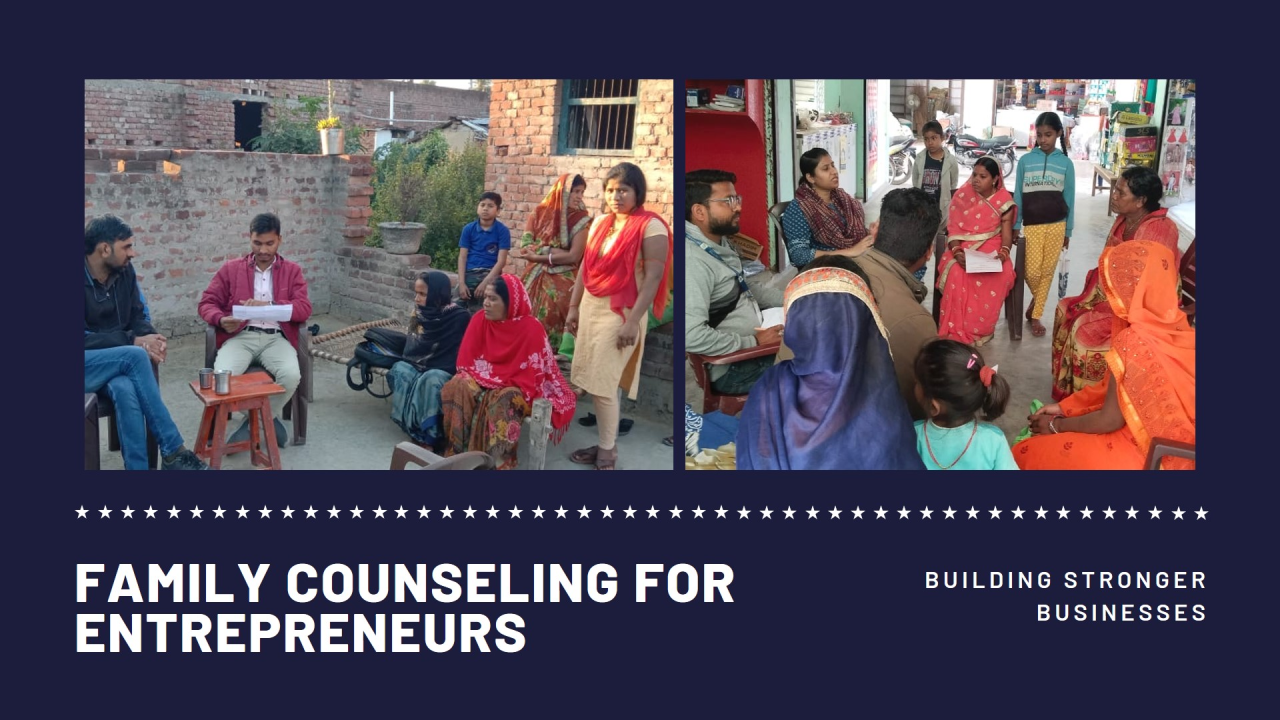
In the process of meeting the family at their house in the village and discussing about their current livelihood and income sources, level of education in the household, aspirations and future plans, nature of relationship with the potential entrepreneurial candidate, sharing about the program, and earning their commitment of being the wind beneath the wings of their daughters, daughters-in-law, wife, and in turn building trust is the main agenda of the family counselling. This support is the most important step and measure for induction of an aspiring candidate in our entrepreneurship program. Garnering this support is half the battle won for the aspiring entrepreneur.
The hard work has to be of the entrepreneur, but families give financial assistance and provides the seed capital for the start-up, provides emotional assistance keeping the morale high during those challenging and difficult times that every entrepreneur undergoes, promote the venture in their long curated networks both within and outside their villages through word-of-mouth, volunteer their time at the business to attend to customers and promotion, and more importantly celebrate even the small moments of joy together.
Apart from money and market, family support is the third pillar of the tripod, which drives entrepreneurial success.
If you want to know more about designing rural women entrepreneurship projects and/or learn about family-counselling for rural entrepreneurship, feel free to connect.
(First published on LinkedIn on 6th March 2024)
Disclaimer: The opinions expressed are those of the author and do not purport to reflect the views or opinions of any organization, foundation, CSR, non-profit or others


 Manu Mayank