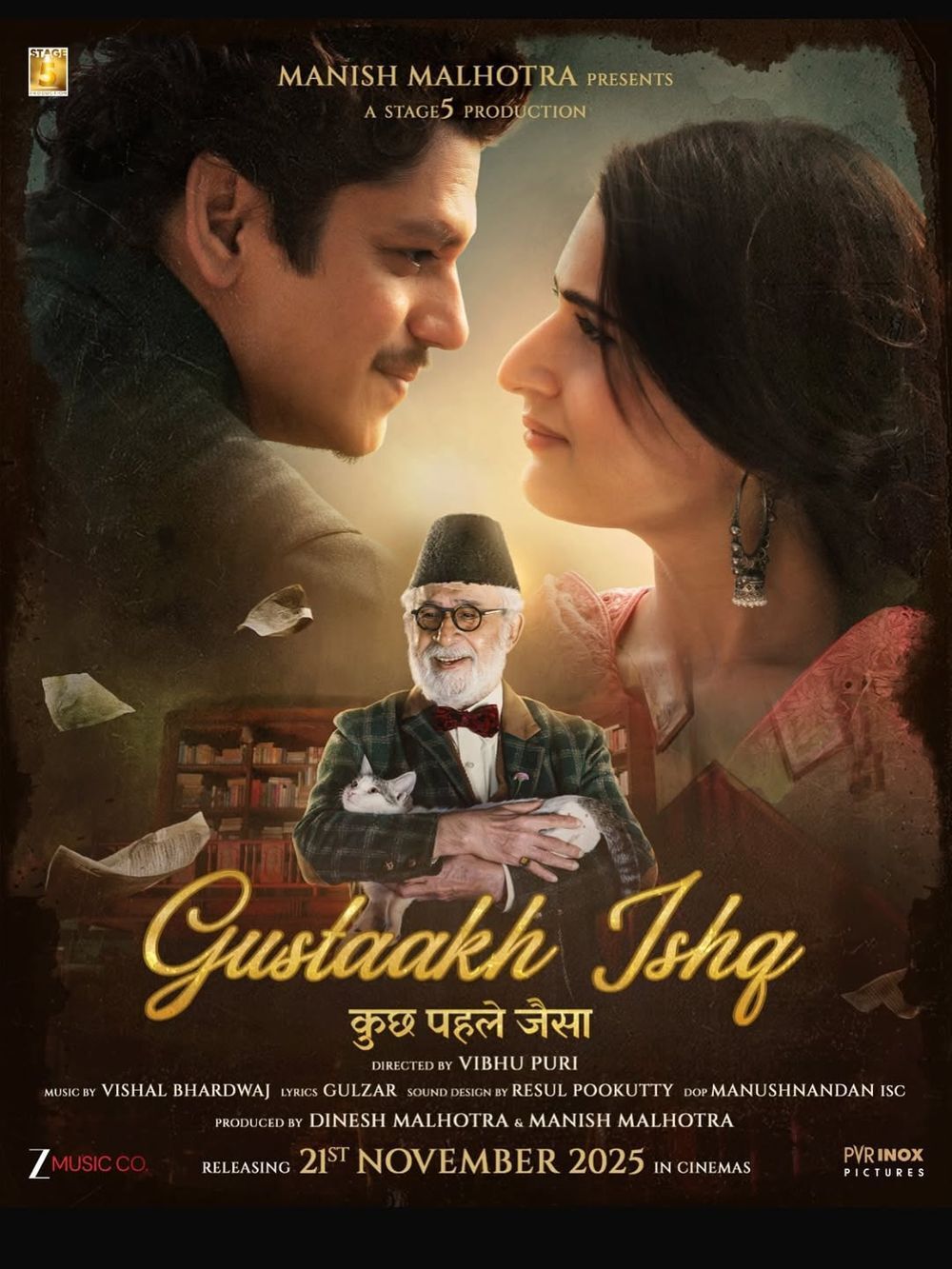
Gustaakh Ishq

Genre: Romance Year: 2025 | Duration: 128 mins | Director: Vibhu Puri |  Medium: Theatre (PVR Cinemas) | Trailer: HERE | Language: Hindi | Cast: Naseeruddin Shah, Vijay Varma, Fatima Shaikh, and others | My rating: 4/5

Gustaakh Ishq evokes the spirit of mid-20th-century Urdu-Hindi cinema full of ‘mushaira’ evenings, old printing presses, dusty lanes and small towns of India, peeling walls, hearts heavy with memories, understated longing and emotional restraint. It is a romance steeped in nostalgia, where even silence has a voice. The film beautifully interweaves mood, texture and poetry. There are moments when the film feels like a delicate ghazal, which is slow, heartfelt, and rich in unspoken emotions. As one of the song’s shayari goes,

Such lines, and many others woven through the film, give it a lyrical soul. The music with songs like ‘Ul Jalool Ishq’ and ‘Aap Is Dhoop Mein’ sprinkles the narrative with the charm and warmth of classic romance.

Set in the crumbling lanes of a North Indian town, the film’s lead character, Nawabuddin (Vijay Varma), a man desperate to save his late father’s printing press, seeks out an ageing, reclusive poet, Aziz Beg (Naseeruddin Shah), hoping to publish his forgotten poetry. Along the way, Nawabuddin becomes attracted to Aziz’s daughter Minni/Mannat (Fatima Sana Shaikh), and the old-world romance between generations, art and longing unfold.  Naseeruddin Shah is the emotional anchor of the film, and his character radiates dignity, nostalgia and weariness, carrying the weight of rueful regrets and mutable hope. Vijay Varma brings earnestness with his character’s love for verse and sincerity, offering a believable link across generations. And Fatima Sana Shaikh as Mannat becomes the soft heartbeat of the film.  

The film’s greatest strength lies in its texture and intimacy. The director’s gaze lingers lovingly on the details, creating a world that feels lived-in and emotionally honest. The cinematography does not chase beauty but rather discovers it in decay. The film is like a visual poem, which is its emotional backbone. Lines of poetry drift through the narrative like ghosts of feeling,

Conversations are sparse, glances that linger a second too long, gestures left unfinished, words swallowed, this sensibility, where silence itself feels accusatory, defines the emotional climate of the film.

The performances of all the actors deserve special mention. Naseeruddin Shah brings a weary grace to the role of someone who has lived too much and lost too often. His eyes carry entire libraries of regret. Vijay Varma’s portrayal of Nawabuddin anchors the film with sincerity and his yearning to preserve art in a world that no longer cares feels achingly real. Mannat, a woman whose stillness hides tremors of rebellion, played by Fatima Sana Shaikh with quiet strength, is the film’s most layered character.

One of the most striking aspects of the film is how it treats love. This is not love as possession or dramatic union. This is love as distance, as restraint, as something that exists more powerfully in what is unsaid. In one of the film’s most beautiful moments, this sentiment finds voice,

The background score deserves credit, where the music does not intrude, but it hums like an old wound. Songs are well placed when emotions can no longer be contained by silence. Lyrics feel like extensions of the characters’ inner lives rather than commercial breaks. One such line captures the film’s aching spirit,

Yet, for all its beauty, Gustakh Ishq is not without flaws. The screenplay sometimes confuses stillness with stagnation. Certain emotional turns are hinted at rather than explored, leaving the viewer wanting deeper psychological meaning. The bond between Nawabuddin and Minni, despite its lyrical foundation, sometimes feels emotionally underdeveloped in execution. Perhaps that is the nature of this film, as it is not designed to entertain as much as to envelop. It is more like a fog of memory and longing through which one must walk slowly. Another verse in the film captures this ethos perfectly,

For viewers used to fast-moving plots, clear romantic arcs, or dramatic catharsis, this film may feel meandering, slow, and even frustrating. The pacing demands patient acceptance of nuance, subtle gestures, and quiet sorrow. For those willing to surrender to its rhythm and appreciate the small pauses, soft glances, whispered verses and the ache between two silences, it offers genuine beauty.

If you appreciate cinema that smells of old books, handwritten letters, melancholic poetry and tender regret, and if you believe that sometimes love doesn’t demand grand gestures but hushed confession, the kind of love that bruises quietly rather than bleeding loudly, then this film will likely stay with you.

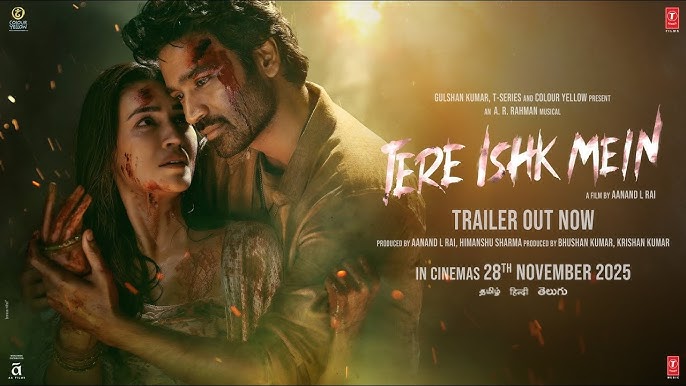
Tere Ishk Mein

Genre: Romance Year: 2025 | Duration: 167 mins | Director: Anand L Rai |  Medium: Theatre (PVR Cinemas) | Trailer: HERE | Language: Hindi | Cast: Dhanush, Kriti Sanon, and others | My rating: 4/5

I have a fascination with morbid romance, where passion is fierce and consuming, love and ruin walk hand in hand, and loss feels almost sacred. After a long time, I totally enjoyed a Bollywood film, Tere Ishk Mein, for its feverish, fractured, and fearless ode to obsessive love and loss. Anand Rai, as Director, and Dhanush and Kriti Sanon as actors have so beautifully portrayed the volatile landscape of love, messy and irrational, dark and bruised. It is a film that is less about romance and far more curious about what happens when love mutates, dissolves boundaries, and begins to reshape identity itself.

The film centres around Shankar (Dhanush), a young man navigating the emotional ruins of unrequited affection. His world is small, ordinary, burning with relentless restlessness, textured with the familiar lanes of Rai’s cinematic universe. When he falls in love with Mukti (Kriti Sanon), it is with the conviction of a man who sees devotion as delusional destiny. Dhanush’s performance is a masterclass. His portrayal of longing, with shoulders slightly slumped, eyes rimmed with unspoken ache, voice cracking in the in-between spaces of sentences, is brilliant. He brings a fragile humanity that compels empathy even when the character’s choices spiral into moral greyness. There are moments when Shankar’s yearning feels suffocating, and moments when it feels heroic. In several scenes, especially those dealing with solitude and heartbreak, the camera lingers on his face with cruel intimacy. He allows vulnerability to show across the frame, leaving behind emotional aftershocks.

The film’s leading lady, Mukti (Kriti Sanon), is a girl caught between affection, caution, and the burden of societal expectations. She is real, flawed, and aware of her own contradictions. Her emotional arc of moving from curiosity to confusion to a painful clarity is one of the more grounded aspects of the film. What stands out is that Mukti is not a passive recipient of Shankar’s affection. She pushes back, speaks for herself, asserts her boundaries, and refuses to become a prop for his emotional turbulence. In many ways, her character reminded me that intensity does not equal righteousness.

Rai’s filmmaking has always been rooted in the everyday—narrow streets, chaotic homes, lived-in locations where life unfolds in all its contradictions. In Tere Ishk Mein, he retains this aesthetic but adds a layer of psychological depth. His director truly excels in designing silences. Some of the best moments in the film are those where nothing is said: an unfinished sentence, a doorway half-shut, a glance held for one second too long. These are the moments when the film transcends melodrama and ventures into introspection.

What distinguishes this film from typical love stories is its willingness to confront the darker territories of attachment. The film does not glorify suffering, nor does it portray persistence as virtue. Instead, it presents a sobering reality that love can be transformative, but it can also be corrosive if it becomes entitlement.The climax, which is raw, unsettling and necessary, is where the film truly earns its place. It is neither triumphant nor tragic in a conventional sense. Rather, it is painfully truthful. It is a rare mainstream film that lets discomfort linger. A must-watch if you enjoy a turbulent exploration of love.

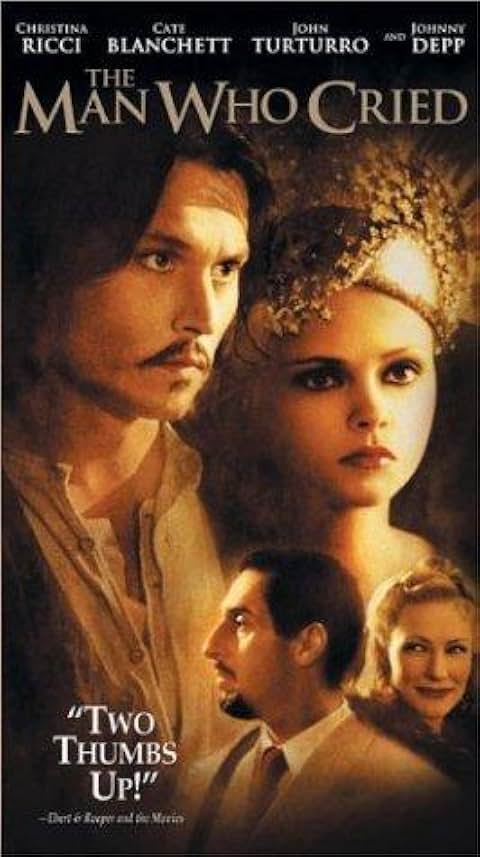
The Man Who Cried

Genre: Romance | Year: 2000 | Duration: 100 mins | Director: Sally Potter | Medium: DVD | Trailer: HERE | Language: English, French, Yiddish | My rating: 3.5*/5*

Favorite Dialogue: “Lola: One should never look back. One should never regret. Never.”

This romantic movie by Sally Potter has no chemistry between its co-stars, Johnny Depp and Christina Ricci, even though I quite liked their individual performances as Fegele, a Russian Jew with elfin features separated from her father as a child in 1927 and later re-named as Suzie when she escapes to England, and Cesar, a Romani gypsy with brooding countenance . And therefore there was no heat and the romance seemed sterile. 

Fegele’s father leaves for the promise of wealth and better future to the land of opportunity, America, intending to bring his daughter over later. However, after he left, a band of raiders attacks Fegele’s settlement, and she is bundled off in the middle of the night by her grandmother with few gold coins to take the ship to America. She ends up living in a foster home in England. After ten years she leaves England and joins a musical troupe in Paris, with the goal of making enough money so she can go to America to locate her father. She keeps her identity as a Jew a secret – only her roommate, Lola (Cate Blanchett), her roommate’s famous opera-singing lover, Dante (John Turturro), and her landlady know the truth. With World War II looming, Suzie and Lola escapes Paris, and after some drama Suzie reaches America and finds her ailing father in Hollywood.

This beautifully recorded and scored film of love, loss and human character is worth a watch.

The Accidental Husband

accidental-husbandGenre: Romance/Comedy| Year: 2008 | Duration: 90 mins | Director: Griffin Dunne | Medium: VCD (EROS Video) | Trailer: HERE | My rating: 2.5*/5*

Favorite Dialogue: Patrick: [with a mouth full of sample wedding cake] This cake is fantastic!

FDNY fireman Patrick Sullivan (Jeffery Dean Morgan) is a happy-go-lucky, soccer playing man about to marry a girl from Astoria, when his life goes topsy-turvy through an advise taken by his fiancee, Sophia, from this famed radio host and love expert, Dr. Emma Lloyd (Uma Thurman), ending with a break-up. Patrick wanted revenge and takes help from his Indian neighbor, who’s a whiz hacker, to falsely put his name as Emma’s husband in public record. Emma gets to know about this sudden change in her life when she goes for registering her marriage with her long time fiance, Richard (Colin Firth), and is asked to get Patrick’s signature on the annulment forms. These forms led Emma and Patrick to fall in love with each other, and eventually get married for real. The movie ends with Tamil music playing in the background.

Dunne’s ‘accidental & forgettable’ flick is my Movie of the Day

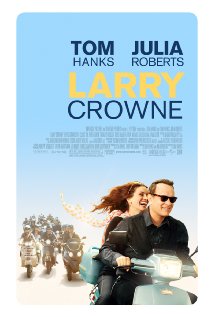
Larry Crowne

larryGenre: Romance/Comedy| Year: 2011 | Duration: 98 mins | Director: Tom Hanks | Medium: VCD (BIG Home Video) | Trailer: HERE | My rating: 2.5*/5*

Favorite Dialogue: Mercedes: (mixing a strong frozen drink) “Mmmmm…brain freeze!”

Larry Crowne (Tom Hanks), a divorced middle-aged man and navy’s veteran cook, gets fired from his floor keeper job at a store because he lacked a college level education. Upon encouragement from his neighbor, Lamar, he enrolls at a local community college to pursue better opportunities in future, studying economics and communication. Larry befriends a bunch of young, scooter-riding young people, and strikes a special friendship with a free spirited girl Talia.  The saving grace of the movie is the subtle romance between Larry and ever-radiant Julia Roberts as Mercedes Tainot, the public-speaking professor with an alcohol addiction and a disintegrating marriage.

This tepid rom-com, which is neither full of romance nor comic is my Movie of the Day.