Code Dependent: Living in the Shadow of AI

Code Dependent: Living in the Shadow of AI

by Madhumita Murgia | 320 Pages | Genre: Non-Fiction | Publisher: Pan Macmillan | Year: 2024 | My Rating: 5/10

My life—and yours—is being converted into such a data package that is then sold on. Ultimately, we are the products.”
― Madhumita Murgia, Code Dependent

Code Dependent is a collection of case studies about people who are affected by technology, without the rigour and analysis that I was expecting. But then it is not an academic or research-oriented book, but more in the popular non-fiction genre. Several of the case studies in the book reflected on the dark side of technology and social media manipulation of individuals and communities, and their rights, privacy, freedom and future.

The book is an account of how the algorithms used by tech in our daily lives through the user-friendly apps like Google Maps, Uber, Instagram, Facebook and others are changing us and the way we see the world. Our data and us as data is continuously being used for targeted advertisements to make businesses grow fatter.

Murgia defines AI as “a complex statistical software applied to finding patterns in large sets of real-world data.” I believe that AI is much more than Statistical Pattern Recognition (SPR), and this viewpoint of the author is quite narrow.

I agree with Murgia’s take on emergence of new data colonialism around the worlds, especially in under-developed and poor economies, where sub-contracting create numerous jobs as data workers, but wealth created in not shared equitably. ‘Informed Consent’ seemed misinterpreted in the book, and subjective.

There was less of ‘AI’ and more of ominous ‘shadows’ in the book. While the book talks about algorithmic bias against people, it certain has flavours of human bias against technology from the author. The book read more on data transparency than demystifying the positives and negatives of AI and technology. Pessimistic views due to advancement in technology is more pronounced throughout the book.

The book is still a fascinating read, with glimpses of ‘how AI is altering the very experience of being human’.

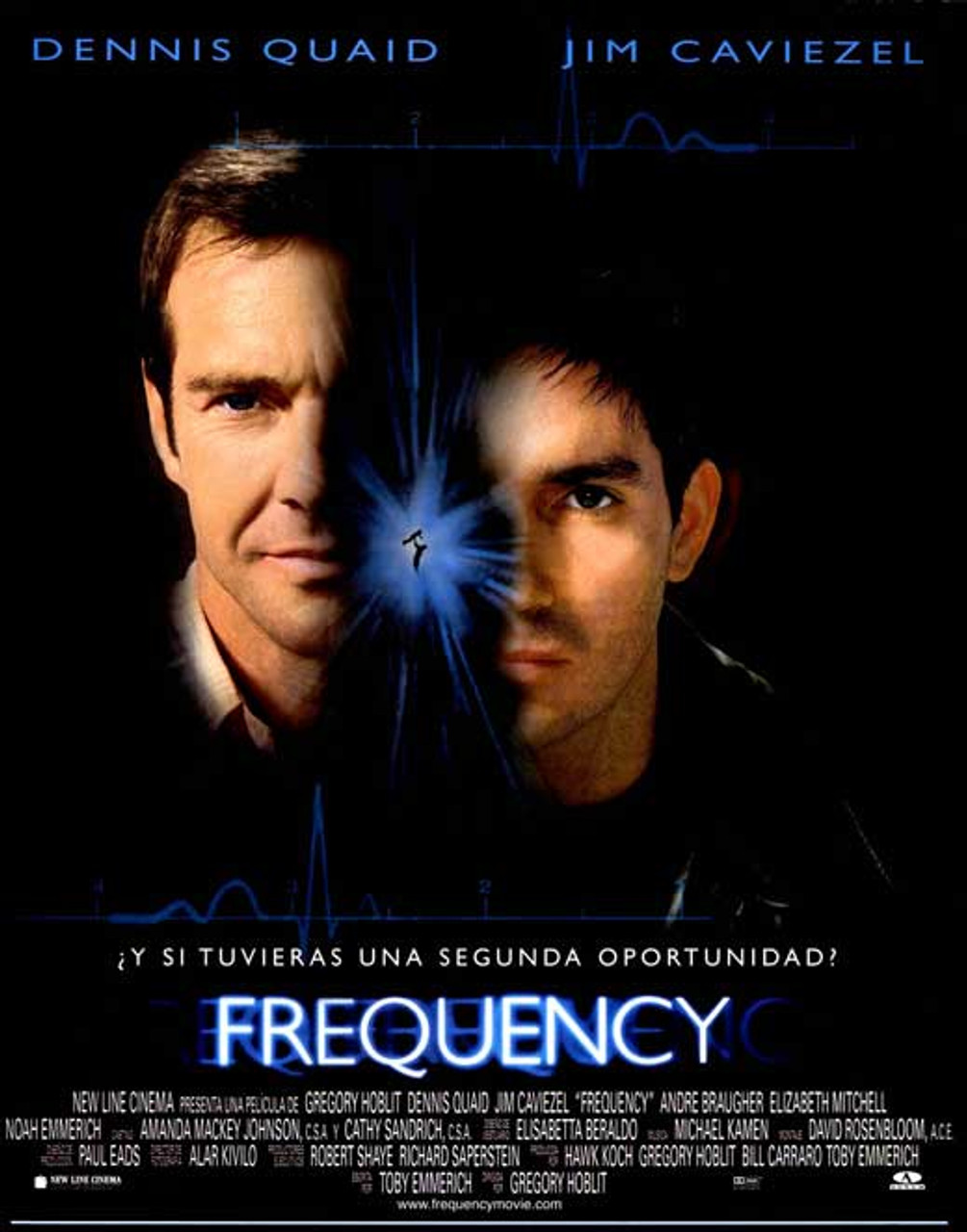
Frequency

Genre: Sci Fi | Year: 2000 | Duration: 118 mins | Director: Gregory Hoblit | Medium: DVD | Trailer: HERE | Language: English | My rating: 3.5*/5*

Favorite Dialogue: “John Sullivan [Jim Caviezel]: Ya’know the past is a funny thing, we all got skeletons in closet and ya never when one is gonna pop up and bite ya in the ass”

Frequency is about time travel and alternate paradoxes, baseball, father (Dennis Quaid as Frank Sullivan) and son (Jim Caviezel as John Sullivan), aurora borealis, and New York city. John, who’s a homicide detective in NYPD uses a Ham radio to connect and communicate with his deceased father 30 years in the past through the miracle of extraordinary solar activity, and alters the course of events and saves his father from death as a fire fighter for FDNY. 

Even though the film has competent acting and direction, the script seems poor. Moreover there are several factual errors in the movie. One of my favorite errors is that, when Shepard and his partner are looking for Frank on the docks, the camera pans to the left and we see a flash of the World Trade Center just before the cameraman catches his error. It was built between 1970 and 1977, not 1969! As past events change, so do John’s old clippings and framed photos, updating themselves every time somebody who died doesn’t.

This science fiction about alternate realities and the cosmic relationship between cause and effect is an interesting watch. 

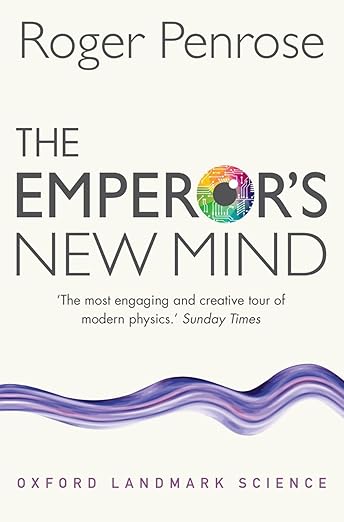
The Emperor’s New Mind

Author: Roger Penrose | 640 Pages | Genre: Non-Fiction | Publisher: Oxford University Press | Year: 1989 | My Rating: 10/10

I argue that the phenomenon of consciousness cannot be accommodated within the framework of present-day physical theory.”
― Roger Penrose, The Emperor’s New Mind

Sir Roger Penrose’s “The Emperor’s New Mind” is a captivating exploration of the intersection between mathematics, physics, consciousness, and the cognitive mind. Renowned for his contributions to theoretical physics and cosmology, Penrose brings his deep understanding of complex scientific concepts to the realm of cognition and artificial intelligence in this thought-provoking work. He covers a wide range of topics, from classical physics and Gödel’s incompleteness theorem to the puzzles of quantum mechanics and the philosophy of mind. He explains complex scientific ideas with remarkable clarity and delves into the question of what constitutes consciousness and the nature of human thought. He critiques the current state of artificial intelligence and posits that human understanding and awareness transcend mere computation. Through a blend of philosophical inquiry and scientific analysis, he argues against the idea that machines can fully replicate human cognitive processes. The book highlights the unique qualities of human thought, suggesting that there are aspects of consciousness that remain elusive to mechanistic interpretations.

Penrose also explores the implications of his theories for fields such as neuroscience and philosophy, offering insights into the workings of the human brain and the potential limitations of current scientific understanding. He integrates ideas from his previous works, such as the concept of objective reality and the nature of mathematical truths, providing a cohesive framework for his arguments.

The book is also notable for its engagement with the nature of mathematics and reality. Penrose argues that mathematics has an existence independent of the human mind, a stance known as mathematical Platonism. This perspective is central to his critique of artificial intelligence and his belief that the brain’s functioning may be linked to quantum processes. It truly is a profound and insightful exploration of consciousness and the nature of thought, bridging the gap between science and philosophy. It makes one ponder the complexities of the mind and the potential for understanding what makes us human in an age increasingly dominated by artificial intelligence.

This book is a must-read for anyone with a scientific temper, a love for complex and abstract ideas, and a deep interest in the fundamental questions of consciousness, cognitive science, and the philosophy of mind, offering an enriching perspective on the enduring mysteries of human existence.

Joker: Folie à Deux

Genre: Psychological Thriller | Year: 2024 | Duration: 138 mins | Director: Todd Phillips | Medium: Theatre (PVR-INOX) in 2024 | Trailer: HERE | Language: English | My rating: 5/5

Favorite Dialogue: I HOPE YOU GET CANCER (autograph to a prison guard), signed with a sad smiley.

Joker: Folie à Deux is a bold, unsettling, dark, and subversive sequel that dares to explore madness as both a personal and shared experience. While it may not resonate with everyone (as was evident with nearly empty theatre), the film is an ambitious character study, elevated by outstanding performances from Joaquin Phoenix as the Joker. This film is one of the most unique interpretations of the Joker mythos, weaving together psychological drama, abstraction, romance, and musical surrealism into an unforgettable cinematic experience.

Picking up where the first film (2019) left off, Arthur Fleck (Joaquin Phoenix) Gotham’s Clown Prince of Crime, is confined in Arkham Asylum in Gotham City, where he meets Harley Quin (Lady Gaga). Arthur Fleck as Joker is nothing less than brilliant, haunting, and unforgettable. He is as disturbing and tragic as ever, but this time with a quieter menace that builds alongside his relationship with Harley. Their twisted relationship serves as the film’s emotional and narrative core. The chemistry between Joaquin Phoenix and Lady Gaga is one of the film’s strengths, with their performances drawing both fascination and discomfort as they navigate a romance defined by shared trauma and chaos. 

Director Todd Phillips shifts away from the gritty realism of the original, blending genres and taking inspiration from Hollywood musicals. The visuals are striking, often juxtaposing Gotham’s decaying, grimy backdrop with the characters’ vibrant fantasies.

Needless to say, Joker has been (and will always be) my most favorite comic book character, the most kickass supervillain ever created.

Binny and Family

Genre: Drama | Year: 2024 | Duration: 139 mins | Director: Ssanjay Tripaathy | Medium: Theater (PVR-INOX) in 2024 | Trailer: HERE | Language: Hindi | My rating: 3/5

Favorite Dialogue: Zindagi ki expiry date toh hoti hai par zindagi jeene ki nahin

Binny and Family is an emotional (and often melodramatic) roller coaster family drama depicting teenage angst, the thought divide across three generations, and shifting values of a nuclear non-resident Indian family. The film is mostly set in London and partly in a small town of Bihar, depicting different lifestyles and local flavors of people, cultures, and confused desis overseas, which also gets very well portrayed through the tug of war and conflicted relationship between a teenager and her parents and grandparents.

As a non-resident Bihari hailing from a middle class family, I could relate to several scenes like the makeover of the house prior to visiting parents, temporary changes in day-to-day life, familiar conversations, the subtle difference between ‘lihaaj’ and ‘unexpressed love’ that many like me have with their parents.

For a small size family, the film seemed a bit stretched at times! Some portions could have been edited, especially the school and romance routines, which didn’t fit in with the narrative. There was no chemistry between Binny and her crush, Dhruv (played by Tai Khan). In fact, the friend-zoned BP (played so well by Naman Tripathy) and Binny had better chemistry and could have been explored further in the story. From “Ladki jaat ho. Kuch anhoni ho gaya to kisko muh dikhange hum log” to sporting hat and being a cool grandfather seemed unrealistic within a short span of time.

Pankaj Kapoor, Rajesh Kumar and confident debutantes’ Anjini Dhawan and Naman Tripathi are a delight to watch. Even with ‘all that could have been better and viewing fatigue at times’, it’s still worth watching.