The Tiger’s Wife

8366403When your fight has purpose—to free you from something, to interfere on the behalf of an innocent—it has a hope of finality. When the fight is about unraveling—when it is about your name, the places to which your blood is anchored, the attachment of your name to some landmark or event—there is nothing but hate, and the long, slow progression of people who feed on it and are fed it, meticulously, by the ones who come before them. Then the fight is endless, and comes in waves and waves, but always retains its capacity to surprise those who hope against it.”
― Téa Obreht, The Tiger’s Wife

This novel full of historic and human complexities of Balkans through its principal narrator, Natalia Stefanovic, a young doctor who lives with her mother, grandmother and grandfather in an unnamed Balkan city early in the 21st century, is my “Read of the Week”.

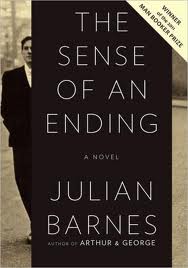
The Sense of an Ending

b3“How often do we tell our own life story? How often do we adjust, embellish, make sly cuts? And the longer life goes on, the fewer are those around to challenge our account, to remind us that our life is not our life, merely the story we have told about our life. Told to others, but – mainly – to ourselves.”
― Julian Barnes, The Sense of an Ending

This 2011 Booker Prize winning, witty, cynical and ironic novel is my “Read of theWeek”

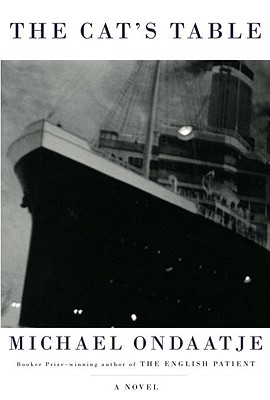
The Cat’s Table

Cat's TableWe all have an old knot in the heart we wish to untie.”
― Michael Ondaatje, The Cat’s Table


This bittersweet story of memory & place, of three boys who take a journey by sea from one world to another, which florishes in the gaps between fact and fiction is my “Read of the Week”

River of Smoke

150px-River_of_smoke“Opium is like the wind or the tides: it is outside my power to affect its course. A man is neither good nor evil because he sails his ship upon the wind. It is his conduct towards those around him – his friends, his family, his servants – by which he must be judged”

– Amitav Ghosh, River of Smoke

‘River of Smoke’, a brilliant historical fiction set in late 19th century China is my “Read of the week”.

Snow

“How much can we ever know about the love and pain in another heart? How much can we hope to   understand those who have suffered deeper anguish, greater deprivation, and more crushing disappointments than we ourselves have known?”
― Orhan Pamuk, Snow

Snow is a powerful, unsettling novel set in the snow covered isolation of Kars, a remote Turkish town and uses this landscape as a crucible for deep cultural, political, and emotional conflict.

At the heart of the novel is Ka, a poet and returned political exile, who arrives in Kars hoping for poetic inspiration and solace, and possible reconnection with an old love, Ipek. As the town becomes caught in a tense standoff between secularists, Islamists, and political opportunists, Ka’s personal longings become entangled in tragic social realities.

Pamuk’s strength lies in his subtle, unsentimental portrayal of clashing worldviews. He reveals how secularism, religious fundamentalism, political ambition, all contribute to heartbreak, betrayal, and disillusionment. The snow itself becomes a metaphor for erasure, silence, and the fragility of truth.

Through Ka’s inner turmoil and bursts of poetic inspiration, Pamuk reflects a universal search for identity, belonging, and meaning in a world fractured by ideology. The result is a novel that is both timely and timeless, a stark meditation on faith, freedom, and the cost of dividing lines.

 This political thriller set in Turkey is my “Read of the Week”