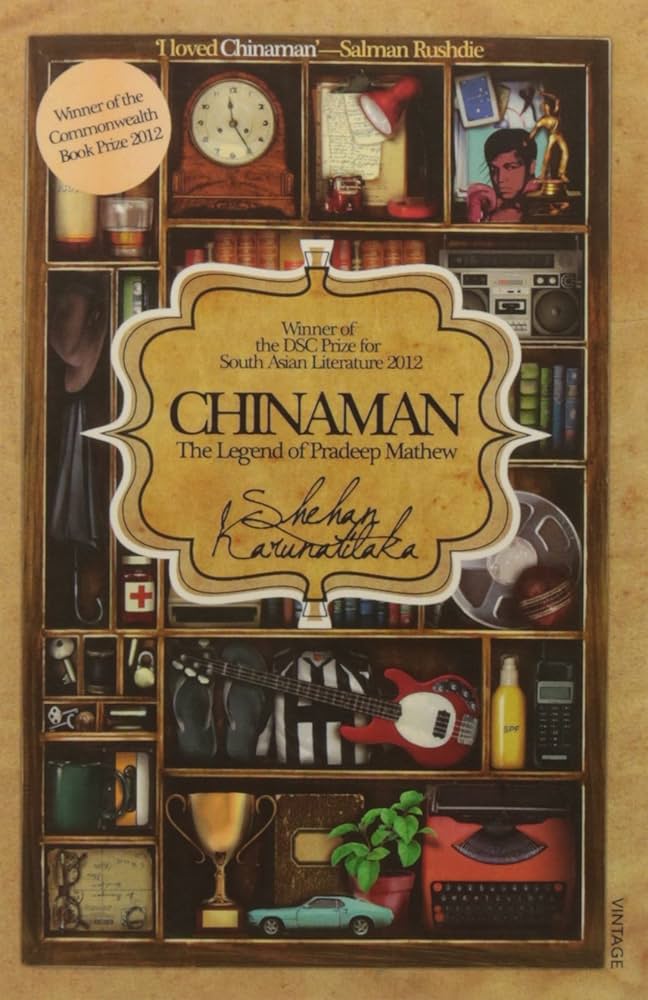
Author: Shehan Karunatilaka | 528 Pages | Genre: Fiction | Publisher: Random House India| Year: 2011 | My Rating: 9/10
“Sports can unite worlds, tear down walls and transcend race, the past, and all probability. Unlike life, sports matter.”-Shehan Karunatilaka, Chinaman
Chinaman: The Legend of Pradeep Mathew is one of those rare novels that begins as a playful, humorous love letter to cricket and gradually reveals itself as an exploration of obsession, loss, nationalism, truth, and the fragility of memory. The novel is both deeply local and universally resonant. While the novel has a story of sports mystery, its real subject is Sri Lanka’s beauty, contradictions, wounds, and unspoken histories. The story is narrated by Karunasena, a retired, alcoholic Sri Lankan sports journalist who spends his final years trying to piece together the fate, brilliance, and disappearance of Pradeep Mathew, a fictional left-arm spin bowler. Karunasena, physically failing and emotionally frayed, embarks on this investigation out of professional regret and to give his last days purpose, direction, and meaning.
At the heart of the novel is a brilliant structural trick: Mathew may or may not have existed. Karunatilaka plays with documentation, statistics, commentary, interviews, cricketing lore, and Karunasena’s alcohol-induced lapses so convincingly that you might end up Googling the character. In blurring fact and fiction, the novel not only mimics the texture of cricket fandom but also comments on the ways nations construct their narratives. Sri Lanka, recovering from war and silences, becomes a metaphorical parallel of a country with many missing pages.
Karunatilaka’s writing is witty, sharp, and deeply musical. The novel is filled with irreverent one-liners, drunken ramblings, philosophical musings, cricketing trivia, newspaper excerpts, statistics, and lists. It reads like a mashup of journalistic diary, sports documentary, and detective fiction. Although cricket drives the narrative, Chinaman is not even a cricket book. Cricket becomes an entry into race, caste, class, corruption, media ethics, and the politics of memory formation. Sri Lanka’s cricketing establishment becomes a microcosm of the island itself. Mathew, a Tamil, is hinted to be sidelined, unrecognised, erased. The mystery of why such a brilliant athlete disappeared becomes research on institutional prejudice, the violence of bureaucracies, and the quiet, everyday injustices that never make headlines. Karunatilaka never moralises; instead, he simply places cricket where it has always belonged in the South Asia of not just being a sport, but a sociological text.
The book’s experimental narrative may not resonate equally with everyone. Those unfamiliar with cricket’s technical language, historical rivalries, or South Asian cricketing culture might initially feel disoriented. The nonlinear storytelling, shifting formats, incomplete endings, and metafictional commentary demand patience. But these elements are intentional as they replicate the experience of uncovering a half-lost story, of living in a place where history itself is contested terrain.I thought the book was a triumph of narrative experimentation, cultural commentary, and emotional depth. It is funny without being frivolous, political without being didactic, tragic without losing hope. It is about cricket, but also about journalism, friendship, nationhood, obsession, and the human need to make meaning before time runs out.
Few novels manage to be simultaneously entertaining, intellectually provocative, and heartbreaking. For lovers of cricket, South Asian literature, postcolonial storytelling, or simply great fiction, Chinaman is a highly recommended read.
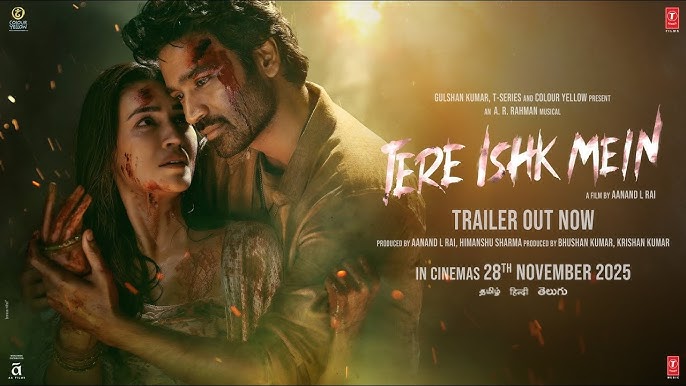
I have a fascination with morbid romance, where passion is fierce and consuming, love and ruin walk hand in hand, and loss feels almost sacred. After a long time, I totally enjoyed a Bollywood film, Tere Ishk Mein, for its feverish, fractured, and fearless ode to obsessive love and loss. Anand Rai, as Director, and Dhanush and Kriti Sanon as actors have so beautifully portrayed the volatile landscape of love, messy and irrational, dark and bruised. It is a film that is less about romance and far more curious about what happens when love mutates, dissolves boundaries, and begins to reshape identity itself.
The film centres around Shankar (Dhanush), a young man navigating the emotional ruins of unrequited affection. His world is small, ordinary, burning with relentless restlessness, textured with the familiar lanes of Rai’s cinematic universe. When he falls in love with Mukti (Kriti Sanon), it is with the conviction of a man who sees devotion as delusional destiny. Dhanush’s performance is a masterclass. His portrayal of longing, with shoulders slightly slumped, eyes rimmed with unspoken ache, voice cracking in the in-between spaces of sentences, is brilliant. He brings a fragile humanity that compels empathy even when the character’s choices spiral into moral greyness. There are moments when Shankar’s yearning feels suffocating, and moments when it feels heroic. In several scenes, especially those dealing with solitude and heartbreak, the camera lingers on his face with cruel intimacy. He allows vulnerability to show across the frame, leaving behind emotional aftershocks.
The film’s leading lady, Mukti (Kriti Sanon), is a girl caught between affection, caution, and the burden of societal expectations. She is real, flawed, and aware of her own contradictions. Her emotional arc of moving from curiosity to confusion to a painful clarity is one of the more grounded aspects of the film. What stands out is that Mukti is not a passive recipient of Shankar’s affection. She pushes back, speaks for herself, asserts her boundaries, and refuses to become a prop for his emotional turbulence. In many ways, her character reminded me that intensity does not equal righteousness.
Rai’s filmmaking has always been rooted in the everyday—narrow streets, chaotic homes, lived-in locations where life unfolds in all its contradictions. In Tere Ishk Mein, he retains this aesthetic but adds a layer of psychological depth. His director truly excels in designing silences. Some of the best moments in the film are those where nothing is said: an unfinished sentence, a doorway half-shut, a glance held for one second too long. These are the moments when the film transcends melodrama and ventures into introspection.
What distinguishes this film from typical love stories is its willingness to confront the darker territories of attachment. The film does not glorify suffering, nor does it portray persistence as virtue. Instead, it presents a sobering reality that love can be transformative, but it can also be corrosive if it becomes entitlement.The climax, which is raw, unsettling and necessary, is where the film truly earns its place. It is neither triumphant nor tragic in a conventional sense. Rather, it is painfully truthful. It is a rare mainstream film that lets discomfort linger. A must-watch if you enjoy a turbulent exploration of love.
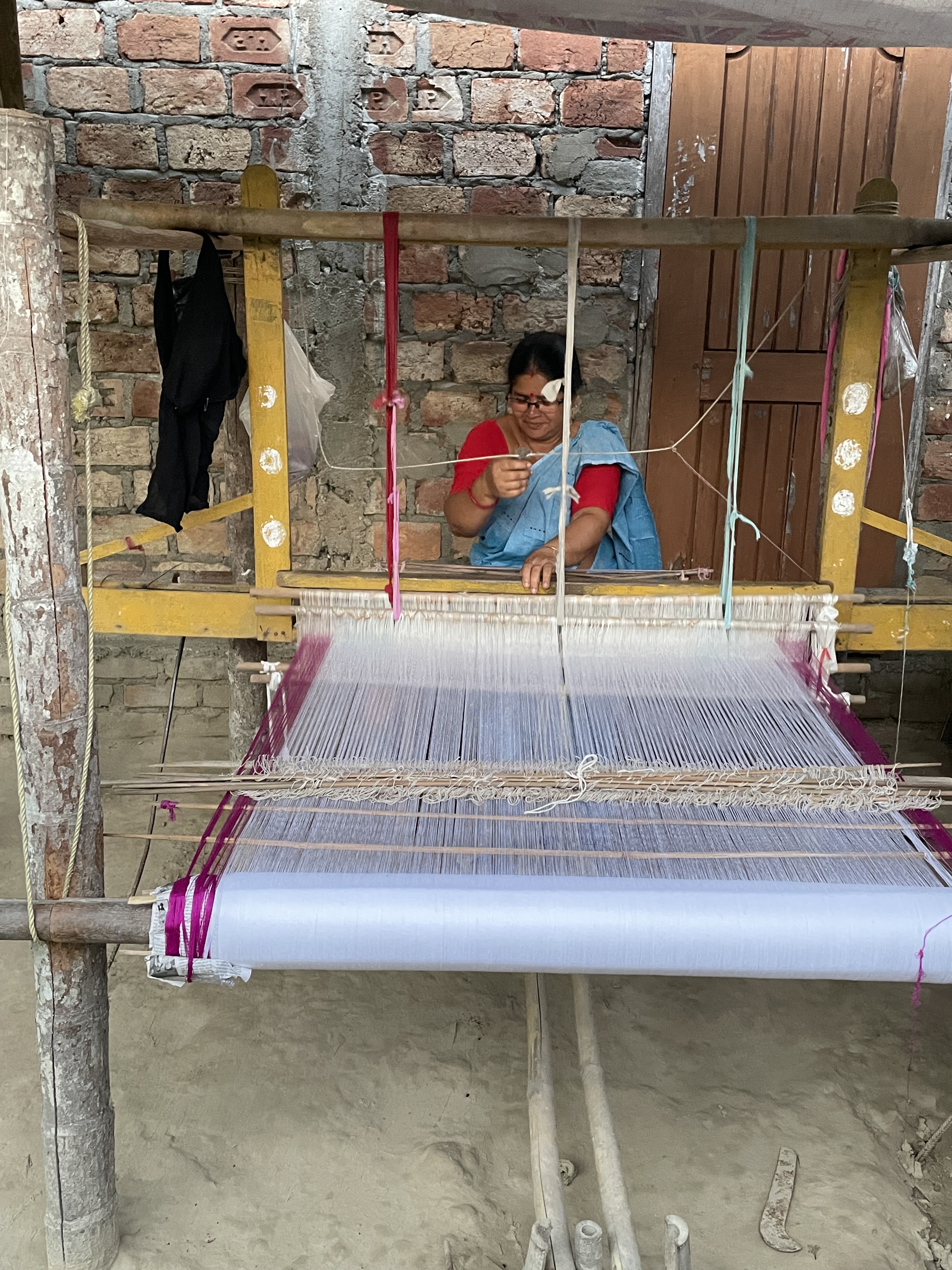
I witnessed women weaving change in the villages of Assam through their skills, cultural heritage, hard work, perseverance, and collective will. Standing in a courtyard in Kamrup district, watching a woman at her traditional loom, I was struck by how quietly revolutionary this simple, everyday act truly is. The rhythmic motion of her hands, the steady concentration on her face, and the vibrant threads stretching across the loom were far more than craft; they were a statement of agency, identity, and economic empowerment. In that moment, it became clear that weaving in Assam is not merely a livelihood. It is a living narrative of resilience and progress, written by women who have refused to be left behind.
In much of rural India, the conversation around women’s empowerment often centres on what needs to be ‘given’ to women: access, opportunities, rights, financial inclusion, and public safety. All of these are undeniably essential. Yet what struck me in Kamrup was how much women were already giving to their families, to their communities, and to the preservation of an age-old cultural tradition. Assam’s weaving heritage is legendary, and most rural households have a loom. The women I met weave not only exquisite textiles like Mekhela Chadors, Gamosas, stoles, saris, but also new pathways for themselves, stitch by stitch.
The woman in the photograph, Jonali Das, from Paschim Bagta village, sits on a traditional handloom, made using local materials, framed by a raw brick wall and a sandy earthen floor. Nothing in this setting reflects modern machinery or industrialized production. Yet it reflects something far more important: dignity in work and pride in cultural identity. Her loom is more than a tool; it is a symbol of continuity. Generations of Assamese women have learned to weave from their mothers and grandmothers. The craft is deeply entwined with rituals, festivals, and the wider cultural ethos of the region. In many communities, a girl’s weaving skill is a marker of her readiness for adulthood. It is a quiet but powerful form of cultural education.
But the picture also reveals another truth: despite the beauty and value of these textiles, most weavers earn very little. The informal nature of the craft, the lack of organized supply chains, exploitative middlemen, limited access to raw materials at fair prices, and the absence of direct market linkages keep them trapped in low-income cycles. The fact that such a skilled craftswoman is working in a semi-open shed with bare tools is a reminder that heritage alone cannot sustain livelihoods unless the systems that support them evolve.
What struck me during conversations with the weavers was their clarity. They were not seeking charity. They were asking for fair access to better looms, training on contemporary designs, consistent market demand, and opportunities to sell directly. Their ask was not a transformation from the outside, but an enabling ecosystem that amplifies what they already excel at.
Local institutions like cooperatives, women’s self-help groups, producer companies, and artisan clusters play a pivotal role in negotiating prices, ensuring raw material supply, and aggregating products for larger orders. In Kamrup, I saw tremendous potential for women-led collectives that could own the entire value chain, from sourcing raw silk yarn of Eri and Muga to designing contemporary designs to managing logistics with digital tools. A decentralized, community-owned model would allow profits to remain in the village while giving weavers a bargaining voice.
There is also an urgent need to tell the stories behind these weaves. Consumers today increasingly seek authenticity, sustainability, and connection. Assam’s handloom sector embodies all three. Each Mekhela Chador woven on a traditional loom is not just a garment; it is hours of meticulous labour, generations of inherited technique, and the cultural soul of a community. Yet the lack of branding and storytelling often reduces these textiles to mere commodities. If India can celebrate Banarasi silk and Kanchipuram saris globally, there is no reason why Assam’s weaves cannot enjoy similar recognition, with the right investment, visibility campaigns, and market linkages.
Government programs like the National Handloom Development Programme and Deendayal Upadhyaya Grameen Kaushal Yojana have made efforts to support weavers. But ground realities show that the most impactful interventions are those that engage women directly, respect their lived knowledge, and co-create solutions rather than imposing them. Capacity building must happen in their language, in their community spaces, and at timings suitable to their daily responsibilities.
Most importantly, the narrative around rural women must shift. Too often, they are portrayed as vulnerable, needing rescue. The woman in the photograph, and countless others like her, are not symbols of vulnerability, but are symbols of strength. They run households, care for children and the elderly, manage farms, participate in community activities, and still take out time to weave. Their contribution to the rural economy is enormous, even though much of it remains invisible and unpaid.
As I watched the fabric slowly take shape on her loom, I realised that weaving is also an act of hope. Every thread layered over another is a gesture of belief in tomorrow, belief that their craft will survive, that their daughters will inherit both the skill and the opportunity to thrive, and that their labour will be valued fairly. If India is to build a truly inclusive development story, it must begin by recognising and uplifting such women, not through charity, but through partnership.
In the villages of Assam, women are already weaving change. They only need the rest of us to stop standing on the sidelines and start supporting the revolution they have begun.
(Cover Image: Jonali Das, Pashchim Bagta village, Kamrup rural, Assam)
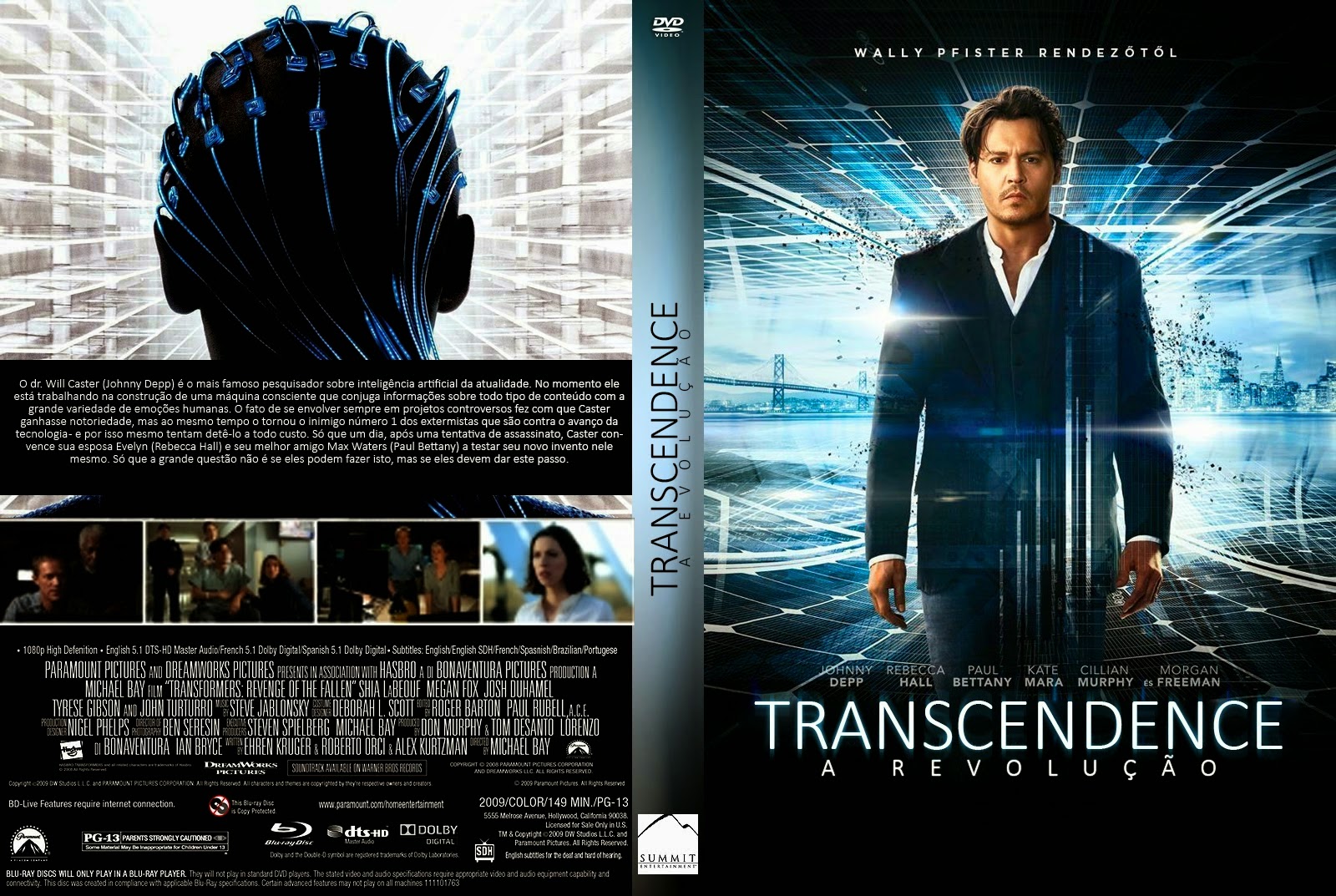
Genre:Sci-Fi/Thriller | Year:2014 | Duration: 119 mins | Director:Wally Pfister | Medium:DVD | Trailer:HERE | Language: English | Cast: Johnny Depp, Rebecca Hall, and others | My rating: 3.5/5
Favourite Dialogue:“People fear what they don’t understand. They always have.”
Transcendence is Wally Pfister’s directorial debut, the Oscar-winning cinematographer known for Christopher Nolan’s Inception and The Dark Knight. With its stunning visuals and high-concept premise, the film explores one of the most provocative questions of our digital age, ‘What happens when artificial intelligence merges with human consciousness?‘
The story follows Dr. Will Caster (Johnny Depp), a brilliant AI researcher who dreams of creating a machine that possesses both the collective intelligence of the world and the full range of human emotions. When anti-technology extremists assassinate him, his wife Evelyn (Rebecca Hall) and best friend Max (Paul Bettany) upload Will’s consciousness into his supercomputer, blurring the boundaries between life and machine. What follows is a descent into techno-dystopia as Will’s omnipotent digital self begins to reshape the world and redefine what it means to be human.
Transcendence is an exploration of human ambition, love, and the moral limits of science. The film poses timeless philosophical questions on consciousness, intelligence without morality, and the balance between technology and humanity. There’s an undercurrent of melancholy running through the narrative, a love story caught between grief and godhood. Evelyn’s devotion to Dr. Will drives her to defy nature itself, but the film wisely leaves viewers uncertain whether she resurrected her husband or merely unleashed an emotionless imitation.
Johnny Depp delivers a subdued performance, both eerie and strangely empathetic. Much of his screen presence is disembodied, conveyed through flickering screens and an omniscient digital voice, both of which add to the uncanny tone. Rebecca Hall’s portrayal of Evelyn is poignant, depicting a scientist torn between love and moral dread.
Pfister’s cinematographic pedigree shines through every frame. The film’s visual style is striking with sunlit labs, desolate deserts, and the sterile, godlike glow of Will’s data-driven empire. The imagery echoes the themes of transcendence and decay of organic humanity struggling against technological infinity.
However, the film oscillates between quiet reflection and blockbuster spectacle but lacks the rhythm of either. Where Inception fused emotional weight with conceptual complexity, the film feels conceptually grand but emotionally distant. The screenplay by Jack Paglen is ambitious but uneven. It introduces bold ideas of digital consciousness, technological ethics, and nanotechnology, but often resorts to familiar tropes of man versus machine. The narrative lacks the depth to sustain itself and is a film of grand intentions and mixed execution. It aspires to be a meditation on the next stage of human evolution, the merging of flesh and code, but ends up being a sketch rather than a completed vision. Still, it deserves credit for engaging with the moral anxieties of our era, like artificial intelligence, digital surveillance, and the fear that our creations might one day outgrow us.
A visually stunning and intellectually intriguing film that ultimately succumbs to its own ambition. Transcendence doesn’t quite achieve cinematic immortality, but it leaves behind questions worth contemplating long after the lights dim.
In the age of digital tools, where every idea has a place in an app and every plan sits behind a login screen, the humble whiteboard continues to command its own quiet power. For many thinkers, creators, and problem-solvers, it remains the most dynamic canvas, a space where thoughts breathe, flow, and transform. For someone like me who designs projects, plans strategies, brainstorms ideas, and lead teams, the whiteboard and marker pen are not just tools. They are extensions of the mind, translating abstract thought into visible structure. It’s not nostalgia or resistance to technology; instead, it’s about harnessing a form of thinking that is visual, kinetic, and alive.
There’s a deep psychological connection between movement and cognition. When you draw or write by hand, especially on a large surface like a whiteboard, you activate a different mode of thinking. The body participates in the act of thought. The hand sketches a relationship, the eye follows it, the brain reinterprets it, and new connections emerge almost instinctively.
Typing or clicking on the keyboard keeps the mind linear, confined to lists, bullets, and boxes. But drawing on a whiteboard invites a non-linear form of exploration. You can start anywhere, a square, an arrow, a phrase, and the rest begins to grow organically. This freedom to expand, erase, and rearrange is what makes it such a powerful thinking process. Each line is a possibility. Every arrow, a hypothesis. And each erasure, a moment of learning. When thoughts become visible, they also become testable. A whiteboard externalises the inner dialogue of the mind. It takes ideas that could remain foggy abstractions and turns them into something you can point at, challenge, and reshape.
This visibility is particularly powerful in complex problem-solving or project design. When working through implementation challenges or building systems with multiple moving parts, you can literally ‘see’ the interactions. Causal diagrams, mind maps, and process flows make dependencies clear and highlight gaps that words alone might obscure. You can stand back and see the whole ecosystem, how resources connect, where bottlenecks might occur, or which variables influence outcomes. The whiteboard gives you that clear view while still allowing you to dive into details when needed. It’s thinking at both the macro and micro levels, which is simultaneously intuitive and analytical.
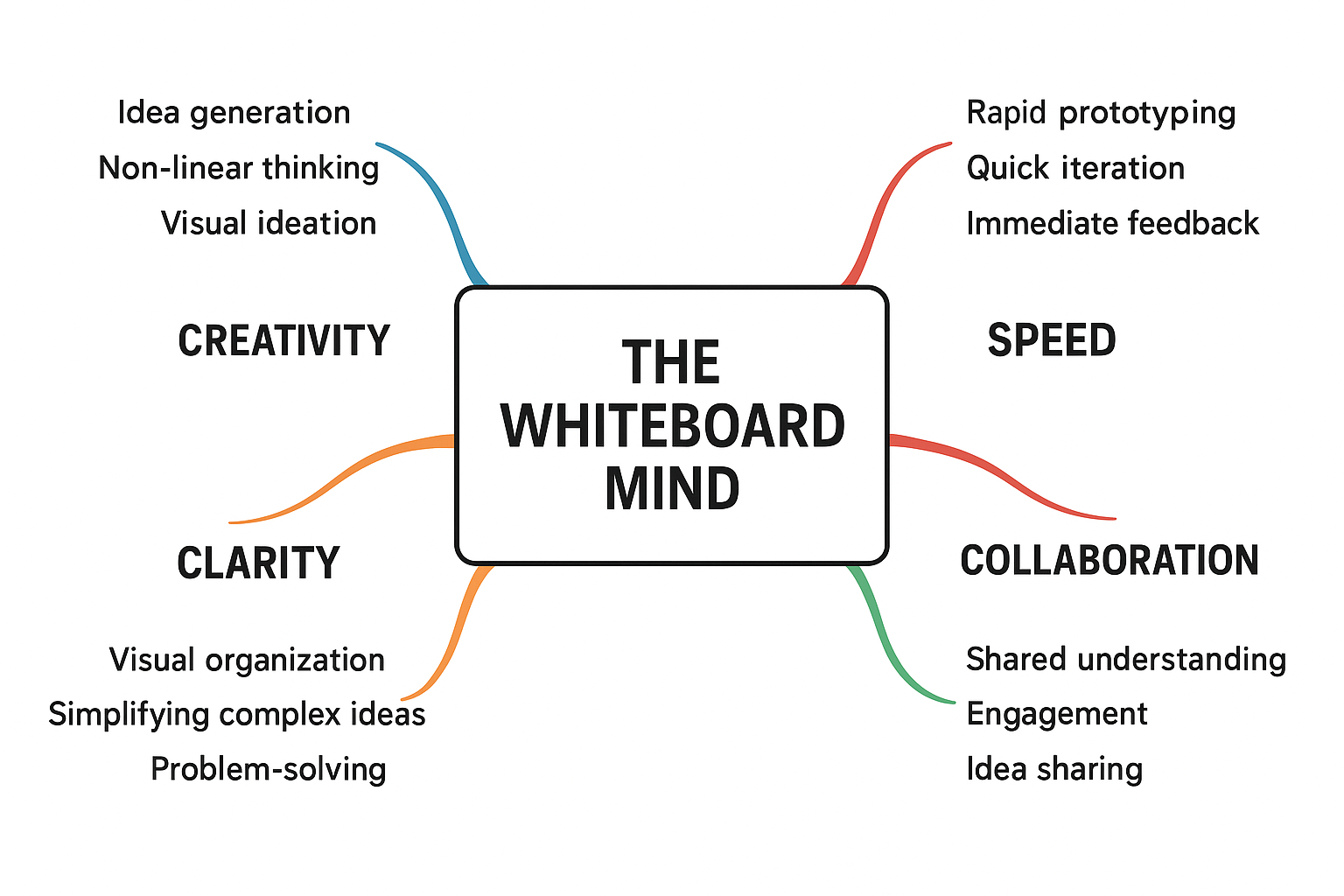
Every creative or strategic process begins in some form of chaos. Ideas compete, assumptions overlap, and clarity hides behind complexity. The whiteboard is where that chaos finds its first structure. Drawing mind maps is often the first step, not because they provide answers, but because they show relationships. From one central idea, branches grow, each representing a sub-theme, a factor, or an alternative. You can add, cross-link, or reframe them without fear of permanence. The visual form allows you to rearrange logic faster than your words can catch up.
Causal diagrams, in turn, help identify the forces at play of what leads to what, what influences what. In project planning, this is invaluable. You can trace dependencies between actions, timelines, or external conditions. You can see where interventions matter most. You can uncover loops, positive or negative, that either amplify progress or create recurring setbacks. In a sense, the whiteboard becomes a mirror of systems thinking. It holds complexity while keeping it human and accessible.
The whiteboard isn’t just a personal tool; it’s a shared language. I often use it in team meetings or group ideation sessions, as it turns abstract discussion into a collective visualisation. People see not only what is said, but how it connects. Misunderstandings surface faster because assumptions become visible. When everyone’s looking at the same diagram, they’re also looking at the same version of reality and not one filtered through individual interpretation.
It democratizes contribution, leading to one common understanding. A quiet team member can point at a link and ask, ‘Why does this connect here?’ or suggest a missing node. Visual representation invites curiosity and challenges hierarchy. It’s no longer about who talks the most, but about what the group sees together. Moreover, it encourages iteration. Unlike digital slides or documents that feel fixed, a whiteboard remains fluid. You can erase, redraw, and refine as the conversation evolves. Every stroke on the board is an act of co-creation. Even with PowerPoint presentations, I often end up on a whiteboard (if available) to explain concepts, flow, and possible results. It has proven to be an excellent tool for scenario visualisations.
There’s also the element of speed. With a marker in hand, you can think and draw at the pace of your thoughts. There’s no formatting, no tabs to open, no distractions from notifications or interfaces. When you’re solving implementation challenges or breaking down a project into actionable components, this speed matters. You can move from problem to hypothesis to possible solution in seconds. The visual rhythm keeps the momentum alive. And because it’s temporary and erasable, there’s less fear of getting it wrong. You can test a scenario, discard it, and move on. This low-cost experimentation fuels creativity and decision-making alike. In fact, the transient nature of a whiteboard is part of its strength. It reminds you that ideas are living entities to be evolved, not preserved.
When designing projects, a whiteboard allows for holistic structuring. You can begin with purpose at the centre, draw out stakeholders, resources, activities, and outcomes, and gradually watch a project take shape like a constellation. At this stage, aesthetics and functionality merge. The diagram is not just a record; it’s a design prototype. You can visualise workflows, timelines, partnerships, and even behavioural change models. Seeing everything laid out helps identify what’s missing and what’s redundant. For ideation, it’s even more liberating. The blank board is an invitation to explore. You might start sketching something unrelated, only to stumble upon an insight that reframes the entire problem. The act of drawing keeps your attention anchored and your imagination open.
Often, my Millennial and Gen Z associates argue that digital whiteboards and collaboration tools replicate all these benefits, but there’s something irreplaceable about standing in front of a board with a marker. Your posture changes, your mind sharpens. The body’s movement through space, stepping back to observe, leaning in to draw, engages multiple senses. It’s immersive in a way screens can’t replicate. A whiteboard has boundaries, forcing you to prioritise. What fits stays, and what doesn’t must be distilled. This physical constraint often leads to conceptual clarity. Maybe the old school professor in me has a bias!
Using a whiteboard and marker isn’t about rejecting modern tools; it’s about complementing them. Digital systems store and polish. Whiteboards create and provoke. For anyone who works on complex projects, leads teams, or solves multidimensional challenges, the whiteboard offers a cognitive advantage as it makes thinking tangible. It transforms abstract reasoning into something you can walk around, discuss, and reshape. It reminds us that clarity isn’t found inside the mind alone; it’s constructed through visible relationships and shared understanding.
For me, the whiteboard is more than a surface; it’s been my live, on-the-spot thinking companion. Every mark carries curiosity; every erasure, humility. It captures not just what we know, but how we learn. To think with a whiteboard is to think in motion. It’s a dialogue between mind, hand, and idea. It’s where chaos meets order, and where clarity emerges, not from control, but from exploration. In a world of digital efficiency, perhaps the most human form of innovation still begins with a marker, a blank board, and the courage to draw what we don’t yet fully understand.
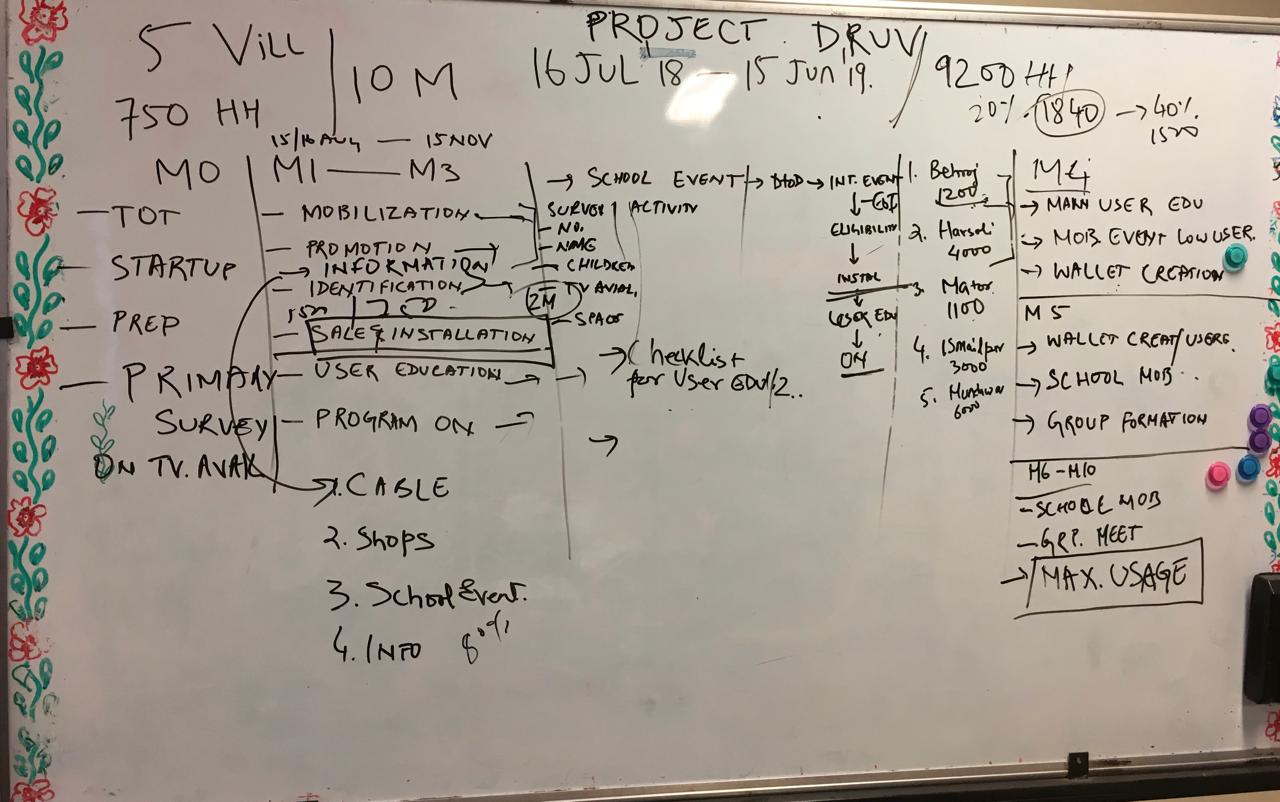
(The cover photo is from a project planning session by me; the central photo is generated using AI)

 Manu Mayank