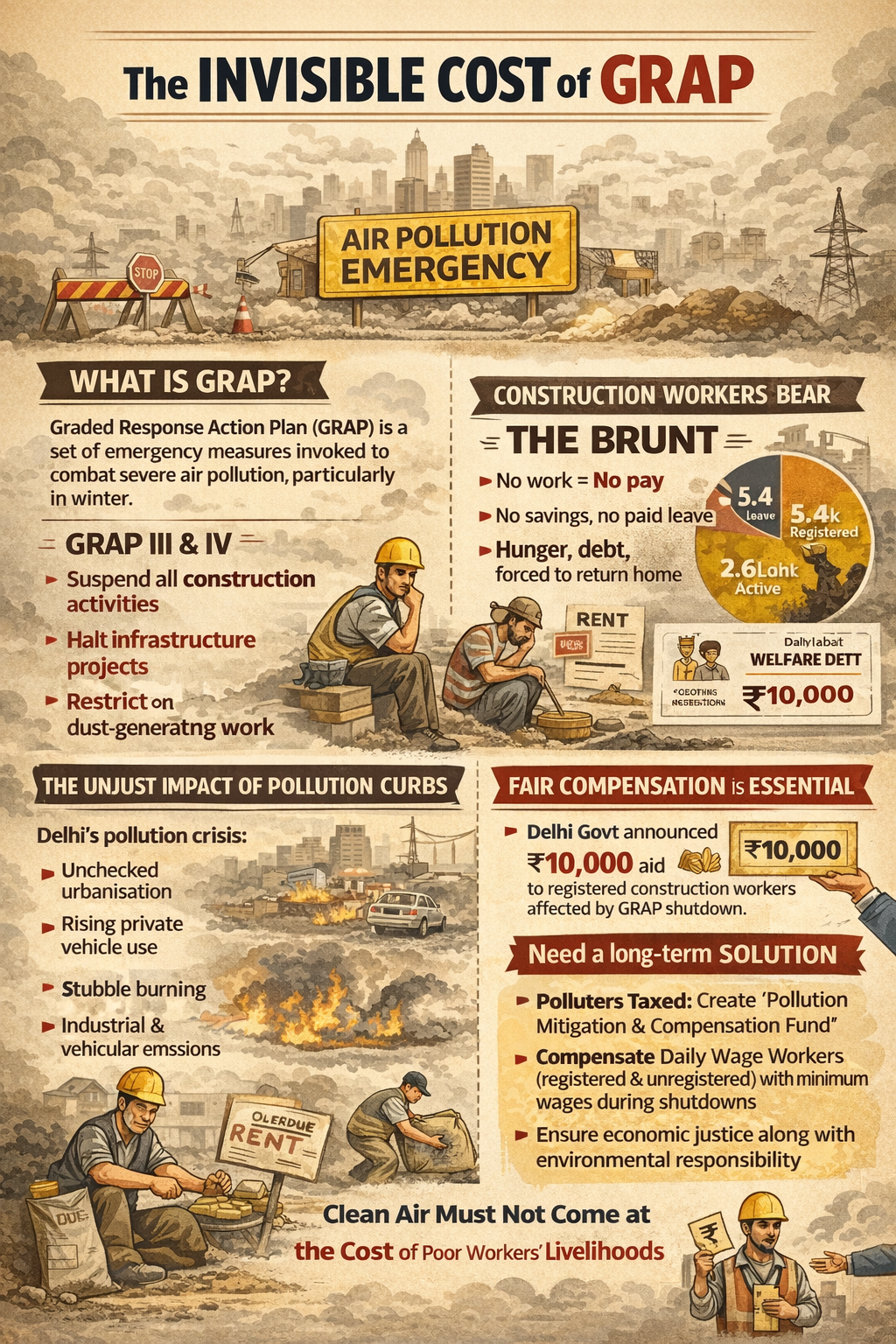
Delhi slips into a public health emergency as air pollution reaches hazardous levels every winter. The government responds by invoking the most stringent measures under the Graded Response Action Plan (GRAP III and IV), suspending all construction and demolition activities, halting infrastructure projects, and restricting dust-generating work. These steps are necessary and justified for pollution control and the health of people. However, the cost of Delhi’s clean air policies is disproportionately borne by construction workers and daily wage labourers, whose livelihoods are abruptly and completely cut off.
Delhi has a massive daily wage construction labour force, estimated between 10-12 lakhs workers, with only around 5.4 lakhs officially registered (around 2.6 lakh active). Construction restrictions under GRAP III and IV are designed to curb particulate pollution, particularly PM10, a major contributor to Delhi’s smog. However, the construction sector is sustained almost entirely by informal labour. Migrant workers, hired through layers of contractors, work without written contracts, income security, or social protection. When work stops, wages stop instantly. There are no savings to fall back on, no paid leave, and often no local support systems. For these workers, a week-long (or longer) pollution shutdown can mean hunger, unpaid rent, mounting debt, or forced return to their native places under distress.
The injustice lies in the fact that these workers are not the architects of Delhi’s pollution crisis. Air pollution is the result of long-term structural failures, like unchecked urbanisation, rising private vehicle use, industrial emissions, poor public transport planning, weak enforcement of environmental norms, and regional factors like stubble burning. Construction workers operate within this system, responding to demand created by the city’s growth. Yet, when pollution peaks, their labour is the first to be criminalised, as if survival itself were an environmental offence.
The common defence of GRAP rests on a false dichotomy between public health and livelihoods. This framing assumes that income loss is a tolerable short-term sacrifice in the interest of long-term health. For daily wage labourers, livelihood and health are inseparable. Loss of income leads to undernutrition, stress, untreated illness, and increased vulnerability. Clean air achieved by pushing workers out of their wages is a policy failure and not a public health success. India’s environmental governance has consistently overlooked this social dimension. While regulations effectively restrict polluting activities, there is little institutional thought given to compensating those who lose income due to regulatory action.
On 18th December 2025, the Delhi Government announced financial assistance of INR 10,000 through Direct Benefit Transfer (DBT) to registered construction workers affected by the curbs under GRAP. While this is a welcome announcement by the Government, a clear policy solution is required in the long run for the provision of minimum wages to construction workers and daily wage labourers, both registered and unregistered, for the duration of GRAP shutdowns. This compensation should not be framed as charity or welfare, but as a rightful payment for income loss imposed by public policy in the interest of collective well-being. If the state mandates a halt to work for environmental reasons, it must also accept responsibility for the economic consequences of that mandate.
The most viable way to finance this support is through a dedicated ‘pollution tax.’ Delhi already collects various environment-linked charges, including green cess on vehicles, environmental compensation from polluting industries, and penalties for regulatory violations. These revenues can be consolidated into a Pollution Mitigation and Compensation Fund. Additional sources could include congestion charges in high-traffic zones, higher fees on large real estate developments, and stricter fines on construction firms that violate dust-control norms. Those who contribute most to pollution should bear the cost of its social mitigation.
Beyond immediate compensation, such a policy would also strengthen environmental compliance. When workers are protected from income loss, resistance to pollution-control measures will also decline. Environmental regulation will become a shared responsibility rather than an imposed punishment. Over time, this approach can build public trust in pollution governance, which is currently eroded by perceptions of unfairness and elite insulation from consequences.In the longer term, Delhi must move towards cleaner construction technologies, year-round dust control enforcement, better urban planning, and formalisation of labour. But these structural reforms will take time. Until then, compensating workers during pollution-induced shutdowns is a matter of basic justice. Environmental policy that ignores inequality risks becoming morally hollow and politically fragile. Clean air should be a shared achievement, not one built on empty stomachs and silent suffering.
India has huge natural bamboo stocks that have been an integral part of Indian culture for many millennia. Bamboo in many ways is the mainstay of the rural Indian economy, sparking considerable social and ecological spin-offs. In the early part of the century, large tracts of bamboo occurred in many parts of the country but were treated by the forestry sector (which was then cast in a production forestry mode) as a weed of little economic value and was used mostly by the rural communities for crafts, making implements and as housing material. It was the discovery of bamboo as a source of long-fiber by the Forest Research Institute in Dehradun that started the process of using bamboo in a variety of industrial applications, so far unexplored, with several paper mills and rayon mills being set up. But in the absence of a clear policy there was rapid degradation and decimation of the resource in much of the country. Bamboo resources plummeted so alarmingly that at present the resource is limited to few pockets in the country. Two-thirds of the bamboo in the country is restricted to the North-Eastern Region (NER) while the remaining one-third is spread across the country.
But there is hope for the resurgence of bamboo, and this is based on evidence of significant new and contemporary economic opportunities that have emerged over the past decades. A bamboo revolution that holds the potential of reversing economic downturns and ensuring profitability, is very much possible. Bamboo is an untapped avenue of economic growth, and a burgeoning bamboo sector can rope in prosperity, profits, and sustainable livelihoods.
Despite the severe degradation of the resource in the past, India still has a considerable growing stock of bamboo, and comparative annual harvest figures[1] still place India at the top of the global league. It is important to realize the considerable latent potential that bamboo has to contribute to economic growth, poverty alleviation, generating employment, rehabilitating vast tracts of degraded land generated due to past agricultural and industrial practices and policies, and revitalizing the social, economic and ecological well-being of rural economies.
In line with this, goals should be aimed at focusing on recovering the resources lost to the rural poor as it has been a natural capital that has helped them to keep their economies afloat even in times of significant cash crunches. Attempts should be made to replenish bamboo stocks, make it economically beneficial to rural communities in a way that it provides them opportunities to earn a sustainable income and improve their standard of living. Efforts should also be made to increase the economic opportunity from the use of bamboo as an industrial raw material, to raise employment opportunities (especially for the educated and unemployed rural youth), and to rehabilitate the degraded lands across the country (making available and productive a natural resource which is increasingly becoming scarce and expensive).
Over the years a variety of strategies have been developed to reduce the poverty of rural and rurban population through small enterprise development, based on various forest produce. In rural areas, the poor are overwhelmingly dependent on natural resources and in most cases, it is the only capital they possess. They have little power or ability to climb out of poverty. They are not only financially poor, but also opportunity-and knowledge-poor. In this respect, bamboo is one of the few natural resources that could provide a lifeline to sagging rural economies and help integrate them into the market economy. As bamboo is not one commodity but the fountainhead of many products, it could open up a number of markets simultaneously for the rural poor with the added advantage of being a low-risk option.
The bamboo sector also forges personal links with the rural community, allowing them to participate closely in production processes and directly access profits through value addition as compared to other industrialized processes. As the sector is dependent to a large extent on manual labour, it demands many hands to contribute to the cultivation, harvesting, preservation and value-added manufacturing processes. The upshot is that it provides livelihood options in varying activities to a large number of rural workers. This is the main reason why developing countries find it more viable to be involved with the sector whereas developed countries prefer becoming consumptive markets for these very products. Women in particular stand to gain from this sector as they secure means of livelihood due to their dexterity with the material and their ability to shape it into products and more important, they gain from the flexible work hours this sector affords. Bamboo can thus break marginalization through empowerment and also bridge gender divides.
Employment generation and livelihood creation are enabled through strong backward integration of bamboo production and processing. Though tree-like in stature, bamboo is best grown and managed like an agricultural crop or managed as such within the forest. This needs labour input, which calls for significant people involvement. Again, volume production in bamboo is achieved through a large number of unit poles, unlike timber where one large log provides a substantial quantity of wood. But on the other hand, the lightweight poles enable people participation in its transport. Furthermore, the easy linear splitting ability of bamboo, quite unlike that of wood, enables primary processing for a final industrial product to be undertaken by the rural community. The above properties lay the economic basis for definite win-win community-industry partnerships in bamboo, with the bamboo being managed or grown, and primary processing undertaken by communities in rural areas.
Experience has shown natural resources can be harvested sustainably if people stand to benefit from it. The development of bamboo as a cash crop will result in the conservation and protection of the existing resource, and the scaling up of cultivation, which would be a natural outcome of the increased cash value of the resource, as against its present low cash to mere-subsistence value. The environmental benefits from the economic development of bamboo can be very significant.
As a resource that can be harvested annually, it could provide a regular supply of construction material to the communities. If the use of wood could be replaced with that of bamboo, it could reverse the process of severe and rapid degradation of forests and forest cover. Bamboo also helps protect soil from erosion, especially in the upland areas. Bamboo should also be strategically grown to reduce or prevent soil cutting from riverbanks, which is perhaps the major cause of siltation of riverbanks, resulting in reduced carrying capacity of rivers and flooding during the peak rainy season.
In last 3-4 decades, intensifying patterns of land and resource utilization, primarily due to pressure from the rapidly increasing population, have caused land and natural resource degradation in many parts of India. Bamboo is an ideal resource for rehabilitation, even in extremely degraded situations such as land used for brick making.
India with its rich potential of bamboo resources has only just started to develop bamboo marketing and trade. However, the significant bamboo resources in India make it ideally placed to benefit from the experience of China and other countries around the globe. Bamboo holds within it the promise of bailing people out from below poverty line levels.
Bamboo finds many uses today in addition to its conventional uses for handicrafts, scaffolding and the paper industry. It can be used as construction material, as a wood substitute and as food, fuel and a filtration medium. Its real contribution to housing lies in the dual role it can play – of providing a cheap and affordable wood alternative to the homeless while at the same time generating livelihood options for those involved with it.
Bamboo can propel economic growth through increased local production and the sale of high-value wood-substitute products, especially in bamboo-rich states. Robust local production of a local natural resource capital like bamboo will lead to the retention and circulation of cash within the state economies itself, rather than the cash flowing out for purchase of goods from outside the state. Export of cash value-added bamboo products to markets outside the bamboo states could enable incremental cash earnings that will add to the economic growth of the state. Asset creation and local consumption can get a fillip from the increased circulation of money within the state economy from local consumption of locally manufactured products. This consumption will be enabled not only by government purchases, but also as a result of the higher disposable incomes that will be generated.
In India, as elsewhere in other developing countries, strong correlative linkages exist between economic growth, rural poverty and the environment. Firstly, the poor are more vulnerable to the health effects of pollution because of their inadequate nutrition, poor access to health care and their unhealthy living environment. Secondly, the poor are affected faster by degradation of natural resources because of their greater reliance on them to meet basic needs. Environmental degradation, in turn, adversely affects the economy’s capacity to grow, because growth relies on the sustainable productivity of natural resources and the health of the population.
It is a vicious circle, which can be broken through a growth solution that is not only income generating for rural communities but also environmentally sound. Bamboo, a natural resource and one that protects the environment, enables the development of industries, which function through a symbiotic linkage between small and large enterprise that significantly benefits the community.
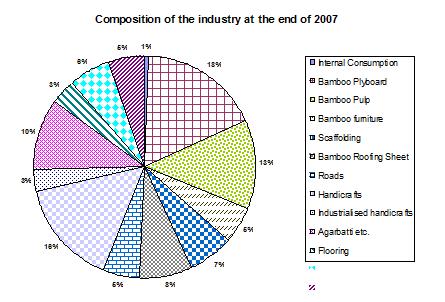
Bamboo is available throughout the country barring the states of Jammu and Kashmir and Rajasthan (except for some areas). Existing traditional bamboo and cane handicraft products, though not many, could be improved, diversified, produced along industrial assembly lines and converted into value-added products that are already a part of mainstream industry. Value additions could be made to its use in the paper industry and its use in the unorganized scaffolding industry can be doubled. Simultaneously, other mainstream micro and small enterprise products such as matchsticks, pencils, toothpicks, skewer sticks, and blinds, as well as medium-scale industrial panel products that rival wood products, with strong backward community linkages and benefits can be explored. An increase in bamboo products and market opportunities will also result in increases in demand for raw bamboo, besides the production of fresh bamboo shoots and their processed products. There is considerable potential to set up medium and large-scale industries for generating value-added food and wood-substitute products for export markets.
The value-added bamboo industry is ideally placed to adopt that model. Given the right policy atmosphere and thrust, the value-added bamboo industry in India has the potential of reaching a size of USD 2.3 billion (USD 131.5 billion globally) in the next 10 years with a CAGR of 10.3%, employing 11-15 million people in the primary, secondary and tertiary sectors[2].
The bamboo industry also fulfils the criteria needed by sectors that aim to achieve double-digit economic growth. Bamboo has a very strong and direct with rural communities, which would allow them to partake directly and in a more significant way to value addition as compared to other industrialized processes. The value-added bamboo industry thus provides an integrated solution that uses an abundant natural resource that protects the environment and can be processed and generated through community-owned enterprises, both small and large.
Disclaimer: The opinions expressed are those of the author and do not purport to reflect the views or opinions of any organization, foundation, CSR, non-profit or others
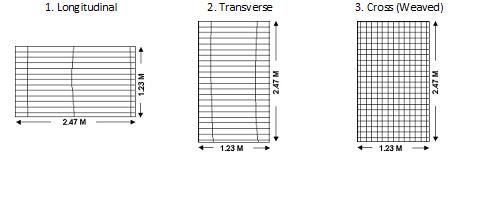
The main raw material for the production of bamboo ply/mat board is bamboo, which is the fastest growing plant and occurs naturally in the forests and is also suitable for plantation even over degraded lands. For manufacturing boards, bamboo is to be converted into mats. The sheets have been found to be resistant to water, fire, decay, termites, insects, etc.
Bamboo charcoal and active carbon are new products developed in recent years. Bamboo being of special microstructure possesses extreme absorbing and other special capacities after carbonization. Their uses in the areas of new technology are of importance.
Variety of Bamboo Charcoal: There are many kinds of bamboo charcoal. In line with their origin, bamboo charcoal can be divided into two parts: raw bamboo charcoal and charcoal stick of chips. Raw bamboo charcoal is made of small sized bamboo, old bamboo, and bamboo tops, roots, which are not fit for making other bamboo products. Charcoal stick of chips is made of residue from bamboo processing industries. In the process of making different kinds of industrialized products, there will be residue, which should be broken in chips, dried, and pressed into sticks before carbonization.
India has huge natural bamboo stocks that have been an integral part of Indian culture for many millennia. Bamboo in many ways is the mainstay of the rural Indian economy, sparking considerable social and ecological spin-offs. In the early part of the century, large tracts of bamboo occurred in many parts of the country but were treated by forestry sector (which was then cast in a production forestry mode) as a weed of little economic value and were used mostly by the rural communities for crafts, making implements and as housing material. It was the discovery of bamboo as a source of long-fibre by the Forest Research Institute in Dehradun that started the process of using bamboo in a variety of industrial applications, so far unexplored, with several paper mills and rayon mills being set up. But in the absence of a clear policy of husbanding of the resource there was rapid degradation and decimation of the resource in much of the country. Bamboo resources plummeted so alarmingly that at present the resource is limited to few pockets in the country. Two-thirds of the bamboo in the country is restricted to the North-Eastern Region (NER) while the remaining one-third is spread across the country.



 Manu Mayank