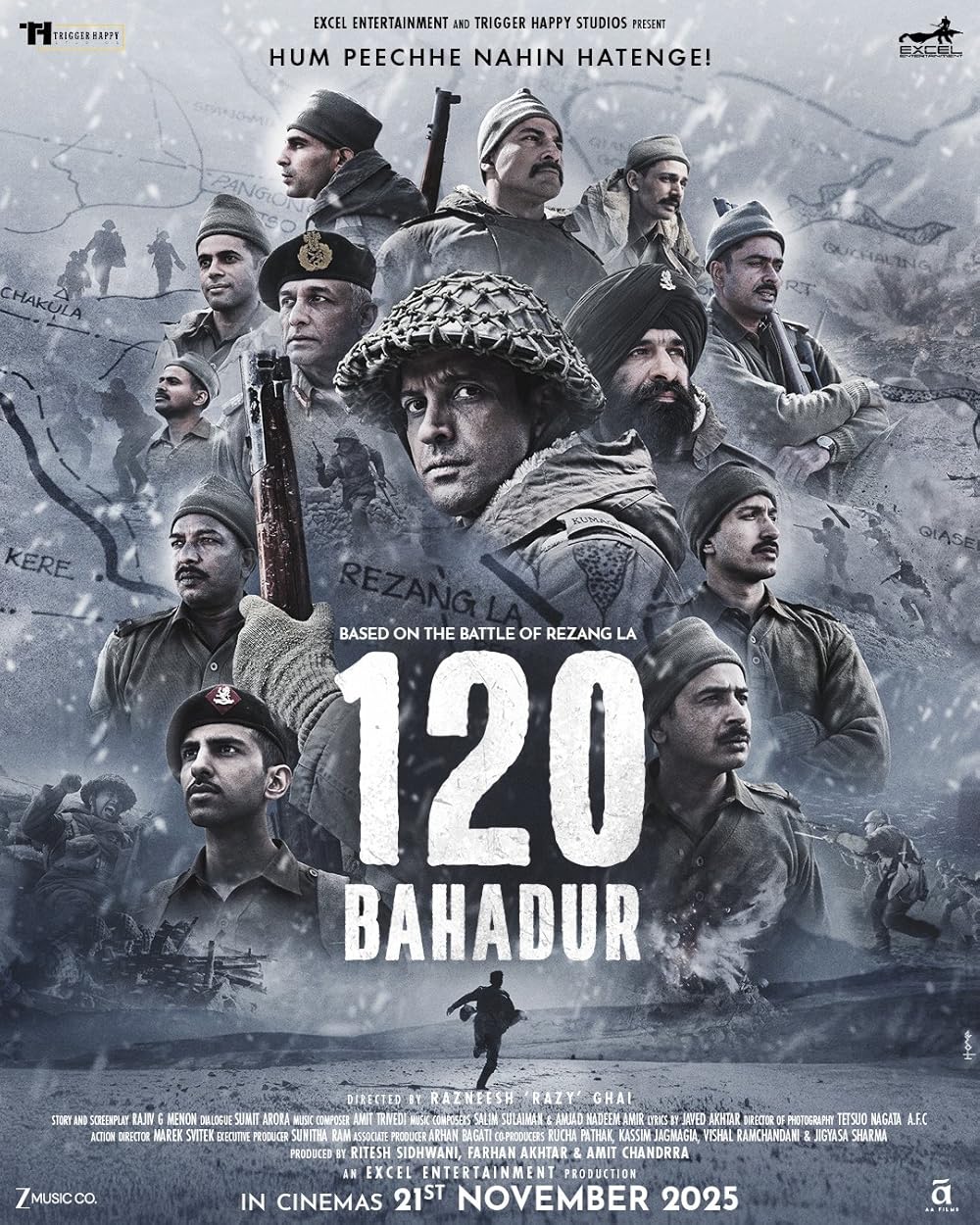
120 Bahadur 

Genre: War Drama Year: 2025 | Duration: 160 mins | Director: Razneesh Ghai|  Medium: Theatre (PVR Cinemas) | Trailer: HERE | Language: Hindi | Cast: Farhan Akhtar, Raashil Khanna, and others | My rating: 3.5/5

120 Bahadur is based on the real-life sacrifice of the 120 soldiers of Charlie Company, 13 Kumaon Regiment of the Indian Army at the Battle of Rezang La during the 1962 Sino-Indian War. It chronicles the extraordinary courage of 120 Indian soldiers who stood their ground against 3000 Chinese troops. The film focuses on Major Shaitan Singh Bhati (played by Farhan Akhtar), showcasing the grit, sacrifice, and valour of soldiers fighting in the brutal cold and high altitude of Ladakh. The story is narrated through the memories of a surviving soldier, and it unfolds as a tribute to the heroism of a band of brothers whose courage came at the highest cost.  

The film’s strongest suit is its war sequences and immersive realism. The battle sequences at Rezang La, rifle fire, bayonet charges, final close-quarters combat, the harsh terrain, bone-chilling cold, and the almost claustrophobic desperation when ammunition runs out are realised with a fierce intensity that’s rare for many modern Hindi war films.  The film features brilliant cinematography by Tetsuo Nagata, with breathtaking shots of snow-covered mountains, freezing desolation, and the starkness of high-altitude warfare.  The film mostly avoids glorifying war for its own sake and is a sober portrayal of the events. This sincerity gives the film humility as it doesn’t frame itself as a triumphant spectacle, but a respectful tribute and remembrance. 

Farhan Akhtar delivers a thoughtful performance. He largely avoids the larger-than-life histrionics often associated with Bollywood war heroes. Instead, he feels rooted, authoritative yet human, decisive yet burdened.  At the same time, the supporting cast, many of them lesser-known actors, bring the infantrymen to life with grit, camaraderie, humour, and vulnerability. Their messy friendships, small conversations, homesickness, and occasional fears humanise what might otherwise have been just a war drama with guns and trenches.  

However, the film seemed to have weak character development; their individual stories were barely sketched out. This makes certain deaths feel less impactful emotionally, more like casualties on a battlefield than deeply personal losses. Because of that, while the collective sacrifice hits home, personal grief and tragedy often don’t. The film’s narrative isn’t always smooth, as flashbacks to family life, interspersed with the lead-up to battle, sometimes break the tension. The prelude drags at times, and the buildup to the climax lacks the steady escalation that such stories need for maximum impact.  

I felt that the depiction of Chinese soldiers has been overly simplified and tends to lean towards caricature: monolithic, villainous, almost cartoonish, robbing them of nuance or complexity. This weakens the moral weight of the conflict and reduces it to a binary ‘good vs evil’ war movie. In parts, storytelling relies heavily on familiar Bollywood popular drama of last-minute motivational speeches, montage-heavy sequences, formula flashbacks and emotional beats, which keep the film from feeling fully original.  

120 Bahadur is not a perfect film, but it is an earnest, important one. It doesn’t glamourise war, and it doesn’t demand you leave the theatre cheering mindlessly. Instead, it makes you reflect on duty, courage, and sacrifice. As a cinematic recreation of a tragic but heroic moment in India’s history, the film succeeds more often than it fails. Its war sequences are unflinching and immersive; its portrayal of brotherhood and sacrifice is heartfelt; its lead performance is measured and credible.

But beneath the combat and solemn patriotism, it made me think that India’s rural society holds the backbone of India’s defence forces. The film also has a sociological moment where rural identity, class, caste, and nationhood intersect. The men of Charlie Company came largely from agrarian communities, especially the Ahir (Yadav) belt of Haryana and Western UP. Their lives before the war were shaped by farming cycles, monsoon anxieties, livestock, joint families, and deeply rooted village cultures. The film becomes a testament to how rural young men, in search of dignity, livelihood, and service, become the face of national defence but rarely the face of national storytelling.

Despite its narrative shortcomings, 120 Bahadur performs a cultural service of returning Rezang La to public consciousness.
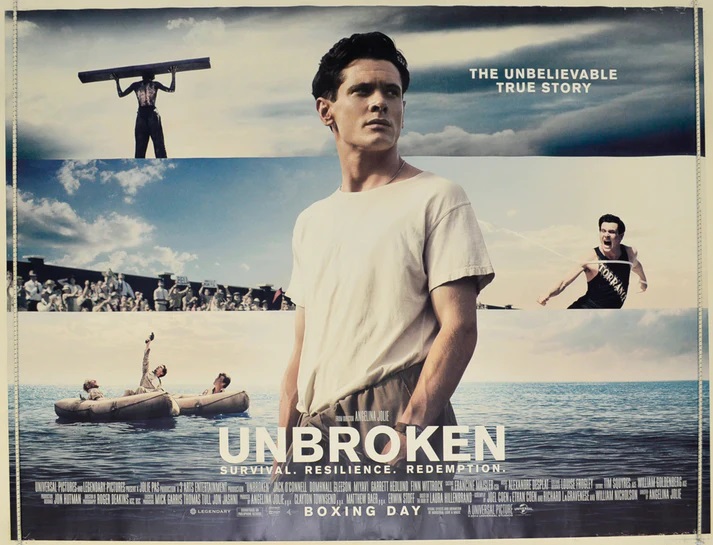
Unbroken

Genre: War/Action | Year: 2014 | Duration: 138 mins | Director: Angelina Jolie | Medium: DVD | Trailer: HERE | Language: English | My rating: 5/5

Favorite Dialogue: “A moment of pain is worth a lifetime of glory.”

Unbroken is based on an inspiring true story of Louis Zamperini, a World War II bombardier, and an Olympic athlete whose remarkable life story is chronicled in Laura Hillenbrand’s bestselling book, Unbroken: A World War II Story of Survival, Resilience, and Redemption (2010). The film is a powerful tale of human spirit and forgiveness.

The story follows Zamperini (Jack O’Connell), who survives a plane crash in the Pacific Ocean, captured by the Japanese navy and endure years of brutal treatment in prison camps. The film spans Louis’s early life, childhood and his troubled youth, athletic achievements, and his experiences during the war, first as a Bombardier and then as a POW. 

Jack O’Connell delivers a compelling performance, capturing both the vulnerability and strength of Zamperini as he faces unimaginable hardships. The supporting cast, including Domhnall Gleeson as fellow soldier Phil, and Takamasa Ishihara as the sadistic camp commander “The Bird,” contribute significantly to the film’s emotional weight.

Angelina Jolie’s direction is visually stunning, emphasizing the stark contrast between the beauty of nature and the brutality of war. The cinematography portrays the vastness of the ocean and the starkness of the prison camps, effectively immersing the audience in Zamperini’s harrowing journey, combined with Alexandre Desplat’s evocative score.

“Unbroken” excels in showcasing the inspiring and intensity of Zamperini’s ordeal, making it a powerful portrayal of the strength of the human spirit. However, the film differs from the original book in balance. While the book is more focused on his post-war journey of forgiveness and healing, the film focuses more on his suffering.

Overall, Unbroken is a visually compelling and emotionally charged film that pays homage to Louis Zamperini’s extraordinary life, and is certainly a must watch. For me, the DVD of this film is a collectible too.

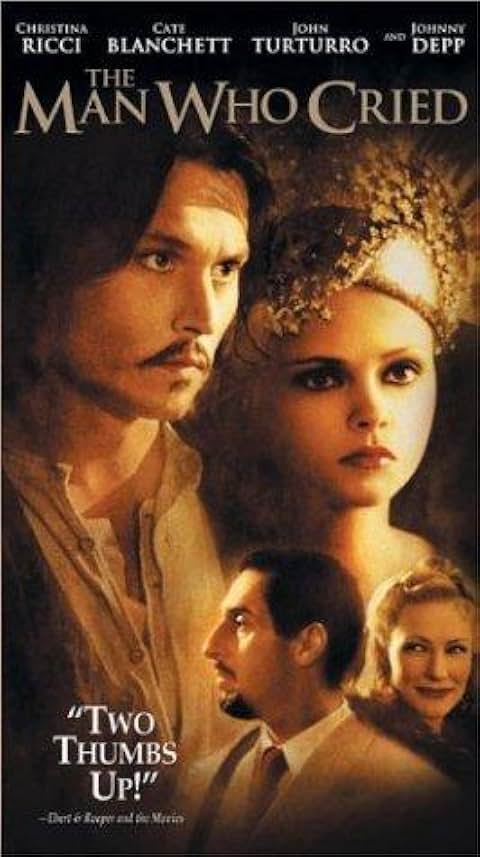
The Man Who Cried

Genre: Romance | Year: 2000 | Duration: 100 mins | Director: Sally Potter | Medium: DVD | Trailer: HERE | Language: English, French, Yiddish | My rating: 3.5*/5*

Favorite Dialogue: “Lola: One should never look back. One should never regret. Never.”

This romantic movie by Sally Potter has no chemistry between its co-stars, Johnny Depp and Christina Ricci, even though I quite liked their individual performances as Fegele, a Russian Jew with elfin features separated from her father as a child in 1927 and later re-named as Suzie when she escapes to England, and Cesar, a Romani gypsy with brooding countenance . And therefore there was no heat and the romance seemed sterile. 

Fegele’s father leaves for the promise of wealth and better future to the land of opportunity, America, intending to bring his daughter over later. However, after he left, a band of raiders attacks Fegele’s settlement, and she is bundled off in the middle of the night by her grandmother with few gold coins to take the ship to America. She ends up living in a foster home in England. After ten years she leaves England and joins a musical troupe in Paris, with the goal of making enough money so she can go to America to locate her father. She keeps her identity as a Jew a secret – only her roommate, Lola (Cate Blanchett), her roommate’s famous opera-singing lover, Dante (John Turturro), and her landlady know the truth. With World War II looming, Suzie and Lola escapes Paris, and after some drama Suzie reaches America and finds her ailing father in Hollywood.

This beautifully recorded and scored film of love, loss and human character is worth a watch.

CAPTAIN CORELLI’S MANDOLIN

220px-Mandolinfilm1Genre: Romance/Drama | Year: 2001 | Duration: 131 mins | Director: John Madden| Medium: VCD (BIG Home Video) | Trailer: HERE | My rating: 3.5*/5

Fav Dialogue: “Dr. Iannis: When you fall in love, it is a temporary madness. It erupts like an earthquake, and then it subsides. And when it subsides, you have to make a decision. You have to work out whether your roots are to become so entwined together that it is inconceivable that you should ever part. Because this is what love is. Love is not breathlessness, it is not excitement, it is not the desire to mate every second of the day. It is not lying awake at night imagining that he is kissing every part of your body. No… don’t blush. I am telling you some truths. For that is just being in love; which any of us can convince ourselves we are. Love itself is what is left over, when being in love has burned away. Doesn’t sound very exciting, does it? But it is!”

Even though am a fan of Nicholas Cage and Penelope Cruz, I enjoyed this movie mostly because of its beautiful cinematography. The film’s story, based on Louis de Bernieres novel, is of a beautiful greek girl falling in love with an infantry officer from the occupying Italian forces during the second world war. Captain Antonio Corelli (Nicholas cage) has a love for music and keeps his mandolin in his knapsack insead of an officers’ baton, and strumming on his mandolin charms the gorgeous Pelagia (Penelope Cruz) off her feet (and her pants too!). However John madden fails to capture the essence of music transcending the brutality of war and nationalistic boundaries. Cage didn’t sound Italian enough and nor did Cruz did justice with the Greek accent. The movie does show brilliance in parts in bringing out the pathos and grit of war time romance.

This flawed, yet sweet war-time romance is my ‘Movie of the Day’.

The Photographer

9781596433755The Photographer: Into War-Torn Afghanistan with Doctors Without Borders

by Emmanuel Guibert, Frederic Lemercier and Didier Lefevre
267 Pages | Genre: Graphic Novel | Publisher: First Second | Year: 2009 | Rating: 8.5/10

In 1986, French photojournalist Didier Lefèvre documented the efforts of Médecins Sans Frontières (Doctors Without Borders) in Afghanistan, which was torn apart by a war with USSR. This graphic novel is a record of his arduous journey along with the Doctors across Afghanistan and presents a powerful story of a mission dedicated to mending the wounds of war. I like the presentation style of using real B/W photographs and comic book illustrations & dialogues by Emmanuel Guibert based on the notes taken during the journey.

This incredibly brilliant graphic novel is my “Read of the Week”.