Fabric of Resilience in Assam
December 8, 2025 1 Comment
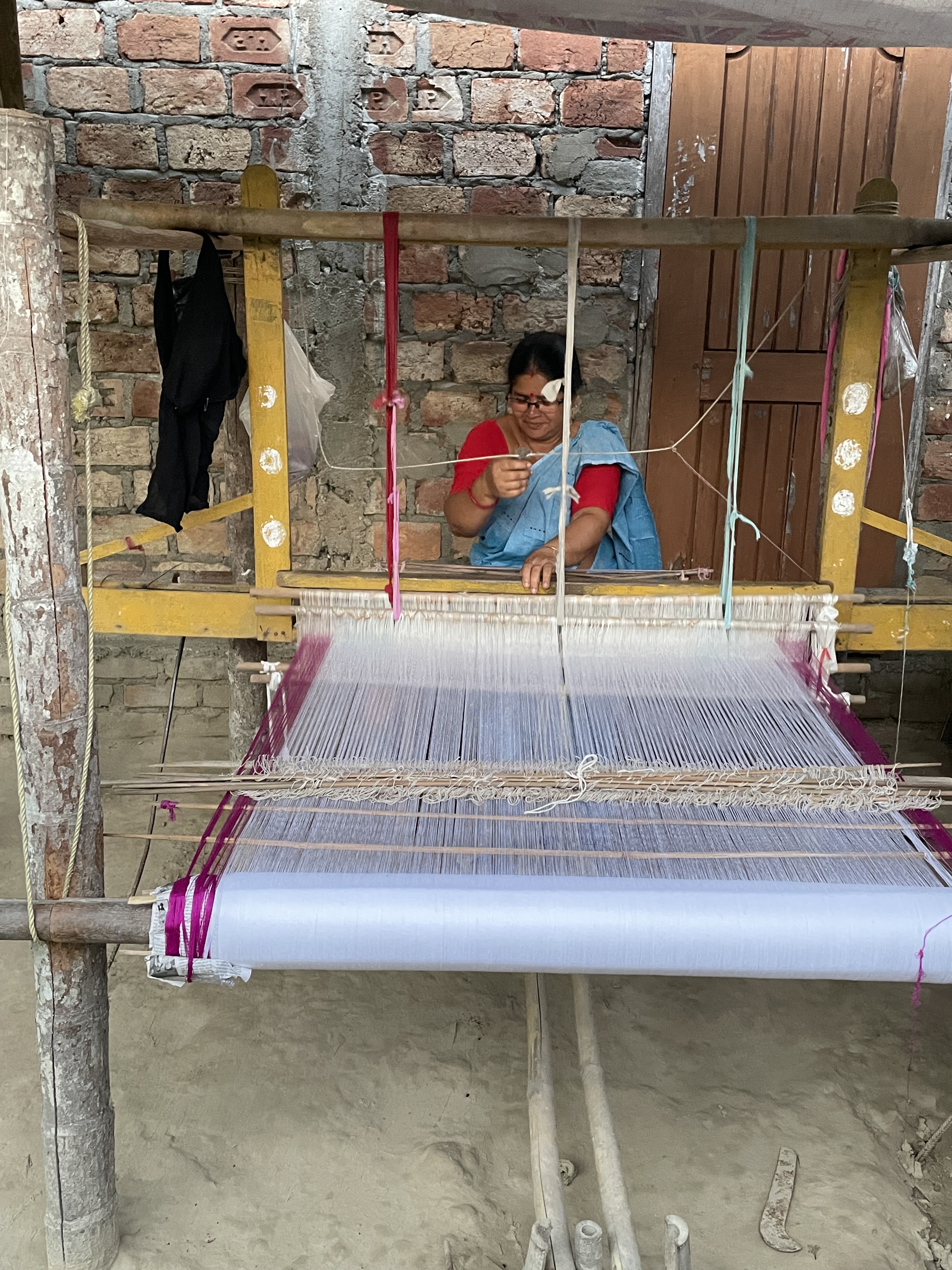
I witnessed women weaving change in the villages of Assam through their skills, cultural heritage, hard work, perseverance, and collective will. Standing in a courtyard in Kamrup district, watching a woman at her traditional loom, I was struck by how quietly revolutionary this simple, everyday act truly is. The rhythmic motion of her hands, the steady concentration on her face, and the vibrant threads stretching across the loom were far more than craft; they were a statement of agency, identity, and economic empowerment. In that moment, it became clear that weaving in Assam is not merely a livelihood. It is a living narrative of resilience and progress, written by women who have refused to be left behind.
In much of rural India, the conversation around women’s empowerment often centres on what needs to be ‘given’ to women: access, opportunities, rights, financial inclusion, and public safety. All of these are undeniably essential. Yet what struck me in Kamrup was how much women were already giving to their families, to their communities, and to the preservation of an age-old cultural tradition. Assam’s weaving heritage is legendary, and most rural households have a loom. The women I met weave not only exquisite textiles like Mekhela Chadors, Gamosas, stoles, saris, but also new pathways for themselves, stitch by stitch.
The woman in the photograph, Jonali Das, from Paschim Bagta village, sits on a traditional handloom, made using local materials, framed by a raw brick wall and a sandy earthen floor. Nothing in this setting reflects modern machinery or industrialized production. Yet it reflects something far more important: dignity in work and pride in cultural identity. Her loom is more than a tool; it is a symbol of continuity. Generations of Assamese women have learned to weave from their mothers and grandmothers. The craft is deeply entwined with rituals, festivals, and the wider cultural ethos of the region. In many communities, a girl’s weaving skill is a marker of her readiness for adulthood. It is a quiet but powerful form of cultural education.
But the picture also reveals another truth: despite the beauty and value of these textiles, most weavers earn very little. The informal nature of the craft, the lack of organized supply chains, exploitative middlemen, limited access to raw materials at fair prices, and the absence of direct market linkages keep them trapped in low-income cycles. The fact that such a skilled craftswoman is working in a semi-open shed with bare tools is a reminder that heritage alone cannot sustain livelihoods unless the systems that support them evolve.
What struck me during conversations with the weavers was their clarity. They were not seeking charity. They were asking for fair access to better looms, training on contemporary designs, consistent market demand, and opportunities to sell directly. Their ask was not a transformation from the outside, but an enabling ecosystem that amplifies what they already excel at.
Local institutions like cooperatives, women’s self-help groups, producer companies, and artisan clusters play a pivotal role in negotiating prices, ensuring raw material supply, and aggregating products for larger orders. In Kamrup, I saw tremendous potential for women-led collectives that could own the entire value chain, from sourcing raw silk yarn of Eri and Muga to designing contemporary designs to managing logistics with digital tools. A decentralized, community-owned model would allow profits to remain in the village while giving weavers a bargaining voice.
There is also an urgent need to tell the stories behind these weaves. Consumers today increasingly seek authenticity, sustainability, and connection. Assam’s handloom sector embodies all three. Each Mekhela Chador woven on a traditional loom is not just a garment; it is hours of meticulous labour, generations of inherited technique, and the cultural soul of a community. Yet the lack of branding and storytelling often reduces these textiles to mere commodities. If India can celebrate Banarasi silk and Kanchipuram saris globally, there is no reason why Assam’s weaves cannot enjoy similar recognition, with the right investment, visibility campaigns, and market linkages.
Government programs like the National Handloom Development Programme and Deendayal Upadhyaya Grameen Kaushal Yojana have made efforts to support weavers. But ground realities show that the most impactful interventions are those that engage women directly, respect their lived knowledge, and co-create solutions rather than imposing them. Capacity building must happen in their language, in their community spaces, and at timings suitable to their daily responsibilities.
Most importantly, the narrative around rural women must shift. Too often, they are portrayed as vulnerable, needing rescue. The woman in the photograph, and countless others like her, are not symbols of vulnerability, but are symbols of strength. They run households, care for children and the elderly, manage farms, participate in community activities, and still take out time to weave. Their contribution to the rural economy is enormous, even though much of it remains invisible and unpaid.
As I watched the fabric slowly take shape on her loom, I realised that weaving is also an act of hope. Every thread layered over another is a gesture of belief in tomorrow, belief that their craft will survive, that their daughters will inherit both the skill and the opportunity to thrive, and that their labour will be valued fairly. If India is to build a truly inclusive development story, it must begin by recognising and uplifting such women, not through charity, but through partnership.
In the villages of Assam, women are already weaving change. They only need the rest of us to stop standing on the sidelines and start supporting the revolution they have begun.
(Cover Image: Jonali Das, Pashchim Bagta village, Kamrup rural, Assam)
First published on 20th November 2025 on LinkedIn
 About Manu Mayank
 Manu Mayank
Thank you so much for sharing the content with us. We truly appreciate the time and effort you put into it. Your contribution is valuable and helps us move forward with better clarity and confidence. We look forward to more such meaningful collaborations ahead.