The Sisters Brothers
April 13, 2013 Leave a comment
“Come with me into the world and reclaim your independence. You stand to gain so much, and riches are the least of it.”– Patrick deWitt, The Sisters Brothers
Read & Reflect
April 13, 2013 Leave a comment
“Come with me into the world and reclaim your independence. You stand to gain so much, and riches are the least of it.”April 13, 2013 2 Comments
When your fight has purpose—to free you from something, to interfere on the behalf of an innocent—it has a hope of finality. When the fight is about unraveling—when it is about your name, the places to which your blood is anchored, the attachment of your name to some landmark or event—there is nothing but hate, and the long, slow progression of people who feed on it and are fed it, meticulously, by the ones who come before them. Then the fight is endless, and comes in waves and waves, but always retains its capacity to surprise those who hope against it.”
― Téa Obreht, The Tiger’s Wife
This novel full of historic and human complexities of Balkans through its principal narrator, Natalia Stefanovic, a young doctor who lives with her mother, grandmother and grandfather in an unnamed Balkan city early in the 21st century, is my “Read of the Week”.
April 12, 2013 Leave a comment
What I say is, a town isn’t a town without a bookstore. It may call itself a town, but unless it’s got a bookstore it knows it’s not fooling a soul.” ― Neil Gaiman, American Gods
American Gods is a masterful blend of mythology and existential questioning, crafted with the confidence of a storyteller who knows how to make the unreal feel intimately familiar. The novel follows Shadow Moon, a man adrift after personal tragedy, who becomes entangled in a looming war between the old gods brought to America by immigrants and the new gods born of technology, media, and modern obsession.
Gaiman uses this supernatural conflict to explore what a nation chooses to worship, and what those choices reveal about identity, belief, displacement, and memory. His America is vast, strange, melancholic, and quietly magical with a landscape where roadside attractions become sacred spaces and forgotten deities cling to survival.
What makes the novel enduring is its atmosphere: moody, mythic, and laden with symbolism. Shadow’s journey is both epic and introspective, revealing the cost of faith and the fragility of stories in a changing world.
While the pacing occasionally drifts, the richness of character, imagination, and cultural insight more than compensates. American Gods remains one of Gaiman’s most ambitious works, an absorbing, thought-provoking modern myth that lingers long after the final page.
This dark, poetic and thrilling novel across an American landscape is my “Read of the Week”.
April 10, 2013 2 Comments
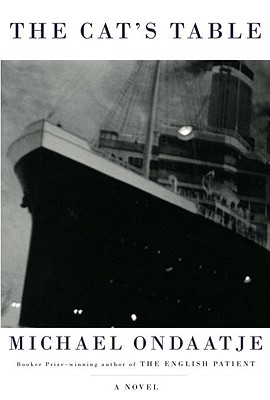
We all have an old knot in the heart we wish to untie.”
― Michael Ondaatje, The Cat’s Table
The Cat’s Table by Michael Ondaatje is a luminous novel about memory, chance, and the strange alchemy of growing up. The story is set aboard a ship sailing from Colombo to England in the early 1950s. It follows a 11 year-old boy, Michael, who is seated at the ‘cat’s table,’ the least prestigious place in the dining room, far from the authority of adults. From this marginal position, the novel unfolds the ability to see the world obliquely, through curiosity rather than control.
Ondaatje writes with a restraint that is deceptive. The plot is episodic, almost drifting, mirroring the ocean that carries its characters. Michael and his companions—Cassius and Ramadhin move through a floating society of eccentrics, which includes a jazz pianist in disgrace, a mysterious prisoner, a silent tailor, and adults whose private griefs remain partially hidden. These encounters linger like half-remembered stories, suggesting that childhood understanding is always incomplete.
What elevates The Cat’s Table beyond a simple coming-of-age tale is its adult consciousness looking back. The older narrator reflects on how friendships, betrayals, and moments of wonder gained meaning only years later. Memory, is less an archive than a reconstruction shaped by emotion and loss.
The sea voyage becomes a metaphor for life in transition between cultures, innocence and knowledge, belonging and exile. There is no dramatic climax, no grand revelation. Instead, the novel leaves a gentle ache, the sense that some journeys matter not for where they end, but for the fleeting connections made along the way.
The Cat’s Table is a beautiful novel on how childhood experiences quietly, irrevocably shape the adults we become. This bittersweet story of memory & place, of three boys who take a journey by sea from one world to another, which flourishes in the gaps between fact and fiction is my “Read of the Week”